
April 28 2026
“I meet my God through my camera”: Raghu Rai (1942–2026), India’s master chronicler of six decades
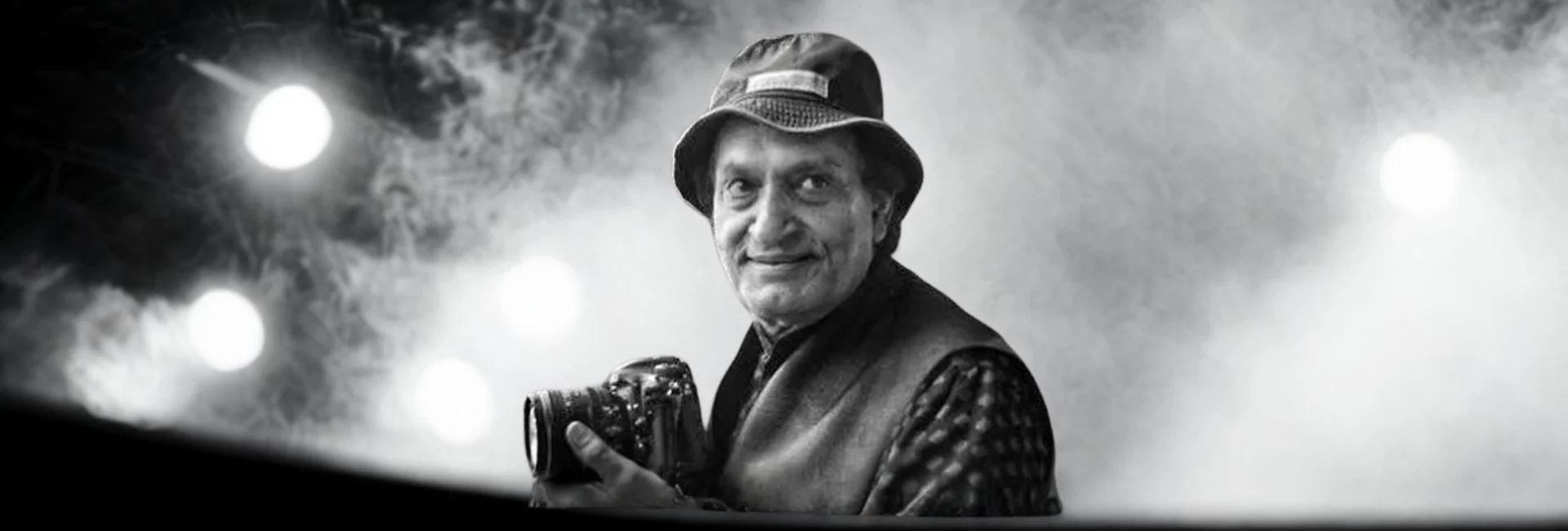
(April 28, 2026) It all started with a donkey. In the early 1960s, Raghu Rai was on a break from his engineering job, visiting his elder brother in their village. His brother was a photographer. Rai borrowed a camera, with no particular plan in mind, and pointed it at a baby donkey staring straight back at him.
What followed was three hours of pursuit. Every time Rai got close enough for a shot, the animal bolted. He waited, repositioned, and approached again multiple times. When the donkey finally stood still, he got his frame. His brother sent the photograph to The Times of London. The paper published it. The payment covered a month of Rai’s living expenses.
“I thought, ‘This is not a bad idea, man!’” Raghu Rai later recalled. He never went back to engineering. And that single, stubborn act of patience, three hours for one frame of a donkey in a village, became an early marker of a career that would go on to define how India was seen through the camera.
Over the next six decades, Rai became one of India’s most influential photographers, documenting war, politics, spirituality and everyday life with equal intimacy. His work appeared in leading international publications, earned him membership of Magnum Photos, one of the world’s most respected photography collectives, and shaped global perceptions of India with a rare emotional clarity. Yet he remained based in India throughout his life, building an archive that functions as both personal vision and national memory.
I constantly feel a sense of wonder and amazement at the gifts photography bestowed on me.
Raghu Rai
The ace photographer died on 26 April 2026 in Delhi, after a two-year battle with cancer. He was 83. His family confirmed the news through a tribute post on his Instagram account.
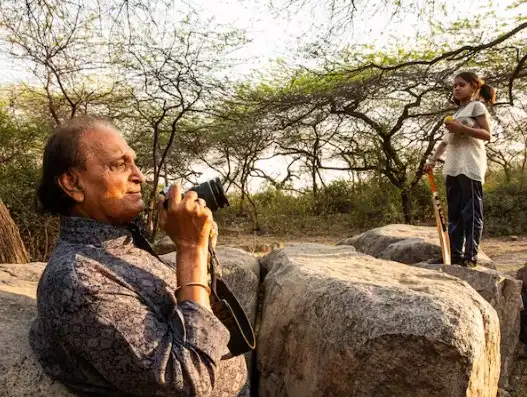
Raghu Rai | Photo Credit: Madhu Kapparath
The Magnum moment
In photography, few recognitions carry the weight of Magnum Photos. Founded in 1947 by Henri Cartier-Bresson, Robert Capa and others, Magnum is a cooperative of the world’s most respected photojournalists. Membership is decided by existing members. It cannot be applied for; it must be earned.
In 1971, Henri Cartier-Bresson, widely regarded as the father of modern photojournalism, saw Rai’s work in Paris and was struck by it. He later nominated him for membership in 1977. Raghu Rai became the first Indian photographer to join Magnum, and one of only two Indians ever admitted to the agency, the other being Sohrab Hura decades later.
Cartier-Bresson had himself photographed India extensively, from Gandhi’s funeral in 1948 to the upheaval of Partition, and understood its complexity better than most Western photographers of his time. His endorsement of Rai was a recognition from one master to another. Rai would go on to spend the next decades working at the highest level of global photojournalism while remaining firmly rooted in India.
A nation, frame by frame
Born on 18 December 1942 in Jhang, then part of British India and now in Pakistan, Rai grew up in a country still defining itself after Partition and Independence. He began his photography career at The Statesman in New Delhi in 1966 as chief photographer, and soon became a witness to some of the most defining events in modern South Asian history.
A photograph has picked up a fact of life, and that fact will live forever.
Raghu Rai
He documented the Bangladesh Liberation War in 1971, including one of the largest refugee crises of the 20th century, as nearly 10 million people fled into India. In the 1980s, he photographed Punjab during the Sikh separatist insurgency, including the storming of the Golden Temple during Operation Blue Star in 1984. His images from this period, including portraits of Sikh preacher Jarnail Singh Bhindranwale, remain among the most widely recognised visual records of the conflict.
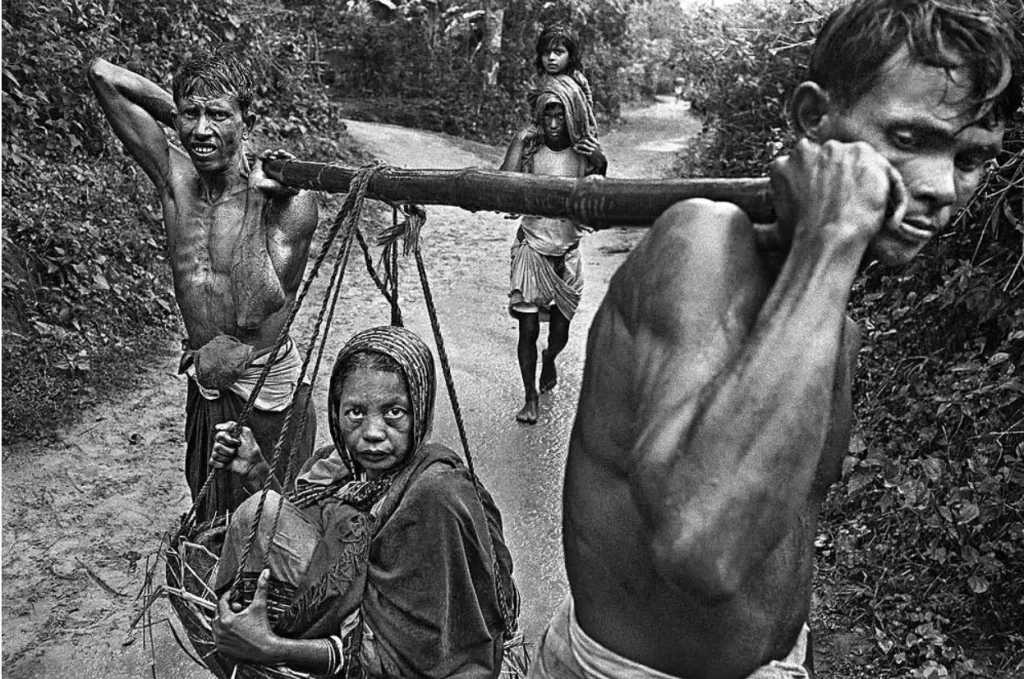
One of Ragu Rai’s award-winning pictures
The ace photographer was also in Bhopal on the night of 2–3 December 1984, when a gas leak at a Union Carbide pesticide plant caused one of the world’s worst industrial disasters, killing an estimated 25,000 people. His photographs from Bhopal became defining visual documents of the tragedy. Unlike many who moved on after breaking news cycles, Rai returned repeatedly, including for Greenpeace, documenting the long-term suffering of survivors. This work culminated in Exposure: A Corporate Crime and international exhibitions decades later.
The six-decade practice
Rai’s longevity was not only about endurance but about method. Unlike photographers who worked in isolated assignments, Rai often returned to the same subjects over years and sometimes decades, building layered visual histories instead of single narratives. Delhi, for example, was not just a city he photographed but a lifelong subject. He documented its political shifts, expanding urban landscape, street life and quieter corners with the familiarity of someone who had seen it evolve in real time.
This approach extended to people as well. His portraits of Indira Gandhi evolved across different phases of her political life, reflecting not just authority but also transition, consolidation and isolation. His long engagement with Mother Teresa in Kolkata followed a similar rhythm, where repetition became a form of deeper observation rather than repetition itself.
He worked across formats, including editorial assignments, books and exhibitions, but rarely treated any commission as a closed story. Assignments often became starting points for longer personal inquiries.
By the early 2000s, he transitioned from film to digital photography while on assignment in Mumbai. The change increased his speed of working but did not alter his approach. He continued with the same patience and instinct-driven method that had defined his early years. Across six decades, his practice remained anchored in one principle. Return, observe, wait, and return again.
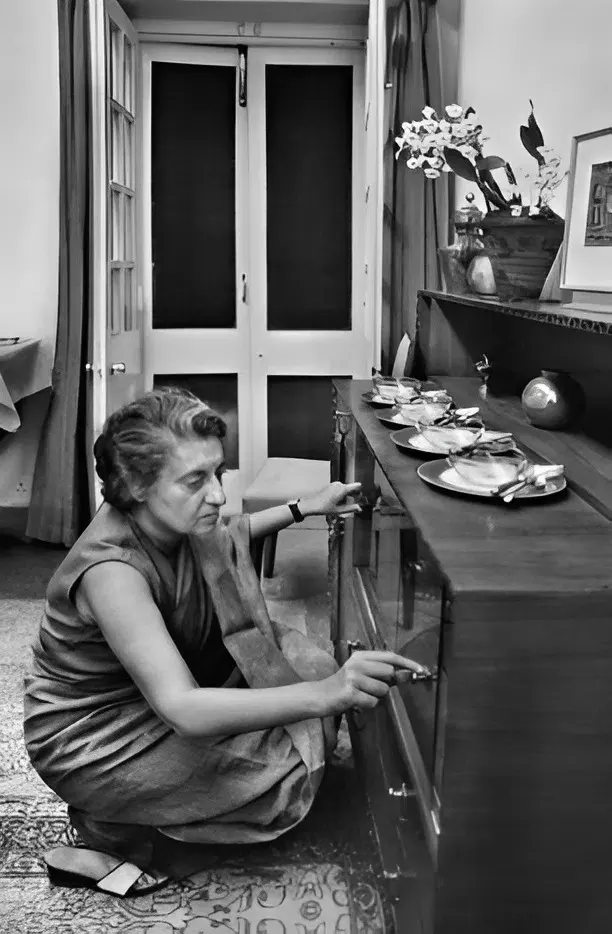
A rare, unguarded portrait of Indira Gandhi, captured by Raghu Rai
The global footprint
Rai’s work travelled far beyond India at a time when Indian photography had limited global visibility. His photo essays appeared in Time, Life, GEO, The New York Times, The Sunday Times, Newsweek, The Independent and The New Yorker. His exhibitions were shown across London, Paris, New York, Tokyo, Zurich, Prague and Sydney.
A 1992 National Geographic cover story on human wildlife interaction in India brought him wider international recognition. Over his career, he published more than 18 books covering Delhi, Calcutta, the Taj Mahal, Tibet in exile, the Sikh community and Mother Teresa, among others.
He served three times on the jury of World Press Photo and twice on UNESCO’s International Photo Contest jury, roles that placed him among photographers responsible for shaping global visual standards. In 2019, he received the inaugural Académie des Beaux-Arts Photography Award in Paris, cementing his standing in international photography circles.
Once I pick up my camera, I am driven by the ever-changing energy of life and nature. It is like investing in a bank of life, where the returns keep growing.
Raghu Rai
Power, intimacy and the famous face
Rai’s career was defined not just by events but by access and how he chose to use it. He captured encounters between global leaders, including Indira Gandhi with British Prime Minister Margaret Thatcher, two of the most powerful women of the 20th century seen through an Indian lens. His portraits of Lata Mangeshkar, Satyajit Ray, M.F. Husain and Amitabh Bachchan reflect a different kind of access built not on intrusion but on patience. His subjects often appeared unposed, as though the camera had faded into the background.
In 1968, Rai was present at Maharishi Mahesh Yogi’s ashram in Rishikesh when The Beatles visited, a moment that briefly placed India at the centre of global counterculture and his camera at its intersection.
An instinctive response is free from the mind, from ideas, from all those trappings. Your instinct lives beyond your head.
Raghu Rai wrote in his last book Waiting for the Divine (2025)
The archive that remains
What the photographer has left behind is not only a vast archive of more than 18 books, decades of assignments and exhibitions across continents, but a way of seeing.
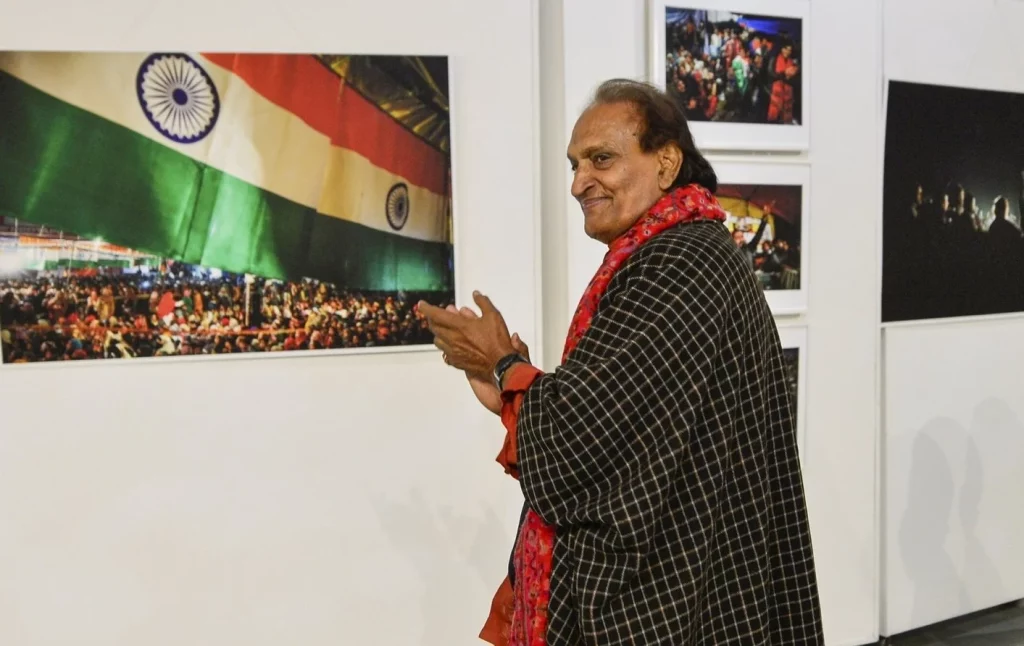
He proved that a photographer working entirely within one country could still shape global visual culture. He did not chase wars abroad or tailor his gaze for external approval. Instead, he returned again and again to India, trusting that its ordinary and extraordinary moments were enough. He waited, sometimes for hours, sometimes for years, for the right frame. He continued working well into his later years. “I could constantly feel a sense of wonder and amazement at the gifts photography bestowed on me,” he once wrote. For sixty years, he kept accepting them.
Awards and recognitions earned by Raghu Rai
- Padma Shri (1972) — one of India’s highest civilian honours, awarded to him for his exceptional contributions to photography
- Lifetime Achievement Award (2017) — conferred by Ministry of Information and Broadcasting of India
- Académie des Beaux-Arts Photography Award – William Klein (2019) — a prestigious French honour recognising his lifetime body of work
- National Geographic cover story critical acclaim (1992) — his cover story Human Management of Wildlife in India won him widespread international recognition
- Magnum Photos membership (1977) — nominated personally by Henri Cartier-Bresson; the first Indian photographer ever admitted to the cooperative
- World Press Photo jury member — served three times on the jury of one of photojournalism’s most prestigious global competitions
- UNESCO International Photo Contest jury member — served twice on the jury of UNESCO’s international photography contest
ALSO READ: Homai Vyarawalla: Meet India’s first female photojournalist
Share with


Written By: Vikram Sharma
Shooting the wild: Behind the lens with wildlife photographer Masood Hussain
Written By: Amrita Priya
World Photography Day: How photographs gave the Indian diaspora a sense of belonging

Written By: Mallik Thatipalli