
June 24 2026
Kunal Shah named global head of WhatsApp, the world’s biggest messaging platform with its largest user base in India
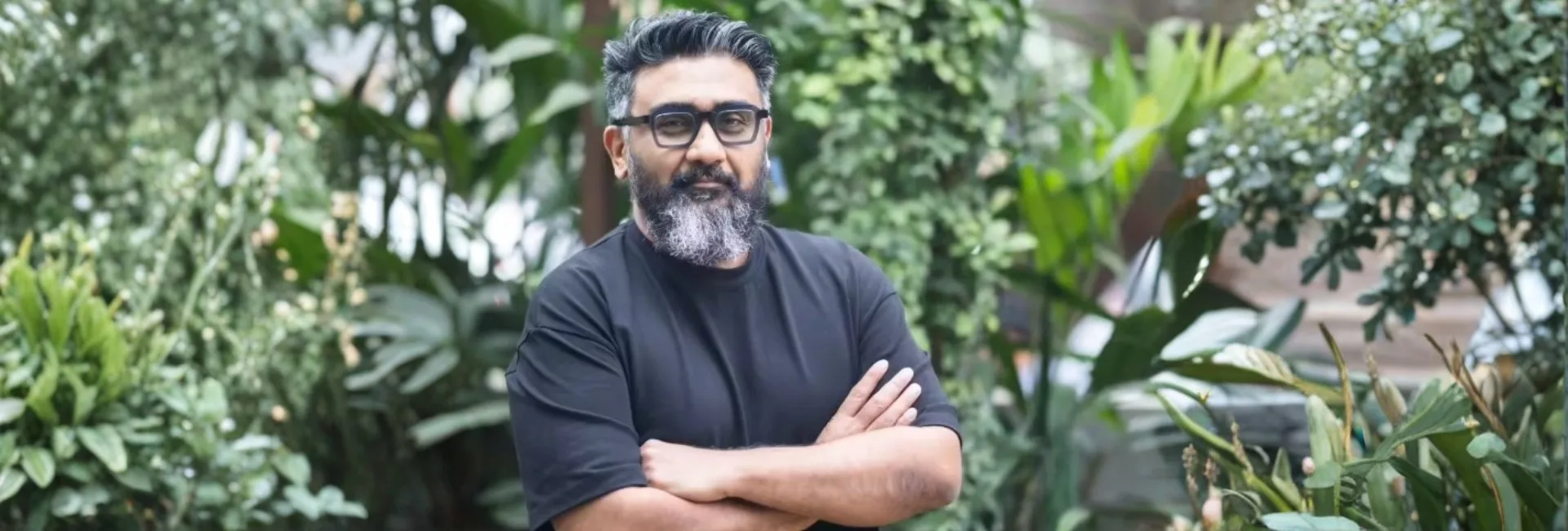
(Jun 24, 2026) On 22 June 2026, Meta CEO Mark Zuckerberg announced that Kunal Shah, founder of CRED, would become the new global head of WhatsApp, succeeding Will Cathcart, who led the platform for nearly seven years. WhatsApp is used by more than three billion people worldwide, with India accounting for over 500 million users, making it the platform’s largest market globally.
The CRED founder becomes the first Indian to lead the world’s largest messaging platform, in a move that signals Meta’s deepening bet on India’s digital economy. The announcement came bundled with a financial commitment that underlined just how seriously Meta is treating this bet. The social media giant is making a $900 million investment in CRED, giving Meta an estimated 20 per cent minority stake and valuing the Bengaluru-based company at approximately $4.5 billion.
Kunal Shah will join Meta as WhatsApp’s next leader. Kunal built CRED into one of India’s most important technology companies, and he brings the kind of builder mentality and global perspective that will serve him well in running the world’s biggest messaging app. I look forward to working with Kunal to continue to make WhatsApp the best service for billions of people and millions of businesses.
Mark Zuckerberg, Meta CEO
Starting work at 15 in a family under pressure
Shah began working at the age of 15 to help his family through a financial crisis. At 14, his family went bankrupt and lost their home. At 15, he is reported to have worked as a delivery boy selling pirated CDs to survive. He later took up odd jobs of data entry, freelance design, and programming gigs, all while completing his undergraduate degree, to support his family.
Shah studied philosophy at Wilson College in Mumbai. It was not a conventional choice for someone who would go on to reshape India’s digital payments landscape twice over. In interviews, he has described choosing it partly because of when the timing of the classes, giving a hint of how pragmatic he was even then. He later enrolled in a part-time MBA programme at the Narsee Monjee Institute of Management Studies before leaving the course in 2004.
In his own words: “I think I have been financially independent since I was 15.” If asked about his work experience, he minuses 15 from his current age to give the figure. “I’m a fairly old person from a work experience perspective.”
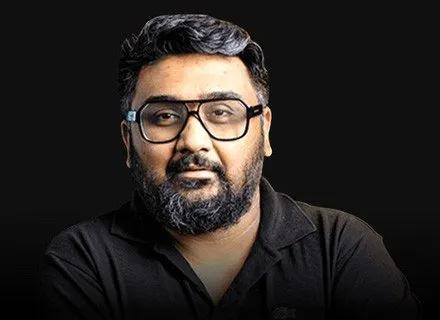
I’ll will be joining Meta to lead WhatsApp globally…Meta comes in as a minority investor in CRED. No access to member data…I look forward to working with Mark, Chris and the leadership across Meta for the next step in WhatsApp’s journey.
Kunal Shah
From SaaS to cashback to FreeCharge
The path to his first major company was anything but direct. Shah moved through a series of pivots like freelance design, a small SaaS company, a BPO, and then a marketing solutions company, before that last iteration became PaisaBack, a cashback promotions platform. FreeCharge emerged from a further pivot of that business model.
Shah co-founded FreeCharge with Sandeep Tandon in 2010, having launched PaisaBack in 2009. The premise at FreeCharge was elegantly simple. Mobile recharge was something almost every Indian needed, and the platform made it effectively free by returning equivalent value in coupons. With mobile phone usage exploding across India, FreeCharge quickly became one of the country’s most popular digital payment platforms. By 2015, it had over 30 million users.
In April 2015, Snapdeal announced the acquisition of FreeCharge in a cash-and-stock deal widely reported to be about ₹2,800 crore making it the largest startup acquisition in India at the time.
The exit should have been the high point. Instead, Shah has described the period that followed as one of the most difficult of his life. In a candid interview with The Ken, the entrepreneur who was included in Fortune India’s 40 Under 40 list in 2016 said: “The overwhelming emotion was actually of pain… the entire first year after the acquisition was extremely painful. I remember the next day I could not get out of bed. I felt my purpose was stolen and I had nothing to look forward to.”
The two years in between: investing and rethinking
After leaving FreeCharge in 2016, Shah became an active angel investor, backing dozens of technology startups including Unacademy, Shuttl, and TVF. He also spent time as a part-time partner at Y Combinator. These years gave him both financial distance from the FreeCharge exit and an unusually broad view of what was breaking in India’s financial ecosystem.
What he kept returning to was a deceptively simple observation that the financially responsible Indians with good credit scores were being treated identically to everyone else. There was no system that rewarded trustworthy behaviour. The idea that ultimately became CRED started with a single question: “Why can’t trust be rewarded?”
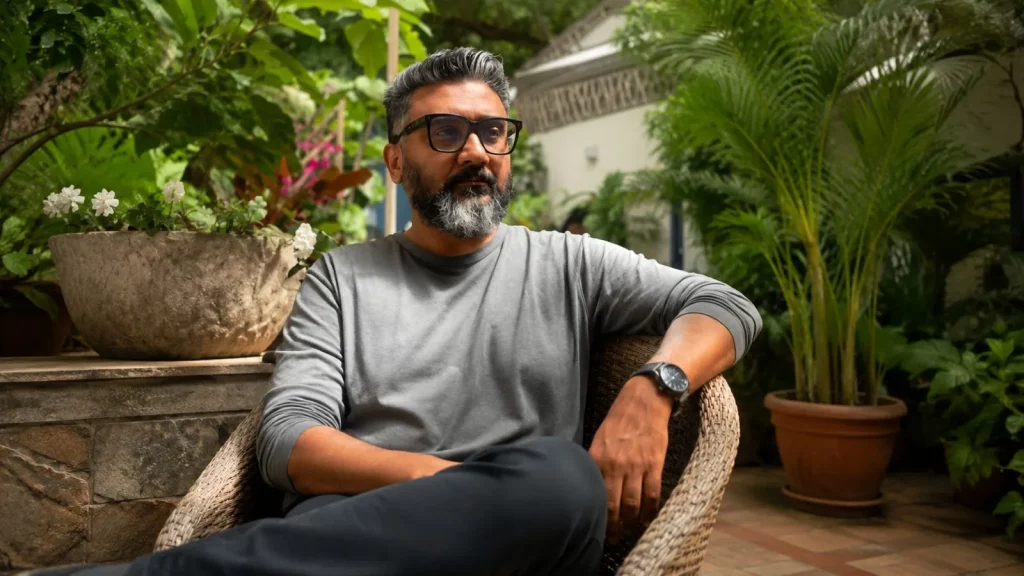
Building CRED from $1 million of personal capital
Shah launched CRED in 2018, investing $1 million of his own capital. It was a members-only platform that rewarded users for paying credit card bills on time. It was a concept that attracted considerable scepticism early on. Critics questioned the business model. Users wondered why a company would give them rewards for something they were supposed to do anyway.
Shah was patient. The platform grew into a financial-services ecosystem serving 17 million members across payments, lending, insurance, commerce, wealth management, and credit cards. CRED raised more than $900 million from global investors, completed four ESOP buybacks, and reported its first profitable quarter in 2026, with annual revenue reaching approximately ₹3,200 crore.
The WhatsApp appointment and what comes with it
Meta’s Chief Product Officer Chris Cox described Shah as “one of India’s most respected entrepreneurs, a serious thinker, and a deeply good person.”
Kunal Shah will be WhatsApp’s next leader. He built CRED into one of India’s most important technology companies and has a deep care for the people that rely on our apps. I’m very excited to see what Kunal and our amazing team continue to build.
Will Cathcart, Outgoing WhatsApp Chief
Kunal Shah broke his silence in a detailed post on Instagram on 22 June, setting out the handover at CRED before turning to what lay ahead. He announced that Miten Sampat, who has headed strategy and finance at CRED since 2020, would step in as interim CEO. On his own role, he wrote: ” While it’s come very far, the delta between WhatsApp today and its full potential is massive.”
Shah becomes WhatsApp’s first Indian CEO, leading a platform whose single largest market globally is his own country, India. He inherits a product being steered towards monetisation through business tools, in-app payments, AI integration, and advertising. The trajectory maps almost precisely onto what he has spent the last decade building at CRED.
A philosophy student who started work delivering CDs at 15, who pivoted a SaaS business into a cashback platform into one of India’s landmark fintech exits, who then sat with his discomfort for two years before asking a single question about trust, now runs the app through which much of the world talks.
Kunal Shah
| Born | May 30, 1979, Mumbai |
| Based | Bengaluru, India |
| Studied | BA in Philosophy, Wilson College, Mumbai | MBA dropout, Narsee Monjee Institute of Management Studies, Mumbai |
| Languages | Gujarati, Marathi, Hindi, English |
Signature work
Kunal Shah co-founded FreeCharge in 2010, which Snapdeal acquired in 2015 in what was India's largest startup acquisition at the time. He then founded CRED in 2018, scaling it into one of India's most prominent fintech platforms before being appointed global head of WhatsApp in June 2026.
Idea
Each of Shah's ventures was built around the behavioural insight that everyday financial actions, if incentivised correctly, could shift how Indians engage with money and digital transactions.
Network
He has backed over 200 startups including Razorpay, Unacademy, and BharatPe, and served as a part-time partner at Y Combinator. His WhatsApp appointment places him within Meta's senior global leadership alongside Mark Zuckerberg and Chief Product Officer Chris Cox.
Impact
His venture FreeCharge helped normalise digital payments for millions of Indians before its landmark 2015 acquisition. CRED scaled to 17 million members and $325 million in annual revenue. His appointment as global head of WhatsApp makes him the first Indian to lead the world's largest messaging platform.
Inspired by Kunal Shah 's journey?
Yours follows the same Hero's pattern — Separation, Initiation, Transformation, Return.

Share with



Written By: Amrita Priya
Sundar Pichai: The Indian-origin CEO who made Google more global
Cover Story, Indian CEO
Written By: Amrita Priya
George and Thomas Kurian: The rare twin CEOs shaping Silicon Valley’s legacy
Cover Story, Indian CEO

Written By: Amrita Priya