
November 19 2026
Rebuilding what has failed: Dr Krishna Kiran Eachempati’s global journey in complex joint surgery

(Nov 19, 2026) An orthopaedic surgeon with clinical exposure in Germany and the UK, Dr Krishna Kiran Eachempati has shared his expertise in advanced hip and knee replacement techniques through international training engagements in Singapore, Istanbul and Bangkok. His practice combines complex reconstruction, computer-assisted and robotic arthroplasty with efforts to make specialised joint care more accessible.
“One of the toughest decisions in my work is deciding when to operate. I may see two people with similar X-rays, one managing well while the other has completely given up walking. The operation has to make sense for the person in front of me,” says Dr Kiran, Primary and Revision Hip Replacement Surgeon at Medicover Hospitals, Hitec City, Hyderabad, in conversation with The Global Indian.
His current practice includes approximately 1,000 joint replacements annually, including around 180 hip replacements, about 150 of which are performed through the direct anterior approach. He also undertakes 50–60 revision joint replacement procedures each year. An orthopaedic surgeon with more than two decades of experience, he has performed thousands of joint replacements while mentoring young doctors in several countries. His meticulous approach has not only given a fresh lease of life to thousands of people but also contributed to advances in his speciality.
Training surgeons across borders
International collaboration has become an important part of Dr Kiran’s professional life. As faculty for the Asia-Pacific region, he participates in cadaveric training programmes in Singapore, Istanbul and Bangkok, helping younger surgeons develop the skills needed to perform complex procedures safely and precisely.
In May 2025, he demonstrated revision hip techniques at a training course in Singapore. Revision hip and knee replacement involves removing a previously implanted prosthetic joint and replacing it with a new one. Unlike primary joint replacements, these procedures demand extensive planning, advanced surgical techniques and the ability to manage complications while restoring mobility.
Unlike primary joint replacements, revision surgeries require extensive planning, advanced surgical techniques and a skilled surgeon to manage complications and restore mobility.
Dr Krishna Kiran Eachempati
His most recent international teaching engagement was in Istanbul, where he taught at a complex and revision hip cadaveric course in September 2026. The programme covered implant selection in primary hip replacement, classification of socket bone loss, revision stems and reconstruction using augments. He also demonstrated primary and revision hip techniques in the cadaver laboratory.
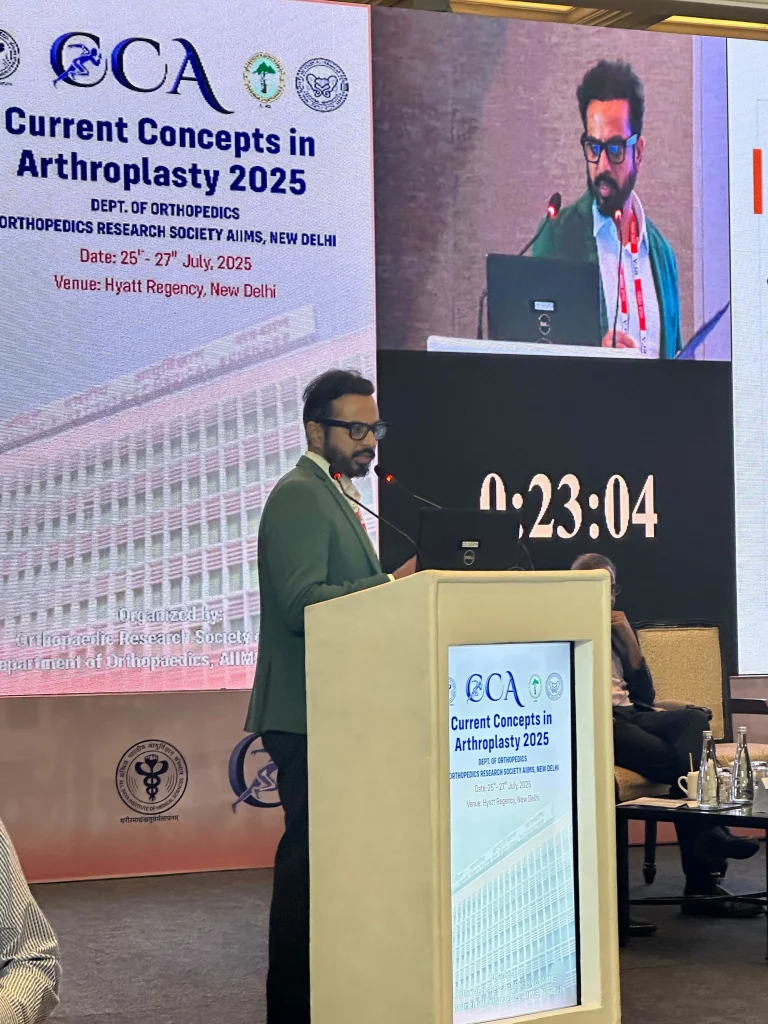
Learning from Germany and the UK
His international engagements began well before his teaching assignments. In May 2009, Dr Kiran undertook a clinical observership in orthopaedics at Schwarzwald-Baar Klinikum in Villingen-Schwenningen, Germany. He subsequently visited Golden Jubilee National Hospital in Clydebank, near Glasgow, for an observership focused on computer-navigated hip arthroplasty.
“These experiences allowed me to introduce similar technology in my practice,” says Dr Kiran also chairs education for the Indian Society of Hip and Knee Surgeons.
From clinical observerships in Germany and the UK to teaching engagements in Singapore and Türkiye, and collaborative work with colleagues overseas, international exchange has remained a recurring feature of his career.
The complexity of joint reconstruction
At Medicover, Dr Kiran’s practice encompasses a wide range of hip and knee conditions. Osteoarthritis accounts for much of his knee replacement work, while the reasons patients require hip reconstruction are more varied.
“Some have arthritis or osteonecrosis, which is damage to the bone from a loss of blood supply.”
Others develop problems following an injury or an earlier operation. Patients who seek treatment after years of stiffness or progressive deformity may require more complicated reconstruction and longer rehabilitation.
By that stage, there can be considerable muscle weakness alongside damage to the joint. “Some patients are most concerned about pain. Others are worried about losing a particular activity that matters to them. You have to optimise long-term outcomes while ensuring a quick, painless recovery as well.”
The preparation for each procedure depends on its complexity. “A straightforward knee replacement and a complex revision hip demand different kinds of preparation,” says Dr Kiran, whose daily responsibilities include operating, consulting patients, reviewing them after surgery and teaching.
Before a difficult revision procedure, he studies imaging and records of previous operations to understand which implants are already in place, how much bone is available and what options the surgical team should have ready if the findings differ once the operation begins. He also emphasises the importance of a consistent team.
I am lucky to have the same team of surgeons, nurses and technicians for more than a decade.
Dr Krishna Kiran Eachempati
Rebuilding what has failed
Revision surgery brings a distinct set of challenges. When a patient presents with a painful joint replacement, the first task is to identify the underlying cause.
“Infection, loosening, instability and stiffness can all present as pain, but they call for different treatment,” says Dr Kiran, who believes in setting realistic expectations about recovery.
One particularly demanding aspect of his practice is rebuilding the hip socket after a previous replacement has failed and substantial bone has been lost. “In that situation, I first have to determine where I can obtain reliable fixation. Sometimes there is enough bone higher up but very little support lower down.”
In some cases, securing the reconstruction to the lower part of the pelvis can provide additional stability. This challenge has become a major focus of his revision practice and influenced his work on implant design.
Dr Kiran was among the first surgeons to introduce computer-assisted hip arthroplasty and partial knee replacement in South India. Between 2017 and 2019, he also served as faculty at a training programme in Würzburg, Germany, in these areas.
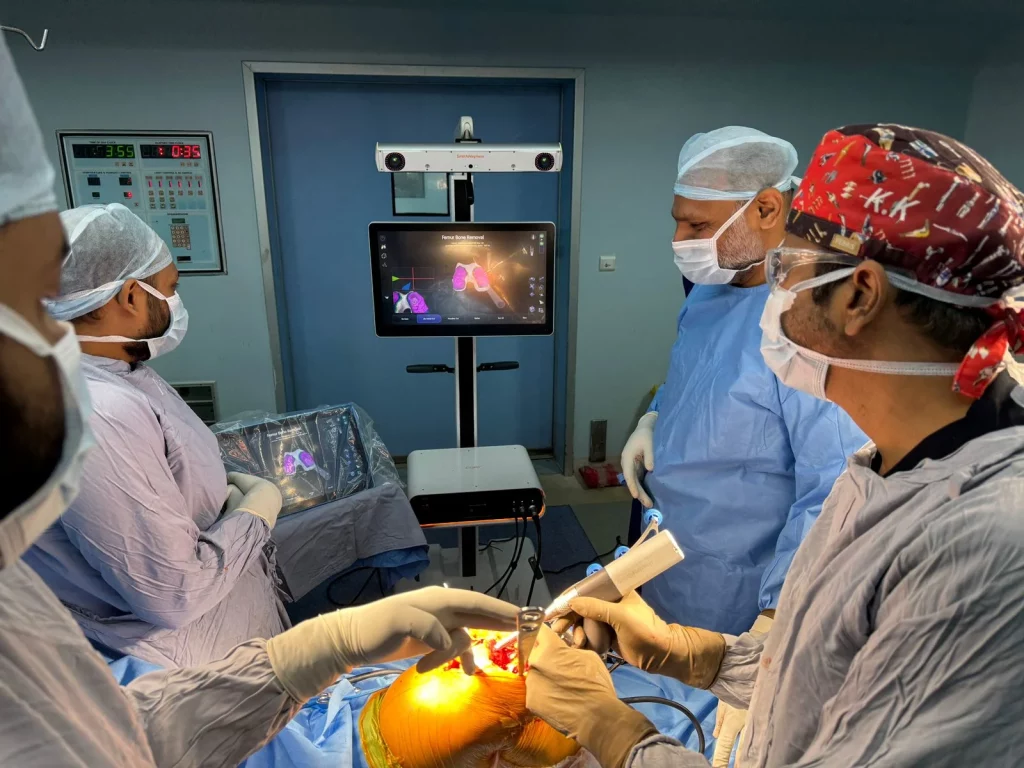
Advancing surgical techniques and implant design
His interest in technology began with the direct anterior approach to hip replacement and computer navigation, eventually extending to robotic arthroplasty. He started computer-assisted surgery in 2009 and was among the first surgeons in South India to adopt it.
He has also contributed to the design of CT-based implants, including a revision knee implant developed with Biorad Medisys in 2022 and a revision cup developed with Meril Orthopedics in 2026. These designs address requirements in complex revision procedures.
Working with Jajal Surgicals, he further refined custom implants for complex hip revision procedures. In 2015, he introduced the direct anterior approach to hip replacement in South India. This minimally invasive, tissue-sparing technique is designed to preserve surrounding muscles.
“It allows patients to perform squatting and sitting cross-legged,” he says. He also pioneered the kinematic alignment strategy in India. His interest in implant development is driven by the need to address challenges encountered in everyday surgical practice.
For implants developed in India, the opportunity is considerable. We can bring surgeons and engineers together around problems we encounter here, including bone loss in revision surgery and the need for a range of sizes and fixation options.
Dr Krishna Kiran Eachempati
India’s changing joint replacement landscape
Dr Kiran believes India has made significant advances in hip and knee replacement, with specialist centres offering modern procedures, including robotic surgery and complex revision work. However, access to these services remains uneven.
“If you look at what patients across an entire country can access, the picture is more uneven. A patient in a major city and a patient who must travel several hours for specialist care may have very different options.”
He points to the UK, which has a mature joint registry, as an example of how systematic data collection can help improve outcomes. “India has the Joint Registry, but wider participation would help us understand how implants perform across hospitals, why some replacements need to be revised and what outcomes patients report after surgery.”
The country has made considerable progress, he says. The range of cases Indian surgical teams now handle and the shift from relying on imported designs to contributing to implant development locally are encouraging signs.
Technology, too, has transformed the speciality. “The next question is whether those advances translate into good care that more people can reach and afford.” He believes district hospitals should have clear referral pathways when they encounter patients with suspected infected joint replacements or fractures around existing implants.
From Hyderabad to AIIMS
Born in Hyderabad, Dr Kiran studied at Little Flower High School and Little Flower Junior College. He was a meritorious student, securing the 11th rank in the state and first rank in his district in Class 10. He subsequently pursued MBBS at Gandhi Medical College.
Medicine was a natural choice in a family of doctors. “My mother was the Head of Department of Obstetrics and Gynaecology at Osmania. Besides, I had a lot of relatives who were also doctors.”
However, a family experience gave him a more personal reason to choose orthopaedics as his speciality. His grandfather suffered a hip fracture and underwent an unsuccessful operation, leaving him wheelchair-bound for six years until his death. “This inspired me to take up orthopaedics as my subspeciality,” he says.
His academic record was equally strong beyond school. He secured the 147th rank in EAMCET, 18th rank in the AIIMS postgraduate entrance examination and seventh rank in the Manipal postgraduate entrance examination.
Dr Kiran pursued his MS in Orthopaedics at the All India Institute of Medical Sciences (AIIMS), New Delhi, where he trained under Professors Surya Bhan and Rajesh Malhotra.
“My work there gave me an early exposure to joint replacement of the hip and knee and revision surgeries, which has been a career-defining experience for me.” After completing his postgraduate training, Dr Kiran pursued a fellowship in arthroplasty at AIIMS and continued there for five years as a senior resident and research associate.
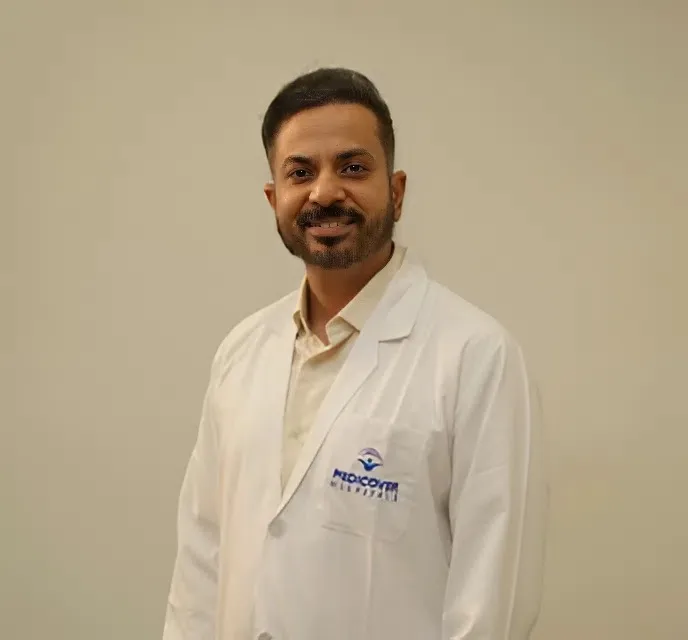
Building a specialised practice
In 2006, he relocated to Hyderabad and joined Care Hospital, Nampally, where he worked until 2009. He subsequently served as a consultant orthopaedic surgeon at Krishna Institute of Medical Sciences from June 2009 to October 2014.
He joined Medicover Hospitals in November 2014. Over the years, his practice has increasingly focused on hip and knee replacement, including partial knee replacement, complex primary procedures and revision surgery. His interest in computer-assisted surgery, navigation and the direct anterior approach gradually evolved into a wider engagement with implant design and robotic arthroplasty. Today, these areas of work complement his clinical practice and international teaching commitments.
Extending care through charitable work
Some of the work Dr Kiran values most has taken place outside his regular hospital practice. Through charitable programmes, he has helped patients who might otherwise struggle to access complex joint replacement procedures.
He performed revision hip replacements free of charge at BIRRD in Tirupati from 2022 to April 2024 and has continued similar work at VIRRD in Dwaraka Tirumala since 2023. The scale of these efforts is reflected in an operating day in August 2026, when his team completed seven revision knee replacements and two other joint replacement procedures at VIRRD.
Looking ahead
Dr Kiran intends to continue developing his work in complex hip and knee reconstruction, particularly for patients who come to him after a failed replacement. “These operations bring together much of what interests me,” he says.
In research, he hopes to make better use of the measurements collected during surgery, exploring how they can contribute to improving surgical planning and outcomes.
Outside the operating theatre, he makes time for resistance training, aiming for about four sessions a week. He follows a vegetarian diet that prioritises protein, controls carbohydrates and includes healthy fats. He also practises intermittent fasting for 16 to 18 hours daily, usually eating one or two meals. A weekly game of cricket, learning classical music and reading the works of Jiddu Krishnamurti round out his interests.
- Follow Dr Krishna Kiran Eachempati on Instagram
ALSO READ: Dr. Ravi Teja Rudraraju: Leading the way in robotic knee surgery and elite sports care


Written By: Vikram Sharma
Dr. Ravi Teja Rudraraju: Leading the way in robotic knee surgery and elite sports care

Written By: Vikram Sharma
Dr Cool: Dr AV Gurava Reddy is making India stand on its feet

Written By: Vikram Sharma