

(May 15, 2026) Growing up in New Delhi, Keshav Singh imagined himself in the cockpit of a fighter jet, serving the country through the Indian Air Force. He cleared the fiercely competitive NDA and CDS entrance exams, driven by a deep desire to fly and serve. But family circumstances intervened, and that path closed before it could begin.
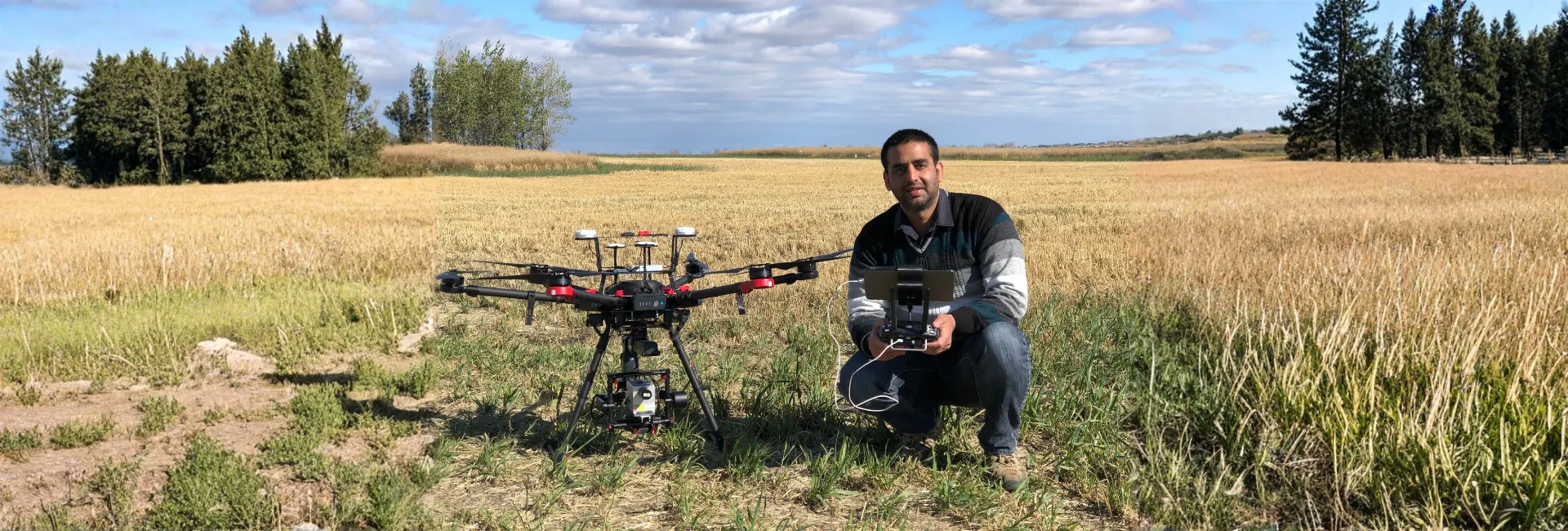
Years later, he still found a way to build a life in the skies. “I didn’t become a fighter pilot, but I still found a way to work in the air,” Professor Keshav Singh tells The Global Indian. Today, he spends much of his working life flying drones over agricultural fields in Alberta, Canada, capturing data that feeds into AI-driven systems used in crop research.
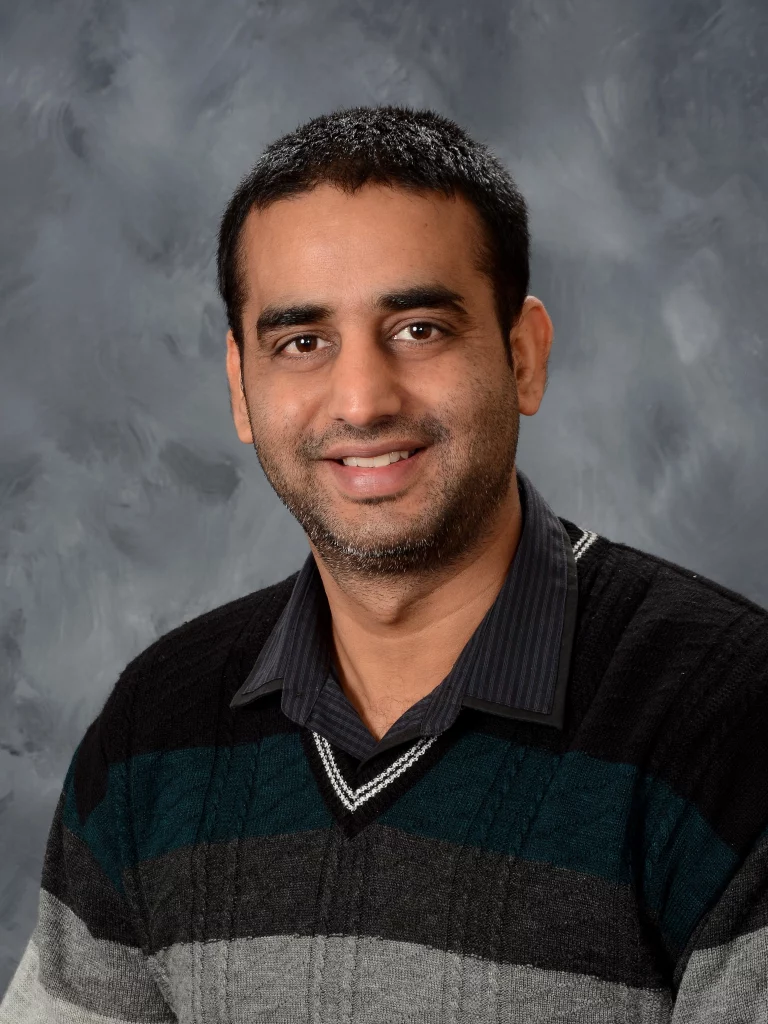
The agrophysicist works an adjunct professor at the University of Lethbridge, and research scientist at Agriculture and Agri-Food Canada (AAFC), the federal department overseeing Canada’s agriculture and agri-food sector. Based at its Lethbridge Research and Development Centre, he leads the Remote Sensing and Phenomics Lab (RSP Lab).
A role in Canada’s national research push
At the Agriculture and Agri-Food Canada’s Remote Sensing and Phenomics (RSP) Lab in Lethbridge, Singh leads work focused on using data-driven tools to improve crop research and smart farming practices. In recent years, his team has developed advanced digital systems that combine aerial, satellite, and ground-based data to help farmers and breeders better understand crop performance.
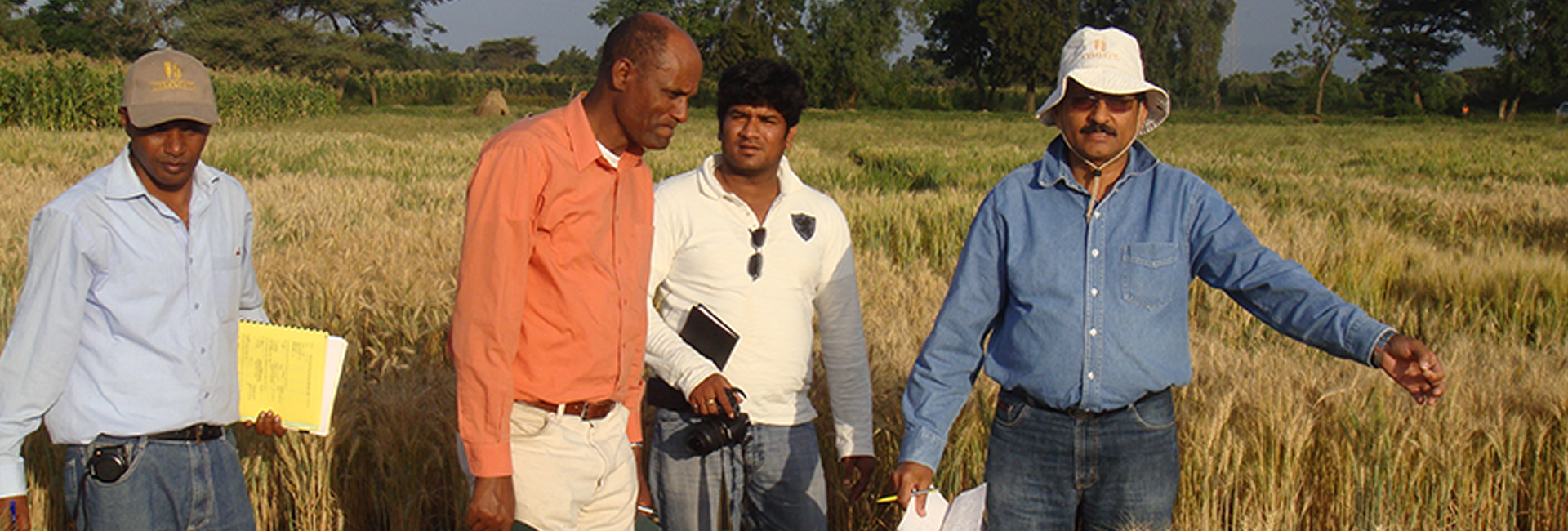
His work is part of a wider national collaboration across research centres in Canada’s Prairies, aimed at improving plant phenotyping and accelerating the development of climate-resilient crop varieties. Supported by organizations such as Results Driven Agriculture Research and the Western Grains Research Foundation, these efforts are helping bring greater precision and scale to modern farming.
Because Professor Keshav designs and flies many of his own data-collection missions, there is no gap between scientific requirements and execution. The data captured feeds into analytical AI models that support breeders and agronomists across research stations in Lethbridge, Saskatoon, Brandon, and Ottawa, helping identify promising crop traits more efficiently than conventional methods.
From Delhi classrooms to global labs
Professor Keshav’s academic journey began in New Delhi, where he grew up in a middle-class family that placed strong emphasis on education and physical well-being. He completed his schooling through the CBSE system before pursuing his bachelor’s and master’s degrees in Physics (Honors) from the University of Delhi.
He went on to complete an M.Tech in Engineering Physics from GGSIPU, with research exposure at the Indian Institutes of Technology (IIT) Delhi, followed by a PhD from IIT Bombay focused on hyperspectral remote sensing for the terrestrial and planetary exploration.
His academic path gradually took him beyond India, from research environments at leading Indian institutions to international roles in the United States and Canada. He held a visiting research position in Canada, and briefly served as an assistant professor in Jaipur, and later pursued postdoctoral research at the University of California, Davis between 2015 and 2017.
When drones entered the picture
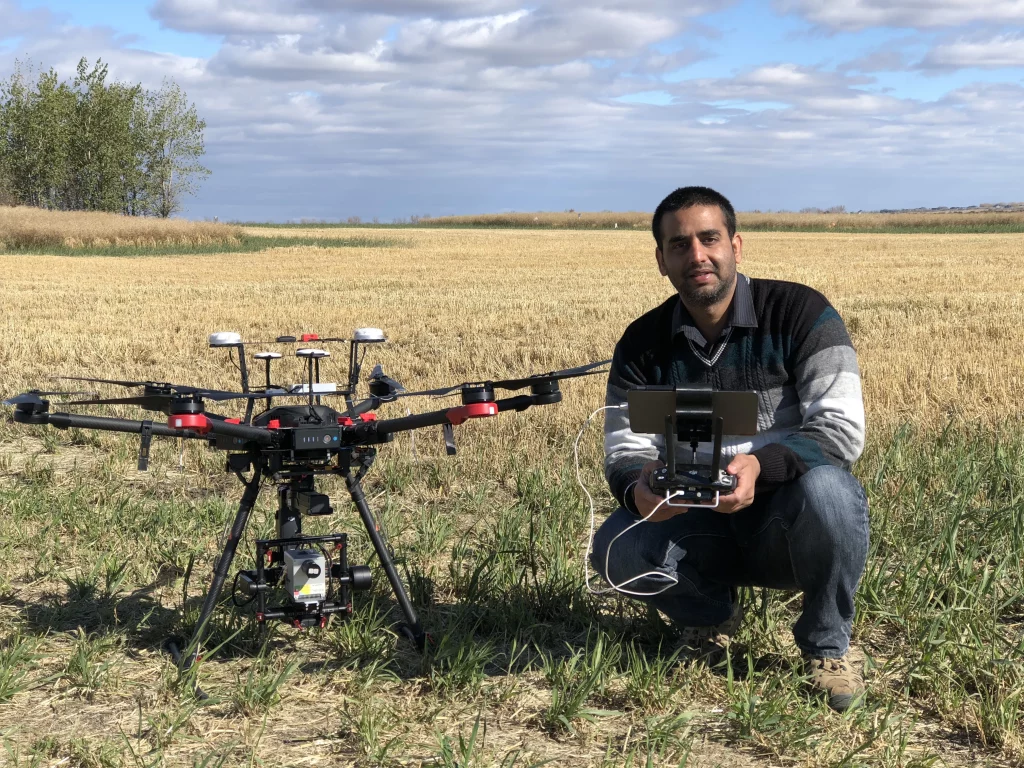
It was during his time in California that he first began working with drones in an agricultural context. Observing how technology was being used to support large-scale farming systems, particularly under challenging environmental conditions, he explored the use of aerial data collection for crop phenomics.
He moved to Canada in 2018 as a research associate at the University of Saskatchewan before joining Agriculture and Agri-Food Canada, where his work would increasingly focus on applying these technologies at the field scale.
“These diverse experiences have taught me adaptability, resilience, and the importance of integrating knowledge across disciplines and cultures,” Prof Keshav says. “Science is a universal language, and impactful research often emerges from collaborative, cross-cultural experiences.”
Using AI to read plants at scale
At the centre of Professor Keshav’s work is phenomics, the large-scale study of observable plant traits such as growth patterns, yield, and stress response.
Traditionally, collecting this data required manual observation in the field, making it time-consuming, subjective and limited in scale. Singh’s work is part of a shift toward faster, more data-driven methods.
His lab uses drones, satellites, and ground-based systems equipped with imaging tools to collect large volumes of crop data. These systems can capture plant structure, detect biotic and abiotic stresses (drought and disease), and even create three-dimensional crop models.
This data is then processed using high-performance computing and machine learning techniques to identify patterns relevant to crop breeding and field agronomy. Over time, his work has evolved from pure research to applications that directly impact how farming decisions are made on the ground.
Advanced technologies like remote sensing and phenomics tools are transforming agriculture by making crop breeding and agronomy more precise, efficient, and resilient.
Professor Keshav Singh
Since 2021, Professor Keshav has led the lab’s digital agriculture research program, contributing to the development of AI-based tools for crop monitoring and high-throughput phenotyping. The ability to analyze plant traits more quickly is increasingly important as agricultural systems adapt to changing climate conditions.
Across multiple research sites like Lethbridge, Saskatoon, Swift Current, Brandon, and Morden in Canada’s Prairies, his team studies key crop parameters such as vegetation cover, grain yield, and flowering timelines to help improve both crop performance and research efficiency.
Why he chose to fly his own missions
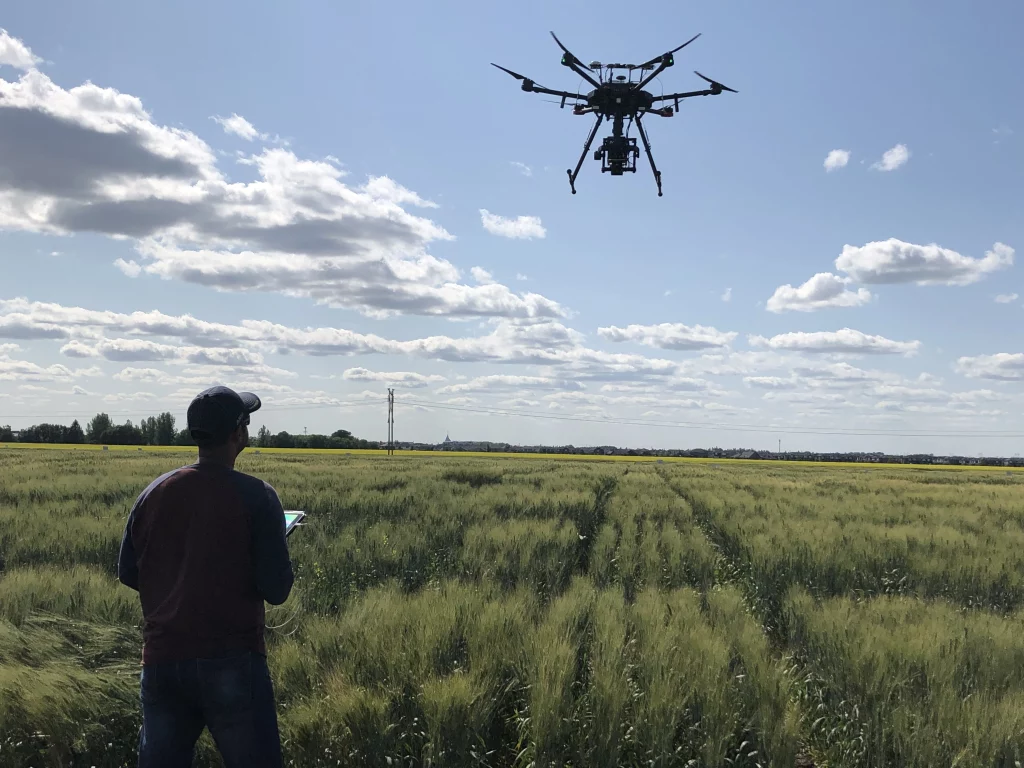
As agricultural research increasingly incorporated aerial data collection, drones became a key tool in field scouting. To support this work, Keshav trained as an advanced certified drone pilot in Canada, combining scientific expertise with operational capability.
This combination of scientific expertise and operational skills of flying a drone allows me to directly design, execute, and interpret aerial imaging experiments. It’s a powerful integration of engineering and applied science.
Professor Keshav Singh
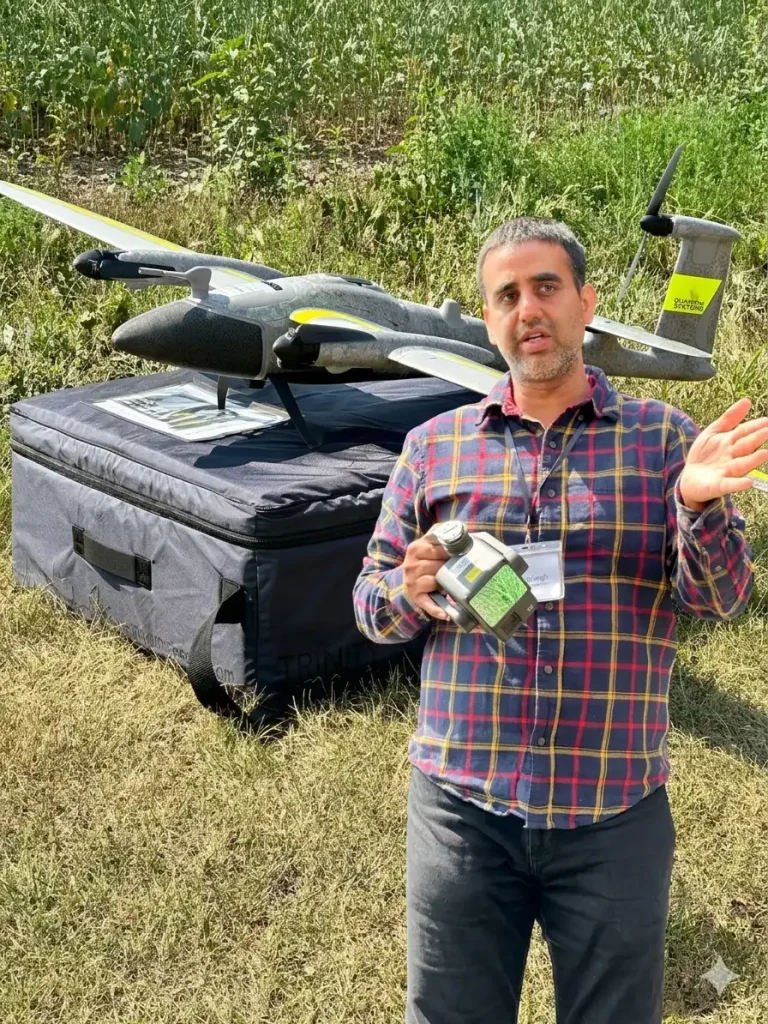
Over the past decade, he has led Unmanned Aerial and Ground Vehicle (UAV & UGV) -based imaging projects, developed workflows for crop monitoring, and contributed to research on crop health, yield prediction, and stress detection. His work has also been demonstrated to farmers, policymakers, and other stakeholders.
His lab collaborates with academic, government and industry partners on applied research, including work on autonomous field data collection systems and precision farming tools. It also supports training and outreach to encourage wider adoption of these technologies.
A key milestone has been integrating UAV and UGV data with machine learning models to develop decision-support tools for precision agriculture and agri-food systems.
Science with global relevance
While Professor Keshav Singh’s work is based in Canada, its applications extend beyond national boundaries. His research aligns with broader efforts to improve agricultural productivity and sustainability through digital technologies.
Drawing from his exposure to technology-driven farming systems in places like California, he sees strong potential for scaling similar approaches across regions. “AI is a tool to address grand challenges humanity is facing right now,” he says.
His work includes developing scalable digital agriculture systems, such as real-time crop monitoring platforms and data-driven tools for farmers, as well as exploring emerging areas like digital twins and edge computing in agriculture.
Life beyond research
Outside of his work, Professor Keshav spends time on photography, often capturing landscapes in the Canadian Rockies. He also enjoys watching science and nature documentaries, staying active through fitness and swimming, and travelling.
He describes life in Canada as rewarding, pointing to its multicultural environment and the opportunities it offers for scientific research, along with a strong sense of work-life balance.
Reflecting on his journey, he points to a belief shaped over time. “I strongly believe that failure is not the end, it’s part of the path to success,” he says.
From early ambitions in aviation to a research career that now spans continents, his journey reflects how paths can evolve while still carrying forward the instincts that first set them in motion. “Above all, I strongly believe in God, the possibility of the multiverse, and the power of technology to improve people’s lives on the planet Earth,” he signs off.
- Follow Dr Keshav Singh on LinkedIn