
May 11 2026
Meet Punjab-born Australian scientist Prof Zora Singh, winner of 2026 ASHS Outstanding International Horticulturist Award

(May 11, 2026) In the village of Aitiana in Ludhiana, Punjab, a young Zora Singh watched his family tend their land with the patience that farming demands, quietly learning lessons about nature, time, and food that would later shape a globally recognised career in horticultural science.

From the fields of Punjab
Agriculture runs deep in my family. I got practical knowledge from our farm and augmented it with my BSc, MSc and PhD in Agriculture. Looking back, that combination made me a better scientist than I could have been any other way.
Professor Zora Singh
He has spent his life pursuing one essential question. How do we keep what the earth gives us from going to waste? Everything that followed, from fellowships and patents to awards and students mentored across three continents, flowed from that original curiosity.
Completing his undergraduate, master’s, and doctoral studies at the Punjab Agricultural University, Professor Singh built a foundation as rigorous as the science he would later practise. His doctoral research earned him the prestigious Jawahar Lal Nehru Award from the Indian Council of Agricultural Research, recognising the promise of a scientist whose work was already beginning to push the boundaries of horticultural science.
A fellowship and the road west
The journey outward began with a leap to the UK. A Commonwealth Postdoctoral Fellowship took Singh to the Institute of Horticultural Research at East Malling in the United Kingdom, which is one of the oldest and most respected horticultural research stations in the world. It was his first encounter with international science at the highest level, and it permanently expanded his sense of what was possible.
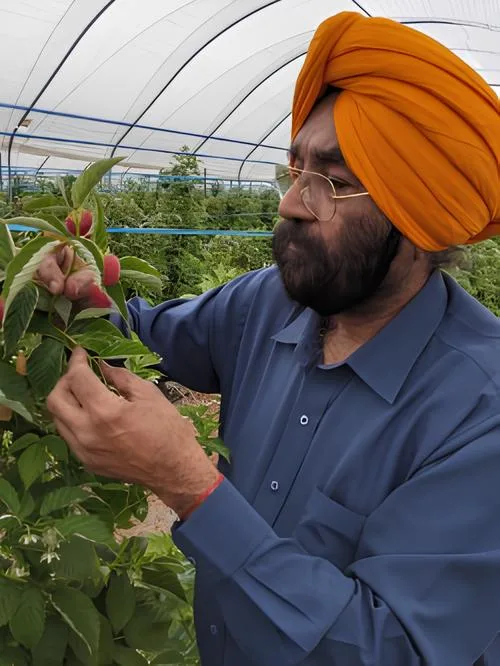
He returned to Punjab Agricultural University as an Assistant Professor, continuing to publish and earn honours. He was recognised with the Indian National Science Academy Young Scientist Medal, the UNESCO/ROSTSCA Young Scientist Award, and the Pran Vohra Award from the Indian Science Congress Association. But the world was pulling him forward. When an opportunity came to join Murdoch University in Western Australia as a Postdoctoral Research Fellow, he took it. He has called Australia home ever since.
Building from scratch
For a young researcher arriving in Perth, the path ahead was uncertain. What Zora Singh did have was the determination to create something that did not yet exist. A stint as Visiting Professor at the University of Bologna, Italy, broadened his European connections before he returned to Western Australia and joined Curtin University, first as an Inaugural ‘Curtin Research Fellow’, then as Foundation Associate Professor, and eventually as Foundation Professor of Postharvest Horticulture. Each new role marked not just professional advancement, but the gradual building of an entirely new research ecosystem. There was no horticulture research program before him. He established it.
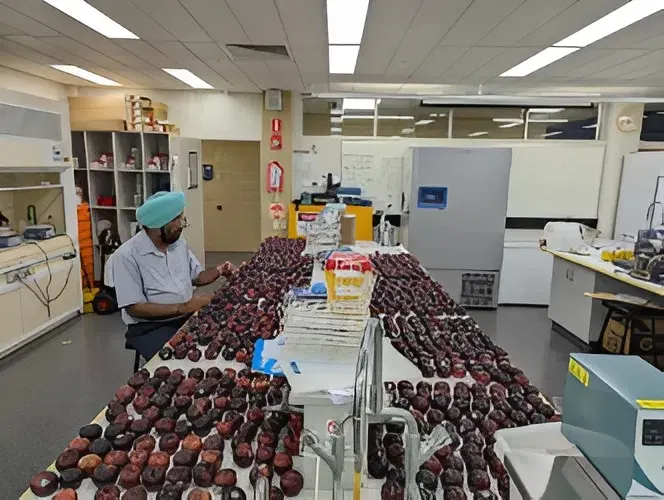
Over the decades that followed, his laboratory became one of Australia’s most productive hubs for postharvest research. The problems he tackled were never abstract. The fruit was rotting. Produce was being lost at staggering rates between the farm gate and the consumer’s table. And he set about fixing it as part of a vast international effort with a network that turned his laboratory in Perth into a hub connected to the world.
I have had global research collaboration with 151 scientists from 69 leading universities and institutions spanning 22 countries.
Professor Zora Singh
The ethylene problem, and a billion-dollar solution
Professor Singh understood the scale of the challenge. Up to 44 per cent of fresh horticultural produce is estimated to be spoiled before it reaches consumers because of naturally occurring ethylene in fruits and vegetables, costing Australia in excess of $2.4 billion a year. Ethylene is the hormone that makes fruit ripen. It’s useful on the tree but ruinous in a shipping container.
Before starting my research on developing ethylene antagonists, I knew that success in this research would actually change things for farmers and growers in a real way.
Professor Zora Singh
That conviction drove everything that followed. Working alongside a colleague in Curtin University’s chemistry department, Professor Zora Singh discovered a new class of ethylene antagonist which delays ripening and reduces flower drop, dramatically reducing postharvest losses. These compounds are used in formulations that extend the storage, transport and shelf life of fruits, vegetables and cut flowers, with Curtin University filing for two patents for their commercial use.
His team also developed controlled atmosphere technology for mango storage, a postharvest disinfestation process for bush tomatoes, and techniques to double the percentage of apple fruit with red blush. It’s the kind of colour that determines whether a grower gets a premium price or a discount at the market. These were not solutions created in isolation. They were built in close partnership with growers, industry bodies, and government agencies, and they were adopted widely because they worked.
The recognition for this body of work arrived in the form of the 2017 Mitsubishi Corporation Western Australian Innovator of the Year Award, the state’s most prestigious innovation prize, and a rare honour for an academic scientist. True to his character, Singh announced that the cash prize that came with it would be invested straight back into further research.
The teacher behind the scientist
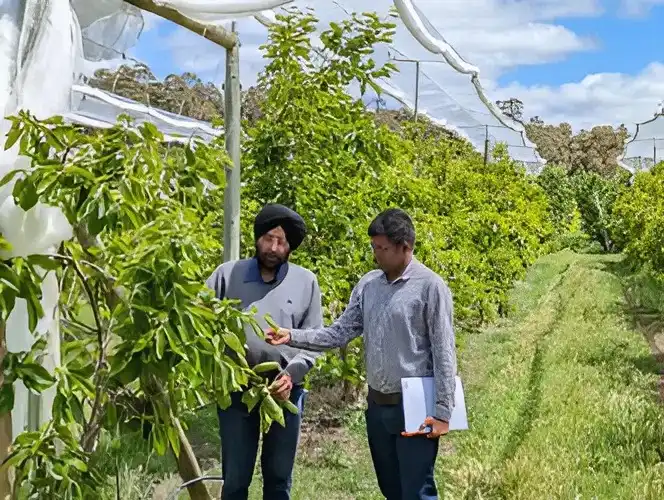
What often gets overlooked in the story of a prolific researcher is the teaching. For Professor Singh, the two were never separate. “I supervised 70 graduate students including 36 PhD, 2 MPhil, 12 MSc, and 19 Honours with a 100 per cent completion rate,” he says.
To that number add 55 visiting scientists, many from developing countries. Each one is a thread in a larger web of horticultural knowledge being woven across the globe. His students now work in universities, government agencies, and industry across Australia, Asia, and beyond.
The research capacity building is an essential part of the research. I feel very blissful that my students are contributing to global horticulture research.
Professor Zora Singh
He played a crucial role in developing the inaugural MSc Horticultural Science and BSc Horticulture programs at Edith Cowan University, and served as a curriculum reviewer for universities as far afield as Malaysia, demonstrating a global impact on horticultural education. The classroom, for him, was an extension of the laboratory — a place where the next generation of problems would be identified and solved.
The latest honour, and what it means
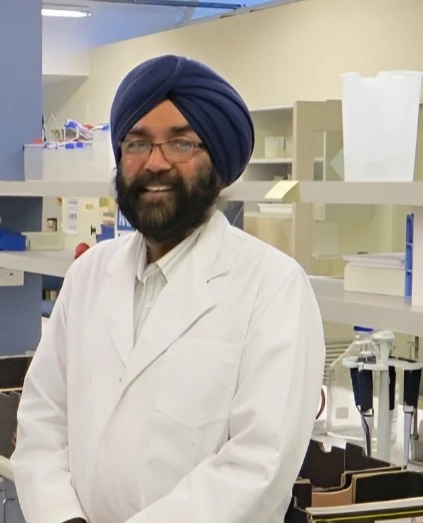
Professor Zora Singh is now Foundation Professor of Horticultural Science at Edith Cowan University in Perth, and the honours have not slowed. He was elected a Fellow of the The World Academy of Sciences (TWAS), joining an elite global network of researchers recognised for advancing scientific excellence. He was also elected a Fellow of the American Society for Horticultural Science and the National Academy of Agricultural Sciences in New Delhi. He became the first Australian academic to receive the ASHS Outstanding Graduate Educator Award.
Then came the honour that perhaps said the most. Professor Singh received the 2026 Outstanding International Horticulturist Award from the American Society for Horticultural Science, recognising a career spanning more than three decades across research, education, and global industry collaboration. It is an award reserved for those whose work has shaped the field not only through scientific research, but also through teaching, mentorship, and real-world impact. “All awards are very important to me,” he says simply, reflecting the temperament of a scientist who has remained focused more on the work than the recognition.
Yet beneath the international honours and scientific acclaim remains the same curiosity shaped in the fields of Punjab decades ago. Much of Professor Singh’s work has centred on a question rooted in farming itself: how to preserve what is grown, reduce post-harvest loss, and ensure food reaches people in the best possible condition. In many ways, that lifelong pursuit has connected the lessons of a village farm to horticultural systems around the world.
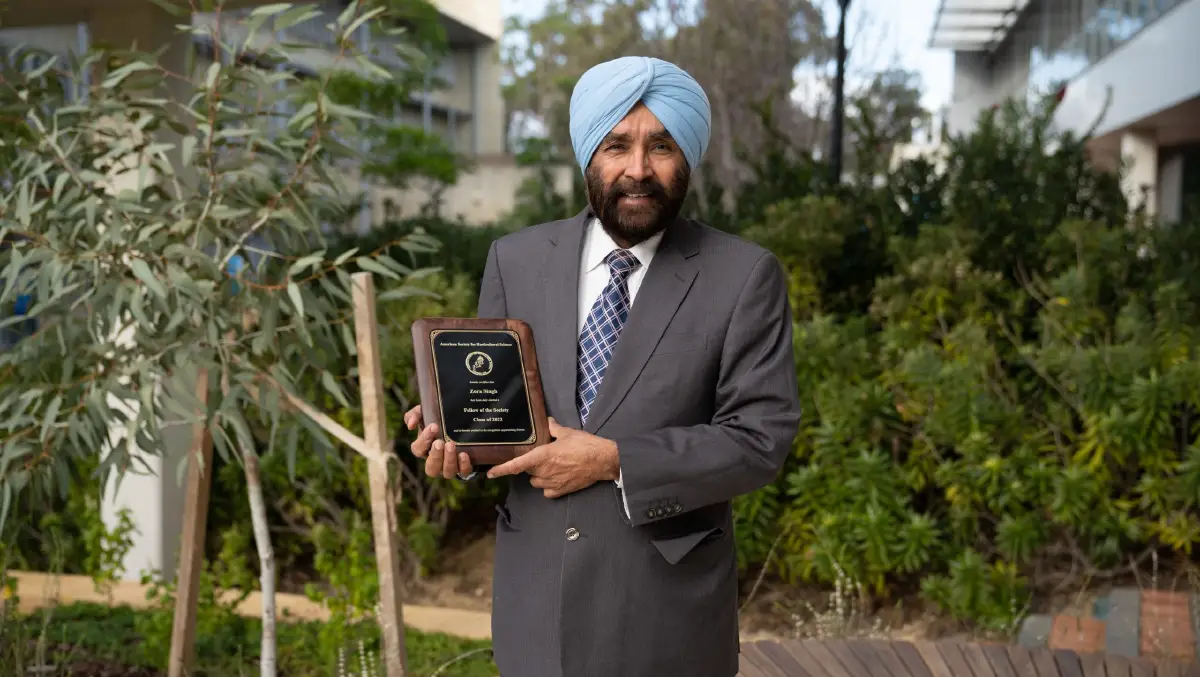
Milestones of a distinguished career
- 2026 ASHS Outstanding International Horticulturist Award
- Inaugural Australian Sikh Award for Excellence in Agriculture (2023)
- Prime Minister’s Prize for Innovation nomination (2018)
- Western Australian Innovator of the Year Award (2017)
- Curtin University Commercial Innovation Award: Climate-KIC Prize (2016)
- ISHS Outstanding Researcher in Postharvest Horticulture citation (2013)
- American Pomological Society U.P. Hedrick Award (2008)
- Indian Science Congress Association Pran Vohra Award (1991)
- UNESCO/ROSTSCA Young Scientist Award (1989)
- INSA Young Scientist Medal (1988)
- INSA Professor LSS Kumar Memorial Award (1988)
- ICAR Jawaharlal Nehru Award for outstanding PhD research (1987)
Follow Professor Zora Singh on LinkedIn
ALSO READ: Rattan Lal: From childhood farmer to godfather of soil science

Share with



Written By: Amrita Priya
How Venkatesan Sundaresan’s 2024 Wolf Prize-winning agricultural discovery will feed billions


Written By: Amrita Priya
Hello Professor Jora Singh Ji
I would like to congratulate you on achieving such high class world recognition in the Scientific Community.
The high academic achievements coupled with a genuine passion for teaching undergraduate students as well as MPhil and Post Doctoral research student is a powerful indicator of your academic prowess in the field of biological science. It has been a privilege and a pleasure to see you at work in Curtin and Edith Cowan Universities in Perth WA.
I wish you even more accolades in your research and life. May god wish you with good life and longevity professor sahib.
Thanks and please keep your splendid work.
Kind Regards.
Master GURDEEP Singh Perth. WA.