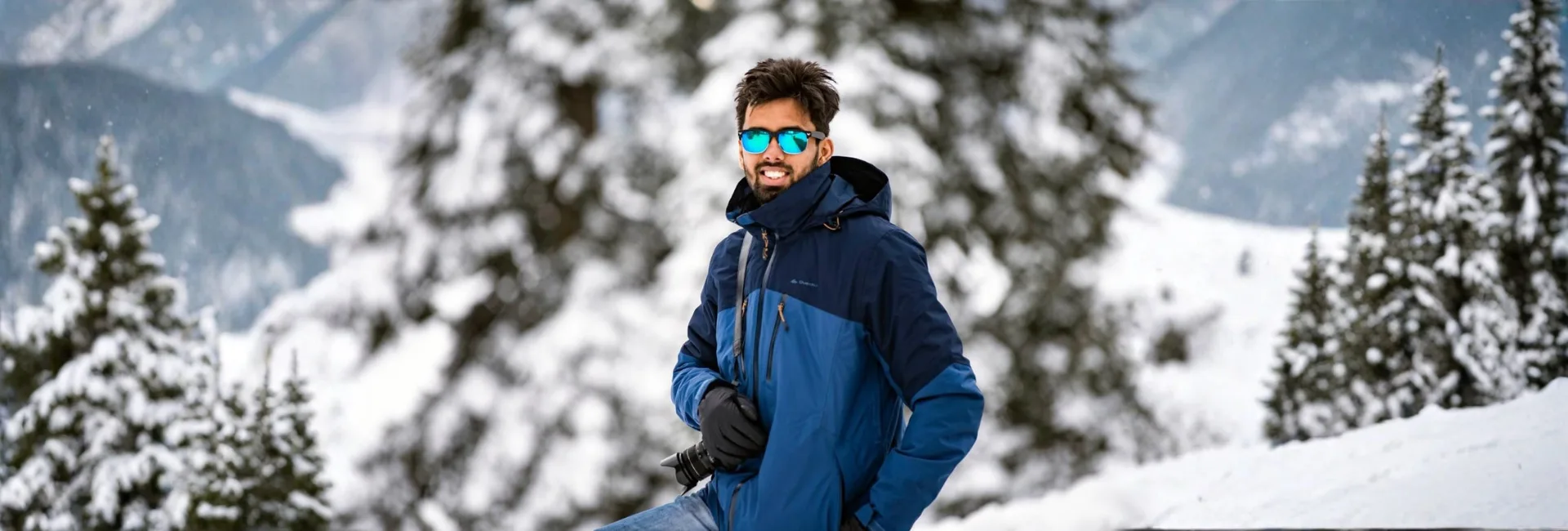
(May 24, 2026) From documenting honey collectors in the Sundarbans and widows in Vrindavan to seeing his photographs exhibited in Mexico, Russia, and Istanbul, documentary and travel photographer Rana Pandey has built a career around capturing lesser-explored human stories with honesty, intimacy, and striking visual depth.
His work has earned recognition at major international platforms including Pictures of the Year Asia, Istanbul Photo Awards, and Russian Press Photo Award at the Andrei Stenin International Press Photo Contest. Through contributions to leading global platforms such as the National Geographic Traveller India, The Guardian, Vice India, FujiLove Magazine and Lonely Planet, Pandey has taken overlooked stories from India to audiences around the world turning deeply local narratives into globally resonant visual storytelling.
With only a camera for company
Years ago, while working on a project in the Sundarbans — the world’s largest mangrove forest, Rana ventured deep into the forest to document honey collectors, who constantly risk attacks from Bengal tigers. The big cats in the Sundarbans are known to stalk collectors on foot or leap from bushes and low-hanging branches — attacks that have claimed dozens of lives over the years.
Standing ankle-deep in mud, surrounded by dense mangroves with nothing but his camera and no protection, Rana overcame his fears and completed the assignment. Experiences like these remind him how demanding and unpredictable documentary photography can be. “Every project comes with its own challenges, but this one stayed with me deeply. It was both terrifying and humbling,” smiles Rana, in conversation with The Global Indian.
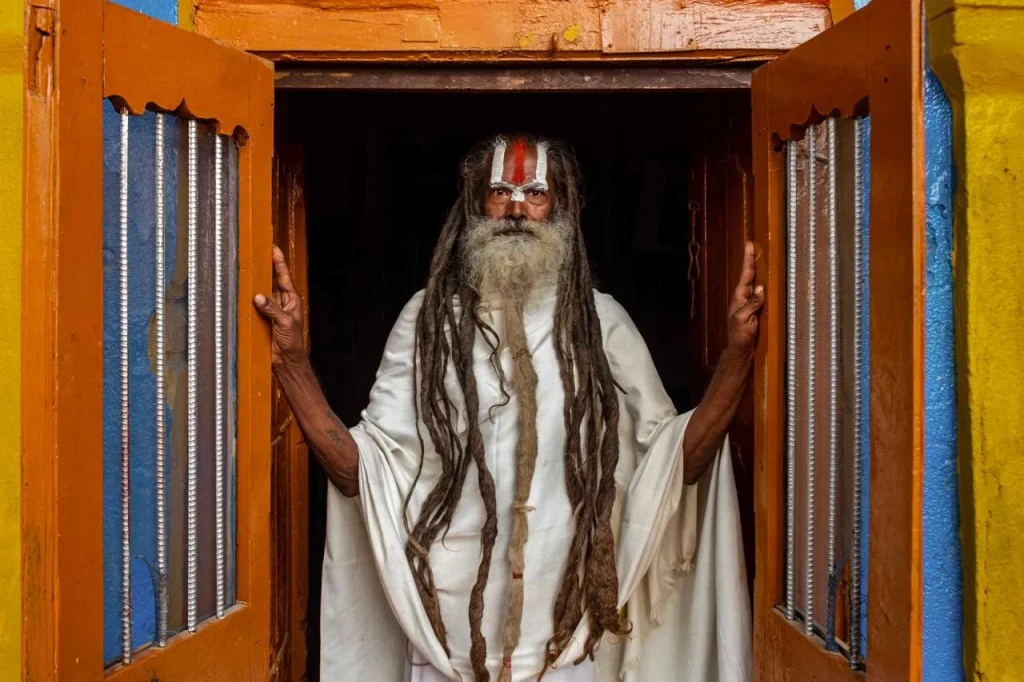
That instinct to step into unfamiliar worlds and quietly observe people’s lives has shaped much of his work over the years. His portfolio reflects an attempt to reveal the many layers of socio-economic realities and lesser-explored aspects of human life through an intimate lens.
Book release by Cherie Blair
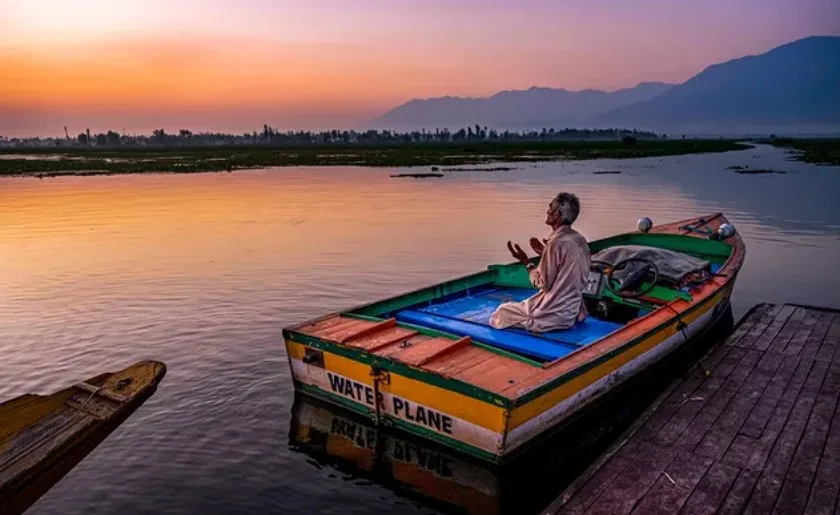
One such project was Altars of Yearning: How India Prays, a photo book to which he contributed in 2018. The book was released at the House of Lords by Cherie Blair. “The photo book explored prayer and faith as a binding force that connects people across the country despite social and cultural differences,” he says.

The book featured photographs of intimate everyday moments — from a woman praying amid the chaos of a busy street to a Christian family remembering a lost loved one on All Souls’ Day, and many other such moments of reverence.
For the photographer, the project stood out for the way it captured spirituality in ordinary life rather than through grand religious symbolism.
PhotoFest, Mexico
His work soon began finding space on global platforms. In 2019, one of his photographs was selected for National Geographic-curated PhotoFest held in San Miguel de Allende, Mexico.
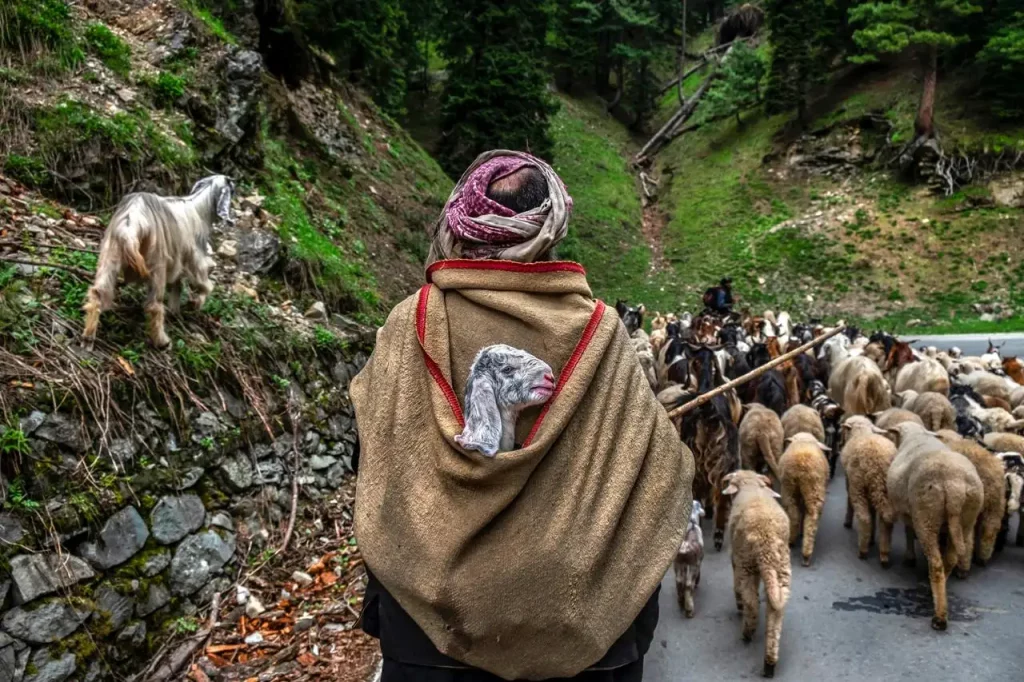
Out of 13,000 entries from over 195 countries, only 25 photographs were selected. The chosen image, taken during his first trip to Kashmir, showed a shepherd carrying a newborn goat on his back through the mountains. “Having my work exhibited on such an international platform was a deeply meaningful experience and an important milestone in my journey as a photographer,” says the Kolkata-based photographer.

Istanbul and Russia photo awards
Over time, several of his long-form documentary projects began receiving international recognition. He is a recipient of the Istanbul Photo Awards (2024), the The Andrei Stenin International Press Photo Contest (2017, 2022, 2024), and Pictures of the Year Asia (2024), among others.
One of the most recognised among them was The Outcast Widows, a series exploring the hidden lives of widows in Vrindavan. The project focused not only on exile, displacement, and grief, but also on resilience and the ways in which these women rebuild identity and dignity within difficult circumstances. “The Istanbul Photo Awards is regarded as one of the leading global platforms for photojournalism and honours courageous and impactful work by professional photographers from around the world,” he says.
Works displayed in Russian museum
His photographs have also travelled beyond award circuits. Some of his works were exhibited at the Chelyabinsk State Museum of Local History as part of the Around the World in 80 Days exhibition.
Inspired by Jules Verne’s famous novel Around the World in Eighty Days, the exhibition featured Rana’s interpretation of Kolkata through photographs documenting the city’s spirit and visual character. “It was a unique experience to see my interpretation of Kolkata become part of an international exhibition inspired by such a timeless literary work,” he says.

The Mirzapur project
Closer home, another project took him to Mirzapur, where he documented the lives of female carpet weavers.
These women had intricately hand-knotted over 600 million knots for the carpets adorning India’s New Parliament Building. “This remarkable feat was achieved in collaboration with one of the country’s largest carpet manufacturers, Obeetee,” he says.
Varied experiences
Born in Lucknow, Rana spent most of his school years in Kolkata because of his father’s transferable job. Frequent relocations exposed him to different environments early in life — something he believes later shaped the way he observes people and places.
“Growing up in different environments due to my father’s postings gave me varied experiences from an early age,” he recalls. Though he was academically inclined and enjoyed Physics, football remained an equally important part of his growing-up years.

First brush with photography
Photography, however, entered his life unexpectedly. One day, his father brought home a camera from work, and curiosity pushed the young Rana to experiment with it.
“I walked into our backyard and photographed flowers and anything else I could find. I was fascinated by the experience of seeing the world through a viewfinder,” he says. At the time, he had little idea that photography would eventually become both his passion and profession.
Today, he primarily works with a Fujifilm X-T10, favouring it for its compact size and unobtrusive nature. As someone who often photographs sensitive environments and intimate moments, he believes smaller equipment helps people feel less intimidated. “A smaller camera allows subjects to feel more comfortable and natural,” he explains.
‘Project Tiger’
That sensitivity towards people and place continues to inform his current work as well. He is presently working on Torn between the Tiger and the Tide, a project documenting human-wildlife conflict and climate-induced displacement in the Indian part of the Sundarbans in West Bengal.
According to him, rising sea levels and shrinking habitats have intensified encounters between villagers and tigers. “Villagers venture deeper into tiger territory for resources, increasing deadly encounters,” he says, adding that climate change has also rendered homes uninhabitable, farmland infertile, and worsened drinking water shortages.
Widows from Vrindavan
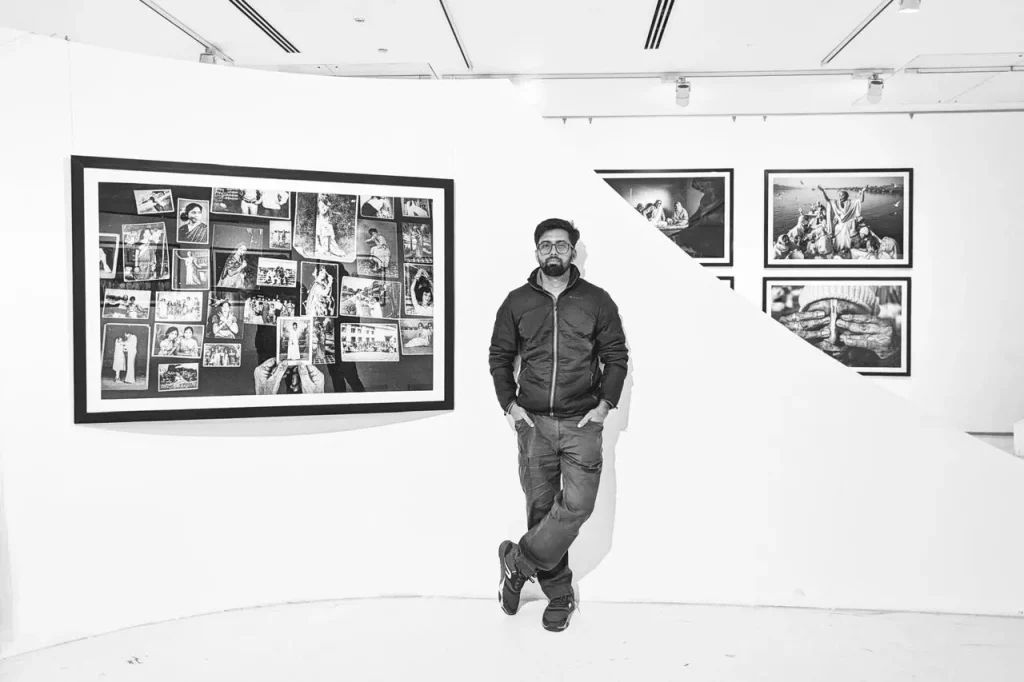
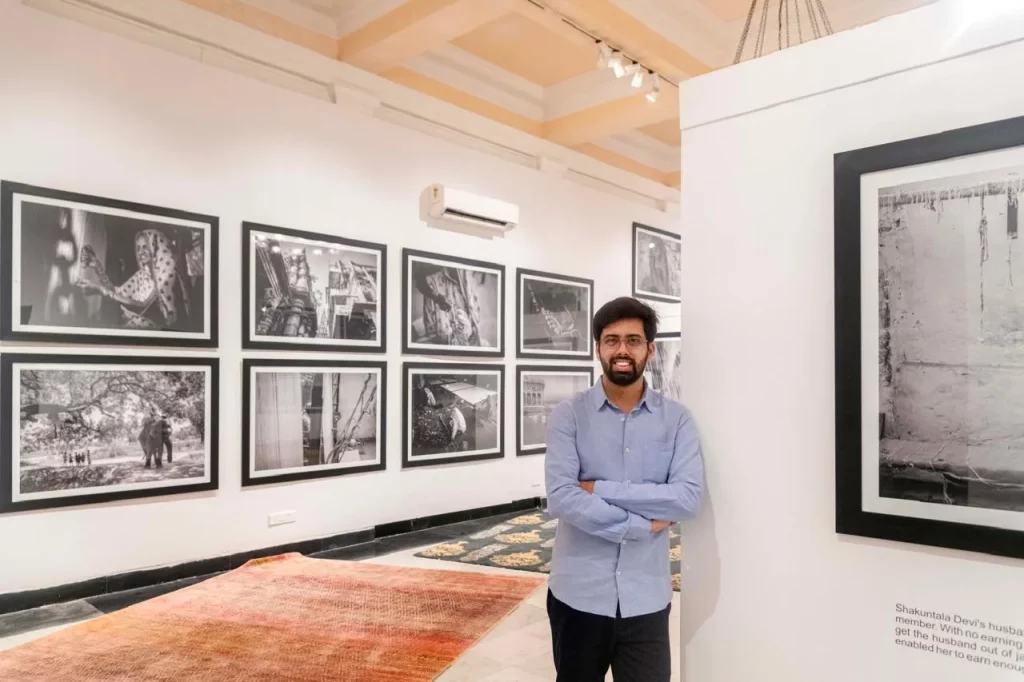
Earlier this year, he and his mentor Kounteya Sinha hosted a photo exhibition in Kolkata attended by C. V. Ananda Bose, the then Governor of West Bengal. Titled Lest We Forget — A Sisterhood Called White, the exhibition once again focused on the lives of widows in Vrindavan. “Almost 90 percent of these widows are from Bengal. The event was also attended by several widows from Vrindavan, including a remarkable 106-year-old woman,” he says.

Stillness and observation
For Rana, documentary photography is as much about patience as it is about visual storytelling. “Barging into a scene with a camera has never been my style. I prefer taking things slowly, absorbing the atmosphere, understanding the situation, and connecting with the environment before taking out the camera,” he says.
He believes preconceived notions can distort reality, which is why observation and stillness remain central to his process — even if that occasionally means missing decisive moments. “Simply entering a space and taking random photographs not only undermines the craft, but can also be disrespectful to the subject itself.”
Road ahead
Going forward, he remains committed to documenting unheard and underrepresented stories, particularly around themes of identity, faith, and resilience across India. “My aim is to continue using photography as a medium to preserve human stories that are often overlooked and to create work that is socially meaningful and visually honest.”
Outside photography, football continues to be his favourite way to unwind. “It has been a passion since childhood and continues to help me stay connected to the sport I’ve always loved,” he signs off.
ALSO READ: Shweta Gulati: The photographer capturing the world on her lens