
May 20 2021
R Gopalakrishnan: ‘Made-in-India Manager’ who shaped HUL and Tata Sons
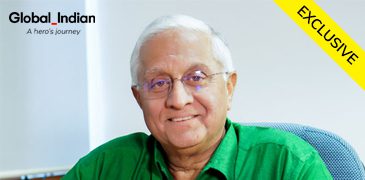
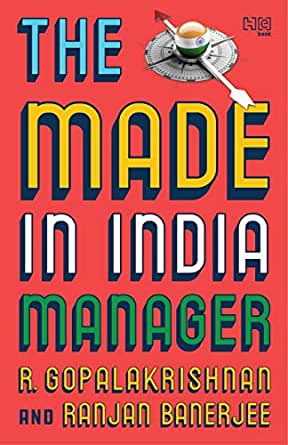
A series of unplanned coincidences: that’s how R Gopalakrishnan, management veteran and former honcho at Tata Sons, Hindustan Lever (now Hindustan Unilever) and Unilever Arabia, describes his career that spans over five decades. Widely regarded as one of India’s leading management thinkers and authors, Gopalakrishnan went on to become Vice Chairman of Hindustan Lever, Chairman of Unilever Arabia and Executive Director of Tata Sons, where he worked closely with the late Ratan Tata. Over the years, he has authored 16 books, including The Made-In India Manager, which examines the distinctive characteristics of Indian management practices.
“My career happened to be the line joining the dots; and to think I had initially turned down a marketing traineeship in Hindustan Lever to work as an engineer,” he says. He wanted to stay in the individual contributor track as he thought “management was flaky,” says the trusted colleague of Tata chairman emeritus Ratan Tata. That’s why he chose IIT over IIM after completing his graduation.
Managing the Indian way
But today Gopalakrishnan is seen as a management guru who brings his life lessons from leading corporate teams across countries in the 16 books he’s authored over the years. His 2018 book The Made-In India Manager examines how a unique combination of factors led Indian management thought and practices to evolve differently from Western discourse.
“As Indians, we learn many managerial qualities without even realizing it. A lot of them dissipate in following protocols: Government and social.” Indians grow up in a highly competitive environment and that compels them to pursue goals with a single-minded focus.
“Which is why when Indians go abroad and work with better infrastructure, they are able to put their surplus energy to better use. They have a unique way of dealing with issues,” he says. These ideas would later find expression in The Made-In India Manager, which argues that India’s social and economic realities have shaped a management philosophy distinct from Western frameworks.
But there are also downsides to the Indian way of managing. The lack of innovation from India, for instance, is largely because we cry victory too soon and don’t see the idea through to customer use and satisfaction. “We don’t plan long term; it’s more about quick fixes or jugaad engineering.”
At the same time, he believes India’s strengths lie in adaptability and resilience, qualities that have enabled Indian professionals and executives to excel globally.
A measured view of India’s startup ecosystem
Gopalakrishnan also mentors a few startups. While there is more respectability surrounding the startup ecosystem today, there is also a lot of hype around it, he feels.
“How many of our startups are actually profitable or IPO-worthy?” he asks, stressing that sustainable businesses matter more than headline valuations. “I believe a startup’s measure of respectability lies in the period of time it takes to make profit. We should encourage startups by applauding the effort behind them and not the inherent talent.”
From Hindustan Lever to Tata Sons
Gopalakrishnan is uniquely qualified to talk about the divergence in Indian and multinational corporate cultures. He is someone who began his career as a computer analyst at Hindustan Lever, moved to a marketing role and eventually settled into the management track.
He went on to serve as the Chairman of Unilever Arabia, Managing Director of Brooke Bond Lipton and Vice Chairman of Hindustan Lever, before being handpicked by Ratan Tata to help drive change at Tata Sons as Executive Director.
He served at Tata Sons for nearly two decades and became one of Ratan Tata’s closest and most trusted colleagues during a period marked by the Tata Group’s growing global presence.
Tata Sons and Ratan Tata
The transition to Tata Sons wasn’t easy at first. One adjustment involved adopting a more indirect and diplomatic style, different from what he would have done as the chief executive of various businesses in previous roles.
About Ratan Tata, his boss for many years, Gopalakrishnan says, “He was a good boss; not perfect, but good. No boss is perfect; I never was either.”
“But Ratan Tata has a large heart, he can think long term and is a critical thinker; not qualities easy to come by.”
Continuing to serve corporate India
Presently, Gopalakrishnan serves as Chairman of Castrol India and as an Independent Director of Press Trust of India (PTI). He is also a sought-after speaker, mentor and author whose writings on leadership, management and business continue to influence executives and entrepreneurs.
He also makes it a point to financially support charities. “I’m not actively involved in philanthropies, but I do support those who run them, for example my wife Geeta, who works extensively with children (Ma Foundation) and cancer patients (Tata Medical Centre).”
Leadership lessons from five decades
Gopalakrishnan says that some of the greatest lessons he learned over the years are the importance of adaptability and the fact that human relations capability often trumps technical capability.
“You may be technically sound, but if you aren’t able to connect with the people around you there’s only so far that you can go.” “Some of the best leaders are people who have the ability to connect with people. It’s what drives the world.”
For someone who once preferred engineering over management, R Gopalakrishnan’s journey—from computer analyst and marketer to one of India’s most respected corporate leaders, authors and management thinkers—illustrates the power of adaptability, human relationships and lifelong learning. His story is also a reminder that careers are often shaped not by rigid plans, but by the ability to embrace unexpected opportunities.
The academic foundation of R Gopalakrishnan’s leadership
An engineer by training and a lifelong student of business, Gopalakrishnan’s academic journey reflects the interdisciplinary approach that would later define his career. He earned a degree in Physics from St. Xavier’s College, Calcutta University, followed by an Electronics engineering degree from IIT Kharagpur in 1967, and later attended the prestigious Advanced Management Programme at Harvard Business School. Over the years, he has remained closely associated with academia and thought leadership through his books, lectures and writings, bringing together insights from science, engineering and management to shape generations of business leaders.
ALSO READ: Designed to Win: How S. Devarajan transformed Tata Elxsi under Ratan Tata’s watch

-
Who is R Gopalakrishnan?
-
What positions did R Gopalakrishnan hold at HUL and Tata Sons?
-
What is R Gopalakrishnan's book The Made-In India Manager about?
-
What are R Gopalakrishnan's views on India's startup ecosystem?
-
What leadership lessons does R Gopalakrishnan emphasize?


