



(January 21, 2026) As artificial intelligence (AI) rapidly weaves itself into everyday life, the focus is shifting from what AI can do to how efficiently it can be deployed. Ziroh Labs, a global startup with teams in Palo Alto and Bengaluru, is addressing this critical challenge.
Its breakthrough platform, Kompact AI, allows advanced AI models to run efficiently on standard CPUs (central processing units)—commonly used in laptops, servers, and everyday computers—rather than GPUs (graphics processing units), which are powerful but costly, energy-intensive, and controlled by a small number of players.
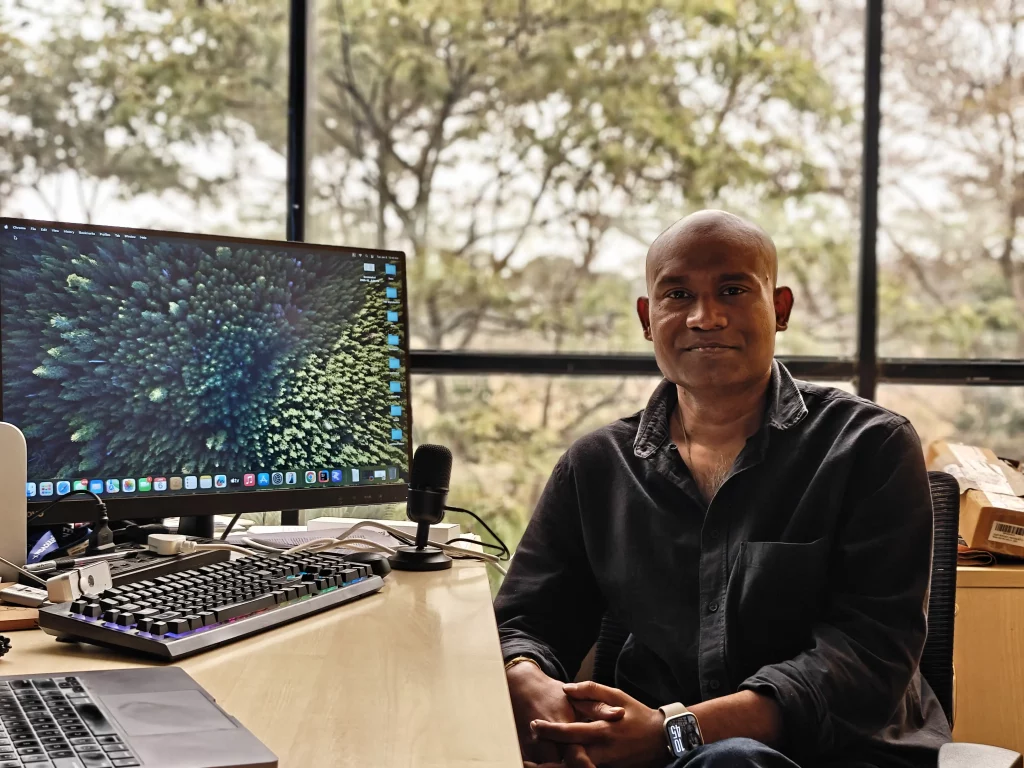
At the helm of this shift is Hrishikesh Dewan, co-founder and CEO of Ziroh Labs. His journey from Guwahati, Assam, to Silicon Valley mirrors the philosophy behind his work: making powerful technology more accessible. Hrishikesh points to Kompact AI’s ability to deliver nearly three times the performance of existing CPU-based solutions without compromising on quality. It is an advancement that could help democratise AI globally. Last year Ziroh Labs unveiled a partnership with IIT Madras and IITM Pravartak Technologies Foundation to set up the Centre of AI Research (COAIR) aligning with India’s “AI for All” mission.
Ideas before ambition
Hrishikesh feels incredibly fortunate about the way he grew up. This is because, at his home in Guwahati, Assam, they never discussed people; they discussed ideas. “We spoke about possibilities—about how one could help others grow. That way of thinking shaped me early,” he recollects in a chat with Global Indian.
His family has long been associated with Assamese art and culture, and as a child, it felt natural to meet thinkers, artists, and creators while growing up. “I heard new ideas and new stories and witnessed creativity unfold almost every day. I studied at South Point School, an English-medium school in Guwahati, and was lucky to form friendships that have endured to this day,” he adds.
Later, he joined the prestigious Cotton College in Guwahati for his higher secondary education. Cotton College was enlightening—not merely as an institution, but as a living space of ideas. Walking its corridors, once walked by great academicians and writers, instilled a quiet sense of responsibility in him. “One of my fondest memories from that time is my interaction with Navakanta Barua, the celebrated poet of Assam and then principal of Cotton College. Though we were separated by nearly fifty years in age, he always called me his friend. From there, I went on to pursue computer science engineering at NIT Bhopal,” he shares.
Returning home: Entrepreneurship rooted in purpose
After completing his engineering, he returned to Guwahati to begin his first entrepreneurial journey. “We wanted to make Assamese, my mother tongue, a first-class language in computing. Our goal was to build an operating system on Linux that was Assamese from start to finish. It was a deeply challenging pursuit, demanding hardcore engineering. The Assamese-language operating system, however, failed miserably, not because it was technically impossible, but because there was no sustainable business case beyond philanthropy,” he admits.
In that journey, however, he was fortunate to meet two individuals who made an immeasurable difference. Professor Anup Gogoi, then Dean at IIT Guwahati, supported the idea wholeheartedly. Professor Alok Kumar Borgohain, former Vice Chancellor of Dibrugarh University, took upon himself the painstaking responsibility of translating computing terminology in English into precise and meaningful Assamese.
“Those evenings were demanding, but with their guidance, I sailed through. What began as an entrepreneurial collaboration soon evolved into deeply personal relationships. Through many highs and lows in my life, both stood beside me, advising and encouraging me with unwavering generosity,” mentions Hrishikesh.
Industry, authorship, and the pull of deeper science
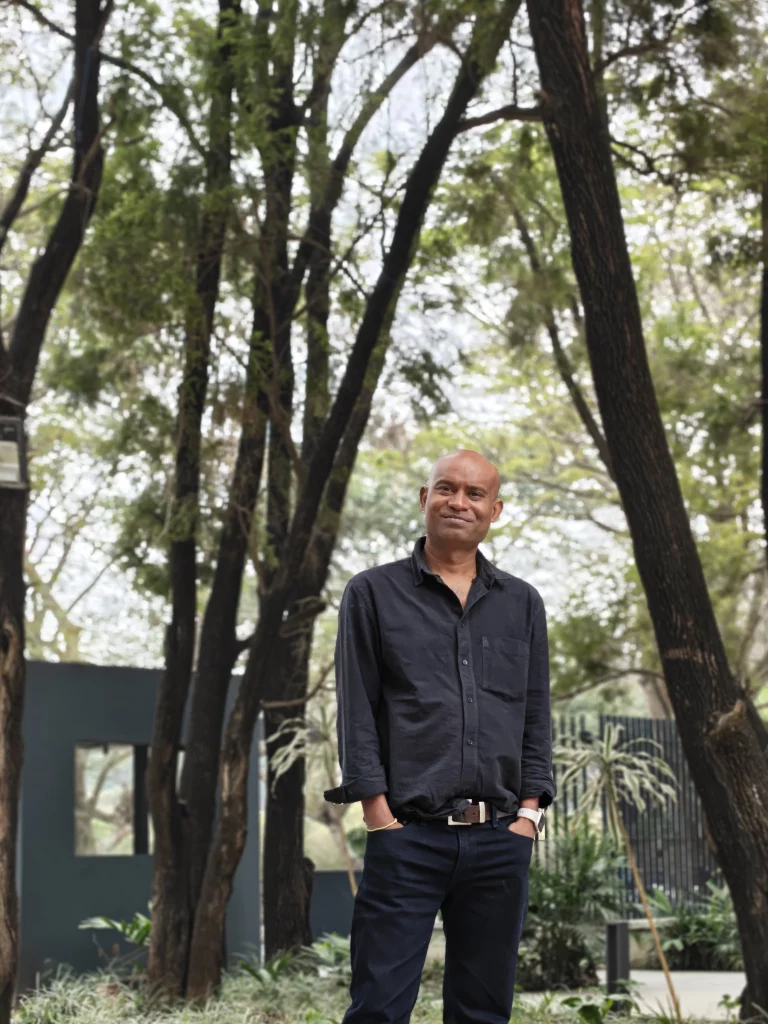
The next phase of his journey took him to Bengaluru, where he joined Siemens. His manager, Dr Raghu Nambiar, an IISc alumnus, encouraged him to go beyond the boundaries of official responsibilities.
“During my time there, I authored four books on computing, published by McGraw-Hill and Apress, one of which was translated into Mandarin. It was also at Siemens that I travelled outside India for the first time, to Munich. Visiting Siemens’ R&D headquarters in Neuperlach and engaging with some of the finest technical minds there reinforced yet another belief: that technology, at its best, is a form of art,” he says.
Encouraged to go deeper by Dr Nambiar, Hrishikesh cleared the entrance examination for a PhD at Indian Institute of Science (IISc). He was supported in this decision by senior leaders at Siemens, including CEO Gerd Hefner and manager Stephen Mayer. At IISc, he says, “I learnt computer science anew.”
Guided by mentorship: The birth of Ziroh Labs
From IISc, Hrishikesh Dewan went on to start Ziroh Labs, this time guided by the wisdom of Professor Swami Manohar, a distinguished computer scientist known for his work at IISc. Professor Swami Manohar encouraged him to explore, build, and take the leap into entrepreneurship.
“When we started Ziroh Labs in 2016, we chose to work on one of the most complex problems of that time—computing directly on encrypted data, without ever requiring decryption. At its core, it was an attempt to solve privacy as a mathematical problem,” he explains.
Naturally, tackling a challenge of this nature demanded deep scientific inquiry. And like any rigorous scientific pursuit, it came with its share of setbacks—many of them—alongside a few hard-earned wins. We began in Bengaluru, and as time passed, raising capital and sustaining the company became increasingly difficult. At times, survival itself felt uncertain. I am thankful to my co-founder Igneta who hails from Mangalore. She has stood firm and managed the team, developed tough products, and has always delivered.
Many people joined him in this endeavour, but among them, Ajay Goel stood steadfast from the very beginning—and continues to do so even today. In 2019, when they were struggling intensely to raise investments, Ajay introduced him to Professor Thomas Binford and his wife, Ione Binford.

Crossing continents, finding collaborators
“Professor Binford, former dean at Stanford and widely regarded as the father of computer vision, was the first person from Stanford I had ever met. What struck me most was not his stature but his simplicity, humility, and openness. After our very first meeting, Ione Binford offered her home in Cupertino as a workspace for me. She also asked me to share five names from across the United States—people I would like to meet to explore potential collaborations and business pursuits,” Hrishikesh shares.
A student of cryptography and distributed systems—and guided perhaps by his natural inclination toward creators—he returned with a list of five of the world’s leading cryptographers. Among them was Dr Whitfield Diffie. Ione suggested that, of all the names, Dr Diffie was the right person to meet, not only because of his stature but also because of his deep industry connections.
“She assured me that Professor Binford would personally speak with Dr Diffie and that within 24 hours, I would have an email and an appointment. It was a promise she kept. The very next day, I received an email from Dr Diffie inviting me to meet him for breakfast at the iconic Café Ramona in Palo Alto. I travelled to Palo Alto, and what began as a breakfast meeting extended well into the afternoon. I was mesmerised by the depth of his intellect and equally by his humility and simplicity. That meeting marked the beginning of my journey with Dr Diffie. Today, he is the Chief Technologist of Ziroh Labs,” he says.
Kompact AI and the future of democratised intelligence
Through his association with Dr Diffie, Hrishikesh Dewan met several of the finest technologists, visionaries, thinkers, and some of the most influential figures in Silicon Valley who have shaped the technology industry as we know it. Among them were Scott McNealy, co-founder of Sun Microsystems, and Marwan Fawaz, former CEO of Google Nest.
“A special mention must be made of Dr William Raduchel, former Chairman of Opera Software and Ruckus Networks, and former Chief Strategic Officer at Sun Microsystems. Bill possesses a rare combination of deep technical insight and nearly four decades of experience across the technology ecosystem. When I first arrived in Palo Alto, it was Bill who walked me through its streets, narrating how technology and the Valley itself had evolved over the years,” he says.
Kompact AI, in many ways, was born out of these discussions. There was a shared and deeply held belief among all these individuals that if artificial intelligence is to be truly democratised and made accessible to people across the globe, it must run on CPUs. There is no other sustainable alternative.

Hrishikesh Dewan during a visit to the IITM Pravartak Technologies Foundation, last year
Ziroh Labs’ Kompact AI is a runtime using which enterprises, academia, AI enthusiasts, and startups can perform AI inference on CPUs rather than GPUs, bringing GPU-class AI performance to CPUs.
“While we began as a cryptography company to solve privacy through mathematics, we eventually came to a difficult realization that privacy is a paradox. People want it, but they are often unwilling to pay for it. That insight did not diminish our commitment to privacy; it refined it. We continue to believe in a future where model building and inference can be performed on fully encrypted datasets. Kompact AI will introduce privacy when the ecosystem is ready to embrace it,” concludes Hrishikesh Dewan.
- Follow Hrishikesh Dewan on LinkedIn
ALSO READ: Shyam Sankar: The Mumbai-born CTO steering Palantir’s AI revolution in the US

I wish more and success in Hrishikesh life. I am proud of him.
Congratulations Hrishikesh. I ( Ismail Baig ) am so feeling proud to have worked with him as my lead in SIEMENS.