


(March 19, 2026) When Shikha Mittal founded Be.artsy, she brought with her not just a vision, but lived experience of workplace harassment, systemic silence, and the transformative power of art. Today, her work spans continents, with clients headquartered across the USA, Singapore, the EU, and Africa. Her methodology has earned recognition at the highest levels: a partnership with the National Stock Exchange of India that scaled to over 1,200 training sessions, and a case study developed at Harvard Business School.
By designing and implementing awareness campaigns and training programmes addressing workplace sexual harassment prevention, inclusivity in diverse workplaces, and violence prevention in work settings, Shikha is steadily making corporate life more humane.
The early years
Shikha grew up in India at a time when conversations around gender, workplace dignity, and emotional well-being were almost absent from public discourse. Like many young people, she began her professional journey by doing the best she could with the opportunities available to her.
“I did not come from a financially privileged background, so I had to find my own path. In hindsight, I consider that my biggest asset. It gave me hunger, resilience, and a deep curiosity about how people think, behave, and interact within systems,” she tells Global Indian. Early in my career, I had the opportunity to step into the corporate world, working with large brands such as Gillette, Vadilal, Kwality, and AT&T. However, during my late teens I was deeply passionate about dance and had hoped to pursue it as a career. Life, of course, had other plans. I entered the corporate world quite early, soon after my graduation.”

A defining wound: Confronting workplace harassment
Spending six to seven years in corporate environments was an intense learning experience. Shikha observed how competitive workplaces can become — spaces where people are constantly trying to secure their position, sometimes at the cost of others.
“During those years, I also faced workplace harassment — more disturbingly, sexual harassment in multiple organisations. It was a deeply shocking experience. However, somewhere within me, I knew that I did not want to see myself as a victim. Instead, I began to understand that the real problem was a systemic lack of awareness and accountability. I realised that confronting such behaviour was necessary, but I wanted to do it in a way that created change rather than only conflict. That realisation eventually pushed me toward entrepreneurship,” she recollects.
Where art meets organisational change: The birth of Be.artsy
Over time, Shikha became increasingly drawn to the intersection of art, psychology, and organisational behaviour. She began experimenting with how creative mediums such as storytelling, theatre, and visual expression could open conversations that traditional training formats often fail to initiate. “This exploration eventually led me to start Be.artsy, a learning and development enterprise focused on behavioural transformation within organisations. Today, Be.artsy is recognised for its work in areas such as POSH (Prevention of Sexual Harassment), unconscious bias, leadership behaviour, women’s leadership, and critical workplace conversations,” she says.
What began as curiosity gradually evolved into a structured methodology that combines art, psychology, and experiential learning creating a very distinct space in the learning and development industry.
Why art-based learning works
Art-based methodologies work because they engage both cognitive and emotional processing. When people watch a theatre performance depicting a workplace scenario, they often see reflections of their own experiences. This recognition creates empathy and opens space for honest conversations.
View this post on Instagram
“In our sessions we combine multiple artistic formats such as street theatre and live performance, storytelling and narrative exercises, visual art and comics / illustrated videos, and interactive role-play scenarios. These formats help participants move from passive listening to active reflection and even participating. Instead of telling someone what the correct behaviour is, we allow them to experience situations, question assumptions, and discuss possible responses. This makes the learning deeper and more personal,” Shikha explains.
Taking awareness to the streets
Between 2010 and 2013, Shikha began working closely with organisations on large awareness initiatives around social issues such as female foeticide, AIDS awareness, power conservation, electricity theft, and financial inclusion. These programmes were often supported by government bodies, corporates, or international institutions.
“This phase helped me understand not just social awareness campaigns but also the internal dynamics of organisations — hierarchies, silences, and behavioural patterns that influence how people engage with important issues,” she says. Around the same time, she launched a proprietary street theatre awareness initiative called “Be on the Street” — an ambitious effort to take awareness conversations out of conference rooms and into public spaces. The festival grew rapidly and became one of India’s earliest structured street theatre movements focused on awareness campaigns, drawing early support from Vodafone and a commission from the United Nations Information Centre.
Scaling Into the corporate world
From 2013 onwards, Shikha’s work began expanding into corporate environments across large national and international organisations. Companies started inviting her to design training interventions around workplace issues such as safety, gender sensitivity, ethics, and respectful communication. “During this phase, I began formalising the concept of art-based learning for organisations. This marked an important transition — from awareness campaigns to structured behavioural learning interventions designed for workplaces,” she says.
A landmark partnership: The NSE chapter
A pivotal moment arrived in 2015 when the National Stock Exchange of India chose Be.artsy as an awareness partner — a collaboration that would reshape the organisation’s trajectory. Over the next five years, Shikha and her team conducted more than 1,200 financial literacy trainings for NSE using art-based methodologies, making Be.artsy one of very few organisations to deliver financial literacy at that scale through experiential learning formats.
From boardrooms to Harvard: The ‘Be Your Own Lakshmi’ journey
That deep immersion in financial literacy eventually led Shikha to write Be Your Own Lakshmi, a book focused on financial independence and awareness. The work has since been developed into a case study at Harvard Business School — a recognition she describes as “a deeply humbling moment.” It stands as testament to the global relevance of her approach: that behavioural change, when grounded in lived experience and creative methodology, carries universal weight.
A global footprint: Working across cultures
Shikha’s key clients’ headquarters span the USA, Singapore, the EU, and Africa. Over the years, Be.artsy has worked with organisations across technology, finance, manufacturing, and professional services.
“Our work spans multiple geographies and involves collaborating with leadership teams, HR professionals, and employees at different levels. One aspect that makes this work fascinating is that while cultures differ across countries, human behaviour patterns are surprisingly universal. Issues like bias, silence in hierarchies, or fear of speaking up exist in many workplaces. Our role is to create learning environments where these conversations can happen constructively,” she says.
Impact on the ground
The impact of Shikha’s work can be measured in several ways. In corporate environments, organisations often report improved awareness, more open conversations about difficult topics, and stronger leadership engagement on culture issues. “In community programmes, especially those focused on women’s empowerment and financial literacy, the impact is even more personal. Women begin to understand concepts like financial planning, personal agency, and workplace rights.
What is most rewarding is witnessing shifts in confidence — when participants feel empowered to ask questions, challenge unfair behaviour, or take control of their financial futures,” she explains.
Lessons from the journey
Shikha is inspired by people who challenge the status quo with integrity. “One important lesson I have learned, especially in recent years, is that the world we live in today requires us to learn how to navigate uncertainty and chaos with resilience. Change is constant, and the ability to remain grounded in one’s values becomes even more important during such times,” she says.
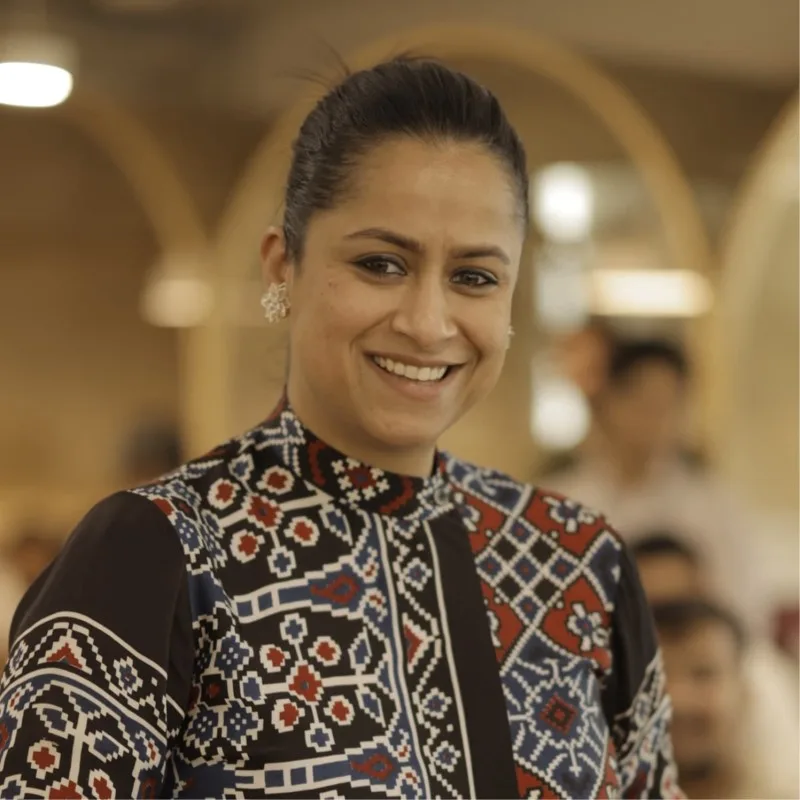
Another lesson that continues to inspire her is the power of collective action. “When communities, whether in workplaces or in society, come together around shared values, they can move mountains. Real change rarely happens because of one individual; it happens when people decide to stand together for something larger than themselves,” she adds.
Building a credible learning ecosystem
Many young people today aspire to become corporate trainers without having substantial corporate exposure themselves — a gap Shikha is now determined to address. “One of my near-future goals is to help address this gap by building a more structured organisational learning ecosystem. The goal is to create a more professional and credible learning ecosystem that benefits both organisations and trainers. Ultimately, my vision remains simple: to help make workplaces more aware, humane and responsible,” she concludes.
ALSO READ: Beacon of Hope: Yogita Bhayana, anti-rape activist who became the face of Nirbhaya movement