
June 18 2026
Dr Syed Mohammed Ghouse: Pioneering borderless surgery with a historic Wuhan-to-Hyderabad operation

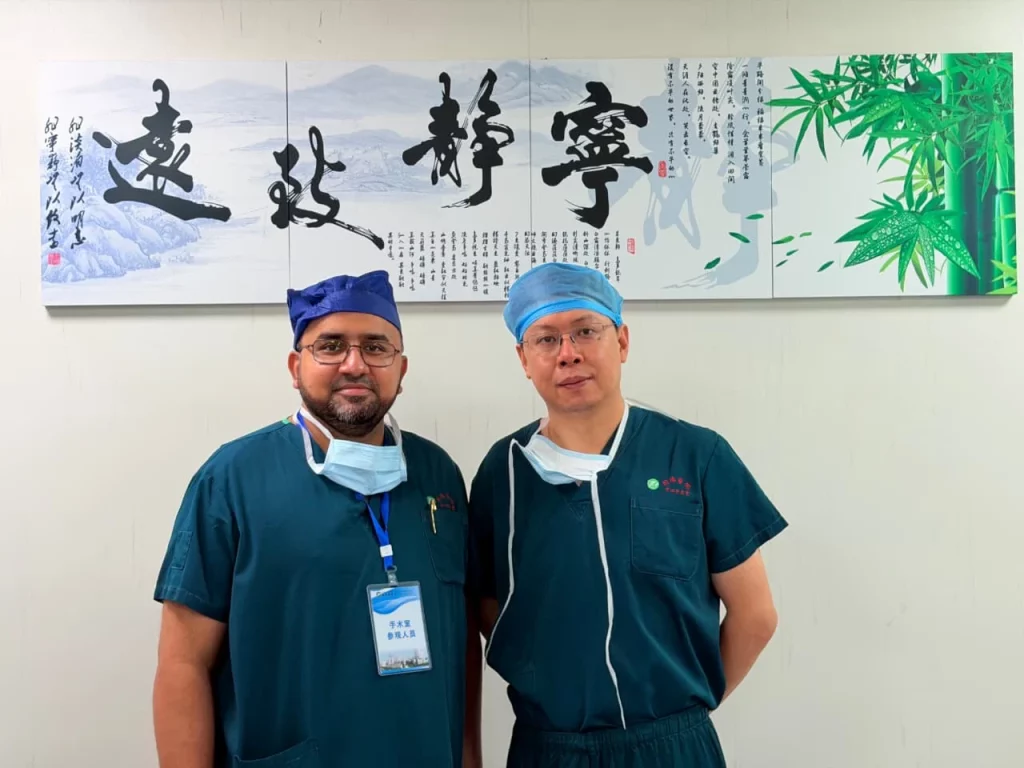
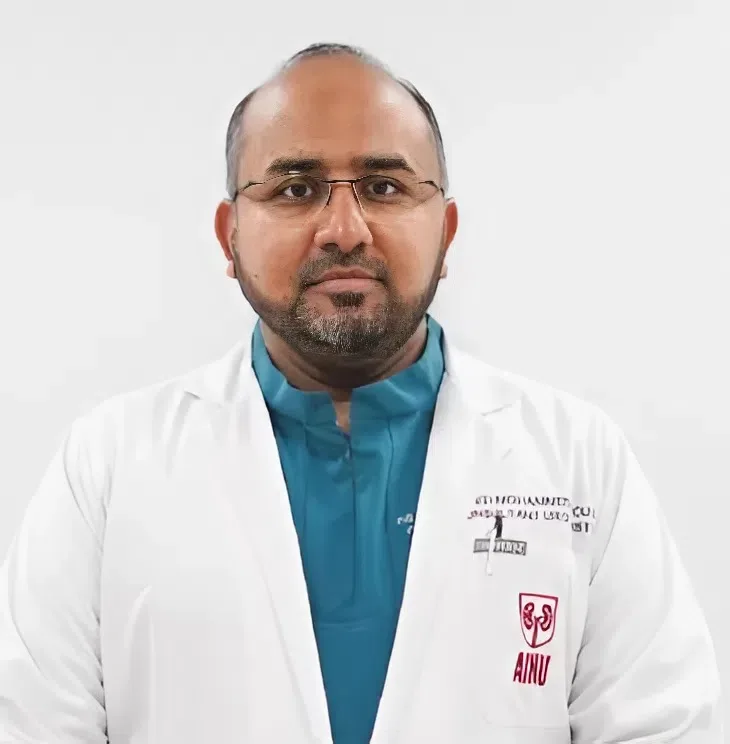
(Jun 18, 2026) Dr Syed Mohammed Ghouse, Consultant Robotic and Transplant Surgeon and Director of Robotic and Minimal Access Urological Surgery at AINU, Hyderabad, is among India’s leading robotic surgeons. His groundbreaking tele-robotic operation from Wuhan, China, on a patient in Hyderabad came under the global spotlight at the 10th Congress of the Chinese Chapter of the International Hepato-Pancreato-Biliary Association, which featured live remote surgical demonstrations by experts from five countries.
For Dr Syed Mohammed Ghouse, May 18, 2026, was just like any other day at work. Except that he was performing a complex robotic surgery from a console in Tongji Hospital in Wuhan, China — on a patient lying in the operation theatre in Hyderabad.
As his hands began working a set of controls — his eyes fixed on the real-time, magnified high-definition 3D images being transmitted from the operating room in Hyderabad through a binocular-style viewer — Dr Ghouse started guiding the arms through the surgery from his console. The robotic arms replicated the doctor’s movements inside the patient’s body while 5G transmitted his instructions within 200 milliseconds.
Almost 90 minutes later, Dr Ghouse successfully completed what is believed to be the world’s first tele-robotic ureteric reimplantation — a complex reconstructive urological procedure, performed entirely via remote robotic control.
“It felt like operating in my own operating room in Hyderabad. The precision, responsiveness, and seamless integration made the entire procedure incredibly smooth,” says Dr Ghouse, Consultant Robotic and Transplant Surgeon and Director, Robotic & Minimal Access Urological Surgery at the Asian Institute of Nephrology and Urology (AINU), Hyderabad, in conversation with The Global Indian.
No room for error
“The patient had put her complete faith in me and obliged to undergo the surgery after I convinced her,” informs Dr Ghouse, who has performed over 2,000 robotic surgeries so far.
She was diagnosed with lower ureteric stricture. Prior to the actual procedure from Wuhan, the robotic surgeon made sure there was no room for error, like he always does in the case of every patient. “I checked the connectivity and robotic movements thoroughly. Even the local medical staff stood by in the operating room to take over the surgery in case of any emergency.”
A milestone in global surgical innovation
For Dr Ghouse personally, this achievement represents the convergence of every skill he has built — surgical, technological, and collaborative.
For AINU, it establishes the institute as a participant in the very vanguard of global surgical innovation. For Indian medicine, it is a declaration that the country is not watching the future of surgery from a distance, it is building it.
Dr Syed Mohammed Ghouse
How robotic surgery works
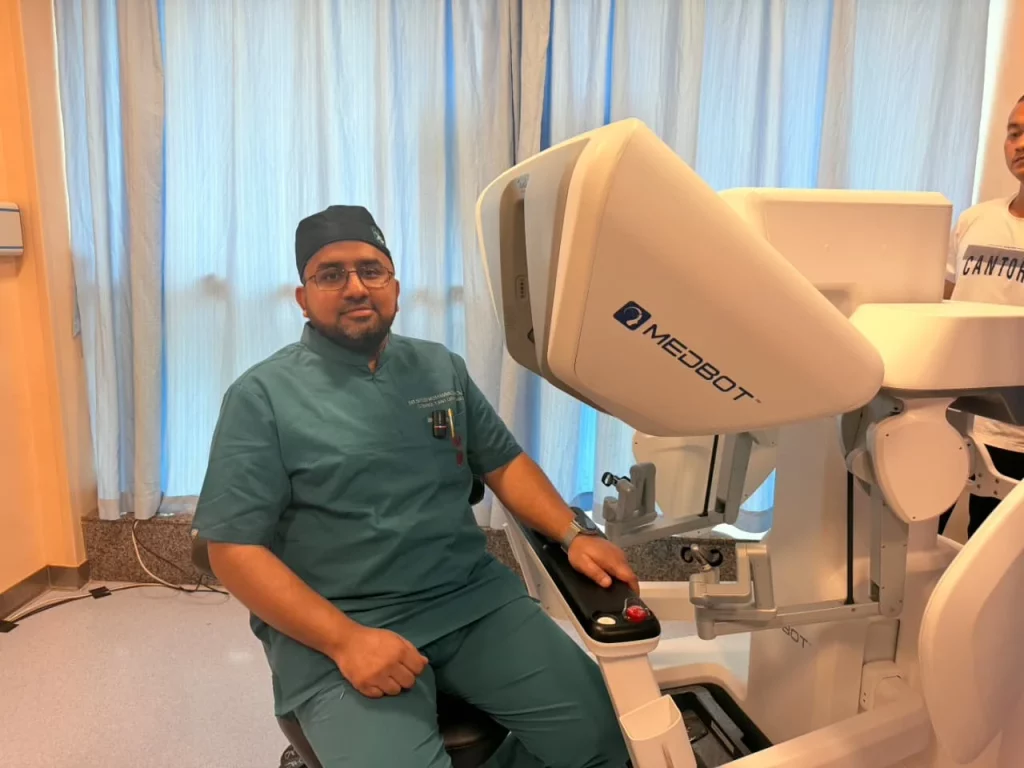
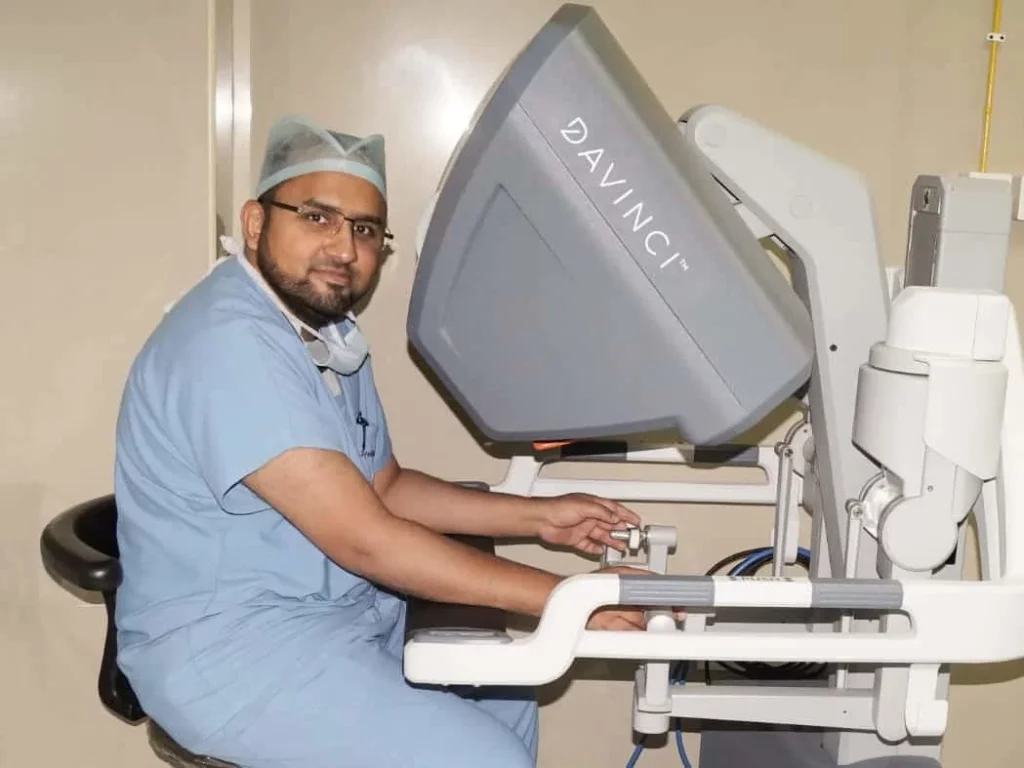
He says robotic surgery is a form of telesurgery. “There are three components of any robotic system — a patient cart attached to the patient, an image cart that processes and displays the visuals, and then there is the surgeon’s console where the surgeon sits and operates,” he explains.
Even in a normal robotic surgery setup, the surgeon does not physically stand over the patient performing the procedure directly. “Now we are just extending that concept across large distances.”
The surgery was performed using the MedBot robotic platform developed by Chinese company MicroPort. “The same robotic system has already been introduced in India and is available at AINU institutes.”
When technology and timing aligned
Dr Ghouse says the procedure was the result of a combination of factors converging at precisely the right moment — the high-speed connectivity infrastructure that makes real-time robotic control possible across intercontinental distances and the technological maturity of the robotic platform at AINU. Through continuous two-way communication, the team coordinated every step of the surgery in real time.
Built-in safeguards
One of the most critical elements enabling remote robotic surgery is stable internet connectivity. The procedure requires broadband speeds of around 30 to 50 Mbps to ensure smooth transmission of live surgical visuals and robotic commands.
Dr Syed Mohammed Ghouse
In case of a possible internet failure during surgery, there are multiple safeguards built into the system. “Usually there are two or three leased lines connected simultaneously. If one fails, another automatically takes over.”
Why Wuhan?
“Because Tongji Hospital — a global institution of the highest clinical and technological standing — had both the infrastructure to support the receiving end of a tele-robotic procedure and the collaborative appetite to make history alongside AINU.”
Dr Ghouse says the partnership represented not just a bilateral surgical achievement but a statement about the new geography of medical excellence — that the best surgical care need not be local. It can increasingly be anywhere. The patient recovered quickly after the surgery and was discharged on the same day Dr Ghouse returned to Hyderabad.
Raised by grandparents
Born in the Kurnool district of Andhra Pradesh and raised in Hyderabad, Dr Ghouse grew up at the intersection of two worlds — the disciplined intellectual rigour of his father, Syed Basheer Ahmed, an IIT Madras alumnus and Professor of Mechanical Engineering, and the clinical passion of his mother, Dr L Fahmida Banu, a renowned gynaecologist and laparoscopic surgeon who would go on to become the single greatest professional influence of his life.
“My parents were both pursuing higher studies during my early childhood, so I was raised largely by my maternal grandparents, which turned out to be among the richest gifts of my early life.”
His grandfather, a retired Superintending Engineer of distinguished standing, instilled in him an engineer’s eye for systems, precision, and problem-solving — an instinct that would, decades later, prove invaluable when he sat behind a robotic surgical console. His grandmother wrapped his entire childhood in warmth and unconditional certainty.
Dr Ghouse attended Little Flower High School, Abids — one of Hyderabad’s most prestigious and demanding convent institutions. “It was a school that produced people of spine and standards.”
The Al-Ameen years
Science was his natural territory — physics, above all else, captured his imagination. Dr Ghouse went on to complete his pre-university studies at St Mary’s Honour College before embarking on his MBBS at Al-Ameen Medical College, Bijapur — a place he describes with genuine affection as “a heaven for structured learning.”
“Remote, disciplined, and insulated from the distractions of city life, Al-Ameen was less a college and more a forge,” recalls Dr Ghouse, describing the institution as a clinical theatre.
Learning by his mother’s side
From his earliest days as a medical student, Dr Ghouse was drawn into the operating theatre by his mother’s side. Dr Fahmida Banu was among the pioneering gynaecologists to introduce laparoscopic surgery to Hyderabad in the 1980s — a time when the procedure was regarded with both wonder and scepticism.
Watching my mother operate, assisting her as an undergraduate, and absorbing the anatomy of the pelvis through her eyes and her teaching were experiences that left an indelible imprint on me.
Dr Syed Mohammed Ghouse
The Deccan College chapter
After completing his MBBS, Dr Ghouse pursued his postgraduate training in General Surgery at Deccan College of Medical Sciences despite an initial flicker of interest in radiology, a field he still pays his respects to each time he decodes a CT or MRI.
“I realised that a clinical subject with radiology is better than radiology alone.”
During his postgraduate years, he threw himself into laparoscopic surgery with unusual commitment, attending conferences from his undergraduate days, including those of the celebrated Dr Palanivelu at GEM Hospitals, Coimbatore.
That dedication earned him a rare distinction — he became the only postgraduate resident to be awarded a Diploma in Laparoscopy by Dr Palanivelu.
The game changer
The introduction of the Aarogyasri health insurance scheme during his postgraduate years turned out to be an unexpected accelerant.With access to government-funded surgical cases now available on a scale previously unimagined, Dr Ghouse found himself performing laparoscopic procedures at a volume that few residents anywhere in the country could match.
He then joined as Assistant Professor in the General Surgery department at Deccan College, sat the DNB super-speciality entrance examination, and qualified. “My mother guided me to urology, and specifically to train under Dr C Mallikarjuna, an extraordinary teacher, leader, and achiever,” says Dr Ghouse, who credits him as one of the defining forces of his surgical identity.
Building AINU from the beginning
Dr Ghouse was part of the founding team that built AINU from its earliest days. When the robotic system arrived at AINU, there was hardly any competition for machine time.
“The robot was simply available, and I used it without restriction — operating on cases of every complexity and mastering the technology at a fast pace,” says Dr Ghouse, who later also pursued an MBA in Hospital Administration. Before arriving at AINU at 9 am every day, he assists his mother at Fehmicare Hospital — a ritual that has defined his mornings for years.
“On days when the robotic schedule is heavy, the day at AINU begins much earlier,” says the robotic surgeon, who finds it fulfilling to bring about a positive change in many lives.
His philosophy
Dr Ghouse’s approach to each case is guided by the philosophy that AINU was built upon: precision care, personalised solutions, advanced technology, and research-driven outcomes.
“No two patients are the same, and no surgical plan is templated,” says Dr Ghouse, who comes from a family of six medical professionals, including his wife, a highly successful gynaecologist and IVF specialist at Fehmicare Hospital.
An academic journey through Istanbul
Dr Ghouse’s presence on the international conference circuit has been a consistent feature of his career — attending and presenting at meetings that have kept him in dialogue with the very best in global urology and robotic surgery.
He participated in the 43rd Annual Congress of the Société Internationale d’Urologie (SIU) in Istanbul in 2023.Hosted in conjunction with the 32nd Turkish Urological Association meeting, the event gathered urologists and healthcare professionals worldwide to discuss advancements in uro-oncology, robotics, and minimally invasive surgery.
“It was a whirlwind of academia and exploration. I presented my research, explored Istanbul’s history, marvelled at Cappadocia’s landscapes, relaxed on Antalya’s beaches, and discovered Pamukkale’s wonders,” says Dr Ghouse, who had delivered a talk at SIU in Athens, Greece, in 2019 as well.
Witnessing innovation in China
He also visited the MicroPort China headquarters — which he describes as an out-of-the-world facility. “I witnessed cutting-edge innovation, precision engineering, and state-of-the-art technology shaping the future of surgical care,” says Dr Ghouse, adding that the scale, vision, and commitment to advancing medical technology were nothing short of inspiring.
Sharing knowledge across South Asia
Dr Ghouse attended the National Urology Conference of the Nepal Association of Urological Surgeons in Pokhara, Nepal, and served as faculty at the 20th BAUSCON 2026 International Scientific Conference in Dhaka, Bangladesh.
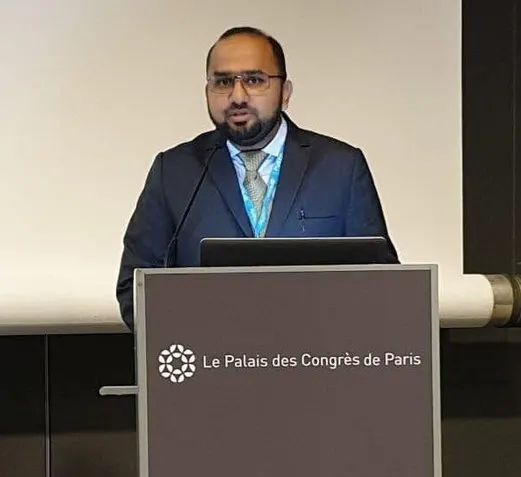
“Each of these visits exposed me to different surgical traditions, patient populations, and technological ecosystems, which refined my skills,” says the surgeon, who also participated in the World Congress on Endourology in Paris earlier. “The gap between India and the West in robotic surgery is not one of surgical intellect. It is a gap of infrastructure, institutional support, volume, and accessibility,” feels Dr Ghouse.
What needs to change?
He says greater investment in robotics infrastructure beyond Tier-1 metropolitan centres, structured training pathways that give young surgeons the volume they need to master the technology, and institutional cultures that allow surgeons to push boundaries without administrative friction will benefit immensely. “Above all, the recognition that India’s surgical talent, given the right environment, is not emerging — it is already world-class.”
The borderless future
Dr Ghouse says the Wuhan procedure was not an endpoint. It was a proof of concept — evidence that the infrastructure, the skill, and the collaborative will exist to take tele-surgery from a historic first to clinical routine. His ambitions for the future are built squarely on that foundation. Tele-surgery, he believes, is the next frontier of equitable healthcare.
The future of surgery is borderless. We have already proved it once. The work now is to make it a regular affair.
Dr Syed Mohammed Ghouse
Finding peace in aquariums
Dr Ghouse has been fond of aquariums since childhood — his grandfather built the first one for him, and the fascination never left him.Today, his residence and hospital both house multiple tanks, each a carefully engineered ecosystem — all programmed and running without his daily intervention. “I like to sit beside the aquariums and watch the fish and the plants grow. It gives me immense peace,” he signs off.
- Follow Dr Syed Mohammed Ghouse on LinkedIn
ALSO READ: Dr Prokar Dasgupta: The surgeon who performed the UK’s first long-distance robotic surgery
Dr Syed Mohammed Ghouse
| Born | March 9, 1981, Kurnool district, Andhra Pradesh, India |
| Based | Hyderabad, India |
| Studied | Al-Ameen Medical College, Bijapur | Deccan College of Medical Sciences, Hyderabad |
| Languages | Telugu, Hindi, English |
Signature work
In May 2026, Dr Syed Mohammed Ghouse made surgical history by performing a complex reconstructive urological procedure remotely from Wuhan, China, on a patient in Hyderabad. A specialist in robotic, reconstructive and transplant urology, he has performed more than 2,000 robotic surgeries during his career.
Idea
Using robotic technology and connectivity to make specialised surgical care borderless.
Network
Building collaborations with leading surgeons and institutions in India and abroad through academic exchanges and global conferences.
Impact
Advanced robotic and reconstructive urology in India while helping position AINU and Indian medicine at the forefront of global surgical innovation.
Giving back
Training the next generation of robotic surgeons and sharing expertise through academic and international collaborations.
Inspired by Dr Syed Mohammed Ghouse 's journey?
Yours follows the same Hero's pattern — Separation, Initiation, Transformation, Return.
Share with


Written By: Vikram Sharma
Dr. Ravi Teja Rudraraju: Leading the way in robotic knee surgery and elite sports care

Written By: Vikram Sharma
Dr Praveen Mereddy: Balancing surgery, stillness, and the spirit of adventure

Written By: Vikram Sharma