July 18 2026
Dr Sunita Gandhi: The Cambridge-trained physicist and former World Bank economist accelerating learning

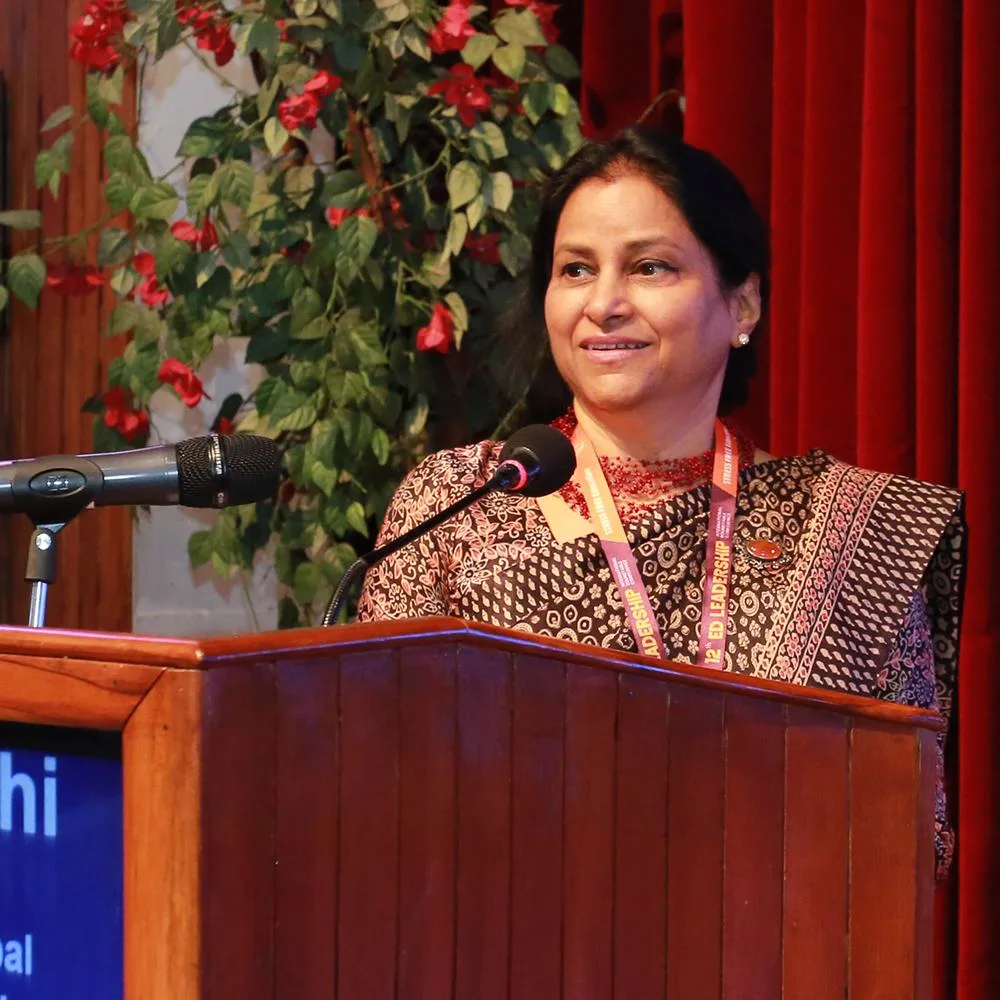
(Jul 18, 2026)Dr Sunita Gandhi was just 14 when she started her first school. A Cambridge-trained physicist who spent a decade at the World Bank, she returned to India to tackle the country’s literacy crisis. Today, the educationist behind ALfA, an accelerated learning model transforming classrooms across India and beyond, is redefining how children learn.
Physics taught Dr Sunita Gandhi to look beyond symptoms and search for root causes. That way of thinking shaped her decade-long career as an economist at the World Bank, where her work on education and development earned the World Bank President’s Most Outstanding Contribution to Development Award. Years later, it also led her to ask a question that would define the rest of her career.
“Why do hundreds of millions of children sit in school for years and still leave unable to read, write or count? That question led me to ALfA,” says the Cambridge-trained physicist, former World Bank economist, TEDx speaker and Chief Academic Advisor of City Montessori School, Lucknow, in conversation with The Global Indian.
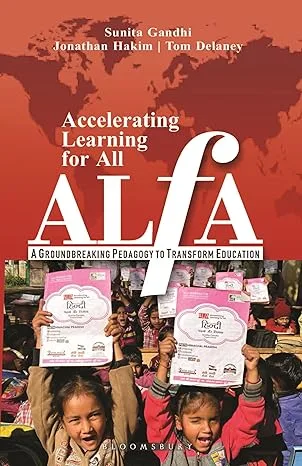
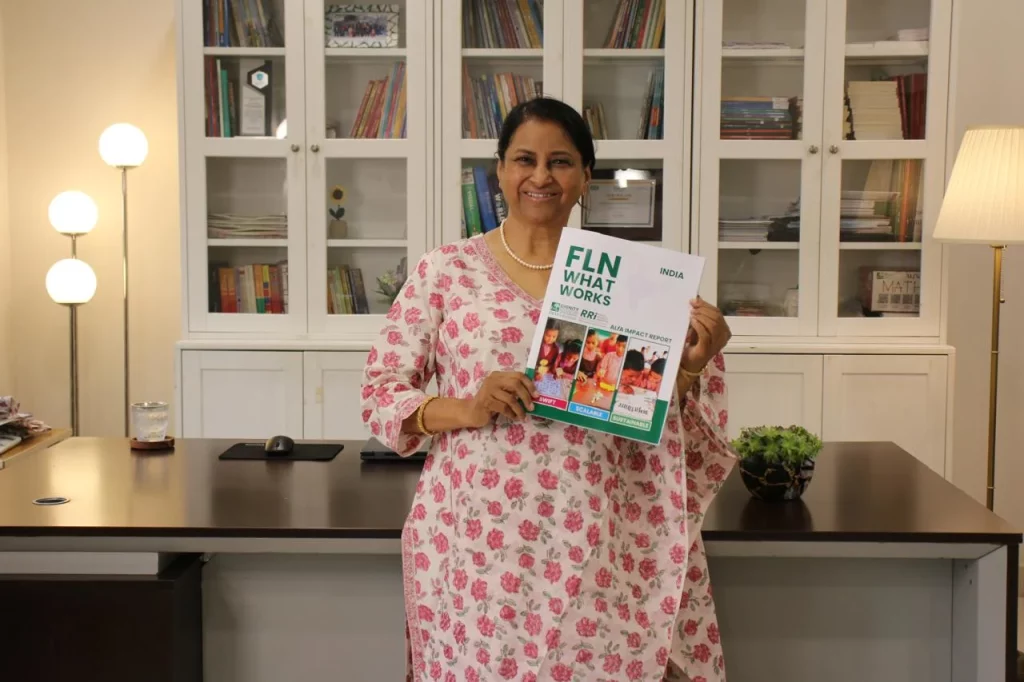
The answer became ALfA (Accelerating Learning for All), an evidence-based peer-learning pedagogy that enables children to acquire foundational literacy and numeracy in about 45 days. The model has already impacted over 1.8 lakh children across more than 1,900 schools in India and is now being piloted in several other countries.
From Lucknow to Cambridge
Born and raised in Lucknow, Sunita grew up in a family where education was more than a profession. Her parents, Dr Jagdish Gandhi and Dr Bharti Gandhi, founded City Montessori School (CMS), which would later become the world’s largest school by enrolment and the only school to receive UNESCO’s Prize for Peace Education.
“But when I was a child, none of that grandeur existed. CMS was young, and our family’s finances were genuinely constrained,” she recalls.
She attended City Montessori School before moving to St Agnes’ Loreto, where she excelled academically. “I was not the sporty type. My energy went into study and increasingly into service.” As a teenager, she met Saint Mother Teresa, who blessed her with words she has never forgotten: “God loves Sunita. Love others as He loves you.” “I did not fully understand then how much that moment would anchor the rest of my life.”
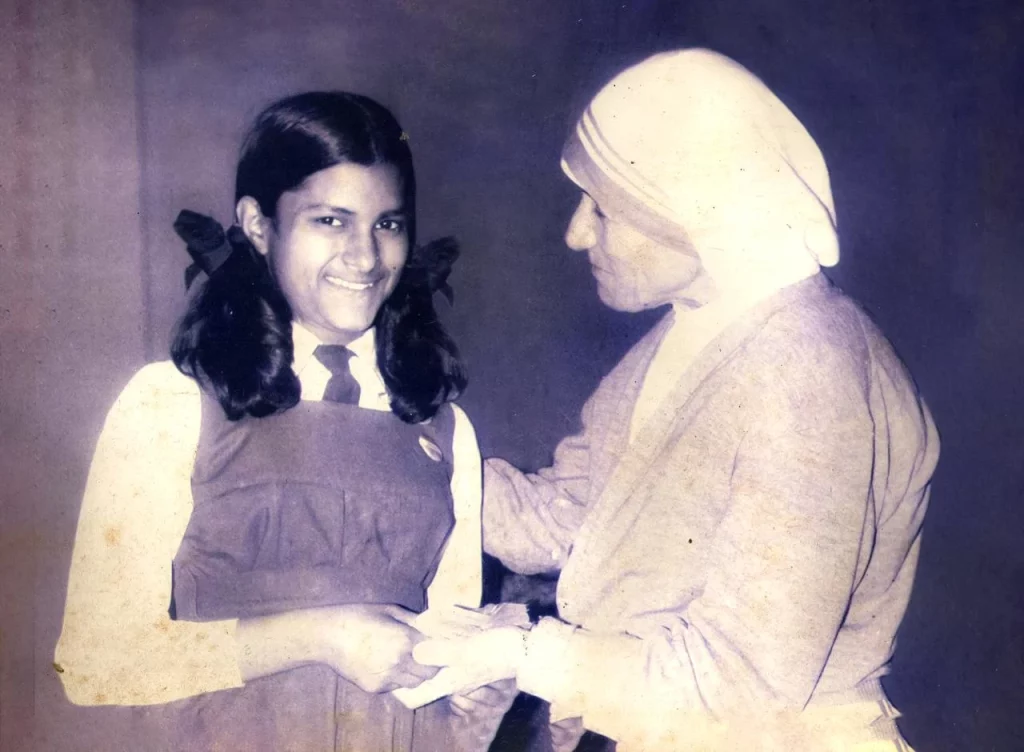
Sunita Gandhi with Mother Teresa
At 16, supported by sacrifices made by her parents and contributions from friends and family, she left for the United Kingdom. She completed her A-Levels at Peterborough Technical College, earned a BSc (Honours) in Physics from Imperial College London and later a PhD from Trinity College, University of Cambridge, supported by three prestigious scholarships.
Following a year as a research scientist at Lawrence Berkeley Laboratory, University of California, Berkeley, she began looking beyond laboratory research.
I wanted to understand how policy could improve millions of lives rather than a single experiment.
Dr Sunita Gandhi
That curiosity led her to the World Bank’s highly competitive Young Professionals Program. “That is how a physicist ended up as a development economist.”
A decade shaping global education policy
From 1988 to 1998, Sunita worked at the World Bank headquarters in Washington, DC, focusing on education policy and development programmes across Asia, Africa and Latin America.
Among the projects closest to her heart was a participatory initiative on women’s development in Morocco, which became part of the World Bank’s Participation Sourcebook. The project was showcased at the 1996 UN Summit in Copenhagen and earned her the World Bank President’s Most Outstanding Contribution to Development Award.
She also represented the World Bank at international forums, including the UN Women’s Conference in Jordan and the UN Summit in Copenhagen. “I got to see how policy is made and how far it travels. But I also saw how often it fails to reach the classroom in a village.” That realisation stayed with her.
Returning home to solve literacy
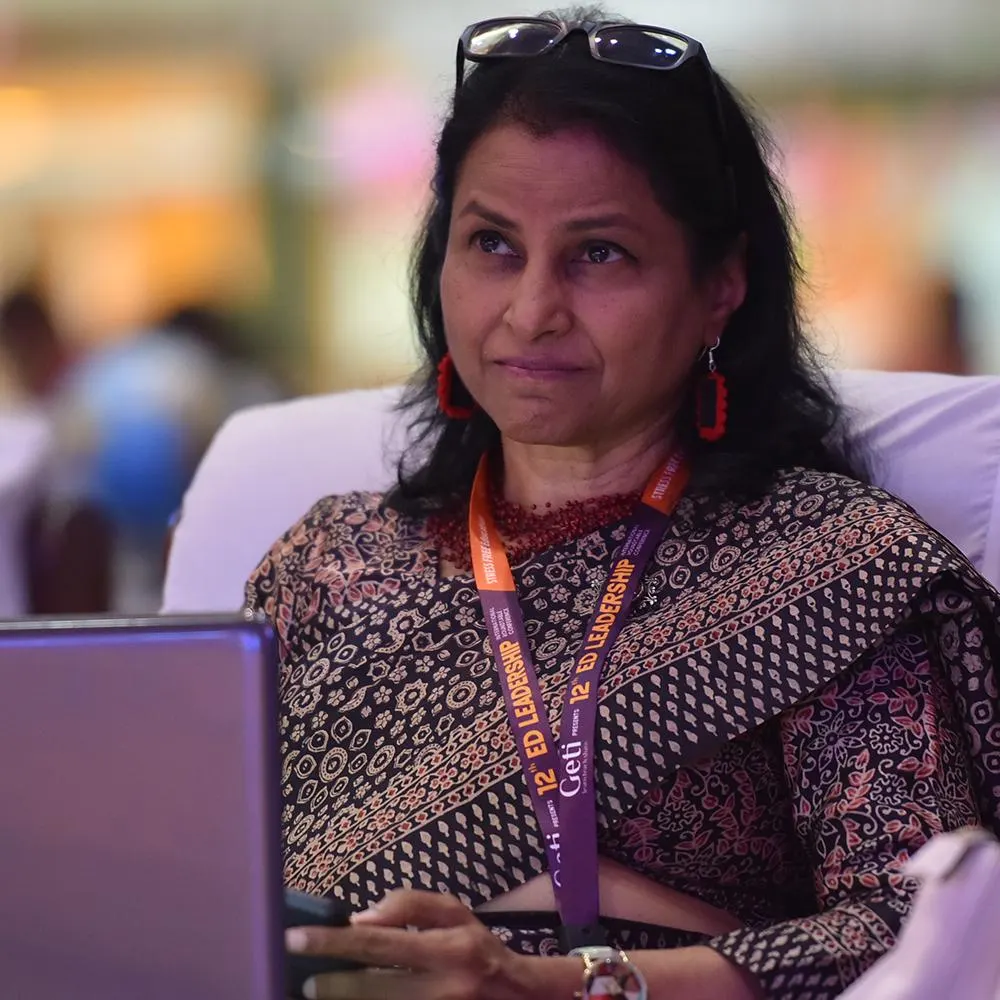
While still working at the World Bank, Sunita had founded Dignity Education Vision International (DEVI) in 1992. Returning to India in 1998, she immersed herself in understanding why millions of children continued to struggle with reading despite spending years in school.
Her research took her into government schools, urban slums and classrooms at City Montessori School, which became a living laboratory for testing new ideas.
I looked at the problem the way a scientist would and not by treating symptoms but by finding the root cause.
Dr Sunita Gandhi
At the same time, she established the Council for Global Education in the United States, allowing her to continue studying education systems across nearly 50 countries while connecting educators through international conferences, research collaborations, Global Learning Labs, MOOT (Massive Open Online Training) and D-Talks.
Reimagining how children learn
Years of research culminated in ALfA (Accelerating Learning for All), a pedagogy that turns the traditional classroom on its head. Children work in pairs, teaching and learning from one another while the teacher facilitates rather than lectures. The learning materials are deliberately concise and visual, while assessments measure each child’s progress against their own previous performance rather than comparing them with classmates.
The objective is simple but ambitious: help every child acquire foundational literacy and numeracy rapidly. Sunita insisted on rigorous evidence before advocating large-scale adoption. In 2022, a controlled pilot involving 20 schools in Uttar Pradesh showed significantly stronger gains in reading fluency and numeracy among ALfA students after just 40 to 45 days.
The programme quickly expanded from a handful of schools to thousands across multiple states. One of its strongest validations came in Uttar Pradesh’s Unnao district. During the state’s NIPUN assessment, only 15 percent of schools in the district met the benchmark. Yet Hilauli block, where ALfA had been introduced in all 155 schools just two months earlier, recorded a 47 percent success rate—more than three times the district average.
Taking an Indian innovation global
What began in Lucknow is now reaching classrooms across the world. ALfA has been piloted or adopted in Ghana, Kenya, Peru, Malaysia, the Philippines, Guyana and Trinidad & Tobago, with discussions underway with UNICEF and education ministries in several other countries.
Through DEVI, Sunita has developed teacher training programmes, assessment tools and literacy materials in more than 30 languages, making the model adaptable across cultures and education systems. She continues to share her work internationally through keynote addresses and education forums across Europe, Asia, Africa and Australia.
Building institutions beyond borders
Sunita’s contribution extends beyond literacy programmes. She has founded or helped establish around 26 schools in India, the Czech Republic and Iceland. In Iceland, she established the country’s first charter schools, while in Prague she founded Global Concepts International School.
DEVI has grown into an ISO-certified organisation and is among the few NGOs listed on the BSE Social Stock Exchange. Her contributions have earned numerous honours, including Educationist of the Year (2014), an honorary doctorate from the University of Vietnam (2015), Visionary of Uttar Pradesh (2017), Best Woman Start-up Entrepreneur from IIM Lucknow (2019), and the Shining World Caring Award (2020).
Why foundational literacy cannot wait
Although India’s literacy rate has steadily improved, Sunita believes the country still faces a foundational learning crisis. She points to persistent rural-urban and gender gaps in literacy and argues that millions who are officially classified as literate still struggle to read fluently or comprehend what they read.
A household survey conducted by her organisation covering 1.5 million people in Lucknow reinforced that concern. Her research argues that weak foundational literacy contributes directly to poverty, inequality and reduced resilience to future challenges. For her, the solution is clear.
Foundational literacy has to be treated as a national emergency. We need fast evidence—not five years to discover whether something works, but 45 days. Policy and pedagogy have to move together.
Dr Sunita Gandhi
Still a teacher at heart
Today, as Chief Academic Advisor of City Montessori School, Sunita continues to guide curriculum design, teacher training and classroom innovation while leading DEVI’s expanding literacy movement. Despite travelling to nearly 50 countries to study education systems and establishing schools across three nations, she says family remains her greatest priority.
When she finds a rare break from work, she enjoys board games, old Hindi films and spending time with her loved ones. For someone who started her first school at just 14, education has never been merely a profession. It has been a lifelong mission—to ensure that every child, regardless of circumstance, gets the opportunity not just to attend school, but to truly learn.
Dr Sunita Gandhi
| Born | Lucknow, India |
| Based | Lucknow, India |
| Studied | PhD in Physics, Trinity College, University of Cambridge, UK |
| Languages | Hindi, English |
Signature work
Creator of ALfA, Dr Sunita Gandhi has reimagined foundational learning through a research-backed pedagogy that accelerates literacy and numeracy. The model is helping governments and educators improve learning outcomes across India and beyond.
Idea
Developed ALfA (Accelerating Learning for All), an evidence-based pedagogy that enables children to achieve foundational literacy and numeracy in about 45 days through peer learning.
Network
Collaborates with governments, educators, schools, UNICEF and international partners to expand ALfA and improve foundational literacy worldwide.
Impact
ALfA has helped improve foundational learning for over 1.8 lakh children across 1,900+ schools in India and is being piloted internationally, influencing literacy programmes beyond the country.
Giving Back
She develops multilingual learning resources, trains teachers and works with governments and NGOs to improve literacy outcomes, making quality education more accessible to underserved communities.
Inspired by Dr Sunita Gandhi 's journey?
Yours follows the same Hero's pattern — Separation, Initiation, Transformation, Return.