June 10 2026
Dr Pattathil Dhanya Menon: India’s first woman cybercrime investigator with a global footprint

(Jun 10, 2026) Recipient of the first Women Achievers Award from former President Ram Nath Kovind and regarded as India’s first woman cybercrime investigator, Dr Pattathil Dhanya Menon has spent over two decades helping individuals, organisations, and law enforcement agencies stay ahead of digital threats. Operating out of Kerala and Dubai, she has trained police personnel across several countries, handled thousands of investigations, and emerged as one of India’s leading voices in cybersecurity.
Dr Pattathil Dhanya Menon is engaged in an unending battle against cyber criminals. Almost every day, they attempt to target her — through calls to her mobile phone, attempts to hack her website, and malicious emails.
She is among the millions of people who are routinely targeted by fraudsters. The difference, however, is that Dhanya understands their methods, knows how to stay protected, and has devoted her life to combating cybercrime and keeping individuals and organisations safe.
As India’s first woman cybercrime investigator, Dhanya is always on top of her game, foiling every attempt to target her in the cyber world as she goes about her mission to combat the bad guys in cyberspace and keep people and organisations safe. “Like Covid, cyber crimes are a menace. All of us need to be aware and on guard always. We do not have a choice any more,” insists Dhanya, in conversation with The Global Indian.
Dhanya’s areas of expertise include cybercrime investigation, forensic analysis, collection and preservation of digital evidence, network security, vulnerability assessment, cyber threat intelligence, incident response, training, and capacity building for law enforcement agencies.
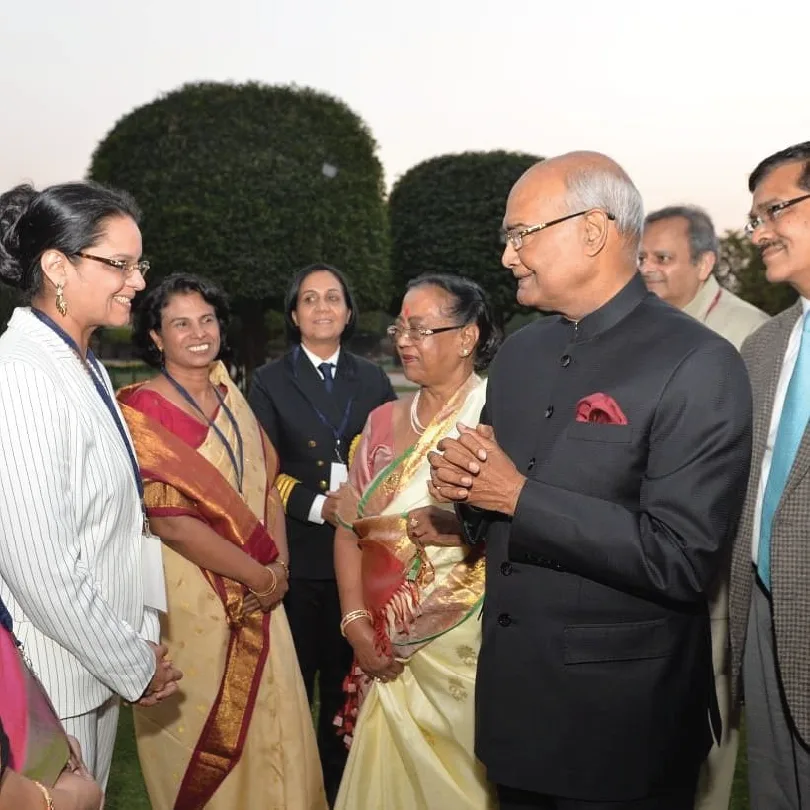
Dr Pattathil Dhanya Menon in 2018 with former President of India, Ram Nath Kovind
Training law enforcement in India and abroad
Dhanya, a recipient of the first Women Achievers Award from the then Indian President Ram Nath Kovind in 2018, has engaged with police and Home departments of the UAE, Oman, Kuwait, Bahrain, Egypt, Sri Lanka, Ethiopia, and Somaliland. Back home in India, she has trained police personnel in various states.
Many people who come under cyber attacks don’t even realise that their data is lost till the same data gets used by someone else or they face a penalty.
Dr Pattathil Dhanya Menon
The distinguished cybercrime investigator and a leading authority in cybersecurity has also played a key role in numerous high-profile cybercrime investigations and collaborated with law enforcement agencies to tackle intricate cybercrimes. She serves as an advisor and consultant to various law firms in India and the UAE.
Teaching cybercrime investigation from the ground up
From teaching the basics of computers to call record analysis, password cracking, log analysis, email header reading, and server dump data analysis, she taught them everything.
“These were topics and terminologies which were very new in those days. How to file a complaint, how to save the evidence, and how to explain the evidence on hand to the courts were the common questions that would come up.”
Besides training, she has also been a consultant to various projects, helping organizations set up infrastructure as well. “There is absolutely no difference in the nature of cyber crimes that get reported anywhere in the world,” says Dhanya, whose work has been recognised by the Ministry of Defence.
Why anyone can become a victim
“From my experience, I can say that education or lifestyle status has got nothing to do with falling victim to cyber crimes. It happens when one is least alert and thoughtful,” says Dhanya, pointing out that such incidents mostly happen during the victim’s vulnerable phase.
She says most victims would not have responded in the way they did if it had been at some other point in time. “Whatever we do in cyberspace remains there; nothing gets deleted. So it comes back to haunt people after days, months, or years,” she says, highlighting that the only difference between the victim and a criminal is that the latter has a thorough knowledge of cyberspace.
“We just use this space and are addicted to it. The criminal actually studies this space and uses it to his advantage,” says Dhanya, who has been appointed by Indian courts to detect financial fraud and manage data integrity within organisational systems.
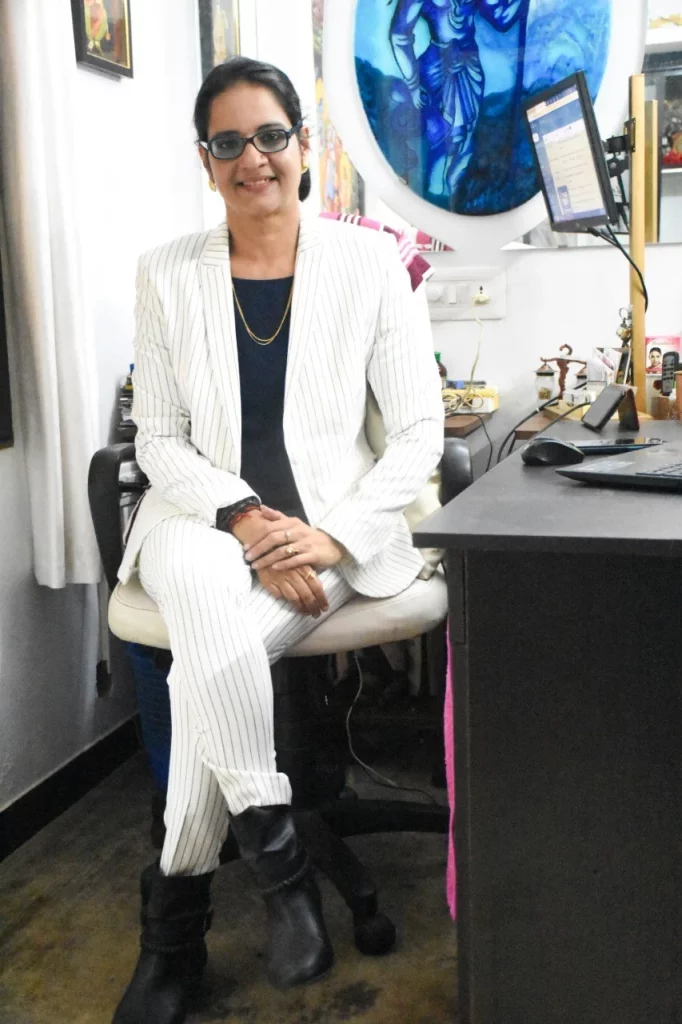
Tackling the challenges of deepfakes and AI
Dhanya says that though the threat from deepfakes and other AI-generated imagery was anticipated, the good news is that there are laws to combat it.
“We now have the framework to curb anticipatory threats and bring structure,” she says, referring to the Government of India’s IT (Intermediary Guidelines and Digital Media Ethics Code) Amendment Rules, 2026, which have marked a significant achievement in the ever-evolving digital world.
With the new amendment being implemented, there is a safer digital ecosystem for everyone. “Platforms are now legally responsible for labelling AI/synthetic content, embedding metadata and provenance markers, and ensuring that all deceptive media are taken down immediately,” says the cybercrime investigator, who was nominated as Cyber Woman of the Year at the Cyber Security Awards (2023).
Bridging the awareness gap
Now that there is a technical solution, Dhanya says the next big challenge is bridging the awareness gap. “I believe digital and ethical literacy can close that gap. In fact, I always tell my students that digital literacy also means the ability to question what you see on the internet.”
The answer, she says, lies in a shared moral responsibility between technologists, educators, regulators, and users.
Growing up in Kerala
A native of Thrissur, Kerala, Dhanya’s father, M Venugopal, was a banker and her mother, Lakshmi Venugopal, a homemaker. “My mother wanted me to become a doctor,” smiles Dhanya, the elder of the two sisters. Her father’s transferable job took her to different cities, which taught her adaptability. As a result, she picked up many languages.
She started out as a model, dancer, and small-screen actress before getting into the cyber world. Her maternal granduncle, PB Menon, a senior advocate in the Supreme Court of India, advised her to study cyber law.
“He was confident that this subject would be the future of cyberspace and that I would fit in,” recalls Dhanya, who, until then, was juggling real estate, insurance, dance, and choreography to earn a livelihood.
Discovering a new calling
She joined the Asian School of Cyberlaw, Pune, in 2003 for the course — Cyber Law and Cyber Crime Investigation. Back then, she did not realise the enormity of the course.
The Asian School would ask students, including Dhanya, to take classes and training sessions for the police, and the next day, they would be flooded with cybercrime case files from them. Ever since, there has been no looking back for Dhanya.
Building Avanzo Cyber Security Solutions
In 2010, Dhanya launched her company, Avanzo Cyber Security Solutions, and later, the Avanzo Charitable Trust. The aim was to provide cybersecurity services and a centre for awareness programmes and support for victims of cyber crimes.
As the Director of Avanzo Cyber Security Solutions, she and her team conduct internal audits for organisations for their cybersecurity, besides working on policies and documentation and training staff regularly. “We also work with law firms when their clients need a forensic investigation done internally. We collect evidence and preserve it for legal purposes. We also assist law firms on the technical side of issues whenever needed.”
She specialises in the formulation and implementation of security policies for corporations besides conducting comprehensive Cyber Legal Audits in accordance with the IT Act, as well as Information Security Audits for banks and Non-Banking Financial Companies (NBFCs).
Our trust was the first to launch a helpline number for victims with a toll-free number in 2010. From 2015, we gave up the toll-free number and switched to a WhatsApp helpline number.
Dr Pattathil Dhanya Menon
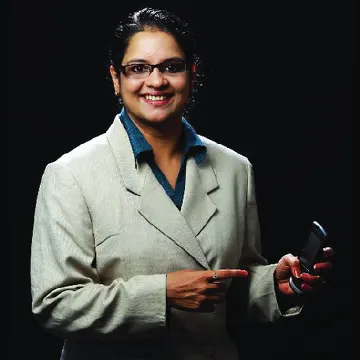
At Avanzo, her team works in different areas of cybersecurity. “We have a team that develops apps, websites, and cybersecurity products. Another team works on investigation and forensics. Besides, there is also an audit team,” she mentions.
Recognition in Dubai
Dhanya’s Dubai operations run under the banner of AVZ Cyber Security Solutions LLC. The company was awarded by the Dubai Quality Group (DQG) for its cybersecurity services and training in February 2025, marking a significant milestone in the organisation’s journey.
The event was held under the patronage of Shaikh Ahmed Bin Saeed Al Maktoum, President of Dubai Civil Aviation Authority, Chairman of Dubai Airports, and Chairman and Chief Executive of Emirates Airline and Group.
Why businesses must take cybersecurity seriously
Dhanya feels many Indian companies still fail to treat cybersecurity as a core business risk. “For most organisations outside the IT sector, cybersecurity is not even an afterthought. They only worry about containing reputational damage after an incident happens,” says the cybercrime investigator, who also delivers expert techno-legal solutions to corporations, government entities, and investigative agencies.
Unravelling complex cybercrime cases
As a cybercrime investigator, Dhanya has worked on thousands of cases. “Every case is challenging in its own way. Even when the issues look simple at first, they may have deep-rooted causes. More than the technical challenges, it’s the legal aspect that is difficult.”
Be aware of cyberspace, be alert, take a pause before doing anything online and, importantly, do not trust this space. Maintain data hygiene.
Dr Pattathil Dhanya Menon
Finding balance through dance
Dhanya is passionate about dance. She was initiated into the world of dance at the age of three and grew into a seasoned Kuchipudi and Mohiniattam dancer. She did her arangetram at the age of six.
“I always loved dancing, though it took a back seat because of education and work,” says Dhanya, who has given over 200 stage performances across the globe.
With her high-profile job as a cybercrime investigator taking an emotional toll on her, given the nature of crimes involving children, Dhanya seeks refuge in dance. “To keep my sanity, I have to juggle time to practise my steps,” she says, adding how dance helps her maintain rhythm and balance in life.

Preserving classical dance traditions
She even established Saalabhanjika, a studio for arts and performance, to impart training in South Indian classical dance forms to budding artists. The centre also conducts workshops on fading dance styles (such as the Devadasi tradition in Kuchipudi) and national-level dance competitions.
“My training in Indian classical dance has helped me stay disciplined, focused, and consistent.”
Looking ahead
“We are open to collaborations and partnerships that will help expand our base,” says Dhanya, who has authored and developed cybersecurity education material, designed specialised courses for colleges and universities, and delivered presentations at numerous national and international forums as a recognised speaker.
The cybercrime investigator also runs an academy called Avanzo Cyber Institute, where she collaborates with colleges and universities to empower young aspirants in this domain.
ALSO READ: Shreya Sharma: Pioneering online legal access in India through Rest The Case
Dr Pattathil Dhanya Menon
Cybercrime Investigator
| Born | November 9, Kochi, India |
| Based | Thrissur, India and Dubai, UAE |
| Studied | Asian School of Cyber Laws, Pune, India |
| Languages | Malayalam, Hindi, English |
Signature work
With assignments spanning India, the UAE, Oman, Kuwait, Bahrain, Egypt, Sri Lanka, Ethiopia, and Somaliland, Dr Pattathil Dhanya Menon has spent more than two decades helping organisations and individuals strengthen their cyber resilience and combat emerging digital threats through investigations, security audits, training programmes, and public outreach initiatives.
Idea
Driven by the rise of cyber threats, Dr Pattathil Dhanya Menon built a career around cyber investigations and digital safety.
Network
She works closely with government bodies, law enforcement agencies, corporates, educational institutions, and legal professionals in India and abroad.
Impact
Her work has helped organisations and individuals strengthen cyber resilience and navigate digital risks more effectively.
Giving Back
Beyond investigations, she trains institutions and spreads cyber awareness to help create a safer digital ecosystem through Avanzo Charitable Trust.
Inspired by Dr Pattathil Dhanya Menon 's journey?
Yours follows the same Hero's pattern — Separation, Initiation, Transformation, Return.
Share with



Written By: Bindu Gopal Rao
Shreya Sharma: Pioneering online legal access in India through Rest The Case

Written By: Mallik Thatipalli
Manasi Chaudhari: Championing women’s legal literacy through Pink Legal and Legally Yours