
November 14 2026
From a tent classroom to global medicine: Dr Dinesh Verma’s lifelong quest to understand healing
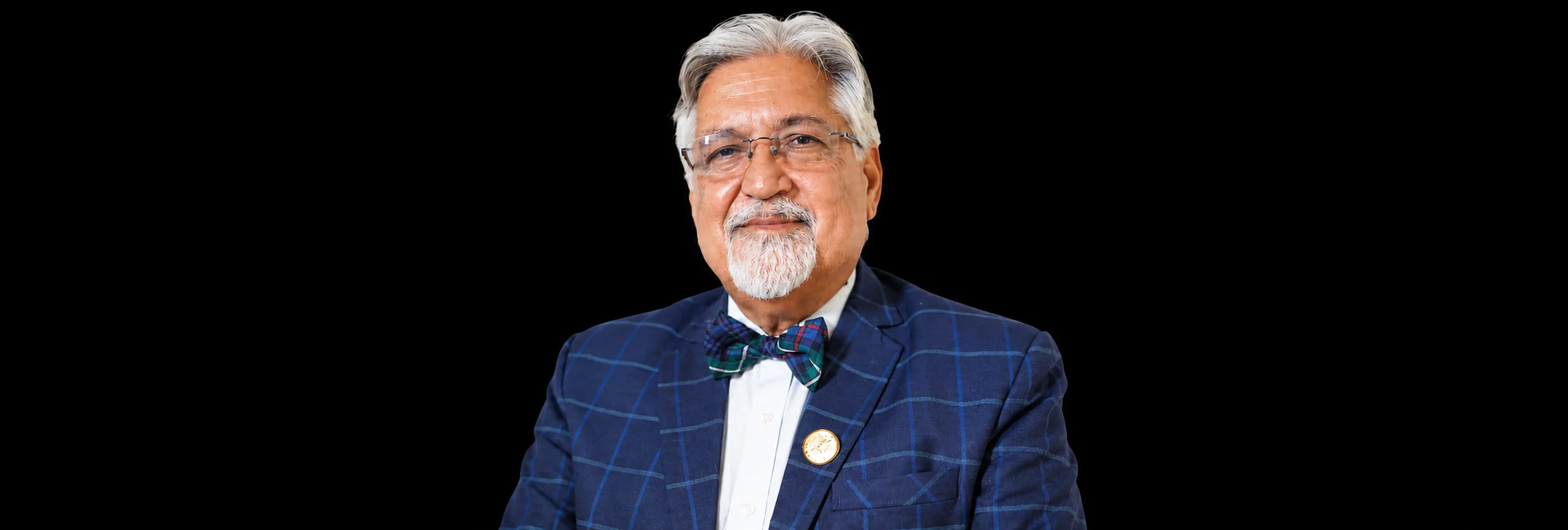
(Nov 14, 2026) From an unconventional start to schooling in a tent in Delhi to medical training at AIIMS and professional stints in the UK and US, Dr Dinesh Verma’s journey has spanned continents and disciplines. Now based in Goa, the internationally trained ophthalmologist explores the connections between genetics, consciousness and healing in his fourth book, The Self-Cure Code.
Years ago, Dr Dinesh Verma underwent an MRI scan in Scotland after experiencing episodes of forgetfulness. Although he had passed his cognitive assessment, his family history prompted further investigation.
As he lay inside the MRI scanner, surrounded by its relentless mechanical sounds, his thoughts wandered towards genes, inheritance, memory and the mysteries of the human mind. He began reflecting on how people are shaped by their genetic inheritance, experiences, beliefs and emotional lives.
His thoughts turned to memories of love, loss, personal achievements, abandoned dreams, his journey in a foreign land and his mother’s suffering back home. These reflections, together with more than five decades of experiences with medicine, illness, grief and human resilience, eventually became the central themes of his fourth book, The Self-Cure Code: How Consciousness, Dreams, Belief, and Genes Converge to Heal published by Readomania.
“Part memoir, part scientific inquiry, part practical guide, this book asks: What if the most powerful medicine available to you has been inside you all along?” says Dr Dinesh, an internationally trained ophthalmologist, researcher, educator and author, in conversation with The Global Indian.
The Self-Cure Code
Drawing on decades of clinical experience, research and real-life cases, Dr Dinesh’s book examines the body’s capacity for self-healing and the possible connections between biology, consciousness, beliefs and emotions.
“It maps the terrain where cutting-edge science meets ancient wisdom: epigenetics and consciousness, dreams and belief, the placebo effect and emerging evidence that our thoughts and emotions may literally rewrite our biology.”
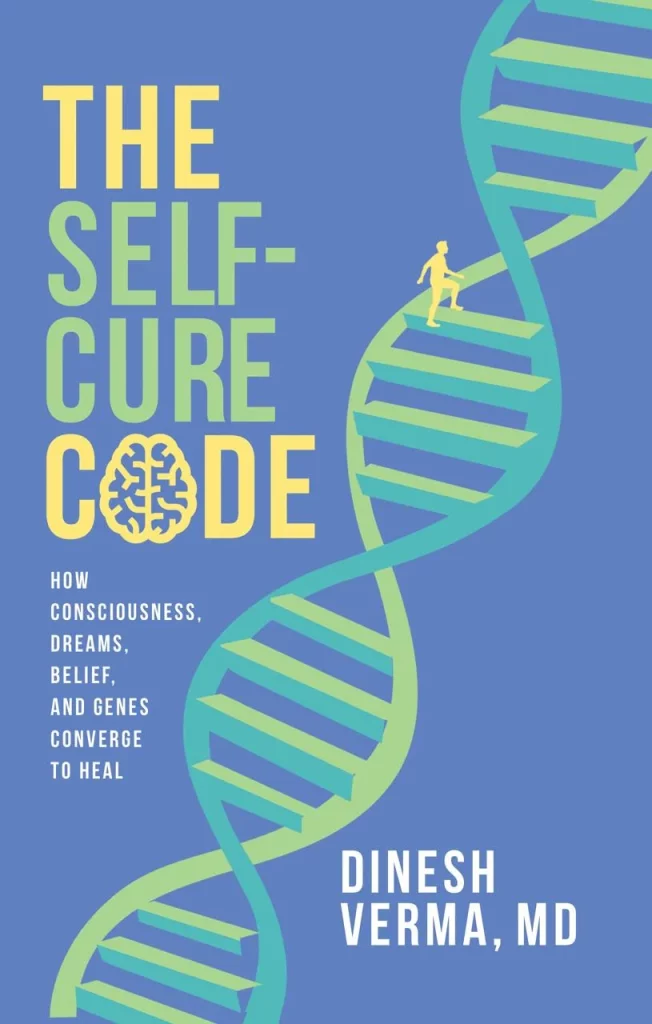
Through personal experiences and stories involving patients, friends and teachers, he explores how a person’s biological makeup, beliefs, emotions and awareness may influence their experience of health and healing.
For more than 50 years, Dr Dinesh says, one question has stayed with him: why do some people recover from illnesses that should have killed them? As a physician trained in Western medicine, he understood what the textbooks said. “But the patients in front of me told a different story — recoveries that defied prognosis, people who healed when they had no business healing.”
At its heart, the book is an attempt to understand why some people find extraordinary strength in the face of suffering and how the mind, body and consciousness may be connected.
“My hope is that these stories will offer readers a different perspective on healing and help illuminate the path for those navigating illness, trauma and loss,” says Dr Dinesh, who lives in Goa and travels frequently to England, Scotland, Canada and other parts of Europe.
A career shaped by curiosity
Dr Dinesh’s journey in medicine has been a long and evolving one, shaped by curiosity and a desire to understand the human body. He chose ophthalmology because of the complexity of the eye and the possibilities the field offered.
I chose ophthalmology because the eye is one of the most fascinating and complex organs of the human body. It brings together precision, technology and the science of vision.
Dr Dinesh Verma
His medical education began at the All India Institute of Medical Sciences (AIIMS), New Delhi, followed by further training in the UK. He trained in Hastings, Sussex; Redhill, Surrey; and Greenock, Scotland, while pursuing a Diploma in Ophthalmology from the Royal College of Surgeons of England, a Fellowship of the Royal College of Surgeons of Edinburgh and qualifications associated with the Royal College of Ophthalmologists.
“My medical training at AIIMS, followed by further exposure to institutions in the UK and the US, gave me a strong foundation in clinical medicine and research,” he says.
His professional journey took him to several hospitals and medical institutions overseas, including Hull Royal Infirmary and Addenbrooke’s Hospital in Cambridge. He subsequently went to Johns Hopkins University Hospital in Baltimore and the University of Southern California in Los Angeles.
Over the years, he has held clinical and academic positions, with contributions to retinal care, medical research, education and innovation, including virtual reality-based medical simulation. His experiences with patients also broadened his understanding of medicine beyond physical symptoms.
Every patient has a larger story involving emotions, beliefs, experiences and relationships.
Dr Dinesh Verma
Beyond ophthalmology
While ophthalmology remains central to his professional life, Dr Dinesh’s interests have expanded into artificial intelligence, genetics, mind-body healing, meditation, spirituality and human consciousness. “These interests may appear to be different fields, but I find that they are all connected by one common question: how do we understand the human being better?”
Artificial intelligence, he believes, has considerable potential to transform medicine, research and healthcare delivery. “From improving diagnosis to supporting medical training and simulation, AI offers exciting possibilities, although it must always be used responsibly.”
His interest in genetics stems from a desire to understand how biological makeup influences an individual’s health. He is particularly interested in epigenetics, which examines how environmental and other factors can influence gene expression. “Our genes do not operate in isolation. Epigenetics offers fascinating insights into the relationship between our biology and experiences,” he says.
The mind-body connection is particularly close to the subject of his book. Through his experiences in medicine and research, he has become increasingly interested in how beliefs, emotions and expectations may influence health and healing. “The placebo effect is one example that encourages me to examine this relationship more closely.”
Meditation, meanwhile, offers him a way to develop awareness, manage stress and understand his thoughts and emotions better. “I see it as a valuable practice for cultivating mental clarity and emotional balance.”
Spirituality allows him to explore questions beyond the physical body, including consciousness, purpose and humanity’s relationship with the larger universe. His interest in Indian philosophy has also given him another perspective on these questions.
Ultimately, Dr Dinesh sees science and spirituality not necessarily as opposing paths, but as different ways of exploring fundamental questions about human existence. “The Self-Cure Code is my attempt to bring many of these explorations together,” he says.
A childhood on a hill
Born in Delhi on November 9, 1957, Dr Dinesh began his education at the age of three, enrolling himself in a school without his parents’ knowledge.
The school in which I enrolled had no conventional building or official name and operated out of tents. They called it Pahadi Wala School because it sat on a small hill in Moti Bagh, near a temple. I had followed my elder brother there, who was studying in Class 4.
Dr Dinesh Verma
When the teacher asked his name, he gave her his pet name, Pinky. She insisted on knowing his real name, but he had no idea what that meant. “We had a neighbour whose pet name was also Pinky, and his real name was Yogesh. So, logically, I figured Yogesh must be my real name too. That’s what I told the teacher and started attending classes.”
The teacher eventually realised that he was the younger brother of another student and summoned his parents. His father then had to give him a formal name. “My father was then forced to give me a real name, which he hadn’t done until then. He changed it to Dinesh.”
For primary schooling, he later joined Government Boys Higher Secondary School in Moti Bagh I. His early interests, he recalls, were books and art.
His siblings also pursued distinctive careers. His sister worked at Sanchar Bhawan, the government communications ministry, while his brother trained at the National Academy in Pune to become a pilot in the Indian Air Force. He eventually attained the rank of Group Captain before retiring. He died at 70 following complications from bypass surgery.
Eye health and India’s progress
Having spent decades in ophthalmology, Dr Dinesh believes that maintaining eye health requires consistent attention.
Regular eye examinations, a balanced diet, adequate sleep and avoiding unnecessary strain are among his recommendations. With increasing screen use, particularly among young people, he advises taking regular breaks, blinking frequently and maintaining a comfortable viewing distance.
He also cautions against ignoring symptoms such as blurred vision, persistent headaches, eye discomfort or sudden changes in eyesight.”Regular consultations with an eye specialist can help detect problems early,” he says.
Comparing ophthalmology in India and the West, Dr Dinesh believes both have made significant progress. “India has highly skilled eye specialists, advanced medical institutions and access to sophisticated technologies.”
In several areas, particularly high-volume eye care and surgical services, India has developed considerable expertise. However, access to quality eye care remains uneven, especially in rural and underserved regions.
The challenge for India is not simply a lack of medical expertise but ensuring that quality eye care reaches everyone. Greater awareness, preventive screening and affordable treatment are essential.
Dr Dinesh Verma
Life beyond medicine
Dr Dinesh has several plans for the years ahead. Alongside continuing to write, he wants to develop smart devices combining augmented reality, virtual reality and artificial intelligence for eye diagnostics.
Another ambition is to train indie dogs as companion, therapy and guide dogs through the NGO Indogethger. He also hopes to travel around the world and continue exploring new interests.
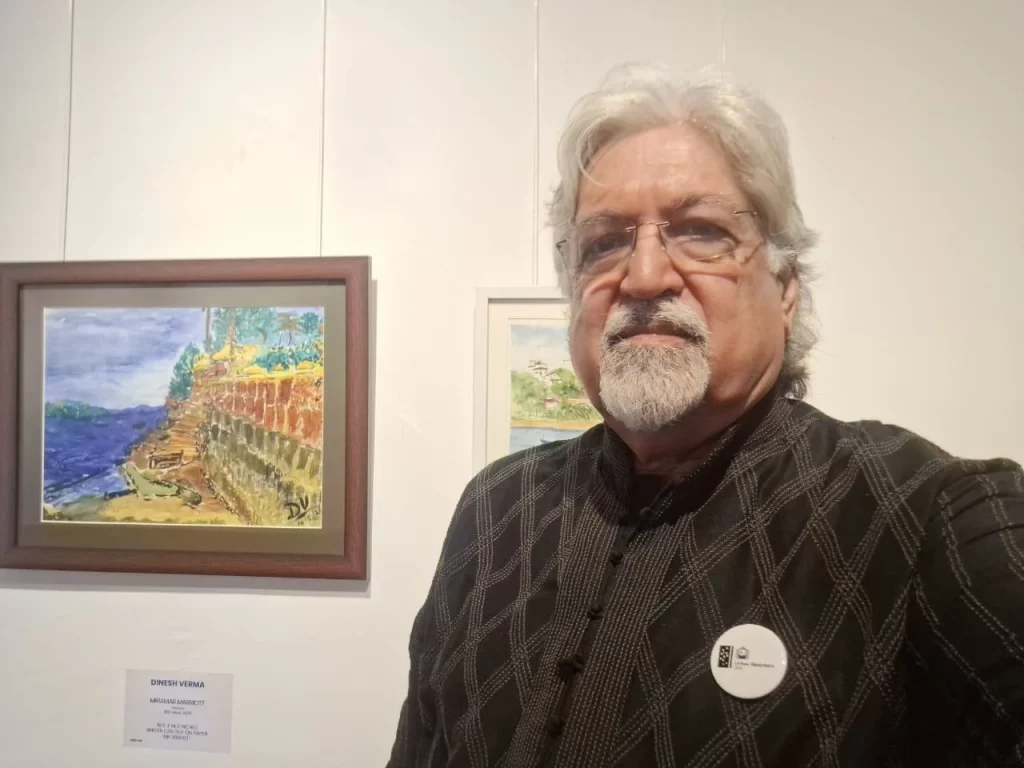
His days begin early, usually at 5.30 am, with meditation, herbal tea and exercise before he gets down to work. Away from medicine and writing, he enjoys sketching and painting, public speaking, dancing and music. He has even had a stint as a radio DJ in Southampton, England.
For someone whose professional life has spanned countries and disciplines, curiosity remains a constant. Whether exploring new medical technologies, writing about the mysteries of healing or pursuing his interests in art and music, Dr Dinesh continues to look for connections between different aspects of human experience.
- Follow Dr Dinesh Verma on LinkedIn
ALSO READ: Dr Kasu Prasad Reddy: From a distinguished UK career to a homecoming that restored sight to millions


Written By: Vikram Sharma
Dr K Surya Rao: From rural Andhra to the Padma Shri and international recognition

Written By: Vikram Sharma