
June 04 2026
Dr Amit Chakraborty: Mumbai oncologist treating patients across India and Dubai

(Jun 4, 2026) Mumbai-based surgical oncologist Dr Amit Chakraborty specializes in head and neck cancers including thyroid, parathyroid, and larynx. The surgical oncologist has performed over 25,000 complex surgeries across India and Dubai. Trained at the Royal College of Surgeons UK and Hanyang University Seoul, his surgical credentials are matched by a formidable business education. As co-founder of SSO Hospital, Mumbai and MBA graduate of London Business School, he applies the same precision to building cancer care infrastructure as he does to the operating table.
When a 67-year-old African woman with advanced-stage thyroid cancer of the larynx approached surgical oncologist Dr Amit Chakraborty for treatment, the challenges before him were considerable. She had been on targeted therapy in her home country and had been deemed inoperable.
Dr Amit took up the challenge. He performed a meticulous surgery for the removal of the thyroid along with the voice box, followed by plastic surgery reconstruction. Three years later, the patient is disease-free and remains completely off targeted treatment.
25,000 surgeries and counting
For someone who has performed over 25,000 complex head and neck cancer surgeries in 15 years, challenges are a daily reality.
Curing people of cancer gives me a high. In modern head and neck oncology, surgery is not only about removing disease but also about restoring form and function.
Dr Amit Chakraborty
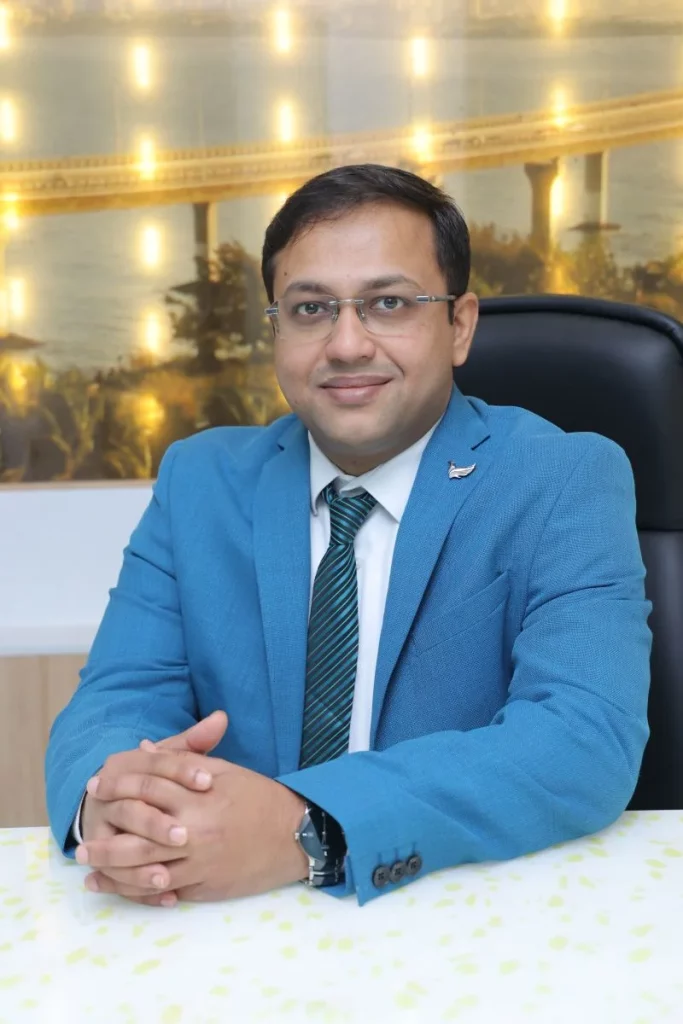
A highly regarded specialist in head and neck surgical oncology with practices in Mumbai and Dubai, Dr Amit has extensive expertise in thyroid, parathyroid, and larynx cancers. With 19 years of experience, he is currently associated with Speciality Surgical Oncology (SSO), Saifee Hospital, Breach Candy, and SL Raheja. He is known for complex oncological procedures and reconstructive surgeries, and his approach combines precision surgery, multidisciplinary planning, and individualised care — including age-specific treatment protocols for older patients.
From Chandrapur to the operating table
Born in Chandrapur, Maharashtra in December 1984, Dr Amit completed his schooling at St Michael’s School, Chandrapur. His father worked as an Executive Engineer with MSEB; his mother was a school teacher. He represented his school at state-level hockey competitions and, in his growing-up years, was passionate about cricket. “I used to look forward to summer holidays so I could play cricket with friends throughout the day,” says Mumbai-based Dr Amit Chakraborty, in a conversation with The Global Indian.
He completed his intermediate studies at Janta College, Chandrapur. Academically focused throughout, he was drawn to medicine during his graduation when he saw surgeons performing interventions and saving lives. He cleared the NEET exam and went on to complete his MBBS from NKP Salve Institute of Medical Sciences and Research Centre and Lata Mangeshkar Hospital, Nagpur in 2007. He then completed his MS in General Surgery from MUHS, Nashik in 2013, and his MCh in Surgical Oncology from Gujarat University in 2017.
Scarless surgery: Training with the world’s best
Dr Amit’s commitment to staying at the frontier of head and neck surgical oncology has taken him across the globe.
He recently returned from Seoul, where he trained under world-renowned surgeon Dr Kyung Tae at Hanyang University. “I trained extensively in the TOETVA approach — Trans-Oral Endoscopic Thyroidectomy Vestibular Approach — a minimally invasive, completely scarless thyroid surgery technique,” he explains. The technique, currently performed by only a handful of surgeons in India, eliminates any visible scar. “The surgery is done from the mouth,” says Dr Amit, a member of the Royal College of Surgeons (MRCS), UK.
Earlier this year, he attended the Asia-Pacific Thyroid Surgery (APTS) Conference in Singapore, where he focused on minimally invasive surgical approaches for thyroid cancer — particularly relevant given that the disease most commonly affects women, for whom a visible neck scar is a significant concern. He also gained expertise in Radiofrequency Ablation (RFA) and Microwave Ablation (MWA) for the treatment of benign thyroid nodules.
At the 2024 APTS Conference in Thailand, Dr Amit acquired expertise in Intraoperative Nerve Monitoring (IONM). “The focus was on testing and ensuring the integrity of the nerve supplying the vocal cords to preserve the patient’s speech during surgery,” he explains.
Cases that pushed every boundary
Dr Amit’s philosophy combines aggressive cancer control with meticulous reconstruction, integrating multidisciplinary tumour board decisions, precision surgery, and coordinated rehabilitation. Several of his cases stand out for their complexity.
A 54-year-old man required simultaneous cardiac and cancer management. His diagnosis revealed three-vessel coronary disease with a 20% ejection fraction alongside concurrent oral cancer. “Both conditions were high priority for survival, making timing critical. Due to the extreme risk, surgery had been refused by others,” says Dr Amit. He performed both surgeries simultaneously. Five years on, the patient is doing well.
In another case, a 25-year-old presented with an ultra-rare small cell carcinoma of the parotid gland — a diagnosis with no previously reported case in India. “We successfully operated on the tumour while preserving all branches of the facial nerve without any damage. The patient subsequently underwent adjuvant chemo-radiation,” he explains. The patient is doing well two years later.
A 60-year-old woman arrived with severe pain from a giant parathyroid adenoma. “We successfully removed the mass completely without opening the chest. The patient recovered fully, and all bony changes were reversed within three years,” says Dr Amit, whose surgical repertoire includes composite resections, microvascular free flap reconstruction, mandibulectomy with reconstruction, thyroid and parathyroid surgery, and skull base approaches.
The Commando Resection
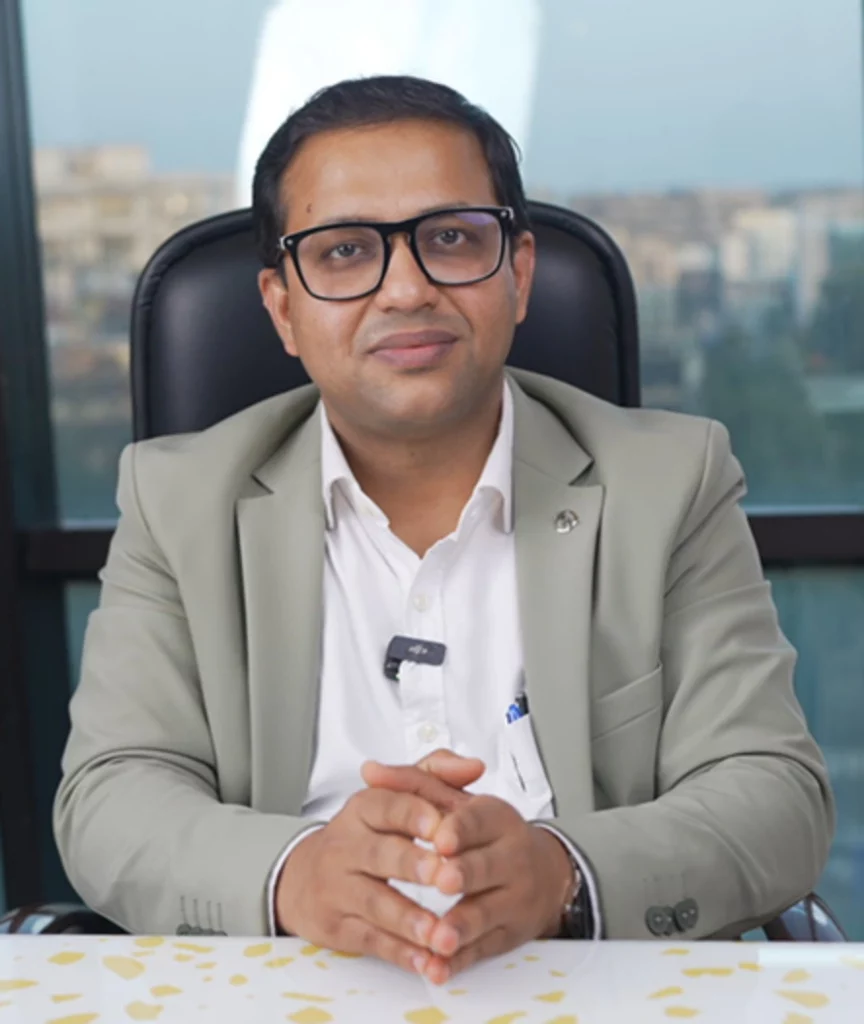
Among his most complex interventions is the Commando Resection — a major surgical procedure used to treat advanced oral and oropharyngeal cancers such as tumours of the tongue or cheek. The term is an acronym: COMbined MAndibulectomy and Neck Dissection Operation. The surgery is conducted in a single continuous block to ensure complete cancer removal. “Because this surgery is highly invasive, it is usually immediately followed by reconstructive surgery to restore the patient’s facial aesthetics, swallowing, and speech functions,” Dr Amit explains. He is also known for structured surgical planning in advanced oral cancers and for scar-minimising approaches in selected cases.
Practice in Dubai
Beyond Mumbai, Dr Amit performs complex head and neck cancer surgeries at Dubai London Hospital and Canadian Specialist Hospital in Dubai. Depending on his India schedule, he holds regular OPD consultations in the UAE, where cancer patients from across the country seek him out for treatment.
An MBA between surgeries
Dr Amit is one of the rare surgeons who can dissect both the human body and a balance sheet. He completed an MBA at London Business School between September 2022 and 2024. “As co-founder of SSO Hospital, it was essential to understand the financial dynamics in order to take the hospital to newer heights.”
His goal is to build a cancer care ecosystem that transforms treatment outcomes in India.
I aim to bring affordable healthcare to Indian masses and work consciously towards reducing the financial burden of cancer on patients.
Dr Amit Chakraborty
Preventing head and neck cancer: What the d
View this post on Instagram
Preventing head and neck cancer: What the doctor says
As a specialist, Dr Amit consistently stresses that the primary causes of head and neck cancers are largely preventable. Tobacco use — smoked or chewed — and excessive alcohol consumption together form the most significant risk combination. HPV infection is a major cause of oropharyngeal cancers. Poor oral hygiene, prolonged exposure to asbestos or wood dust, and a nutrient-deficient diet also raise risk. “Early detection and timely intervention can make a significant difference in outcomes,” he says.
India, he believes, must move more decisively toward minimally invasive cancer treatment, with stricter screening protocols for early detection. His own focus remains on the sub-speciality of thyroid cancer, continuing to innovate and adapt new techniques for better patient outcomes. He contributes actively to academic forums and publications in head and neck oncology and is involved in advancing evidence-based surgical protocols within the SSO network.
Outside the OT
When not operating, Dr Amit keeps up a disciplined routine — gym at least three times a week, cycling on weekends, and a new hobby that is decidedly non-surgical: playing the drums.
Dr Amit Chakraborty
| Born | 5 December 1984, Chandrapur, India |
| Based | Mumbai, India |
| Studied | MBBS, MS (General Surgery), MCh (Surgical Oncology), MRCS (UK), MBA |
| Languages | Hindi, Bengali, English |
Signature work
Pioneer of scarless thyroid surgery in India, Dr Amit Chakraborty has performed over 25,000 complex head and neck cancer surgeries, taking on cases deemed inoperable elsewhere and restoring speech, function, and life to patients across India and the UAE.
Idea
He is bringing scarless, minimally invasive thyroid surgery to India while building a cancer care ecosystem aimed at making advanced treatment affordable for ordinary Indians.
Network
Operates across top Mumbai hospitals and two Dubai institutions, with training stints in Seoul, Singapore, and Thailand and an MRCS from the Royal College of Surgeons, UK.
Impact
Across 25,000 complex surgeries, he has operated on patients others turned away, including India's first recorded case of small cell carcinoma of the parotid gland.
Inspired by Dr Amit Chakraborty 's journey?
Yours follows the same Hero's pattern — Separation, Initiation, Transformation, Return.
Share with




Written By: Amrita Priya