


(March 22, 2026) The chef behind one of Mumbai’s most talked-about modern Asian openings, Bang Bang! Noodle, Rahul Punjabi has had a roller-coaster journey. From being an average school student to landing a job at Google, he gave it all up to follow his passion—cooking. He speaks to Global Indian about his journey so far.
Facing challenges early
Punjabi admits that he was not a good student—lacking focus, earning poor grades, constantly questioning his teachers, and generally a problem child. Playing team sports like cricket and rugby was a childhood hobby, and he was fortunate enough to represent India in the U-20 Asian 5 Nations Rugby tournament in 2010.
“Team sports gave me a sense of belonging in a collective, an appreciation for my role as a cog in a system, and the understanding that we don’t win alone; we win together as one unit. Questioning my teachers taught me that adults hate it when kids blindly accept their words, and often, the adults are wrong—and quietly change their decision after questioning.”
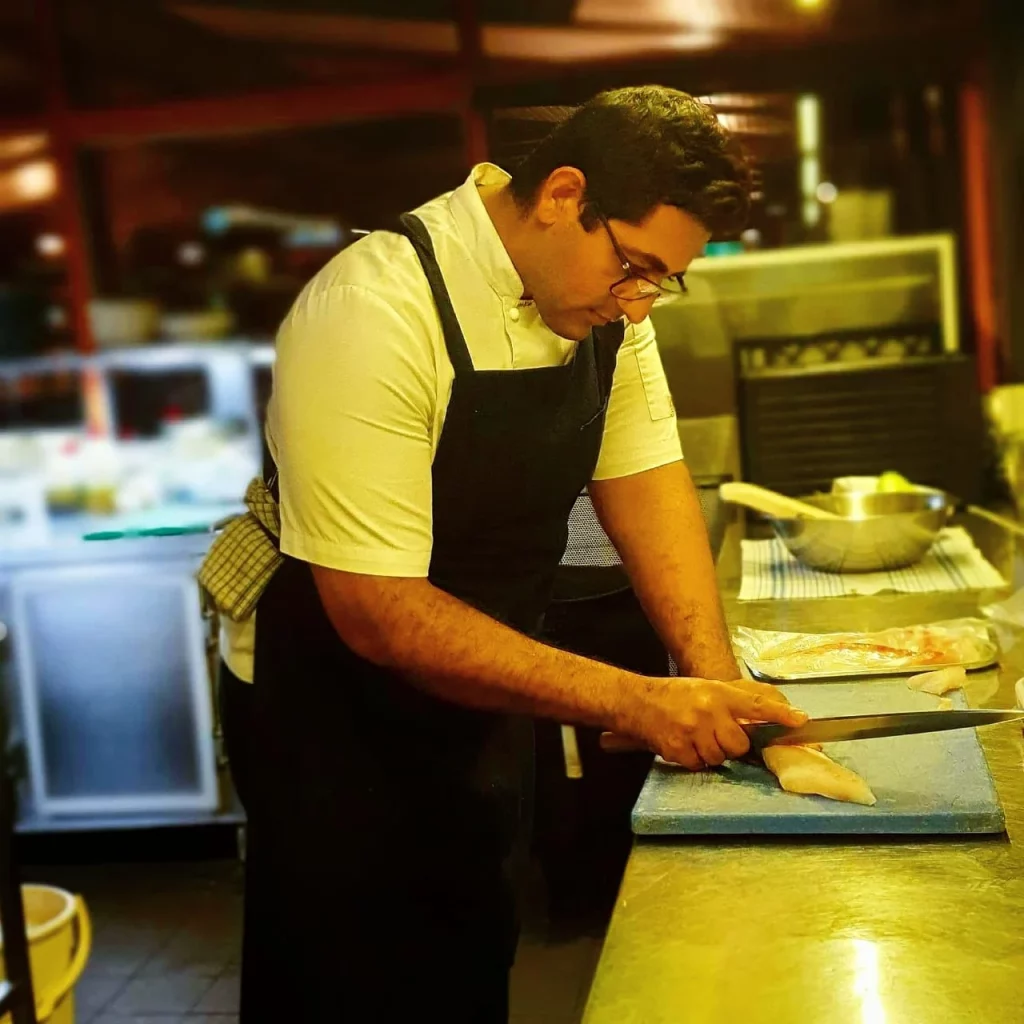
He grew up as the eldest son in a business family, and there was always an expectation that he would eventually take over the family business. But the passing of his grandfather coincided with the government banning all export fishing activities, causing the business to collapse almost overnight.
“It put enormous stress on my father to provide for the family, and our goals shifted to pure survival. During those days, my defense mechanism was to lose myself in TV—not sports or cartoons, but food shows. Vir Sanghvi, Luke Nguyen, Peter Kuruvita, Gordon Ramsay, and Tom Colicchio were my childhood heroes. It wasn’t exactly considered ‘manly,’ and to avoid getting bullied, I kept that side of my life hidden,” he recalls.
Initial food days
He recalls that school was difficult. He didn’t understand why everyone else found studying so easy—yet he knew every ingredient in a Sri Lankan curry and the French colonial origins of bánh mì.
“My family expected me to go to college and work in a company, but even after finishing college and spending a year at Google, I still had a burning desire to become a chef. So, I quit my job, took an unpaid internship at 212 Bar and Grill in the U.S., and never looked back,” he reminisces.
After a year at 212 Bar and Grill, he moved to LCB in Sydney. Determined not to be a burden on his family, he worked the breakfast shift at a café before classes and washed dishes at a kebab shop at night.
“I kept this up until our compulsory work experience segment, where I was fortunate to land a role at Sydney’s iconic ‘The Boathouse on Blackwattle Bay,’ a one-hat restaurant (Australia’s equivalent of a Michelin star) right next to the fish market. After six months, the chef offered me the chance to drop out of school and work full-time. Of course, I grabbed the opportunity, and by the time I left three and a half years later, I had risen to junior sous chef,” he recalls.
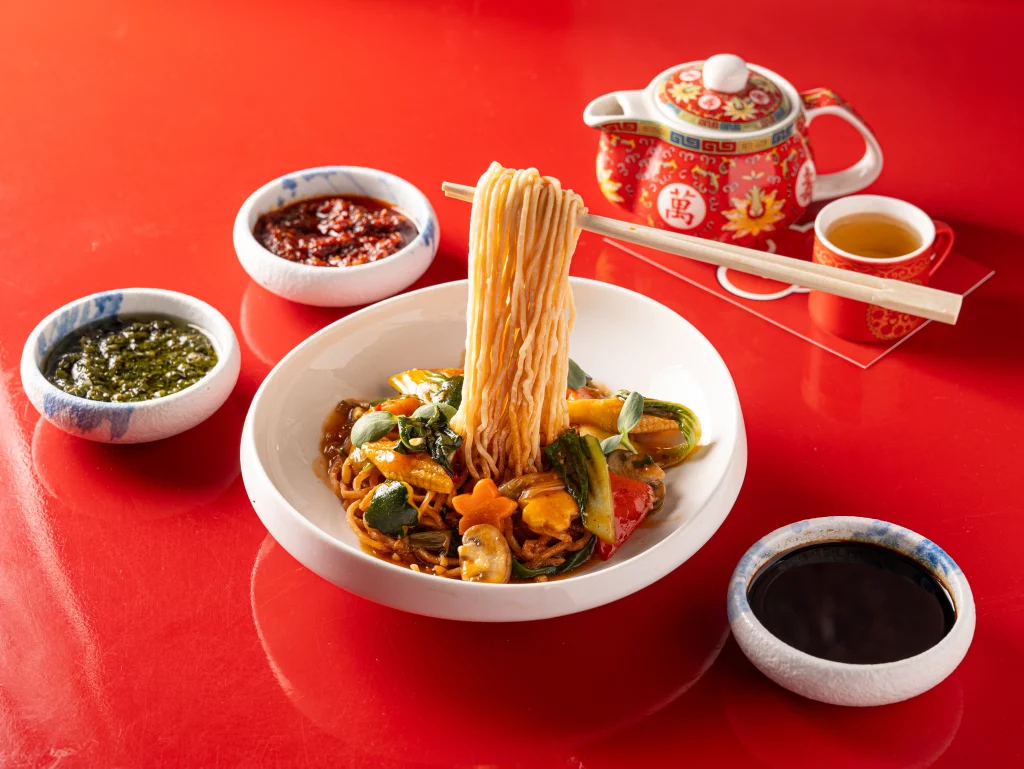
Bang Bang! Flying Noodle
His next job was at Restaurant Quay, Australia’s most iconic restaurant, which held three hats consecutively for 30 years before closing last month.
“The level of cuisine, precision, cleanliness, and sky-high standards was a dream come true for any young chef. Every one of my colleagues was at the top of their game; people came from all over the world for even a six-month stint at Quay, and I was lucky enough to spend three years there,” he recalls.
Eventually, in 2022, he and his wife decided to return to India. “It was here that I connected with Mr. Zorawar Kalra and took on the executive chef role at Masala Library by Jiggs Kalra. Together, we won three Culinary Culture Stars and ranked #3 in India at the Hospitality Horizon Awards,” he says. His final role before Bang Bang! was as corporate chef for Aspect Hospitality, managing 10 brands pan-India and opening 50 QSR outlets in just four months.
His Sydney days were a roller coaster. Some of the hardest days of his life were spent in those hatted kitchens. “But when I look back now, they are also my fondest memories. Everyone there was incredibly passionate, with a burning desire to push themselves and improve. If I could go back in time, I would relive every moment exactly as it happened—just to experience those days again,” he says.
Food philosophy
As a young, up-and-coming chef, he was fully immersed in the hype of fine dining. He wanted every dish to be impeccably soignée, with intricate plating, flawless technique, and absolute precision.
“Over time, my outlook on food has evolved. I still crave the rigour, technical mastery, and drive that fine dining demands, but now I want my food to be big, hearty, generous, and undeniably tasty. When someone eats my dishes, I don’t want them to stop and click photos. I want them to greedily inhale the food—and only halfway through realise they forgot to take a single shot,” he smiles.
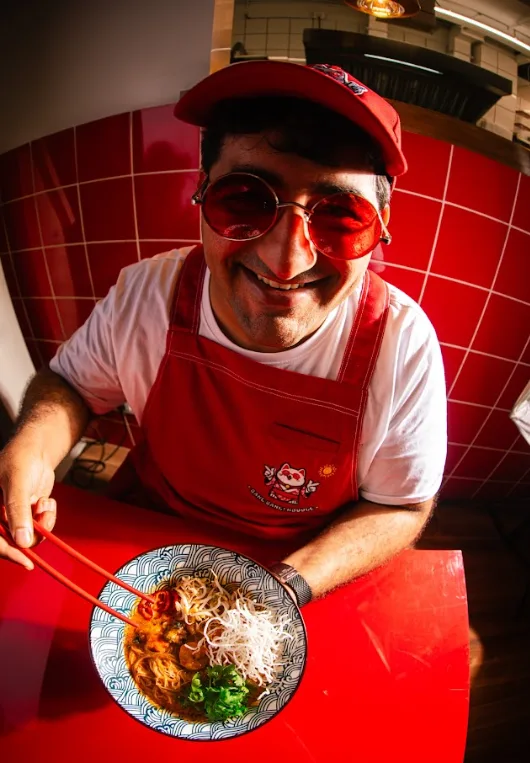
When he was in Sydney, working long nights and early mornings, his only late-night sustenance was Chinatown. “I’d walk in around 1:30 or 2 a.m. and grab my nightly bowl of mala noodles or a Sichuan dry pot. A quick meal—tasty, spicy, and comforting—would keep me going and push me through the night,” he says.
His restaurant, Bang Bang! Noodle in Mumbai, is a nod to that young version of himself. “I want to give my guests the same comforting, flavorful food that once kept me going, both physically and emotionally,” he explains.
Asked what being a chef in India today means, he is optimistic. “It’s arguably better than going overseas. Enough of us have returned from working abroad, and we’re building kitchens with the same passion and drive we experienced overseas. On top of that, the economy is booming, and consumption is local. There has never been a better market for hospitality in India, which brings immense opportunities for exponential career growth,” he says.
Wise words
Having faced innumerable challenges throughout his life, he believes the key is to stay adaptable, keep an open mind searching for solutions, and most importantly never give up, no matter how hard it gets. “Life will keep knocking you down, but losing is the choice to stop getting back up. Those who understand that staying down is a choice always find a way to come out on top,” he says.
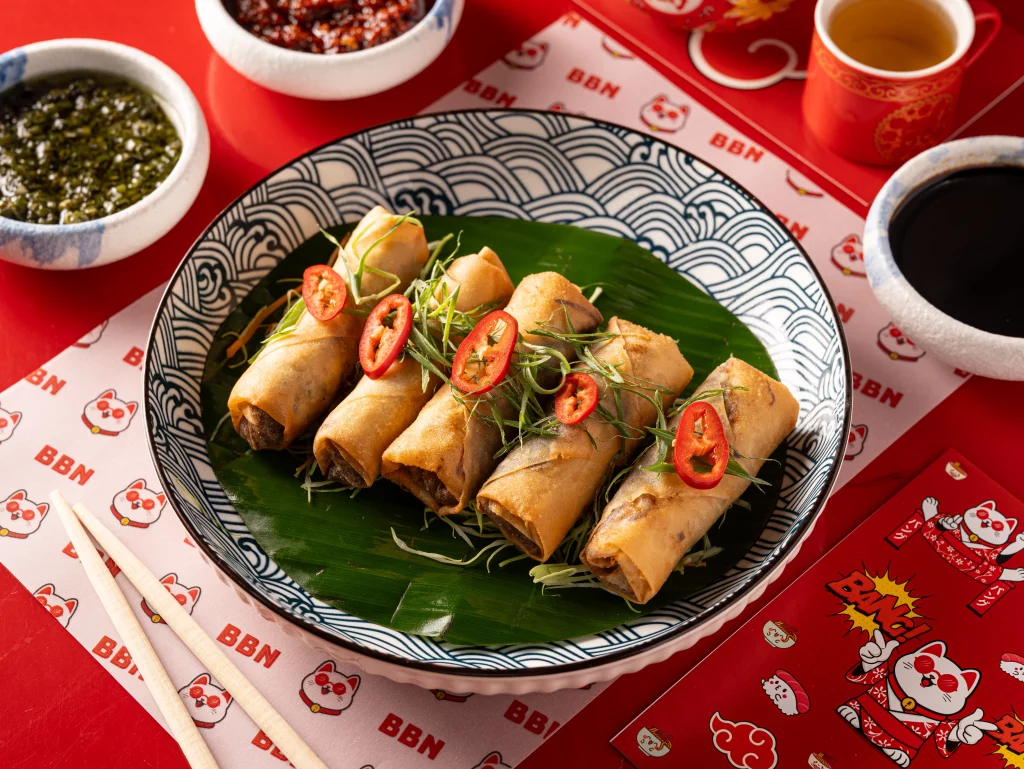
Bang Bang! Veg Spring Rolls
“My biggest advice to young chefs is to cultivate an impatient sense of improvement. Push yourself—wake up early, sharpen your knives, clean your station, declutter, organise, and execute. Finish your prep ahead of time, make the staff meal, take on any task your senior chefs assign, and become a weapon on the line. Go for the after-work beers, but leave after two or three, and don’t even stop to say goodbye—just go,” he advises.
He stresses that it’s equally important to keep enjoying the work, put love into every plate, and fall in love with the entire process of hospitality. “I got into this business for a love of food, beverage, and service. Now that I’ve built the skills and tools to run my own place, I finally get to do what I love—make people happy through my food,” he concludes.
ALSO READ: Chef Mohit Singh and the making of Otoki: A story across four countries