
August 26 2026
Chan Patel: From an 8-by-10-foot room in Bombay to America’s largest Indian-American-owned bank

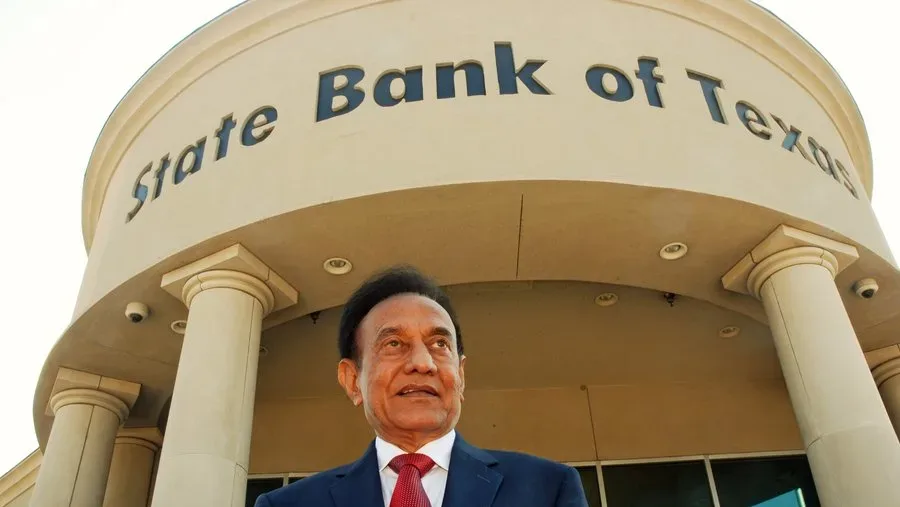
(Aug 26, 2026) Born into a modest family in Bombay, Chan Patel arrived in America in 1965 with $200 and a place at Stanford. He went on to build a successful hotel business and founded State Bank of Texas after seeing fellow hard-working immigrant entrepreneurs struggle to access business loans due to cultural differences. Today, under Chan Patel’s leadership as CEO, State Bank of Texas is the largest Indian-American-owned bank in the United States.
Chandrakant ‘Chan’ Patel grew up with his parents and three siblings in an 8-by-10-foot room in Bombay, now Mumbai, that served as the family’s kitchen, bedroom and living space. He went on to study mechanical engineering at the University of Bombay before leaving India for the United States in 1965 as a graduate student at Stanford University.
He did not arrive with a business plan. In fact, his first instinct was to return home. After completing his master’s degree at Stanford, Patel was deeply homesick. There were few Indians around him and little of the community infrastructure that later generations would take for granted. He had planned to return to India, until his sister reminded him that his education in America had cost money that had come from their father’s lifetime savings.
“She said, look, it is only right that you at least send that money back and then go back to India,” Patel recalled in an interview. That conversation changed the course of his life. He stayed in America, took a job as an industrial engineer at Austin Biscuit Company in Baltimore and enrolled at Johns Hopkins University to study operations research.
View this post on Instagram
A cricket game that changed everything
Patel’s big turn came almost by accident. While playing cricket in Washington, DC, he noticed a hotel carrying a sign advertising jobs for airline employees. Still dressed in his white cricket uniform, he stopped to inquire. The chance encounter eventually led to an interview with Braniff International Airways in Dallas.
During the interview, Patel was unusually direct about his ambitions. He wanted six weeks of leave so he could return to India, get married and bring his future wife to the US. He also told the interviewers that one of his dreams was to take his parents on a trip around the world.
Braniff offered him a salary slightly lower than his existing pay in Baltimore, but added benefits that mattered more to him. He was offered first-class tickets to India for his wedding, a ticket for his future wife and a round-the-world pass for his parents.
“Now we’re talking,” Patel recalled having said before accepting the offer. He began working for Braniff in 1968 and moved to Dallas. He left his PhD programme at Johns Hopkins but received another master’s degree in management science from the university.
His career in aviation, however, would soon expose him to another business that would shape his future.
Discovering the hotel business
Patel and his wife regularly travelled between Dallas and San Francisco, where he had friends and relatives involved in the hotel business. In the early 1970s, he began comparing their earnings with his own salary at Braniff International Airways. While he was making about $30,000 a year, some hotel owners were earning $60,000 to $70,000 from a single property.
The numbers intrigued him, and he decided to invest in the hotel business. His professional friends advised against it. They were engineers and other educated professionals who saw hotel ownership as a risky departure from his education. Patel eventually ignored their advice.
Every time I proposed to my friends that, look, I’m going to buy a hotel, they said, ‘Chan, don’t you do that — it’s a bad business and you won’t be able to use your education.’ … But I couldn’t resist myself.
Chan Patel
In 1976, he bought his first hotel on Fort Worth Avenue in Dallas. It was a 30-year-old property that cost $360,000. He put down $60,000 upfront and convinced the seller to allow him to pay rest of the amount over time, like a loan.
Living in the hotel and doing everything himself
He moved into the property, converted part of the lobby into living quarters and continued working at Braniff International Airways. At lunchtime, he would return to the hotel, change into work clothes and handle maintenance. Sometimes, he cleaned the bathrooms himself. His wife helped run the front desk, while Patel also taught economics at Richland Community College.
For a period, he was effectively juggling three jobs: airline employee, hotel owner and college instructor. The gamble began to pay off.
Two years after buying his first property, he acquired a second hotel. Over time, he finally left Braniff International Airways to focus on the business full time, despite his wife and father believing he was making a serious mistake. He kept on expanding and his portfolio grew to 17 hotels.
A heart attack and a lesson in delegation
In 1983, Patel had a heart attack. His wife was pregnant with their fourth child. The experience frightened him into stepping away from his business. For six months, he stopped visiting his hotels and immersed himself in the study of cardiology. He attended conventions and stayed away from his business contacts.
Eventually, he checked the financial performance of his hotels. The results had barely changed. The business had continued to operate without him. For Patel, the lesson was profound. He realised he had been making himself indispensable when he should have been building an organisation capable of functioning without him.
“I learned the lesson of delegation of authority,” he said. “And then I changed my entire philosophy of running a business.” That lesson would become important again when he entered banking.
The two small loans that sparked the idea of starting a bank
The idea for State Bank of Texas emerged from two seemingly ordinary requests. A bank president who knew Patel asked him to co-sign a $2,000 car loan for an Indian borrower. A short time later, he was asked to do the same for another borrower.
Patel knew both men. Neither had bounced checks or an obvious financial problem. So he asked the bank president why his signature was needed. The answer was that their credit reports were blank.
They had no credit cards or established credit history. For Patel, that was a revelation. Here were people who appeared financially responsible but were being judged by a system that had little information about them.
“That’s where I got the idea of starting a bank,” he said. The bank’s own history describes the larger problem Patel had identified: immigrant entrepreneurs were struggling to obtain business financing because of cultural differences. His answer was to create an institution that understood their businesses and communities. But turning the idea into a bank required $2 million. Patel had about $1 million of his own capital available and needed to raise the rest.
Raising $1 million when banks were failing
The timing was hardly ideal. The US financial system was under pressure, and Patel recalls that banks were failing during the Resolution Trust Corporation era. His first attempts to raise money were unsuccessful.
He spoke to Asian-American physicians’ organisations and other potential investors. Nobody invested. Then he changed his strategy. Patel approached hotel owners who, like him, had come to America as students and built businesses. He offered investors $100,000 for a 5% ownership stake, a seat on the board and the opportunity to learn banking. The pitch worked. Within two weeks, he had raised $1 million.
I wanted to set up an example and prove to the nation (United States) and our community that hoteliers can not only run hotels, but they can run a bank also.
Chan Patel
Opening on Black Monday
State Bank of Texas opened its doors on October 19, 1987. It was Black Monday, the day the stock market crashed. The bank’s official history calls attention to the irony: all eyes were on the “Motel Patels” as they attempted to prove that a group of hotel owners could run a bank.
Patel’s own recollection is even more striking. The moment the bank opened, his directors disappeared.
They were not abandoning him. They were dealing with margin calls triggered by the market crash. Patel was suddenly alone. The investors also knew little about banking. So Patel turned the challenge into a training exercise. He sent the wives to banking school, some of the men to teller school and others to learn the key-punch systems used by banks at the time.
The bank opened with one paid employee, Steve Halt, who became its CFO. Patel himself was president. Over time, professional bankers joined the institution and the customer base expanded. Today, State Bank of Texas describes itself as a family-owned and operated bank specialising in hospitality lending, with about $2.8 billion in assets.
View this post on Instagram
The community bank that grew from an immigrant story
Patel’s story is ultimately about more than banking. It is about what happens when an immigrant understands a problem because he has lived through parts of it himself.
His son Sushil is now president, while Rajan serves as chief lending officer. The bank’s leadership page confirms their roles and describes Sushil as instrumental in growing the institution from a $100 million asset bank in 2004 to a $2 billion asset bank. Rajan oversees roughly $2 billion in loans across 30 states.
For Patel, handing over responsibility was not a retreat. It was the culmination of the lesson he had learned after his heart attack: build something that can continue without you.
State Bank of Texas is now family-owned and operated by the Patel family and has become a major hospitality lender. Its current leadership continues to emphasise the same relationship-based approach that Patel developed at the beginning. Patel remains chairman and CEO, while his sons carry the institution into its next chapter.
When you make a loan there are three C’s: character, collateral, cash flow… In my bank, character is the most important.
Chan Patel
The journey from that 8-by-10-foot room in Bombay to a multibillion-dollar American bank is extraordinary. But perhaps the most revealing part of Patel’s story is that he does not describe his success primarily in terms of money.
He talks about people, about knowing where a borrower came from, about trusting someone’s character, and about helping a business through a difficult period rather than immediately taking its property, and about building an institution strong enough to outlive its founder.
ALSO READ: Serving the Diaspora: How Parth Garg’s Aspora is solving cross-border banking for Indians abroad
Chan Patel
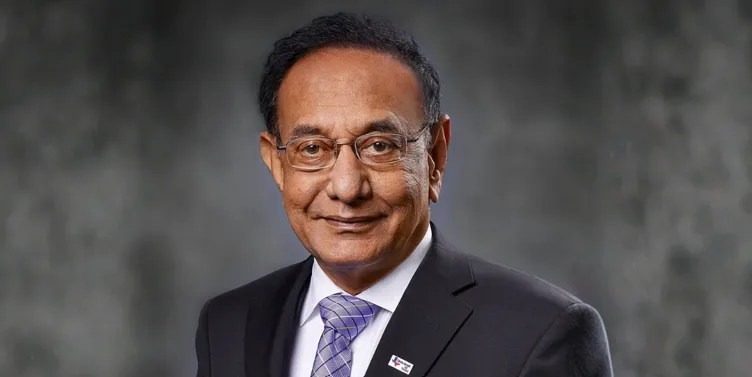
| Born | 1945, Bombay, India |
| Based | Dallas, Texas, US |
| Studied | University of Mumbai | Stanford University | The Johns Hopkins University |
| Languages | Gujarati, Hindi, English |
Signature work
Chan Patel founded State Bank of Texas, a community bank to serve hospitality entrepreneurs overlooked by conventional lenders, built on character-based lending and community trust rather than credit history alone. Through his own hotel portfolio, he also helped pioneer Indian American hospitality entrepreneurship in Dallas, paving the way for a wave of immigrant-owned hotels in the region.
Idea
Chan Patel founded State Bank of Texas after noticing that immigrant hotel owners with strong finances still had blank credit reports, since they dealt in cash rather than credit. This gap inspired a bank built on character and community trust rather than paperwork alone.
Network
His journey spans Dallas's hospitality industry, where he built a portfolio of hotels through the 1970s and 80s, to founding State Bank of Texas, where he raised the bank's capital from fellow hoteliers and built it into a trusted lender for the community.
Impact
Through State Bank of Texas, Chan built the largest Indian American-owned bank in the US, with over $2.8 billion in assets, while his hotel portfolio grew to 17 properties and helped pioneer hospitality entrepreneurship for Indian Americans in Dallas.
Giving Back
Chan and His wife Surekha Patel are engaged in several philanthropic initiatives including the $2 million donation to the cardiovascular unit at Baylor Scott & White Medical Center.
Inspired by Chan Patel 's journey?
Yours follows the same Hero's pattern — Separation, Initiation, Transformation, Return.

Share with



Written By: Amrita Priya
Serving the Diaspora: How Parth Garg’s Aspora is solving cross-border banking for Indians abroad

Written By: Vikram Sharma
Raising the stakes: How investment banker Anurag Tripathi became a bestselling author

Written By: Amrita Priya
With inspiration and vision, opening a bank is one of the most challenging accomplishments. It requires courage when few are willing to lend support, and determination to prove credibility, earn trust, and build a strong financial institution.
Your leadership and commitment have strengthened our community and created opportunities for many to succeed. Your journey is a testament to perseverance, integrity, and excellence. The success you have achieved is highly respected and valued by our community and all those who have had the privilege of working alongside you.
Congratulations on this remarkable milestone. This is truly a celebration of your achievements and an inspiration for future generations to dream bigger and achieve more.
What a gracious life summary and sharing of life shaping events. You were consequential in making choices that created epic results.
Your family reflects and represents the world changing actions and decisions that allowed you to have a positive impact on all you touched. Congratulations.