
July 17 2026
Anil Menon: Indian-origin NASA astronaut begins his first mission to the International Space Station
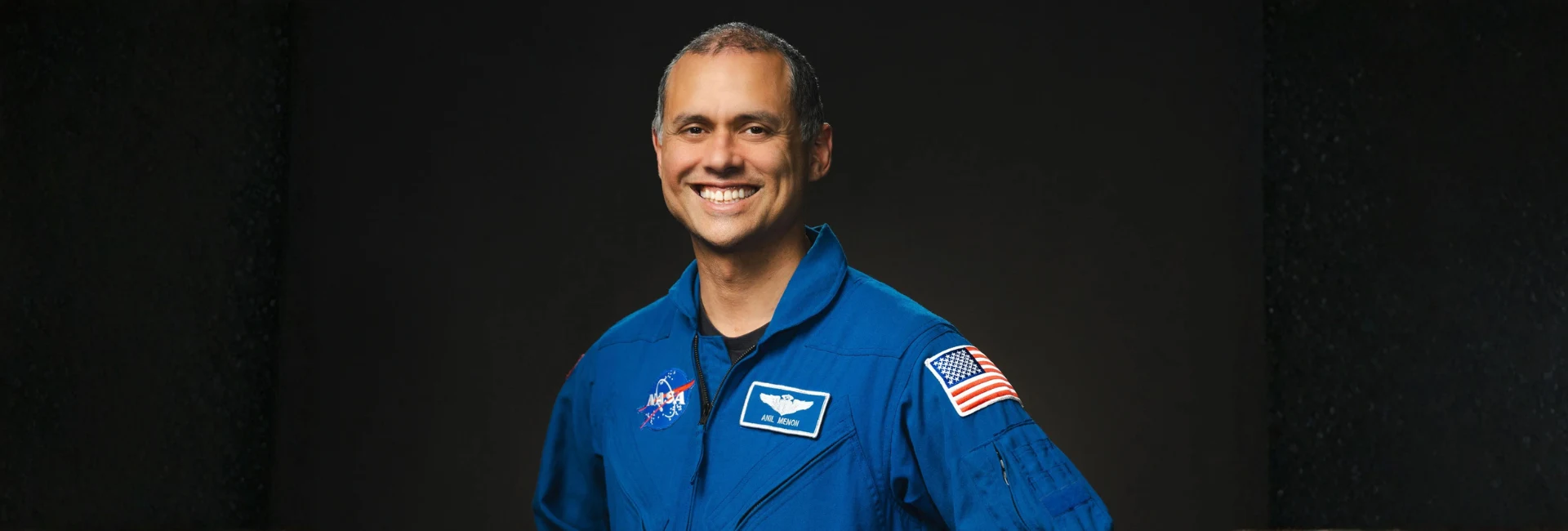
On July 14, 2026, NASA astronaut Anil Menon, an American physician of Indian and Ukrainian heritage, began his first mission aboard the International Space Station after launching on Russia’s Soyuz MS-29 spacecraft. During his approximately eight-month stay, he will support scientific research in medicine and space technology while living and working aboard the orbiting laboratory.
“Hello from the International Space Station. It’s day one for me and I just wanted to say thank you to some of the folks that helped make this dream a reality.”
The above were the first words from orbit by Indian-origin NASA astronaut Anil Menon after arriving at the International Space Station (ISS) on July 14, 2026, marking the first spaceflight of his career.
Earlier that day, a Soyuz rocket lifted off from Baikonur Cosmodrome in Kazakhstan carrying Menon and Roscosmos cosmonauts Pyotr Dubrov and Anna Kikina. Just over three hours later, the Soyuz MS-29 spacecraft docked with the ISS, where the crew began an approximately eight-month mission.
In his first message from space, Menon thanked people who had supported his journey including his astronaut wife Anna Menon, acknowledged his former colleagues at SpaceX, and expressed appreciation for the organisations that had shaped his career. “Thank you all for teaching me how to do the impossible. I have used that lesson time and time again,” he said,.
The Indian-origin doctor who charted an unconventional path
Born in Minneapolis, Minnesota, to an Indian father and a Ukrainian mother, Anil Madhavan Samoilenko Menon did not take the conventional route to becoming an astronaut. His father traces his roots to Kerala, making Menon one of the latest Indian-origin professionals to represent the global Indian diaspora on one of the world’s biggest scientific platforms.
After graduating in neurobiology from Harvard University, he trained in emergency medicine before pursuing a residency in aerospace medicine at the University of Texas Medical Branch. His residency research focused on medical kits for commercial spaceflight, combining his interests in medicine and human spaceflight at an early stage of his career.
Menon was assigned to the 173rd Fighter Wing, where he trained in aerospace medicine and deployed twice with the US Air Force‘s Critical Care Air Transport Team, treating and transporting wounded service personnel. He later served with the 45th Space Wing, providing medical support for rocket launches and landings.
Saving lives before flying beyond Earth
Long before becoming an astronaut, Menon built a career in emergency and aerospace medicine. As a physician with fellowship training in wilderness and aerospace medicine, he joined the International Medical Corps during the 2010 Haiti earthquake, the 2011 Reno Air Show accident and the 2015 Nepal earthquake, providing emergency medical care in disaster-hit regions.
In the US Air Force, he logged more than 100 sorties aboard F-15 fighter jets as a flight surgeon and helped transport more than 100 critically ill patients through the Critical Care Air Transport Team. These experiences, spanning disaster response, aviation medicine and critical care, laid the foundation for his later work in human spaceflight.
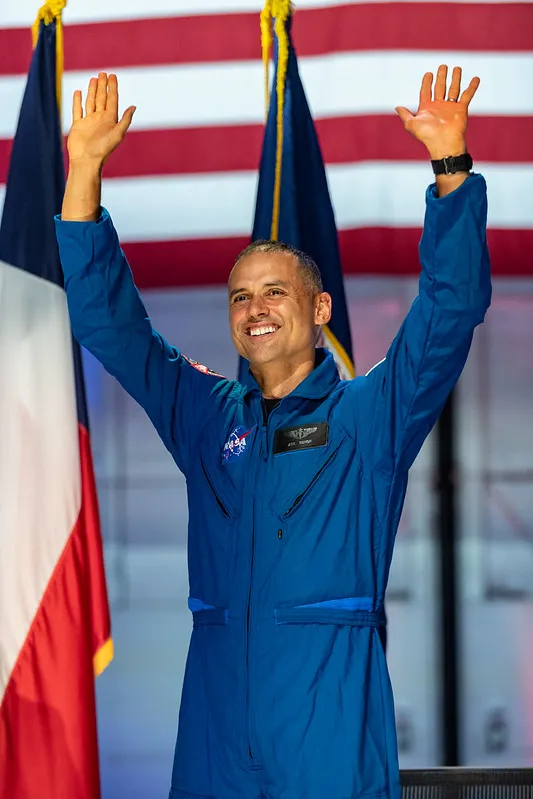
Anil Menon
Helping build modern human spaceflight
Menon joined NASA as a flight surgeon in 2014, supporting astronauts assigned to long-duration missions aboard the International Space Station. He spent more than six months living and working in Star City, Russia, serving as deputy crew surgeon for Soyuz TMA-13M and Soyuz TMA-17M missions and prime crew surgeon for Soyuz MS-06. As part of NASA’s Human Health and Performance Directorate, he also worked on astronaut healthcare systems and medical support for future space missions.
In 2018, Menon became SpaceX‘s first flight surgeon, helping establish the company’s medical programme for human spaceflight. He supported Crew Dragon missions from Demo-2, SpaceX’s first crewed mission for NASA, through Inspiration4, the world’s first all-civilian orbital mission. His work also included building medical capabilities to support future human spaceflight programmes.
Looking back on that period from orbit, Menon said: “Thank you all for teaching me how to do the impossible. I have used that lesson time and time again.”
From flight surgeon to NASA astronaut
In December 2021, NASA selected Menon as part of Astronaut Group 23, choosing him from nearly 12,000 applicants. He reported for astronaut candidate training in 2022 and completed two years of initial training in 2024. The programme included instruction in spacecraft systems, robotics, survival training and other skills required for future space missions.
Menon currently serves in the United States Space Force, in addition to his role as a NASA astronaut. In his first message from the International Space Station, he also acknowledged his fellow Guardians. “This is the biggest domain and your job, our job is unbelievably big. I’m proud to serve alongside you.”
His journey from physician and flight surgeon to astronaut has brought together expertise in medicine, military service and human spaceflight, culminating in his first mission aboard the International Space Station.
Science aboard the International Space Station
Menon’s first mission is expected to last about eight months, during which he will live and work aboard the International Space Station alongside an international crew of astronauts and cosmonauts. The ISS serves as a unique laboratory where research is carried out in microgravity, an environment that allows scientists to study phenomena that cannot be replicated on Earth. The findings are used to improve scientific understanding while supporting technologies for future space missions.
During his stay, Menon will take part in research that includes studying the growth of semiconductor crystals in microgravity, work that could improve the manufacturing of high-performance electronic components used in advanced computing, artificial intelligence and medical technologies.
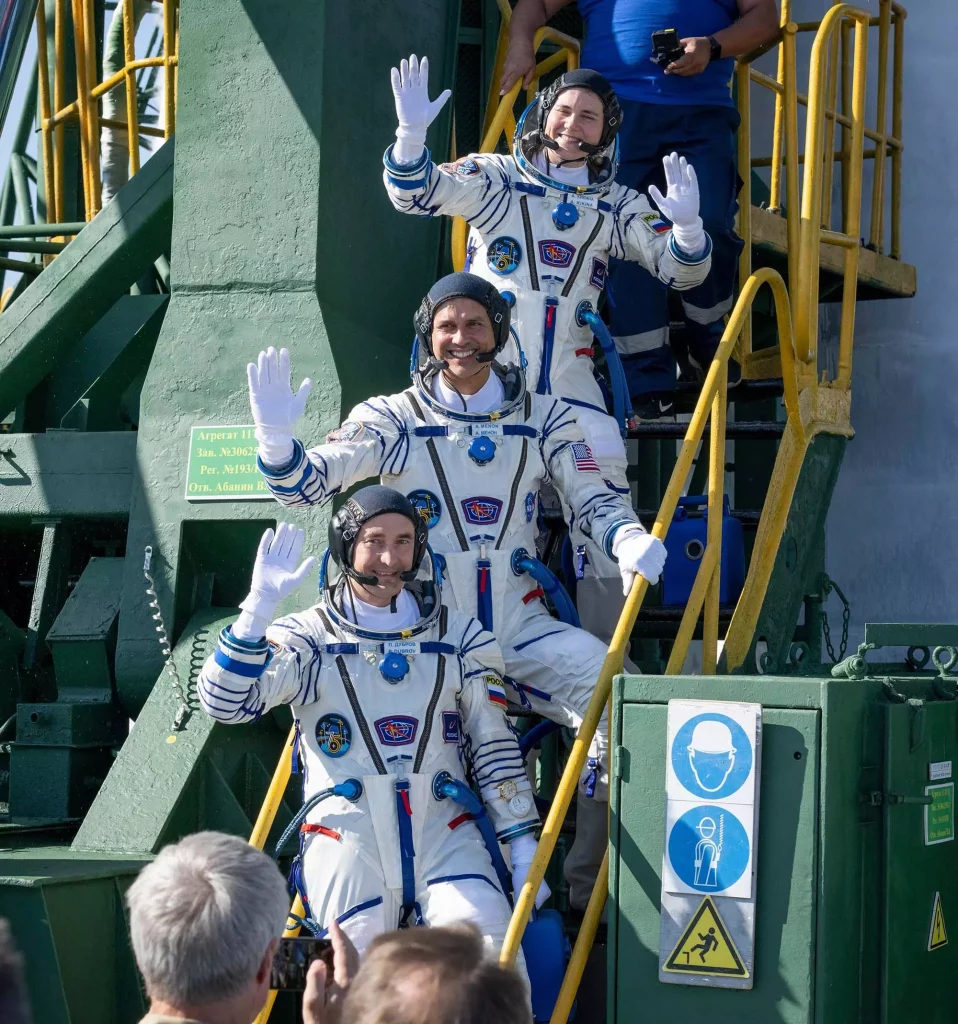
Anil Menon and Russian cosmonauts Pyotr Dubrov and Anna Kikina just before beginning their mission on July 14, 2026
He will also support investigations into ultrasound techniques that combine artificial intelligence and augmented reality, research aimed at helping astronauts perform medical examinations with less real-time support from doctors on Earth.
Why missions like this matter
For more than two decades, the International Space Station has served as a platform for international scientific collaboration and human space exploration. Research conducted aboard the station has contributed to advances in medicine, biology, materials science, robotics and Earth observation. Scientists also study how prolonged exposure to microgravity affects the human body, helping them better understand the challenges astronauts face during long-duration missions.
The technologies tested aboard the ISS are expected to support future exploration beyond low Earth orbit, including missions to the Moon and, eventually, Mars. By carrying out scientific investigations and helping operate the station, astronauts such as Menon contribute to research designed to expand humanity’s ability to live and work in space.
A family connected by space
Space exploration is also part of Menon’s family life. His wife, Anna Menon, is a former Lead Space Operations Engineer at SpaceX who flew aboard the Polaris Dawn mission in 2024 before being selected as a NASA astronaut candidate in 2025. The couple have two children and appeared together in Netflix’s documentary Countdown: Inspiration4 Mission to Space, which followed the Inspiration4 mission.
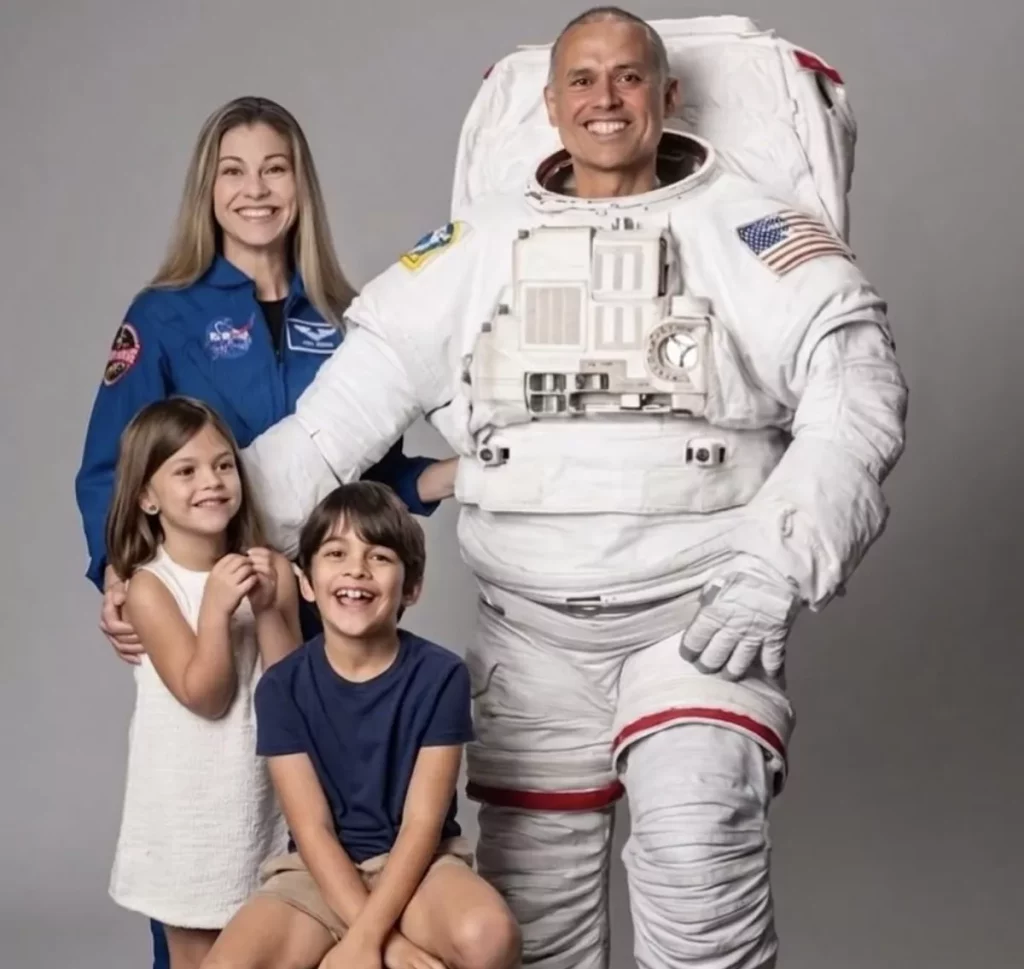
Anil with his wife Anna Menon and their kids
Looking beyond low Earth orbit
In his first message from space, Menon also thanked NASA for its role in advancing human space exploration, mentioning:
“NASA… makes this all happen and is tasked with doing the near impossible, going to the Moon, going to Mars, and pushing our boundaries where we have never gone.”
He concluded his message by highlighting the role of the International Space Station in future exploration. “I am happy to be working alongside of you using the space station as a stepping stone to those huge dreams of ours. Let’s go team. Let’s do this.”
For Menon, the mission marks the first journey into space after years of service as an emergency physician, flight surgeon and astronaut. For NASA and its international partners, it is another expedition dedicated to scientific discovery aboard the International Space Station while helping develop the knowledge and technologies needed for future human exploration beyond Earth.
- Follow Anil Menon on X
ALSO READ 2025’s Most Anticipated Moment: Sunita Williams and her crew’s return to Earth from Space
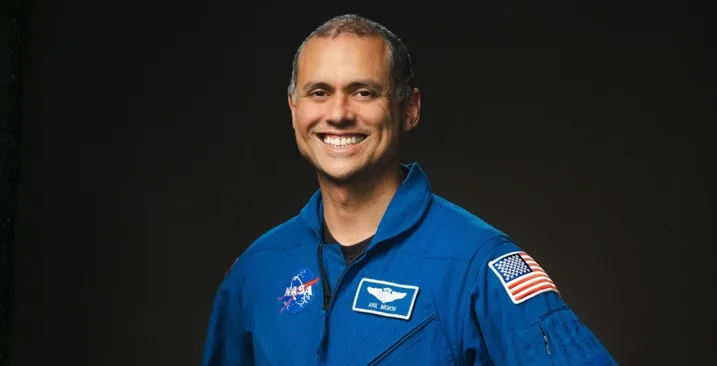
Anil Menon
| Born | Oct 15, 1976, Minneapolis, Minnesota |
| Based | Houston, Texas, USA |
| Studied | Harvard University (BS) | Stanford University (MS, MD) | University of Texas Medical Branch (MPH) |
| Languages | English |
Signature work
As SpaceX's first flight surgeon, Anil Menon helped build the company's medical programme for human spaceflight, supporting historic missions including Demo-2 and Inspiration4. Now a NASA astronaut, he is undertaking his first mission aboard the International Space Station, contributing to research that supports future human exploration of space.
Idea
Combining emergency medicine, aerospace medicine and human spaceflight to improve astronaut health while advancing technologies with applications on Earth.
Network
NASA, United States Space Force, SpaceX, International Medical Corps, Harvard University, University of Texas Medical Branch, International Space Station programme and global space research partners.
Impact
Has helped shape medical systems for modern human spaceflight, supported landmark Crew Dragon missions, responded to major humanitarian disasters, and is now contributing to International Space Station research that could strengthen healthcare technologies and support future missions to the Moon and Mars.
Inspired by Anil Menon 's journey?
Yours follows the same Hero's pattern — Separation, Initiation, Transformation, Return.

Share with


Written By: Amrita Priya
2025’s Most Anticipated Moment: Sunita Williams and her crew’s return to Earth from Space
Written By: Amrita Priya
Indian-origin Canadian astronaut Dr. Shawna Pandya to lead space medicine mission in 2026
Written By: Amrita Priya