
September 08 2026
Anil Chakravarthy: From India to the CEO chair at Adobe in the AI era

(Sep 8, 2026) Anil Chakravarthy will become Adobe’s next president and CEO on December 1, succeeding Shantanu Narayen after his 18-year tenure. At 21, Anil left India for MIT, beginning a technology career that would take him from McKinsey and Symantec to Informatica and now to the top job of Adobe.
“I came from India when I was 21 years old,” Anil reflected on his experience in America in a CNBC interview marking the country’s 250th anniversary. “I had the privilege of going to MIT as a master’s and then a PhD student. America has been very kind to me,” he added.
Now, Anil is preparing to take charge of one of the world’s most recognisable technology companies. On December 1, 2026, he will succeed Shantanu Narayen, who is stepping down after 18 years as CEO and will transition to executive chair.
For Anil, the journey from a young engineering student in India to the top of a global technology company has unfolded alongside some of the biggest shifts in computing. The IIT-BHU and MIT alumnus is preparing to lead Adobe through another defining shift, one in which artificial intelligence is changing how software is built, businesses operate and creative work gets done.
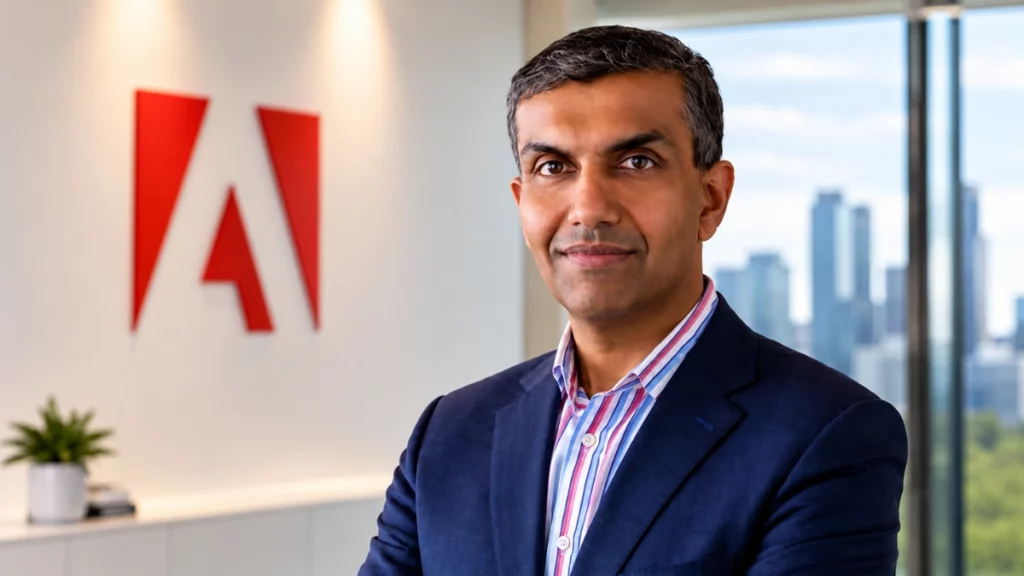
The Adobe Anil is set to lead
If you have ever edited a photograph in Photoshop, opened a PDF or created a presentation with Adobe tools, you have probably used Adobe without thinking much about the company behind them.
Founded in 1982 by John Warnock and Charles Geschke, Adobe began by transforming how computers could reproduce text and images on paper through a technology called PostScript. It went on to create or popularise products such as Photoshop, Illustrator, Acrobat and the PDF, helping shape how people create, share and consume digital content.
The company has reinvented itself several times. Under Indian-origin Shantanu Narayen, who became CEO in 2007, Adobe moved its creative products from traditional packaged software towards a cloud-based subscription model and built a major digital experience business for enterprises.
Narayen led Adobe through one major technological shift. Anil will now be leading it through another, in the age of generative and agentic AI.
So while Adobe is still known to many people for Photoshop and PDFs, its ambitions today extend far beyond creative software. It operates across creativity, documents, productivity and customer experience, with AI increasingly woven into these businesses. That is the Adobe Anil will inherit in December 2026.
From Varanasi to MIT
Anil’s story began in India, where he studied computer science and engineering at the Institute of Technology, Banaras Hindu University, now IIT (BHU) Varanasi. He then moved to the US for graduate studies at the Massachusetts Institute of Technology, where he pursued a master’s and PhD, including work at the MIT Media Lab.
The timing was significant. The technology industry was moving from centralised mainframe computing towards client-server systems, while the personal computer and internet revolutions were beginning to reshape the industry. Anil would spend much of his career navigating such shifts.
From technology to business leadership
After MIT, he joined McKinsey & Company, where he began working at the intersection of technology and business strategy. Roles at Logictier and VeriSign brought him closer to products and customers, while nearly nine years at Symantec expanded his experience across enterprise businesses, including a stint leading its India technical operations.
In 2013, Anil joined Informatica as chief product officer and became CEO two years later. He led the company through a period of product and business transformation as enterprise technology shifted towards cloud and data management.
By 2020, he had moved from being a technology specialist to a leader who understood products, customers and large-scale businesses. That experience set the stage for his next move. He left the CEO role at Informatica to join Adobe as EVP and general manager of its Digital Experience business.
The intersection of technology and business has always been fascinating to me. Technology is most powerful when it solves a real business problem.
Anil Chakravarthy
Why Anil chose Adobe
A move from CEO to president-level executive is not the conventional career trajectory, and it was a point Anil addressed in a Fortune interview before Adobe’s leadership transition was announced.
For him, the attraction was not about title. It was about scale and opportunity. As he stated in an interview with Fortune, “I think Adobe has an opportunity to create a category that is much, much bigger than what Informatica was doing.”
Informatica, he explained, was a strong company in data management, but he saw Adobe as being at the centre of a potentially much larger enterprise-software category: customer experience.
Adobe was already a leader in that space, but Anil believed there was an opportunity to build considerably more around it. Within months of joining, his responsibilities expanded to include Adobe’s worldwide field operations. In December 2021, he became president of Digital Experience and worldwide field operations.
Over the next six and a half years, he helped expand Adobe’s Customer Experience Orchestration business, working across products, customers and the company’s growing AI strategy.
AI as the next expansion of creativity
When Fortune asked why customers would need Adobe if AI could create a finished video or advertisement from a simple prompt, Anil offered a broader view. Creating something, he argued, is only the tactic. The real question is why it is being created and what purpose it serves.
The question is not just what you can build with AI. You have to ask what you should build, what you should buy and where you can create the most value.
— Anil Chakravarthy
As AI makes creation easier, he believes context, judgement and purpose will become even more important. Anil sees AI as another moment when technology can make creativity accessible to more people. He draws a parallel with desktop publishing, which lowered the barriers to becoming a publisher. AI, he believes, could similarly expand who gets to create.
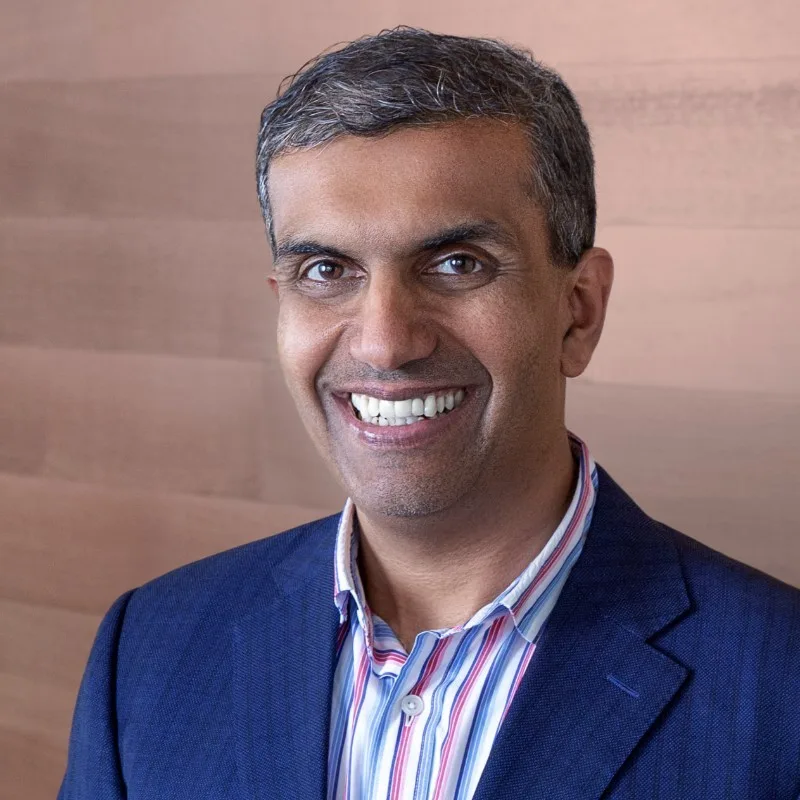
Following Narayen into Adobe’s next chapter
When Anil takes over as CEO in December, he will inherit a company that has already undergone a major transformation under Narayen. Anil has described the opportunity as taking Adobe into the next era of “agentic software” across creativity, productivity and customer experience.
The company now faces another defining shift, this time driven by AI. Adobe’s board has pointed to Anil’s record of transforming its Customer Experience Orchestration business and worldwide field operations as a reason for choosing him to lead that next phase.
You have to move fast enough to stay ahead of your customers, but not so fast that you leave them behind.
Anil Chakravarthy
The Indian thread to the succession is significant. Shantanu Narayen, born in Hyderabad, moved to the US in 1988 for graduate studies and went on to lead Adobe for 18 years, transforming it into a cloud-first software company. Now, Anil Chakravarthy, born in Bengaluru and who came to the US from India as a 21-year-old student to study at MIT, is set to take over. Two Indian-born technology leaders, whose journeys began in India and took them to the US, are now connected by the leadership of one of the world’s most recognisable software companies.
For Anil, the next chapter is not just about leading Adobe, but about helping define what comes next in technology.
- Follow Anil Chakravarthy on LinkedIn
ALSO READ: Shantanu Narayen: The CEO who is heart and soul of Adobe
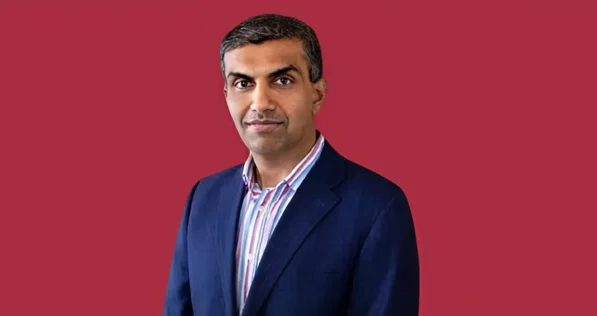
Anil Chakravarthy
| Born | Bangalore, India |
| Based | San Jose, California, USA |
| Studied | BTech at IIT-(BHU), India | Master’s and PhD at MIT, USA |
| Languages | Kannada, Hindi, English |
Signature work
Across his career, Anil has built and led businesses at the intersection of technology and transformation. From McKinsey and Logictier to VeriSign, Symantec, Informatica and Adobe, his work has centred on turning major technology shifts into products, businesses and opportunities for growth.
Idea
His work has focused on turning major technology shifts into practical products and business opportunities, from data management and cloud computing to customer experience and AI.
Network
His career has connected him with leaders, engineers, customers and teams across McKinsey, VeriSign, Symantec, Informatica and Adobe, giving him a broad view of technology and enterprise businesses.
Impact
At Adobe, he has helped expand Customer Experience Orchestration, scale Adobe Experience Platform and bring AI deeper into creativity, productivity and customer experience.
Inspired by Anil Chakravarthy 's journey?
Yours follows the same Hero's pattern — Separation, Initiation, Transformation, Return.

Share with



Written By: Amrita Priya
Shantanu Narayen: The CEO who is heart and soul of Adobe
Cover Story, Indian CEO

Written By: Amrita Priya
Microsoft CEO Satya Nadella’s success comes from empathy
Cover Story, Indian CEO

Written By: Amrita Priya