July 20 2026
The Indian connection at the 2026 FIFA World Cup

(Jul 20, 2026) Today, the FIFA World Cup came to a close, with Spain lifting the trophy at MetLife Stadium in New Jersey after defeating Argentina in the final match of the 2026 tournament. The 23rd edition marked the first time the tournament featured 48 teams, up from 32 in the previous seven editions, and was hosted across three nations. India has never qualified for a FIFA World Cup, but this year’s tournament gave Indian fans something new to follow. Four players of Indian origin featured across four different squads, more than at any previous edition. Before this year, only one footballer of Indian descent, France’s Vikash Dhorasoo in 2006, had ever appeared at a men’s World Cup. Each of these four players belongs to a distinct thread of Indian migration. The Global Indian puts a spotlight on who they are, and where their India connection comes from.
Tahsin Jamshid: From Kerala to representing Qatar
Tahsin Jamshid’s story runs directly back to Kerala, home to one of the largest and oldest Indian expatriate communities in the Gulf. Malayali migration to Qatar and the wider Gulf region dates back decades, built on generations of workers, professionals and traders whose remittances have long shaped Kerala’s own economy. Tahsin was born in Doha to Malayali parents, and his father, who shares his name, once played junior state-level football in Kerala before the family settled in Qatar. Introduced to the game by his father, Tahsin progressed through Qatar’s Aspire Academy, the country’s elite talent pipeline, and its youth national teams, before signing his first professional contract with Al Duhail, becoming the first player of Indian origin to appear in the Qatar Stars League.

He is also reported to hold an Indian passport alongside a special Qatari sporting document, making him, by several accounts, the first Indian passport holder to play at a men’s World Cup. Qatar finished bottom of their group and were eliminated at the group stage, but Tahsin’s rise has already made him one of the most closely followed young footballers in Kerala.
Sarpreet Singh: From Punjab to playing for New Zealand
Born in Auckland to parents from Jalandhar in Punjab, the 27-year-old attacking midfielder belongs to New Zealand’s long-established Punjabi Sikh community, whose roots in the country go back more than a century, when early migrants arrived to work in market gardening and farming around Auckland and Waikato. That community has since grown into one of New Zealand’s most visible immigrant groups, with gurdwaras and Punjabi cultural associations now well established there. Singh rose through Wellington Phoenix’s Academy before a breakthrough season earned him a move to Bayern Munich, where he spent four years training alongside some of the game’s best players.
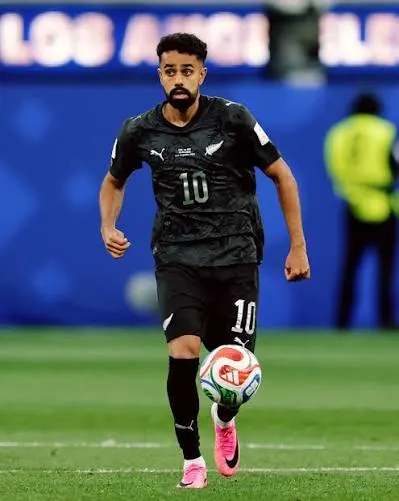
He had already represented New Zealand at the Under-17 World Cup in 2015 and two Under-20 World Cups before this senior call-up. In North America, he became the first player of Indian origin to start a men’s World Cup match, featuring in New Zealand’s 2-2 draw with Iran. New Zealand finished bottom of their group with a single point, losing their final match to Belgium, but Singh’s appearance was celebrated widely within Punjabi communities well beyond New Zealand.
Nishan Velupillay: From Anglo-Indian roots to Australia’s colours
Nishan Velupillay’s family history draws on two separate Indian threads. His father is of Sri Lankan Tamil heritage, part of a community that migrated to Australia in large numbers from the 1980s onwards, many fleeing the civil war in Sri Lanka and settling in cities such as Melbourne, Sydney and Adelaide. His mother is Anglo-Indian, a community with roots in cities like Chennai and Kolkata that trace back to British colonial-era intermarriage, and which itself migrated in significant numbers to Australia, Britain and Canada through the twentieth century.

Born and raised in Melbourne, the 25-year-old winger came through Melbourne Victory’s Academy and marked his senior Australia debut in October 2024 with a goal against China. Melbourne Victory’s director of football, John Didulica, called him one of the club’s most deserving graduates. His selection made him the first footballer of Tamil heritage ever named in a World Cup squad, celebrated across Tamil communities in Australia, Sri Lanka, Malaysia and southern India alike. Australia opened their campaign with a 2-0 win over Turkey and reached the Round of 32 before being eliminated there.
Samuel Moutoussamy: From Guadeloupe’s Tamil community to representing DR Congo
The fourth player represents neither an Asian nor a Pacific nation but DR Congo, marking the country’s own return to the World Cup. His India connection is the least visible but arguably the oldest of the four. His father belongs to the Indo-Guadeloupean community, descendants of Indian workers taken to the French Caribbean island of Guadeloupe as indentured labour in the nineteenth century, after the abolition of slavery, many of them from Tamil-speaking regions under French colonial administration. That community has preserved elements of Tamil culture and Hindu festivals in Guadeloupe for generations, even as its members became fully part of French Caribbean life.
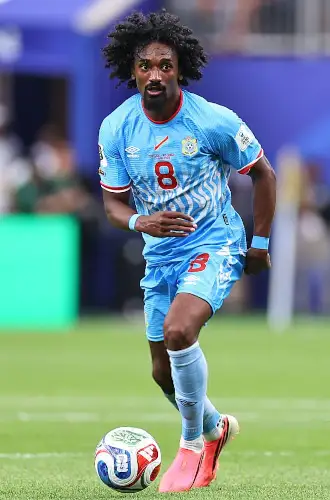
Born in France 29 years ago to a Congolese mother, Moutoussamy chose to represent DR Congo through his mother’s heritage, as FIFA’s eligibility rules allow. Now with Greek club Atromitos, he has become an experienced, composed presence in DR Congo’s midfield, with dozens of senior caps to his name. DR Congo won their final group match to reach the Round of 32, where they were beaten by England.
Watched by India and the diaspora
None of these four players lifted the trophy this year. But their presence in the 2026 tournament, as four Indian-origin players in one edition against just one in the World Cup’s entire history before now, was followed as closely inside India as it was among the diaspora, from Sikh families in Punjab tracking Singh’s every touch to Kerala’s football-mad districts claiming Tahsin as one of their own. It says something the scoreline never will about how widely Indian football families have scattered across the world, from Sikh farmers in New Zealand to Tamil refugees in Australia, Malayali workers in the Gulf and indentured labourers in the Caribbean generations ago, and about how closely those threads are still watched back home. India itself is still waiting for a first appearance at the tournament, but as the final whistle neared, these four journeys served as a reminder that the story of Indian football is already being written, both far from home and within it.
ALSO READ: Indian footballers in foreign leagues: Inspiring a generation

Share with




Written By: Amrita Priya
Ryan Williams: The Australian footballer who gave up his passport for an Indian Dream