April 16 2026
The world’s faith in homeopathy, with India at its core and AYUSH driving its global push
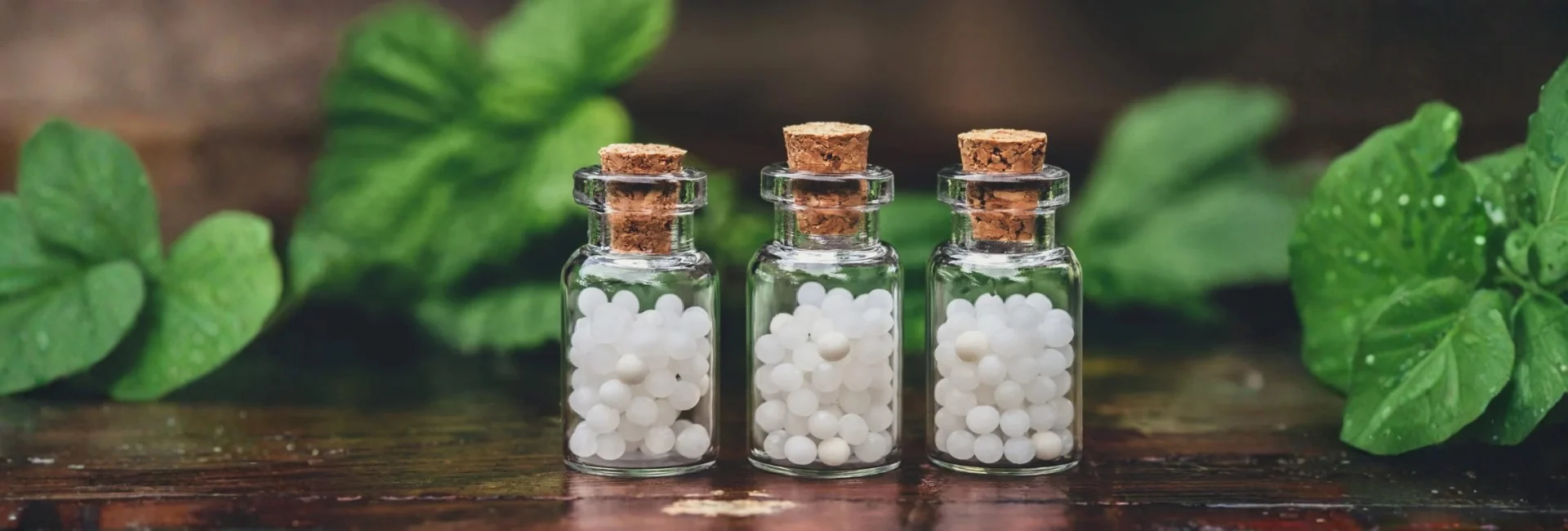
(April 16, 2026) Long trusted by royals, celebrities and healthcare systems alike, homeopathy is gaining ground worldwide. A 2024 global survey across 16 countries found that nearly six in 10 people have used homeopathy in their lifetime, with 55 percent planning to use it in the future. India is already a key exporter of homeopathic products to the US and Europe. Recently backed by quality initiatives like the AYUSH Premium Mark, the “Made in India” remedies including homeopathy are finding increasing global acceptance.
When Queen Elizabeth II passed away in September 2022, tributes poured in from every corner of the world. Among the more intimate remembrances was one from Dr Gill Graham — a homeopath, academic, author and Fellow of the Faculty of Homeopathy, who noted something that many outside royal circles did not know: the Queen had been a devoted follower of homeopathic medicine her entire life.
“Her longevity is as ever, probably due to a multitude of factors, but certainly not least her lifelong love of homeopathic medicine,” Dr Graham wrote. The Queen, she recalled, always travelled with a carefully curated case of remedies — recommended by her personal homeopathic physicians. Inside the case, touchingly, were handwritten notes of advice tucked away for the Queen and, before her, her late father King George VI.
The Royal Family has long consulted Ainsworths Homeopathy Pharmacy, honoured in 1980 with Royal Warrants of Appointment to the Queen, the Queen Mother, and the Prince of Wales. When he was the Prince of Wales, King Charles III repeatedly and publicly praised the benefits of homeopathy, and in 2023, he appointed a homeopath — a gesture that signalled not passing curiosity but a considered, lifelong conviction.
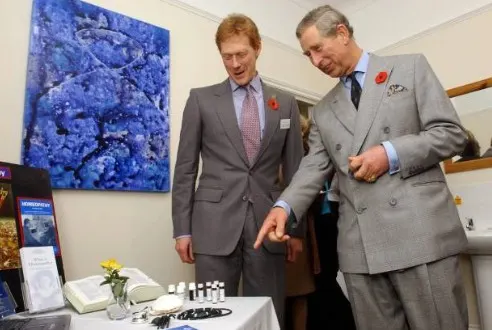
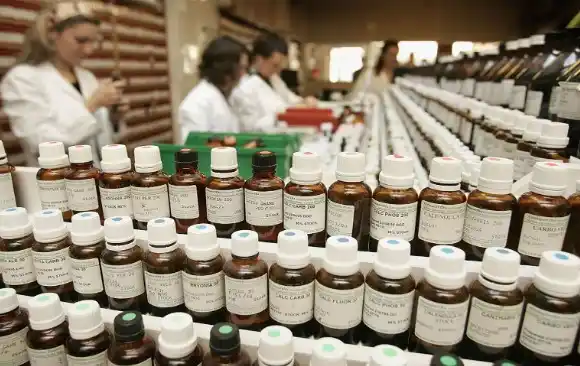
King Charles III, then the Prince of Wales, views a display of homeopathic remedies with homeopath Dr Tim Robinson in Poundbury in 2004 | Photo Credit: Daily Mail
Across the English Channel, the picture is equally striking. Football legend David Beckham underwent homeopathic treatment to aid recovery from a broken foot before the 2002 World Cup and has been a believer ever since. Beatle Paul McCartney swears by homeopathic remedies. Academy Award winner Catherine Zeta-Jones calls it her “best friend.”
These are not people without access to the finest conventional care in the world. Their choice speaks to something homeopathy offers that a prescription pad often cannot — and increasingly, that demand is being met by India’s growing global footprint in the field.
Where trust has stood the test of time
The royals and celebrities, it turns out, reflect a broader European sentiment rather than standing apart from it. “Many chronic conditions are complex and do not have a single clear solution,” says Dr Manoj Kuriakose, a homeopathic physician working with the Central Government of India Health Scheme who has treated over eight lakh patients across India and the world.
“While conventional medicine is highly effective in acute care and emergencies, patients with ongoing issues often look for approaches that consider their overall pattern of health. Homeopathy tends to engage with that broader picture — which is why it finds relevance in different settings, regardless of culture.”
That relevance has translated into concrete policy decisions. Switzerland which is home to one of the world’s finest subsidised healthcare systems — voted to bring homeopathy back into its public health framework. Germany, the birthplace of homeopathy, has never let go of it. France and parts of Italy have well-established homeopathic services.
“There seems to be an acceptance of the will of the citizens of Europe, who by and large want access to homeopathy for a range of illnesses,” says Dr Kushal Banerjee, a senior homeopath who completed his MSc in evidence-based healthcare from the University of Oxford and received training at Harvard Medical School. While Europe has preserved its legacy, the leadership of homeopathy today unmistakably rests with India.
India: The torchbearer
To understand why homeopathy commands such global loyalty, one must return to India — its most passionate custodian and its most prolific engine of growth. The World Health Organisation recognises homeopathy as the second most popular system of medicine in the world, and India is its largest and most active practitioner base.
The story goes back to the mid-19th century, when the court of Raja Ranjit Singh helped introduce homeopathy to the subcontinent. Eminent practitioners of allopathy like Dr Mahendra Lal Sarkar converted to it. Social reformer Pandit Ishwarchandra Vidyasagar championed it as a tool of social service, taking it directly to the masses.
After independence, early policy action standardised homeopathy training and registration. The Chopra Committee and the Drugs and Cosmetics Act gave it formal recognition. The Central Council of Homeopathy Act followed in 1973. More recently, homeopathy became the ‘H’ in AYUSH in 2014, and the National Commission for Homeopathy Act was passed in 2020.
The result is a robust, regulated, internationally respected profession. Today, orthopaedic surgeons routinely recommend homeopathic remedies for fracture healing. Dermatologists refer patients for psoriasis and eczema. Nephrologists suggest homeopathic treatments for kidney stones. “Indian homeopaths are counted among the best in the world,” says Dr Kushal, who practices at Dr Kalyan Banerjee’s Clinic in New Delhi and prescribes for 150 to 200 patients daily — a consequence, he believes, of the training, structure and regulation that decades of policy have built.
India’s quality edge
The global standing of Indian homeopathy was never accidental. “Robust policies implemented standardised homeopathy training and registration, along with establishment of good practices for manufacturing homeopathic drugs,” says Dr Kushal. It laid the foundation for India’s international credibility. That policy tradition continues today — most recently through the AYUSH Premium Mark initiative championed under Prime Minister Narendra Modi, which is quality-certifying Indian homeopathic products for global markets and steadily reshaping how “Made in India” remedies are perceived worldwide. A system that once served the masses at independence is now being positioned as a world-class offering — quality-assured, policy-backed, and globally competitive.
The holistic difference
At the heart of homeopathy’s appeal is how it approaches the patient. “Homeopathy brings a holistic approach to the consultation process where the patient is not shunted from specialist to specialist for each quadrant of his or her body,” says Dr Kushal. “This has great appeal.” The consultation itself dives deep into all aspects of a patient’s life — an experience that can be therapeutic in its own right, something conventional medicine is only now beginning to recognise.
Dr Manoj puts the patient’s experience at the centre of it. “Many patients feel that their full story is understood, not just their symptoms.” But he is quick to anchor that in outcomes rather than feeling alone. “It is the results that ultimately retain patients.” Those results drive referrals, which drive growth. “When someone experiences improvement, they naturally recommend it to others,” says Dr Manoj — one of the first homeopaths in India to bring online consultations to the practice, and a man with 35 years of experience behind him.
When other options fall short
A significant driver of homeopathy’s expanding reach is what happens when conventional medicine reaches its limits — particularly for those managing long-term or chronic conditions. “When patients repeatedly see their illnesses return and are faced with serious side effects, there can be some frustration,” says Dr Kushal, himself the fourth generation of homeopath in his family. “Homeopathy is often called upon to help in these situations.”
For many patients, the appeal is not just relief but something more lasting. “In many long-standing conditions, people are not just looking for temporary relief. They are looking for stability and a sense of overall improvement,” says Dr Manoj. “When they begin to feel that shift, even gradually, they tend to stay with the system.”
The evidence is growing
On the question of scientific validation, practitioners are measured but confident. “There is a large evidence base of scientific findings and studies which clearly indicate the therapeutic effect of homeopathic remedies,” says Dr Kushal. While some gaps in understanding its precise mode of action remain, he says these are “rapidly moving towards clarity with advances in some fundamental sciences.” His clinic draws on 90 years of family practice data to contribute to that growing evidence base.
Dr Manoj frames it with precision. “Homeopathy exists at the intersection of evidence, experience and expectation. There is ongoing research. There is strong clinical experience, particularly in regions where it is widely practiced. And there is expectation, shaped by prior outcomes and word-of-mouth.” At the individual level, trust is often built through personal experience — and that trust, accumulated across millions of patients and multiple generations, is itself a form of evidence that is hard to dismiss.
From last resort to first choice
Homeopathy is sometimes reached for when all else has been exhausted — Dr Kushal frequently visits seriously ill patients with advanced cancers and organ failures at their homes, rehabilitation centres, and even hospital intensive care units. But to frame it purely as a last resort would miss the larger picture.
Increasingly, it is a first choice — for families with generational faith in the system, for patients seeking a more personalised approach, and for those who simply prefer a system where, as Dr Manoj puts it, the consultation “begins with the experience of being heard.”
Over two centuries after Samuel Hahnemann first developed its principles, homeopathy endures — carried from India outward to Europe and beyond, not through inertia or sentiment, but through something far more durable. “Its popularity,” says Dr Kushal, “can only be explained by the results it provides to patients.”
From the Queen’s leather remedy case to a government clinic in Kerala to a rehabilitation ward in New Delhi — the geography of belief is vast, the journey long, and with India now leading the charge, it shows no sign of ending.
ALSO READ: Yoga at Work: India’s ancient practice in modern global workplaces
Share with



Written By: Amrita Priya
Karan Chopra: Harmonizing heritage and healing in the U.S. with the wisdom of Ayurveda