September 22 2026
From IIT and MIT to filmmaking: Sriram Emani’s Jam Boy heads to IFFSA Toronto, North America’s largest South Asian film festival

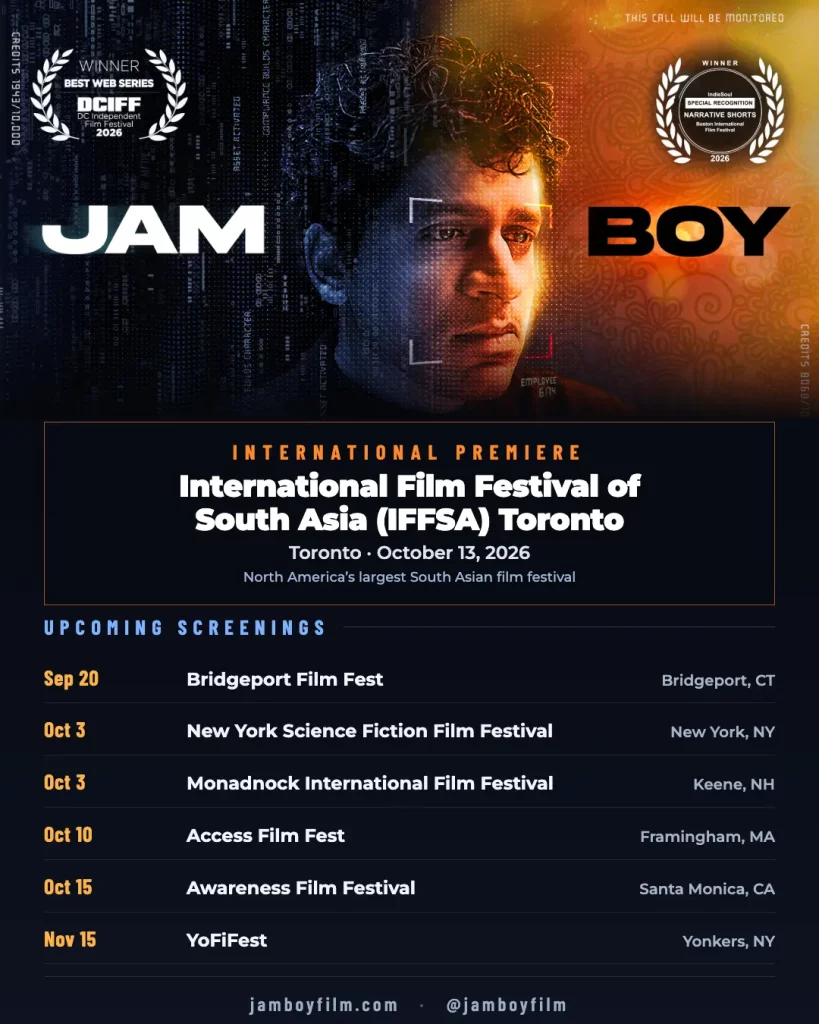
In a near-future America where immigrant workers promised freedom are quietly indentured, a programmer’s attempt to hold on to his mother’s tamarind rice exposes a corporate system designed to make people forget home. Written, directed, co-produced and starring Sriram Emani, Jam Boy has now reached 14 festivals and will have its international premiere on October 13 at IFFSA Toronto, North America’s largest South Asian film festival, during its 15th edition, running October 8 to 18, 2026.
Jam Boy recently won Best Film after premiering in competition at the DC Independent Film Festival in Washington, DC. Its recognition also includes Best Web Series at DCIFF and an Indie Soul Special Recognition at the Boston International Film Festival. The 22-minute dystopian sci-fi drama is continuing its festival journey and is being developed into a feature through Cine Qua Non Lab’s Storylines Lab and Stowe Story Labs’ Narrative Lab.
For Sriram, filmmaking may seem like a new chapter. But look closely at his journey and there is a thread connecting the engineer, entrepreneur, arts advocate, actor and filmmaker, and that’s the fascination with identity, culture and the ways people find a sense of belonging.
“My path has taken a few unexpected turns, from IIT Bombay and MIT to building IndianRaga, and eventually onto film sets as an actor and filmmaker,” he tells The Global Indian. “Jam Boy, my award-winning short about an Indian immigrant navigating technology, work and belonging in America, reflects a larger creative interest of mine in placing Indian characters inside stories that feel truly global.”
At the heart of this is a question that increasingly matters to me: why should migration require us to negotiate away the value of our inheritance in order to become visible or important on the world stage? Language, food, family memory and cultural ways of seeing are often treated as things we must soften or leave behind to belong. I am interested in stories that treat those inheritances not as baggage, but as sources of imagination, strength and resistance.
Sriram Emani
Understanding assimilation through 50 immigrant families
Born to Telugu parents and raised in Mumbai, Sriram’s early path seemed firmly rooted in engineering and management. He studied civil engineering at IIT Bombay before heading to the Massachusetts Institute of Technology for an MBA.
At MIT Sloan, he was a Siebel Scholar, recognised for academic excellence and leadership, and was among the first Tata Fellows at the MIT Tata Center for Technology and Design. Yet the story of how he ended up building a life in America is less straightforward than a conventional overseas education journey.
After his MBA, Sriram spent 50 weeks living with 50 different families across 50 cities in North America. Rather than experiencing America only through a university or workplace, he experienced it through family homes, dinner tables and everyday conversations. “I wanted to understand the role assimilation played in the lives of Indian immigrants entering mainstream America,” he says.
Living with 50 families gave me an unusually intimate view of what stayed, what evolved and what was quietly negotiated along the way. I saw names shortened to make introductions easier, family recipes adapted to what children would eat, languages fading between generations and traditions reinvented in joyful new forms. Not every change represented a loss. Sometimes adaptation gave an inheritance new life. But sometimes people became so focused on fitting in that they misplaced something they later wished they had kept.
Sriram Emani
That experience would change the direction of his career. He had not set out with a grand plan to leave India permanently. But after moving through those homes and seeing how culture continued to shape diaspora families, he found himself drawn towards a question that would eventually become the foundation of his next chapter: how can Indian culture remain relevant to people growing up in a rapidly changing world? The experience also left him with a metaphor that would stay with him.
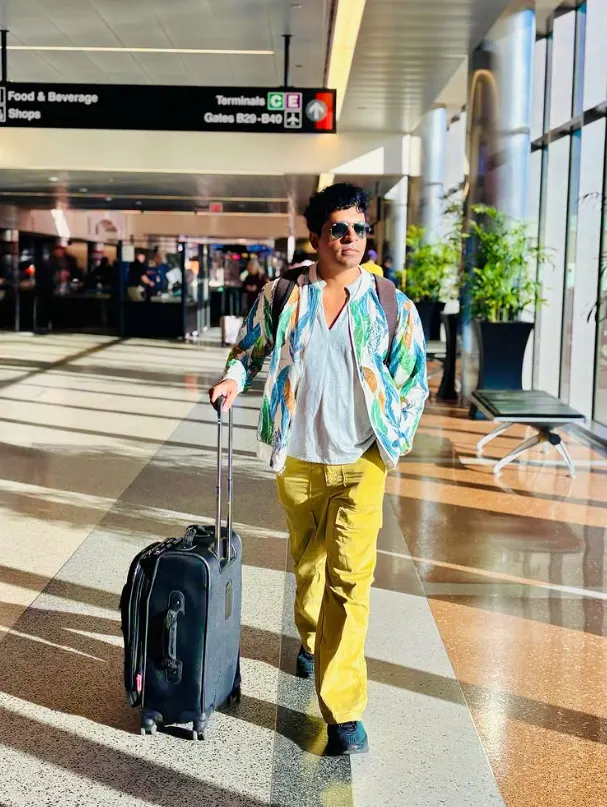
I came away believing that every immigrant travels with two suitcases: one carries what they need to begin again, and the other carries the inheritances that tell them who they are. That invisible suitcase has fascinated me ever since. It shaped IndianRaga and continues to inspire the characters and stories I want to bring to the screen.
Sriram Emani
Turning insight into IndianRaga
Sriram channelled what he had observed and his interest in the arts into entrepreneurship. In 2012, he co-founded IndianRaga, a platform built on the proposition that Indian classical music and dance could retain their essence while being presented in ways that made sense to contemporary audiences.
The idea had been taking shape even before MIT. At Mumbai’s National Centre for the Performing Arts, where he had started the marketing and business development team, Sriram had observed that young classical artists needed more than rigorous training. “They needed visibility, creative collaborators and the opportunity to build identities and audiences of their own.”
As social media began allowing artists to reach people directly, I saw musicians in other genres embracing it while many Indian classical artists remained dependent on traditional gatekeepers. “IndianRaga grew from the conviction that these artists deserved the same power to be discovered.”
“Building it in the US as an Indian immigrant meant creating trust across several worlds at once. We had to respect the rigor of classical traditions while persuading artists and families that digital storytelling and contemporary collaboration did not amount to dilution. We also had to build a sustainable arts venture without an existing blueprint,” he mentions.
Today, IndianRaga has brought together more than 5,000 artists, built a community of over one million subscribers and generated more than 500 million views across a global diaspora spanning 25 countries. It showed me that when artists are given the right stage, cultural specificity does not limit their reach. It becomes their superpower.
Sriram Emani
Carrying his classical roots into new forms
Instead of treating tradition as something that belonged only to concert halls and formal stages, IndianRaga brought musicians and dancers together for collaborations designed for a digital generation. Artists were handpicked through a rigorous selection process and mentored to create performances that combined classical foundations with contemporary ideas and formats.
IndianRaga artists have performed at Lincoln Center and the United Nations General Assembly Hall, while the platform has also been featured at events and platforms including the World Government Summit, Howdy Modi, TEDx, the Chicago Cultural Center, MIT and NPR.
Sriram was not approaching the arts as an outsider, either. He trained in Carnatic classical music for more than 13 years, later studied musical-theatre singing in New York, and performed Bollywood music. “So my artistic life has always involved moving joyfully between forms, I bring that same curiosity to acting. I have trained across different approaches, recently including Shakespeare, while continuing to draw from the rhythms, emotionality and cultural references that shaped me. I do not want to erase one part of myself every time I enter a new form.”
The exciting challenge is to master each tradition and then discover what only I can bring to it. Every new style expands my instrument, but my identity gives that instrument its particular sound.
Sriram Emani
Stepping in front of the camera
After years of working at the intersection of culture, business and technology, Sriram began exploring acting. His credits include the CBS series Matlock and the feature film Chosen Family. But acting eventually led to something more personal: writing his own stories. His first short film, Jam Boy, brings together many of the questions he had encountered during his years in America.
The protagonist is an Indian immigrant trying to make his way through a highly controlled world. His professional life is governed by systems of productivity and reward, while his ability to move, connect and ultimately retain control over his life becomes increasingly restricted.
The film uses dystopia not simply to imagine the future, but to magnify anxieties that already exist: immigration status, workplace pressure, technology’s growing influence, the desire to succeed and the fear of losing one’s identity while trying to fit in. These are not abstract ideas for Sriram. His years in America had given him a close view of the compromises that can accompany assimilation. The film grew from that observation into a larger question about what happens when the pursuit of success begins to cost people their sense of self.
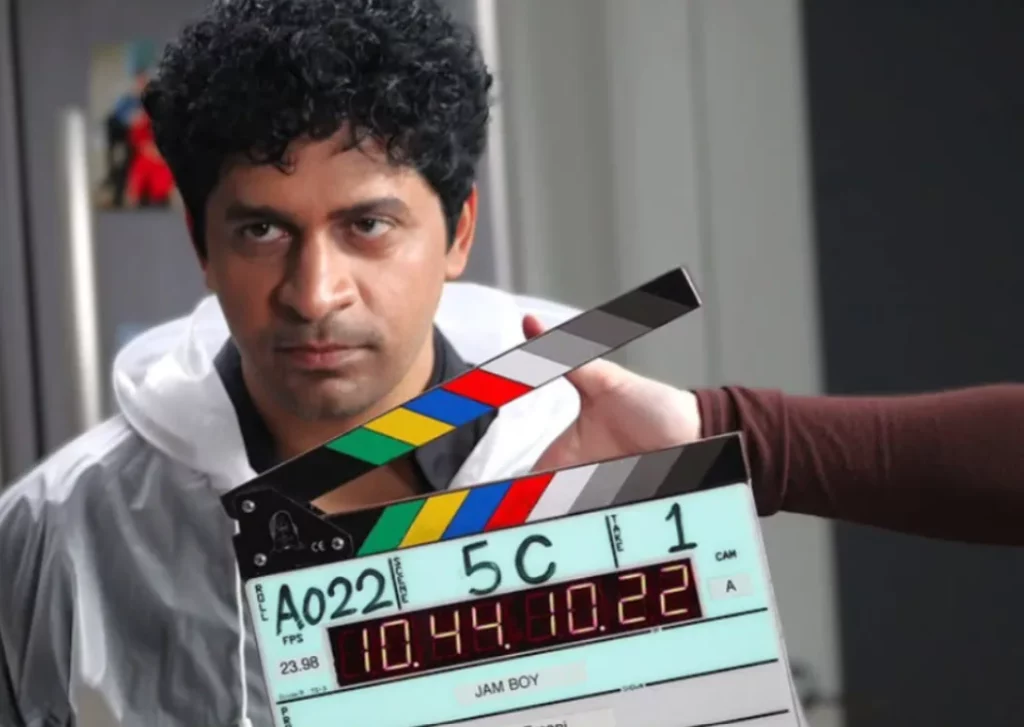
Placing a South Asian immigrant at the centre of a global story
Sriram initially imagined Jam Boy as a story set in the future. But as technology, politics and conversations around control evolved, that future began to feel uncomfortably close. The story was first set in 2060, then moved to 2040 before he removed dates altogether. The result is a dystopian world that feels less like distant science fiction and more like an exaggeration of anxieties already present.
The film imagines a world that controls careers, movement and identity, while extending its surveillance even into reproductive health. Its protagonist works relentlessly to earn enough travel credits to return to India, only to realise that rising within the system may simply mean delaying the moment when it breaks him.
At its centre is an immigrant’s struggle to retain agency while navigating a world that promises success but demands conformity. It is also at the heart of Sriram’s larger creative ambition of putting Indian characters at the centre of stories that speak beyond the Indian community.
I want to portray Indian characters not only within stories about the Indian community, but as protagonists moving through workplaces, technologies, ambitions and moral conflicts that belong to the wider world. Language, food, family memory and cultural ways of seeing are often treated as things we must soften or leave behind to belong.I am interested in stories that treat those inheritances not as baggage, but as sources of imagination, strength and resistance.
Sriram Emani
Food, identity and his own mother on screen
One of Jam Boy‘s most memorable motifs is food. The film opens with Sriram’s character making pulihora (tamarind rice), from a family recipe, turning a familiar dish into a link to his mother, grandmother and the world he came from. For immigrants, food can remain an intimate connection to home even as language, clothes and habits change. It also makes the film’s exploration of identity relatable beyond the immigrant experience: what happens when the pressure to adapt begins to overpower the need to remain connected to who we are?
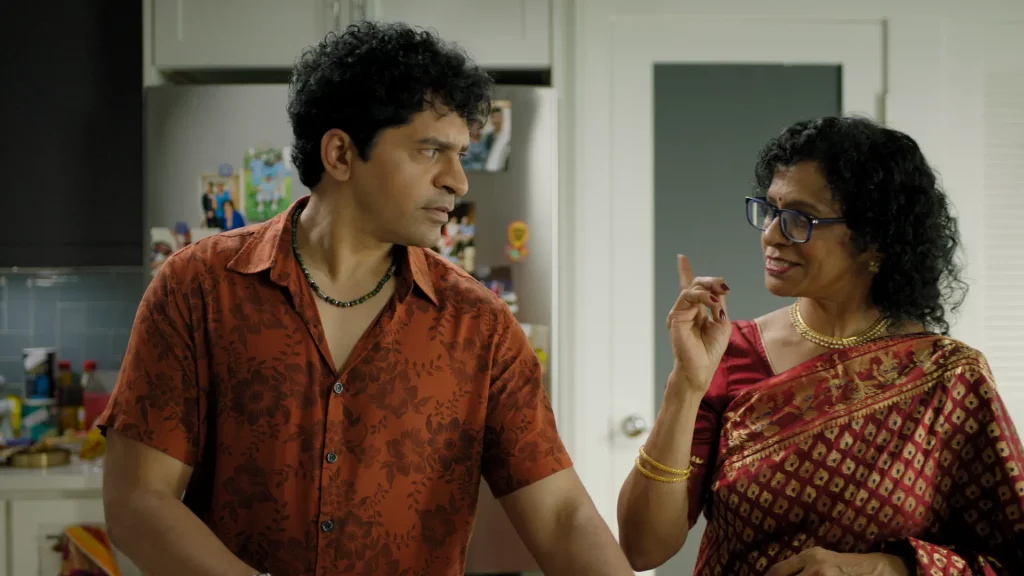
That idea of inheritance becomes deeply personal when Sriram cast his real-life mother, Manga Emani, as his on-screen mother. His parents, he says, supported his choices even when he moved from the conventional path of IIT and MIT towards entrepreneurship in the arts. “They knew that I do not enter anything halfway. Once I commit, I bring the full orchestra,” he says. They trusted his determination and his “slightly unreasonable belief” that a bold idea could become real if he took complete ownership of it.
Years later, his mother moved from encouraging IndianRaga and singing in three of its videos to acting opposite her son in Jam Boy. “She did not simply support the ride. She became part of the cast,” Sriram says.
A new chapter in a journey of reinvention with identity at the centre
Sriram Emani’s career may look like a series of dramatic shifts: civil engineering at IIT Bombay, an MBA at MIT, IndianRaga, acting and now filmmaking. But each chapter has given him a new way to explore culture, identity and human experience.
At IndianRaga, he brought Indian classical arts to contemporary audiences. Acting took him into American film and television. With Jam Boy, he has begun creating stories of his own. Now, acting and filmmaking are at the centre of his creative life. He is developing the award-winning short into a psychological science-fiction feature while continuing to build his career in American film and television.
His larger ambition is to help define what the global Indian looks like in cinema today, and portray “not simply someone suspended between India and the West, forever explaining where he comes from.”
I want to create and embody Indian characters whose inheritance is not decorative backstory. It is dramatic power. The global Indian I want to see can fall in love, build empires, make dangerous choices and leave the world of the story permanently altered. He does not enter the frame to explain himself. He enters with desire, contradiction and consequence, and the story moves because he does.
From 50 American homes to IndianRaga and now the screen, his journey has been less about choosing between worlds than finding new ways to bring them into the same story.
ALSO READ: Rakesh Galebhe: Straddling tech, talent, and Telugu cinema in San Francisco

Share with



Written By: Amrita Priya
Sheena Chohan: From OTT to Hollywood, a pan-India actor with a U.S. Presidential honour

Written By: Mallik Thatipalli