


While studying at University College London in the UK, Ayush Baid began looking at Indian craftsmanship from a consumer’s perspective, while his upbringing around the family manufacturing business gave him an understanding of the making process. These perspectives eventually led him to launch Ellementry, a home and gifting brand serving the contemporary Indian consumer, upon his return from the UK.
Ayush grew up in a family that was deeply connected to entrepreneurship, manufacturing and Indian craftsmanship. So conversations around business, products, manufacturing and global markets were part of his environment from a very young age.
As a child, he used to accompany his businessman father to work, attend meetings, visit the factory and even interact with artisans. Those childhood experiences stayed with him, eventually leading him to launch Ellementry, a home and gifting brand that brings handcrafted beauty into everyday living.
“My journey to ellementry was really about identifying a gap that I had observed firsthand,” says Ayush.
Growing up around Dileep Industries, which has been exporting handcrafted home and living products to global brands for over three decades, gave Ayush a close understanding of Indian craftsmanship and the incredible quality of products being made here for international consumers.
“But when I looked at the Indian market, I felt there was an opportunity that was largely untapped, to bring that same level of design, craftsmanship and quality directly to the Indian consumer.”
While studying Data Analytics at University College London, he started looking at the family business from a consumer perspective and began thinking about how Indian consumers were evolving. “There was a growing appetite for homes that reflected individuality and design, but there was still a relatively limited offering of design-led, handcrafted and food-safe homeware that felt contemporary and distinctly Indian,” says Ayush, of what led him to launch ellementry in 2018.
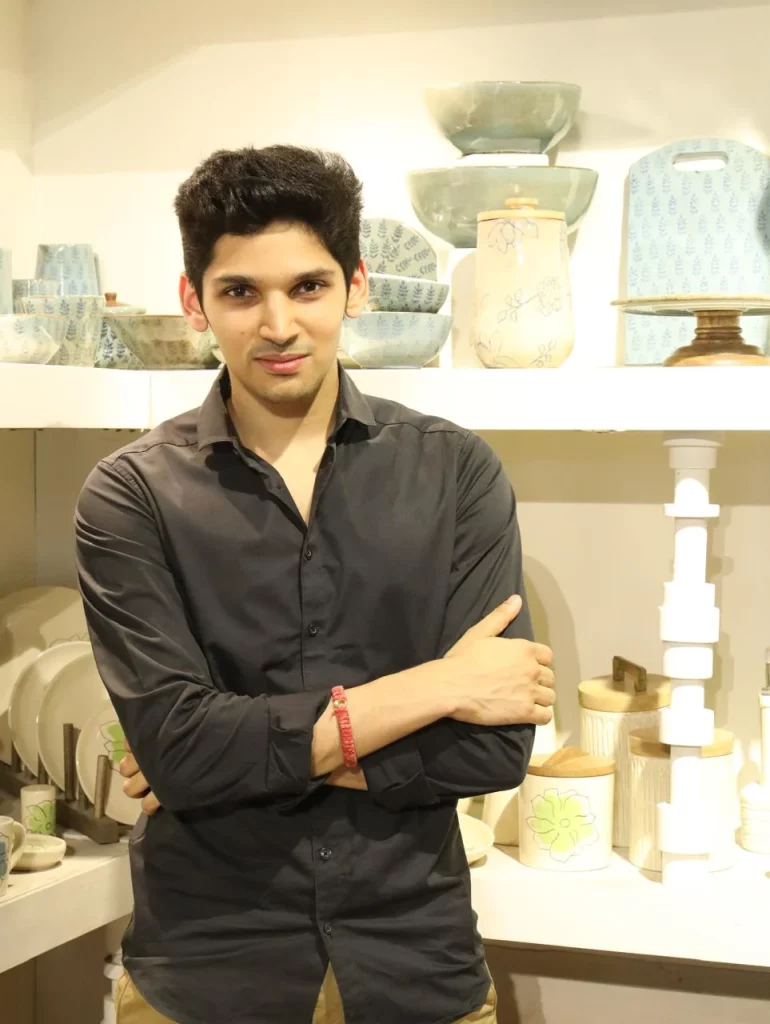
Building Ellementry
At Ellementry, Ayush has seamlessly blended design, sustainability, and tradition to create a home and gifting brand that brings handcrafted beauty into everyday living.
The early journey was not without its challenges. Building a consumer-facing brand out of a manufacturing legacy meant that he had to think differently about everything, from design and branding to retail, consumer behaviour and storytelling.
“We were essentially taking a business that had traditionally operated behind the scenes for global brands and putting our own name and design philosophy at the forefront,” says Ayush, whose biggest advantage was his expertise in manufacturing.
Ellementry works with over 3,000 artisans and has a vertically integrated manufacturing ecosystem that allows Ayush to work across materials including ceramic, terracotta, wood, metal, marble, glass, proprietary eco-mix and cow manure.
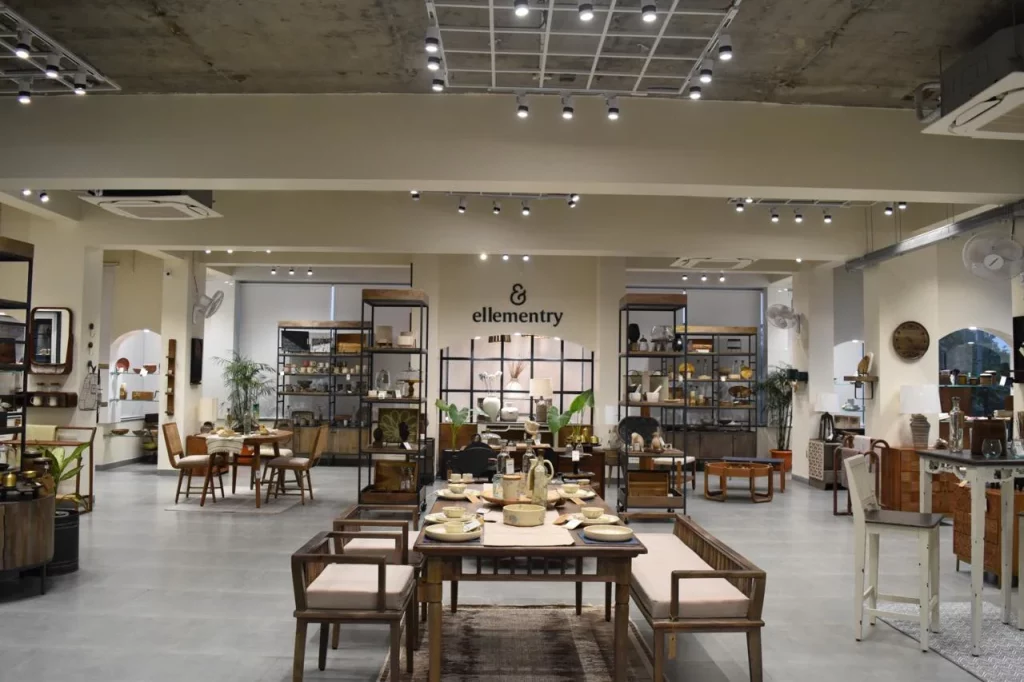
“We have grown from an idea into an omnichannel brand with 11 standalone stores, multiple shop-in-shop locations and a presence across premium retail and online platforms.”
The portfolio spans kitchenware, tableware, serveware, furniture, lighting, décor, soft furnishings and gifting, with more than 2,500 SKUs (stock keeping units). “Our online store receives over 40,000 visits a day, and we have a repeat purchase rate of around 36 per cent.”
The brand also has a community of approximately 2.5 lakh design-conscious consumers on Instagram. The products sell through platforms including Amazon, Myntra, Flipkart, Nykaa, Tata Cliq, Pepperfry and quick-commerce platforms, in addition to their own D2C platform and physical stores.
From family business to consumer brand
His father, Dileep Baid, founded Dileep Industries in 1989. “He has had an enormous influence on both my personal and professional journey,” says Ayush of his father, who built it into a significant exporter of handcrafted home and living products.
Dileep Industries has worked with some of the world’s leading names, including Anthropologie, Crate & Barrel, H&M, Zara Home and Ralph Lauren Home.
One of the biggest lessons Ayush learnt from his father was that building a successful business is not about chasing short-term opportunities, but building capabilities, relationships and trust over a long period of time.
Ayush says the success of Dileep Industries came from that combination of craftsmanship and consistency. “Indian handicraft has enormous creative potential, but converting that potential into products that can meet international standards requires strong processes, quality control, manufacturing capabilities and an understanding of global consumers.”
In many ways, he says, ellementry is an extension of that legacy, but with a different lens. “My father built a business that took Indian craftsmanship to the world. With ellementry, my ambition was to bring that craftsmanship back to the Indian consumer in a contemporary and accessible way.”
View this post on Instagram
Education and early influences
Born in Jaipur, Rajasthan, Ayush completed his schooling from Maharaja Sawai Mansingh Vidyalaya, Jaipur and later went to University College London (UCL).
Studying Data Analytics at the University College London exposed him to a different way of thinking.
Coming from a family business environment, Ayush always understood the importance of instinct, relationships and experience. “At UCL, I developed a stronger appreciation for data, structured thinking and making decisions objectively.”
Living and studying in London also exposed him to diverse cultures, consumers and perspectives. “It broadened my understanding of how design, retail and consumer behaviour can vary across markets.”
He also took up a Master’s programme at the London School of Economics, but chose to discontinue it when he decided to build ellementry. “Building the business became my most valuable learning experience, giving me the opportunity to apply what I had studied to a real-world entrepreneurial journey.”
“My academic journey was particularly important because it gave me a more analytical and structured way of looking at businesses and consumers,” says Ayush, who played cricket, tennis and football, sports that helped him understand the value of discipline.
Growing up, he was always curious about how things worked and why people made the choices they did. “My upbringing gave me two very different but complementary perspectives, an appreciation for the craft and entrepreneurial discipline that comes from being part of a legacy business, and a curiosity to question how that legacy could evolve for a new generation.”
Sustainability and social responsibility
For Ayush, sustainability extends beyond the materials he uses. He feels it is also about the people, communities, and responsibilities that surround a business.
“Whether it is preserving craftsmanship, supporting education and healthcare, or caring for animals, I believe businesses have the ability, and the responsibility, to create an impact that goes beyond the products they make.”
Beyond the artisan ecosystem, philanthropy has also been an important part of his family values. “We take responsibility for supporting the education and long-term well-being of several girls, including funding their education and ensuring they have continued support throughout their lives.”
The Baid family also contributes to the running of a hospital in Jaipur and help provide medicines to the local community, while supporting several NGOs working across different social causes. “In addition, we run our own gaushala, taking responsibility for the care and well-being of cows.”
Work and the road ahead
Ayush’s approach to entrepreneurship is deeply grounded in purpose. He champions ethical manufacturing, sustainable materials, and artisan empowerment, all while maintaining high standards of functionality and aesthetics.
His modern outlook and respect for craft traditions have helped Ellementry win accolades such as the Best Brand in Home & Decor by ET Now – Leaders of Tomorrow (2024).
His typical day involves discussions around product and design, reviewing business and consumer data, working with teams across retail and digital, and thinking about what comes next for the brand.
“We want to deepen our presence across India, expand our retail footprint, strengthen our digital ecosystem, and take Indian materials, craftsmanship and design to a global audience.”
He feels India has an incredible design vocabulary. “We are only beginning to explore its potential in contemporary homes around the world,” says the entrepreneur, who makes it a point to understand where the consumer is headed and where the brand needs to be five or ten years from now.
Ayush’s day starts with a workout and martial arts, which keeps him energised and focused.
He also makes time for his family, health, and hobbies like reading. He has always been interested in design and culture, which naturally overlaps with what he does professionally. “I find inspiration in the way people live, architecture, food, travel, art, fashion and even the small details of everyday life.”
ALSO READ: Sidhant Lamba: Reimagining luxury living with global sophistication and Indian sensibilities