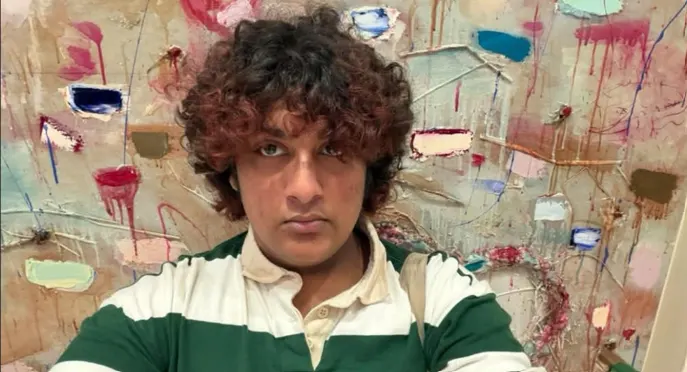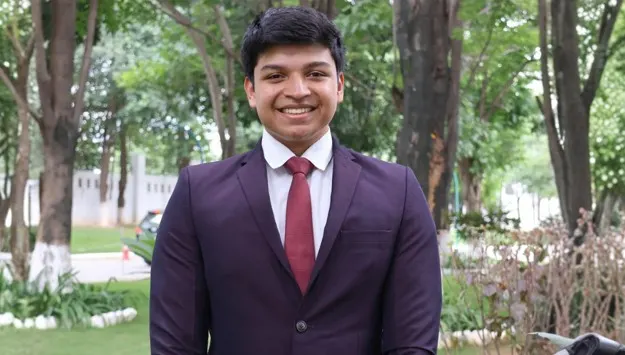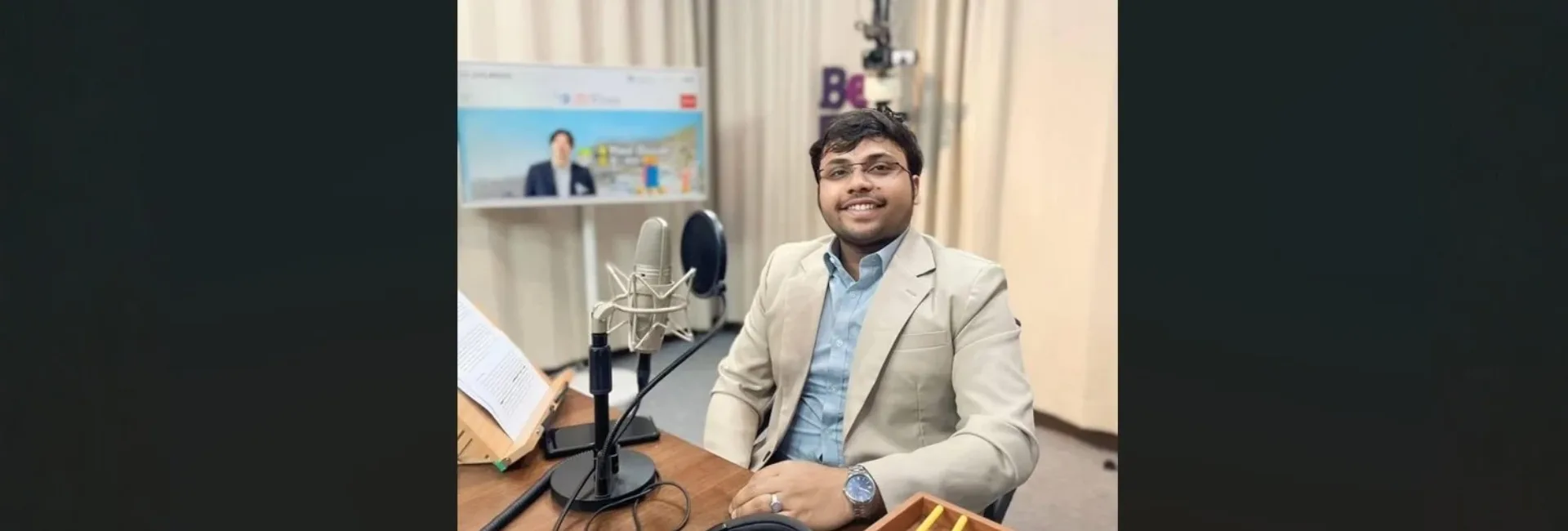


Name: Somenath Dutta | Institution: Pusan National University | Course: PhD in Chemical and Biomolecular Engineering | Location: Busan, South Korea
Key Highlights
- Research journey: Pursuing a PhD at Pusan National University, focusing on RNA biology, miRNA informatics, AI, molecular modelling and therapeutic discovery.
- Global exposure: Built research collaborations and participated in scientific programmes across Asia, Europe, Africa and North America.
- K-STAR recognition: Recommended by PNU under Korea’s K-STAR Visa Track for international talent in science and technology.
- Mentor and facilitator: Mentors young researchers and has delivered hands-on bioinformatics and genome-analysis training to an international cohort.
- Community leadership: Served as President of the Indian Students’ Community at PNU and RSG-Korea, connecting students and early-career researchers in Korea.
Somenath Dutta’s mother was in tears as she bid goodbye to her son, who was all set to board his first-ever flight to South Korea in February 2023. His father and brother appeared tense. Somenath, too, was slightly nervous, but was confident he was on the right track — looking forward to beginning his PhD at Pusan National University (PNU) in Busan.
Upon reaching Busan, one of his first challenges was food. Korean meals were very different from what he was accustomed to, and adjusting to the university cafeteria took time. Language was another barrier. Gradually, he overcame both challenges and adapted to his surroundings. Soon, Busan became familiar.
A little over three years later, his meticulous research has not only taken him across the world, but has also led Pusan National University to recommend him under Korea’s K-STAR talent pathway — intended to recognise and retain international researchers in science and technology.
“A teacher, a senior, a mentor or a collaborator can sometimes change the direction of your life. I have experienced that repeatedly,” smiles Somenath, in a chat with The Global Indian.
His journey from rural Purulia in West Bengal to research collaborations across four continents has not only earned him global recognition, but has also opened new pathways in ways he had not expected.
Finding his research direction
By the third semester of his M.Sc. in Bioinformatics from Pondicherry Central University, Somenath had started thinking about his PhD. “I learned about Prof Sun-Gu Lee’s laboratory at PNU through Dinesh, a senior from my university, who had previously completed his PhD in the same laboratory.”
At that stage, Somenath was mainly working on computer-aided drug design targeting proteins, and the research at PNU was closely aligned with his interests.
“Rather than applying widely to many PhD programmes, I explored the PNU laboratory in detail, applied and was selected.”
Soon after arriving in Korea, Somenath happened to meet Jayaraman, a graduate from Pondicherry who had previously completed his PhD in the same PNU laboratory and later pursued postdoctoral research at MIT.
“Meeting him changed my scientific interests.” Jayaraman was visiting Korea, and their conversations turned to RNA research. “Until then, my computational drug-discovery experience had focused largely on proteins. Those discussions made me increasingly curious about RNA as a therapeutic target. That curiosity gradually became one of the central themes of my PhD project.”
Today, his research combines RNA biology, miRNA informatics, artificial intelligence, molecular modelling and therapeutic discovery.
Research, challenges and mentoring
“The regular work schedule from Monday to Friday remains heavily surrounded with research, computational analysis, university assignments, meetings, writings and other essential academic work,” informs the researcher, who now lives outside campus in a two-bedroom apartment.
Another major direction of his research has focused on the druggability of viral RNA.
Somenath investigated the conserved SL4 region of the SARS-CoV-2 genome using virtual screening, structural modelling and molecular simulations to explore potential RNA-binding small molecules. His broader collaborations have also extended to antimicrobial resistance, glioblastoma and other areas of computational therapeutic research.
Not everything progressed smoothly. In the middle of his PhD, Somenath was worried about obtaining a sufficiently strong and reliable dataset for one of his deep-learning projects.
“For predictive AI research, dataset quality can determine whether the resulting model has scientific value. It became one of the more stressful phases of my doctoral research. The solution came through teamwork,” says Somenath, who published research pertaining to artificial intelligence and antimicrobial resistance as well as computational therapeutic discovery.
His role at PNU has also expanded beyond his own research. He began mentoring younger researchers through the Brain Korea (BK21) FOUR programme at PNU.
“I mentor undergraduate and graduate students in research design, computational analysis, scientific writing and publication,” informs Somenath, who has also mentored early-career researchers outside PNU in bioinformatics, computational biology and research methodology.
A new pathway to stay in Korea
One of the most significant recent milestones has been his recommendation by PNU under Korea’s K-STAR Visa Track.
K-STAR — short for Korea–Science & Technology Advanced Human-Resources Visa Track — is a programme introduced by Korea’s Ministry of Justice to help the country retain outstanding international researchers trained in science and technology at Korean universities.
Applicants must be working in recognised science and technology fields and must also have participated in government-funded research — including programmes such as BK21 — or received relevant government support.
“Unlike a conventional work-visa route that depends first on securing a job, the K-STAR pathway allows eligible science and technology talent recommended by their university to apply for F-2 residence status even without confirmed employment.”
After three years under the relevant residence status, eligible candidates can apply for permanent residency, while researchers with exceptional achievements may also become eligible for a special naturalisation pathway.
“For me, this longer-term residence pathway also creates greater flexibility to continue research in Korea, work with universities or industry, commercialise scientific ideas, or potentially build a technology-based startup in the future,” says Somenath. He was also selected for the American Society for Microbiology’s Future Leaders Mentorship Fellowship (FLMF), making him the first Korea-based fellow selected for the programme.
Taking research beyond Korea
During his PhD years, Somenath has travelled to South Korea, Japan, Singapore, Thailand, Germany, the Philippines, Malaysia and Vietnam. “Some journeys were directly related to science, others broadened my cultural experience.”
His collaborations now extend across four continents — Asia, Europe, Africa and North America — including collaborations involving Spain and the United States.
At Soka University in Tokyo, Japan, Somenath worked with Professor Kiyoko F. Aoki-Kinoshita. “The experience was important because it broadened my scientific exposure beyond my main drug-discovery work and introduced me more vividly to an international network of researchers working across computational biology and bioinformatics.”
His selection as an APBioNET Student Ambassador Fellow connected him with the Asia-Pacific bioinformatics community and provided early exposure to scientific networking, outreach and community engagement at an international level.
What began as participation in APBioNET as a student ambassador eventually led him to become the Founding President of the APBioNET Student Council.
International scientific opportunities continued to expand his exposure. At the National University of Singapore, he participated in cross-disciplinary computational biology training supported through the US National Science Foundation and NRF Korea.
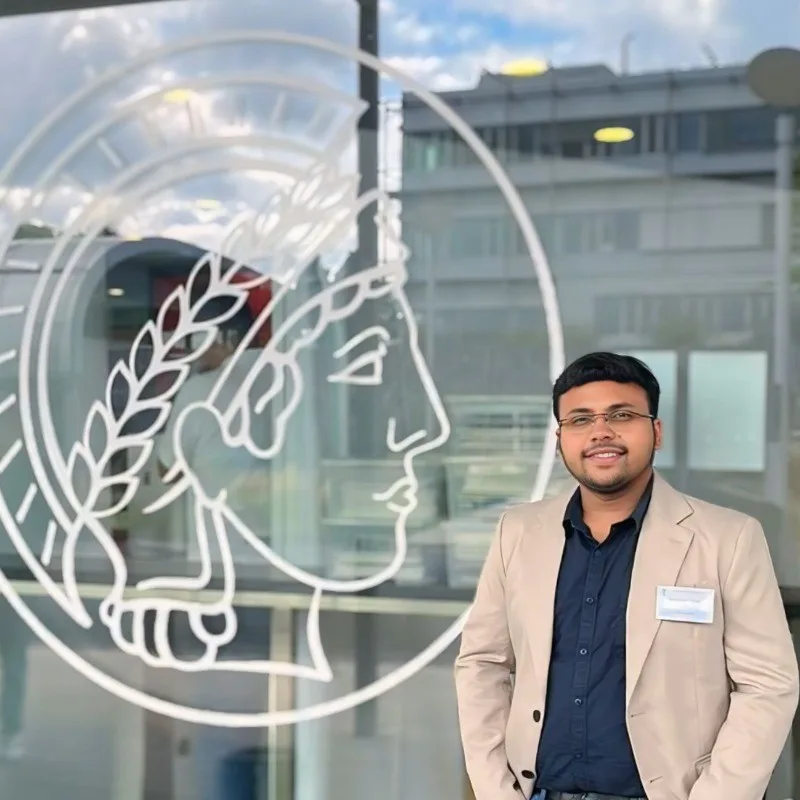
“In Thailand, I joined single-cell omics training supported through the Human Cell Atlas and Chan Zuckerberg Initiative,” says Somenath, whose Zika-related research later took him to Horizons in Molecular Biology in Göttingen, Germany, supported by a Max Planck travel grant.
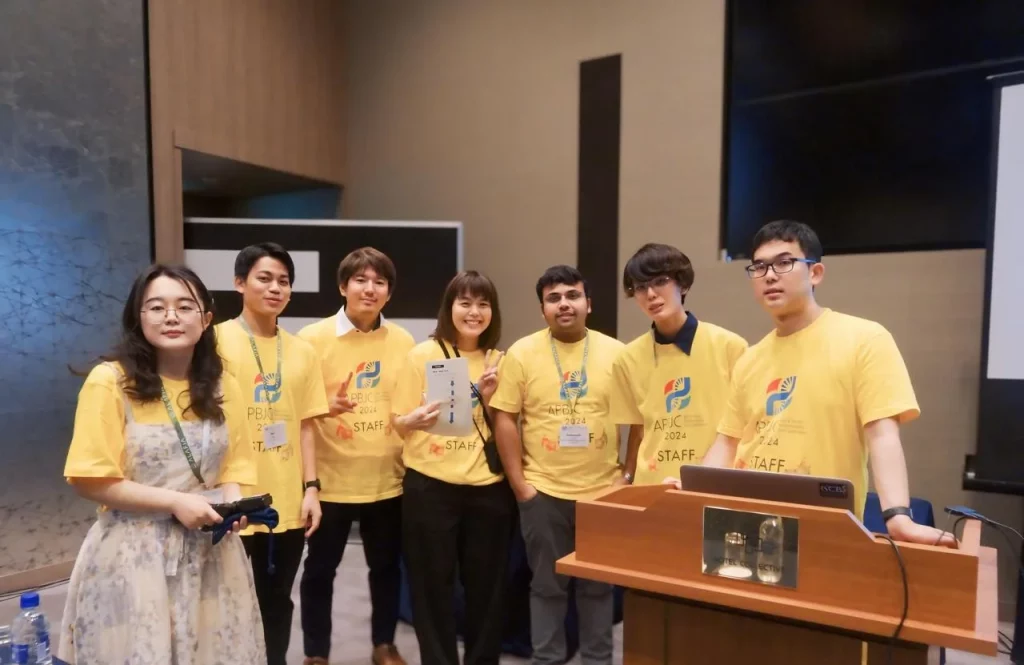
In Japan, he gave a presentation at the Asia & Pacific Bioinformatics Joint Conference and also volunteered at the event.
The early setbacks that shaped him
Born at Puncha BPHC in Purulia, West Bengal, Somenath grew up in a large extended family of around 52 members. His family’s roots are largely in cultivation and small businesses. His father is an LIC agent, his mother is a homemaker, and his younger brother is now studying pharmacy.
“My childhood was dominated more by cricket and outdoor games than by books.” A difficult Class 10 result became an early turning point when his school initially refused to allow him into the science stream.“My father personally approached the headmaster and requested that I be given a chance. That faith became important.”
With help from his family and teachers, Somenath became more serious about his studies and later completed Higher Secondary in science. He then moved roughly 150 kilometres away from home to study Biotechnology at Panskura Banamali College under Vidyasagar University. “There, my mentor Dr Somnath De introduced me to research and encouraged my growing scientific curiosity.”
In 2019, Somenath won a Silver Medal for second position in a state-level science model competition organised by the West Bengal State Council of Science & Technology.
Quiz competitions became another interest, and he went on to secure first prize in several competitions. In 2023, he also won first prize at the 2nd Asian Student Council Symposium. “These achievements mattered because my confidence in science had been built gradually rather than coming from always being a top-performing school student.”
Building a foundation in science
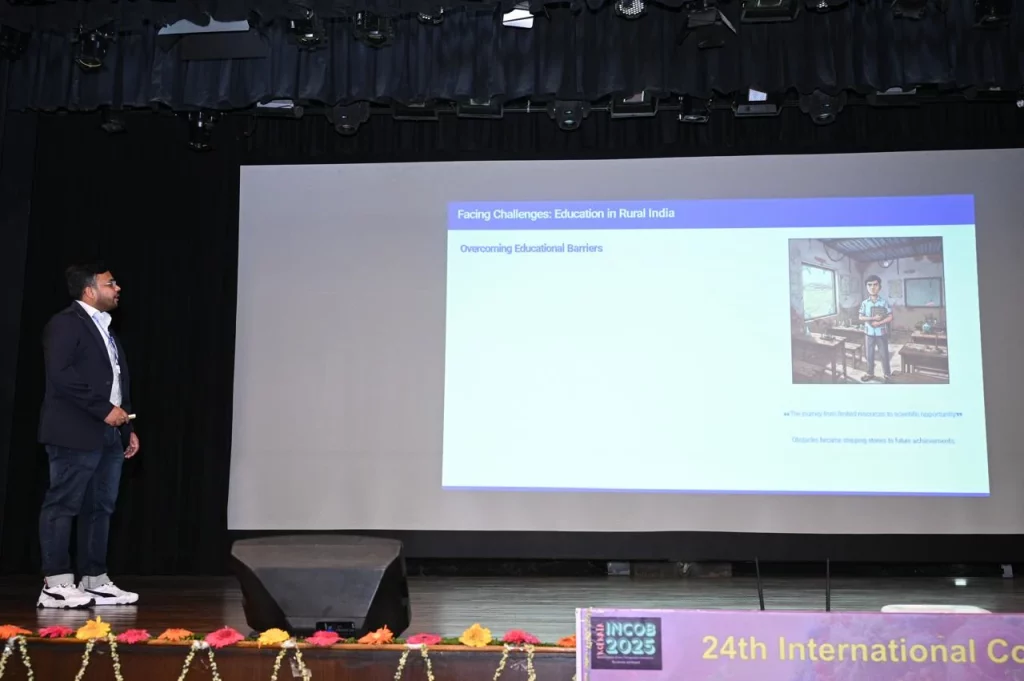
His research and training exposure took him through institutions and programmes associated with AIIMS New Delhi, CSIR laboratories, IISc Bengaluru, BISR Jaipur, NITs and IIIT Hyderabad.
“During these years, I was also learning something beyond research itself — how scientific communities work,” says Somenath, who, in 2022, served as Student Chapter Chair and Core Member of BIOCLUES, the Bioinformatics Club for Experimenting Scientists.
In 2022, Somenath was selected for a research opportunity under Prof Caroline Ospelt at University Hospital Zurich. He applied for the ThinkSwiss Research Scholarship, hoping that the fellowship would make the opportunity financially possible. He couldn’t receive the scholarship.
“The experience was disappointing and disheartening. In contrast, I realised that getting selected for an international opportunity is not always enough. One has to understand funding and learn how to find support,” says Somenath.
He then pursued Bioinformatics at Pondicherry Central University, where he received merit-based scholarships in every semester, including recognition for obtaining the highest SGPA in the second semester of his master’s programme.
From receiving opportunities to creating them
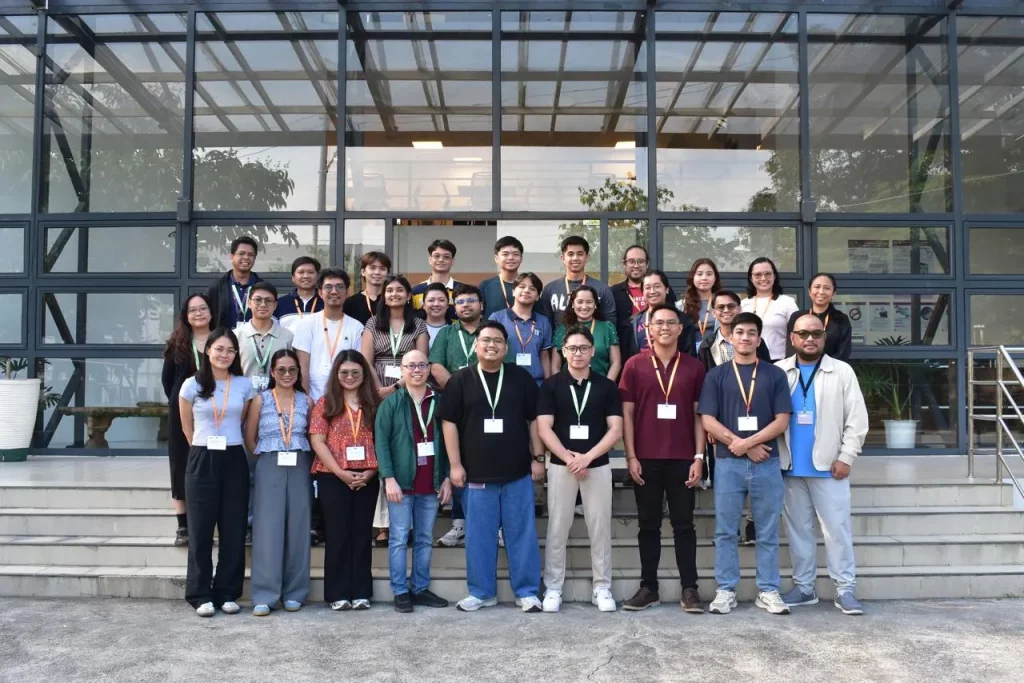
One of the highlights this year was Somenath’s selection as a facilitator for Genome Sequence Analysis–Asia, hosted at the Philippine Genome Center, where he delivered hands-on bioinformatics and genome-analysis training to an international cohort of early-career researchers.
“The role marked a shift from receiving opportunities to helping create them for others.”
Building Korea’s bioinformatics community
Somenath’s interest in community-building later expanded into computational biology through RSG-Korea, the Regional Student Group of the ISCB Student Council.
“I helped strengthen RSG-Korea as a platform for connecting students, researchers and early-career scientists working in bioinformatics and computational biology across South Korea,” says Somenath, who served as President of RSG-Korea in 2025 and currently continues his involvement as a Community Advisor.
Representing Indian students in Korea
Research is only one side of Somenath’s Korea experience. At PNU, he served first as Vice President and later as President of the Indian Students’ Community.
He represented Indian students in interactions with the Indian Embassy in Korea, participated in engagements around visits by senior Indian representatives and ministers, and took part in meetings with Korean immigration authorities regarding practical issues affecting Indian students and their families.
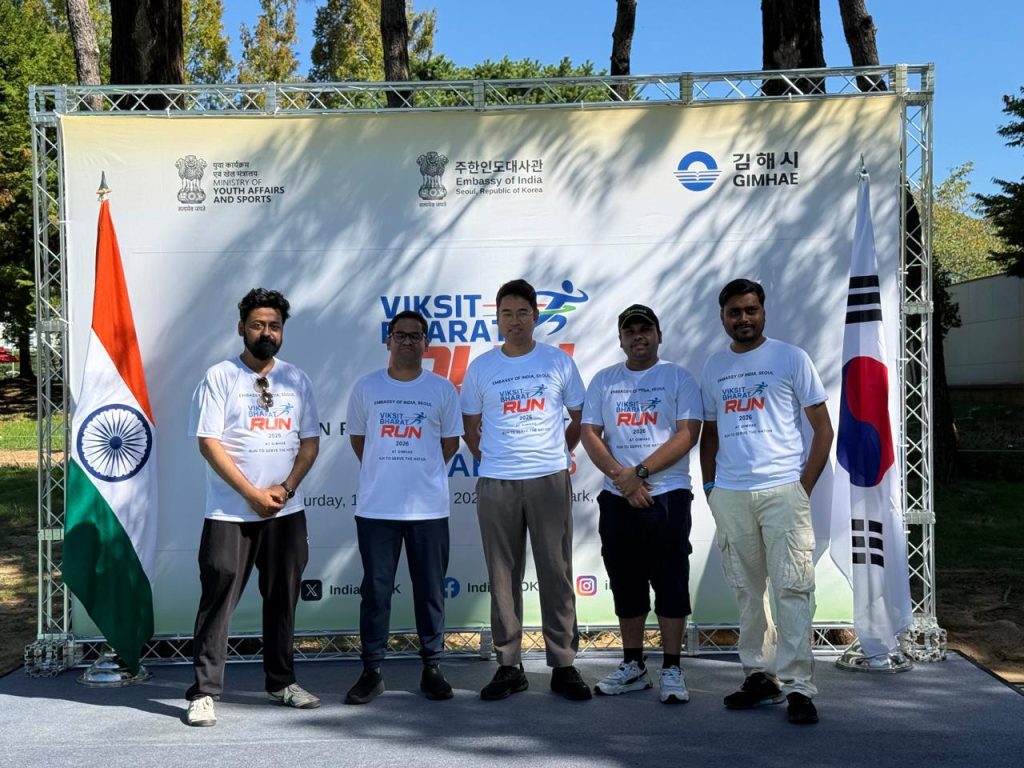
He also helped organise the Viksit Bharat Run in Busan, represented the Indian community at Busan’s Global Gathering, and participated in Korean media interviews as a community representative.
“One of happiest moments during my leadership was when the Indian community won PNU’s ‘We Are One Festival’ championship, competing among communities representing more than 20 nationalities,” he says.
Somenath Dutta’s journey from a small town in West Bengal to research laboratories, universities and scientific communities across continents has been shaped not only by his own work, but also by the mentors, collaborators and opportunities that changed its direction along the way.
Outside the laboratory, Somenath also picked up basic Korean, making everyday life considerably easier. “On weekends, I enjoy driving, going on outings and exploring new places,” he signs off.
- Follow Somenath Dutta on LinkedIn