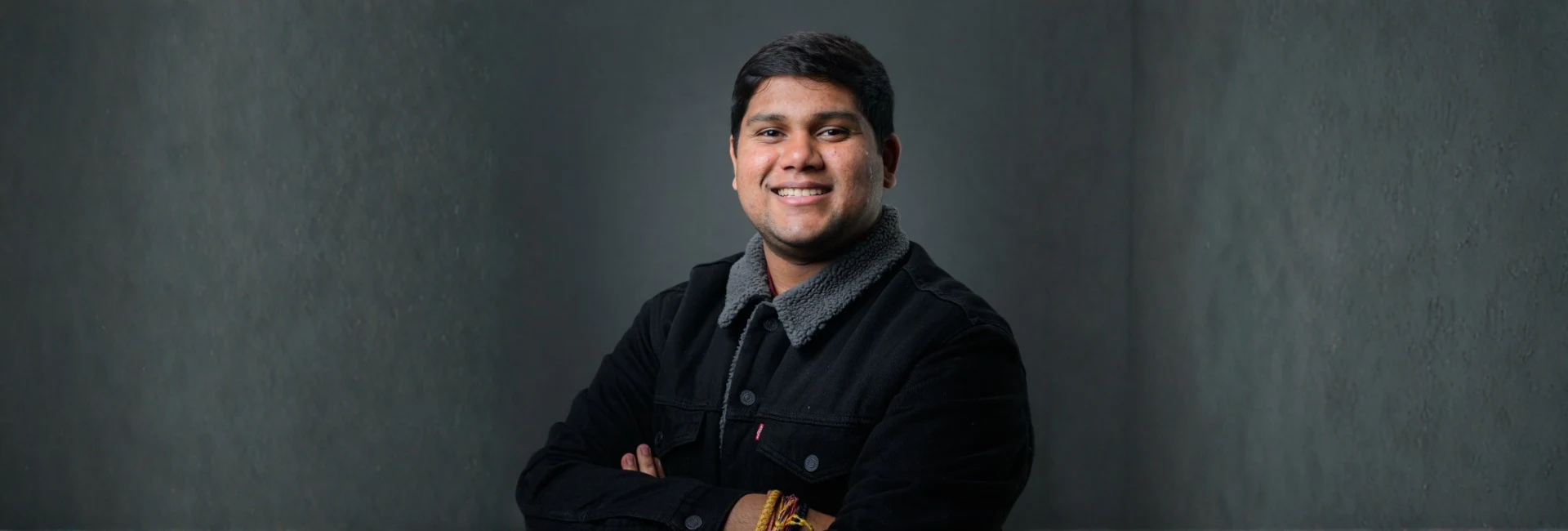


(January 25, 2026) In August 2024, Suvaditya Mukherjee landed in Los Angeles carrying two suitcases and a slight sense of unease. It was the first time he had travelled so far away from his parents who are based in Mumbai. For first time Mumbai felt less like a city and more like a memory measured in flight hours. Nearly 8,700 miles separated him from home. At that moment, his life looked like that of many international students who navigate new country, unfamiliar systems, and the slow process of starting over.
What Suvaditya did not know then was that a few months later, a casual conversation on campus would lead him to one of the most ambitious film-and-technology projects Hollywood has ever attempted. “It was honestly the experience of a lifetime,” the youngster would later say.
A year after arriving in the US, Suvaditya found his name in the credits of The Wizard of Oz at Sphere, an ambitious reimagining of the 1939 classic film that has been described as Hollywood’s most significant experiment yet with artificial intelligence. The project, expected to generate more than a billion in revenue, places a nearly century-old film inside Sphere, in Las Vegas, one of the most technologically advanced entertainment venues ever built.
For Suvaditya, now a Master’s student in computer science at the University of Southern California, the journey from arrival as a student in Los Angeles to working on a landmark Hollywood production has been a chain of chance encounters.
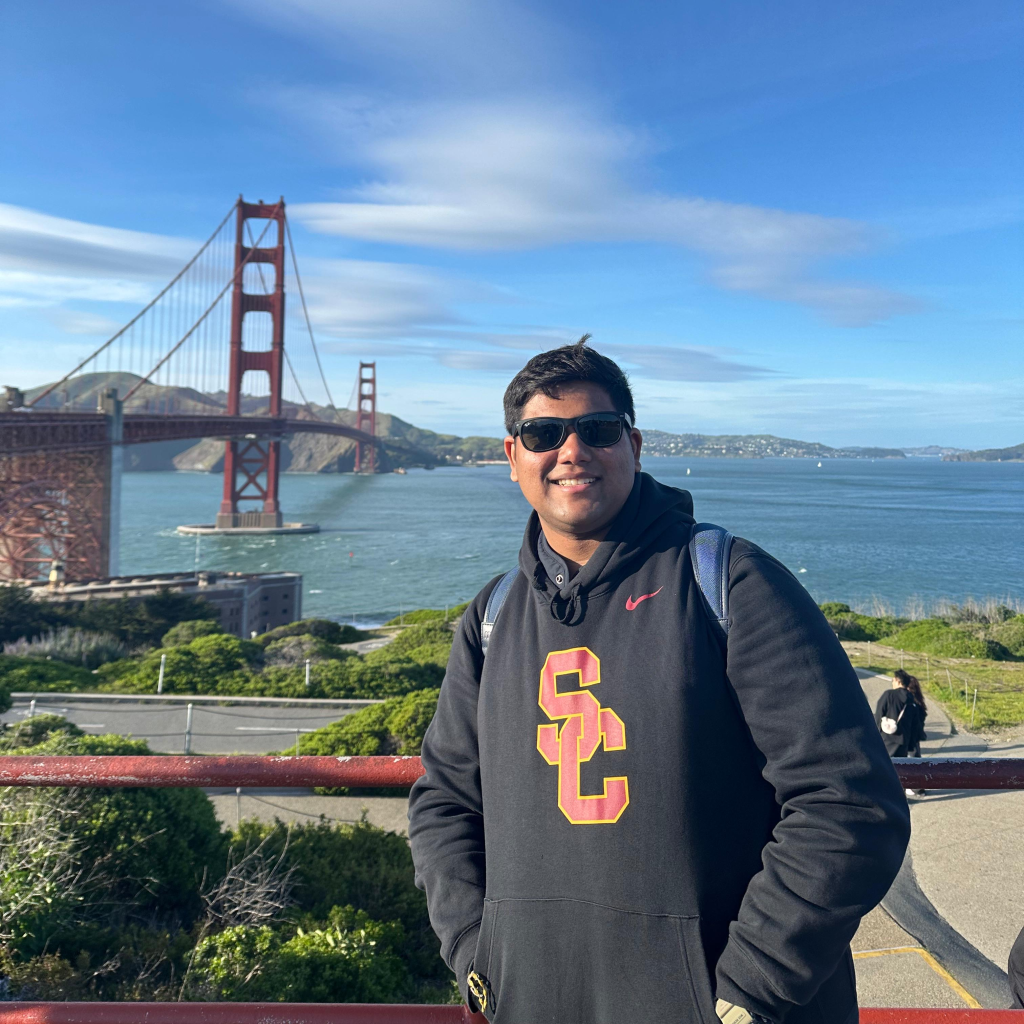
Learning to see through machines
Suvaditya is pursuing a Master’s in Computer Science with a specialisation in Artificial Intelligence at USC’s Viterbi School of Engineering. His academic interests lie in deep learning and generative AI, particularly in areas such as computer vision, 3D generation, and efficiency optimisation. Before coming to the US, he completed his Bachelor of Technology in Computer Science (AI) at NMIMS University in Mumbai, where his fascination with artificial intelligence began taking formal shape.
Alongside his studies, the master’s student works as a Machine Learning Engineer at Magnopus, a global studio known for building immersive experiences that combine cinema, gaming, and extended reality. His work focuses on optimising 3D generative models and exploring how AI can be used to rapidly create detailed three-dimensional worlds. This landed him an opportunity to be part of a historic Hollywood project.
How the Wizard of Oz came calling
After arriving in Los Angeles, Suvaditya made a deliberate effort to immerse himself in research. He emailed as many as 248 professors looking for opportunities in artificial intelligence and machine learning. Of the handful who responded, Professor Benjamin Nye at the USC Institute for Creative Technologies, and Professor Mark Bolas, a pioneer in mixed reality at the USC School of Cinematic Arts, offered him work.
Working part-time with Professor Bolas, Suvaditya helped develop technical coursework and research at the intersection of AI and immersive media. During one conversation, he mentioned his excitement about the large-scale immersive reimagining of The Wizard of Oz at Sphere that he had seen being announced at Google Cloud Next.
Professor Bolas happened to know someone at Magnopus, one of Sphere’s key creative technology partners. One introduction led to another. At a USC Games showcase, Suvaditya met a Magnopus recruiter. Within weeks, he found himself joining a small, high-intensity team working on the final stages of the project.
Rebuilding a film that was never meant to change
The Wizard of Oz was released in 1939, shot in a way that was meant for the small theatre screens of its time. The film’s charm lies in its theatrical staging, hand-painted sets, and carefully composed frames. But placing it inside Sphere, a massive wraparound venue designed to engulf viewers, posed a fundamental problem. The original footage simply did not contain enough visual information to fill such a space.
Rather than stretching or cropping the film, which would have compromised its integrity, the creative teams turned to artificial intelligence. Engineers from Magnopus worked alongside researchers and artists from Google DeepMind, Google Cloud, Sphere Studios, and Warner Bros. Discovery to develop systems capable of enhancing and expanding the original footage without altering performances or storytelling. Nearly 90 percent of the film was enhanced using AI, yet the goal was never to modernise the story, rather to preserve it.
The invisible work behind the screen
Suvaditya joined the project during its most intense phase, as part of a small team assembled for the final push before deadline. His role involved addressing shots that failed to meet quality standards through conventional AI pipelines. These were often scenes with fast movement, complex lighting, or incomplete visual data. These are the conditions under which AI systems tend to struggle.
One of the most sensitive challenges was maintaining character likeness. AI does not intuitively understand faces or movement. When actors move quickly or exit the frame, the system lacks sufficient information to reconstruct them accurately. “While our mind can fill in certain gaps in visual information, the AIs can’t,” Suvaditya explained in an interview. “We had to choose the correct frames and then sort of fill in between.”
His work involved guiding the models with carefully selected references, ensuring that characters remained recognisable and consistent from frame to frame. The success of this effort lies in its subtlety. When done well, audiences never notice the technology at all.
Cinema that surrounds the audience
The finished experience goes far beyond visual enhancement. At Sphere, the film is accompanied by physical effects that synchronise with the story like powerful fans simulate the Kansas tornado, seats vibrate, fog rolls in, and scents are released at key moments. During dramatic scenes, drone-powered flying monkeys pass overhead. It is cinema experienced not just through sight and sound, but through the body.
Despite having worked on the project for months, Suvaditya watched The Wizard of Oz in its entirety only the night before the premiere. Until then, his relationship with the film had been technical and fragmented, defined by frames, models, and optimisation metrics.
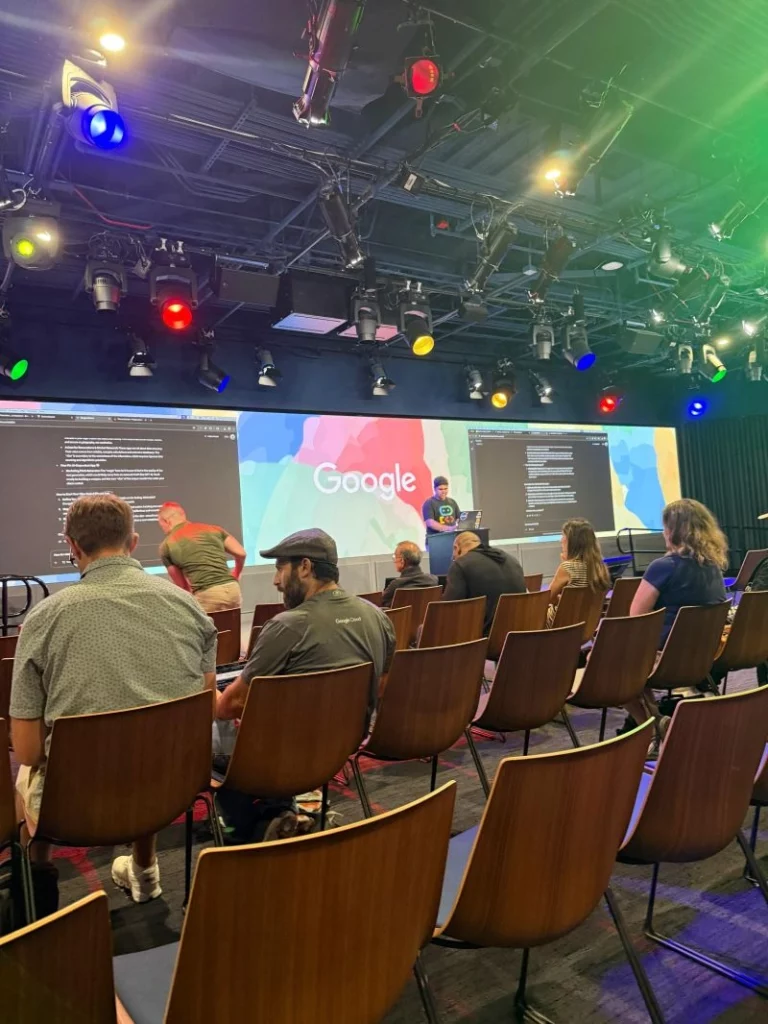
Suvaditya during a talk on Build with AI in Los Angeles
A curiosity that started early
Suvaditya developed interest in AI during his childhood. At the age of 10, he read a science encyclopedia predicting that artificial intelligence would become reality sometime around 2040 or 2050. Reality arrived far sooner. While completing his undergraduate degree in Mumbai, he watched tools like ChatGPT enter classrooms, transforming how students learned and how teachers taught.
At USC, his work has expanded into vision-language models, 3D computer vision, and generative systems for education and creative media. He has presented research at the PyTorch Conference in San Francisco and is recognised as a Google Developer Expert in Machine Learning. He is also deeply engaged with developer communities, having previously founded and led the Google Developer Student Club at NMIMS, organising workshops, competitions, and speaker sessions for students across India.
Looking beyond the credits
Looking ahead, Suvaditya hopes to work at a frontier AI research lab, exploring how intelligent systems reason and how generative technologies can create immersive, interactive worlds. His long-term ambitions include advancing 3D generation toward holographic and mixed-reality interfaces.
For now, he balances coursework, research, and part-time work at Magnopus, while pursuing interests in photography and cooking. He jokes about keeping multiple browser windows open, each packed with dozens of tabs, as he moves between projects and collaborations. Seeing his name in the credits of The Wizard of Oz at Sphere represents a milestone, but not a conclusion. It is one of the chapters that would always be the memorable one in his journey.
- Follow Suvaditya Mukherjee on LinkedIn
ALSO READ: From childhood dreams to the Sundance spotlight: Sripadh Puligilla’s journey