

(January 16, 2026) By the age of 21, Tanuj’s artworks have travelled further than he once imagined with displays at the Luxembourg Palace in France, the Colorado State Art Gallery in the United States, exhibition spaces in Bulgaria, Japan, and Azerbaijan. He has represented India as a youth delegate at the IUCN World Conservation Congress in Abu Dhabi, served on global advisory councils linked to public health and climate policy, and worked alongside Nobel Peace laureates through an international fellowship. His first solo flight abroad carried him not for leisure, but for advocacy. The youngster’s journey has steadily expanded from art into activism and policy.
That path, however, took shape far from international galleries and conference halls. Tanuj grew up in Rangia, a small township in Assam’s Kamrup district, in a nuclear household where his father was the sole breadwinner and financial uncertainty was a familiar companion. “From the humble bylanes of Rangia to places I once thought were out of my reach, my roots remind me that beauty often grows from simplicity,” he tells Global Indian.

The 21-year-old artist studies geography at Kirori Mal College in Delhi, and works across mixed media to tell stories that sit at the intersection of art, social justice, climate action, and mental health.
A humble upbringing and lessons learned knee-deep in floodwater
“While at times it became difficult for my father to make ends meet, he ensured that I had a secure childhood,” Tanuj reflects. His mother, a homemaker, played a formative role long before art became a vocation. “She was my first teacher, my first friend,” he says. “She instilled resilience, curiosity, and an artist’s eye for the unseen narratives in everyday life.” Rangia remains the axis of his work, informing both the subjects he returns to and the questions he now asks of systems, governance, and change.
Art entered his life early through scribbles, colours, and observation. His mother preserved his childhood sketches from as early as 2007. “Almost as if she knew what was to come,” he says, describing those drawings as “silent promises of times yet to be spoken of.” One memory remains indelible. During a severe monsoon, floodwaters breached their modest home. “I remember my mother toiling knee-deep in floodwaters,” he recalls. “She looked at me and said, ‘Someday you will have to escape the precincts of this shelter, in the pursuit of something greater, and you can transform fate for all of us.’”

Mixed media as method, memory, and meaning
Tanuj’s artistic practice spans graphite, charcoal, watercolours, coloured pencils, and mixed media. The choice of medium is never incidental. His works often draw from indigenous visual traditions of Warli, Kalamkari, and Assamese sanchipaat, reframed through contemporary narratives of social justice, climate vulnerability, and collective resilience.
“My work is crafted to tell profound stories rooted in social awareness,” he explains. Over time, this approach has earned him recognition far beyond India, placing his art in international exhibition spaces that span Europe, North America, and Asia.
From Assam to international galleries
Most of the opportunities of getting his work displayed abroad emerged through international competitions. In 2018, he won the Gold Medal at the Draw Me Peace International Art Competition in France, which led to his work being exhibited at the Luxembourg Palace and included in a mobile exhibition across the country. Earlier, his Silver Medal win at the Little Zograff World Competition for Children’s Drawings in Sofia in 2017 brought his work to Bulgaria, while the JQA Special Prize in 2019 resulted in an exhibition at the JQA Headquarters in Japan.
“I do keep track of competitions and exhibition calls,” he says. “Occasionally, invitations come in too. The artworks are usually sent by post to the host organisation.” The global movement of his work, however, has never diluted its rootedness. Assam, its landscapes, wetlands, floods, and silences remain a recurring presence.
When art turned towards activism
In 2023, Tanuj consciously expanded his practice to include structured advocacy. He was selected as a Global Youth Advisor to the Global Youth Advisory Council under Art of Health (Zimbabwe), in collaboration with the London School of Hygiene and Tropical Medicine. In this role, he used character-driven storytelling and visual metaphors to engage young people on mental health and well-being. “Art allowed me to capture the imagination of young teens and school-going students,” he says.
This work grew into several initiatives. Under YOUTHCONNECT, he spearheaded college-wide mental health surveys across the National Capital Territory, generating data that informed the creation of monthly YOUTH MEETS which are safe, inclusive spaces where young people could connect and speak openly. The initiative directly engaged an estimated 350 individuals.
Another initiative, ART4SERENITY, resulted in a short mixed-media video series titled METAMORPHOSIS: ART4SERENITY, exploring pathways to emotional resilience. Over time, these efforts aligned closely with Sustainable Development Goal 4—Quality Education, nudging Tanuj toward questions of governance and structural change.
View this post on Instagram
Entering global policy spaces
Tanuj’s advocacy work placed him within international youth and UN-affiliated networks. He participated in the UNFCCC Conference of Subsidiary Bodies (SB 62) in June 2024, gaining hands-on exposure to climate negotiations and youth-led policy engagement. He also serves as one of the youngest Commission Members of IUCN’s Commission on Environmental, Economic and Social Policy (CEESP), contributing to interdisciplinary work on environmental governance and social equity.
The first international trip
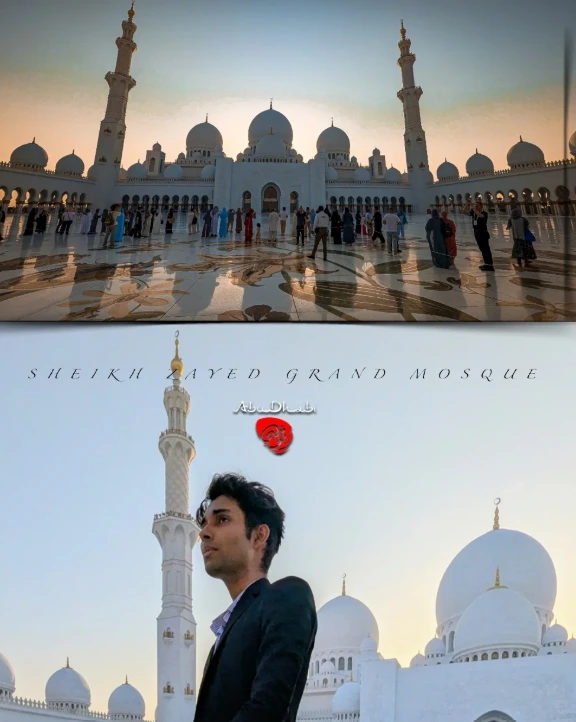
In 2025, he represented India as a youth delegate at the IUCN World Conservation Congress in Abu Dhabi which was his first international trip. “I remember the aircraft leaving the runway,” he says. “A line from the song Ghost Town played through my headphones—‘someday we gon’ set it off.’ It felt less like a departure and more like a mission.” Abu Dhabi, he notes, revealed new dimensions of self-reliance. “I did everything on my own, from attending the conference to exploring the city. The journey quietly reshaped my understanding of my own resilience.”
At the Congress, he drew attention to Assam’s rapidly diminishing wetlands. It was an issue he felt was often sidelined in mainstream policy discourse. In youth pavilions, he advocated for sustainable public-private partnerships to protect fragile ecosystems from encroachment and resource competition.
Recognition, often without self-nomination
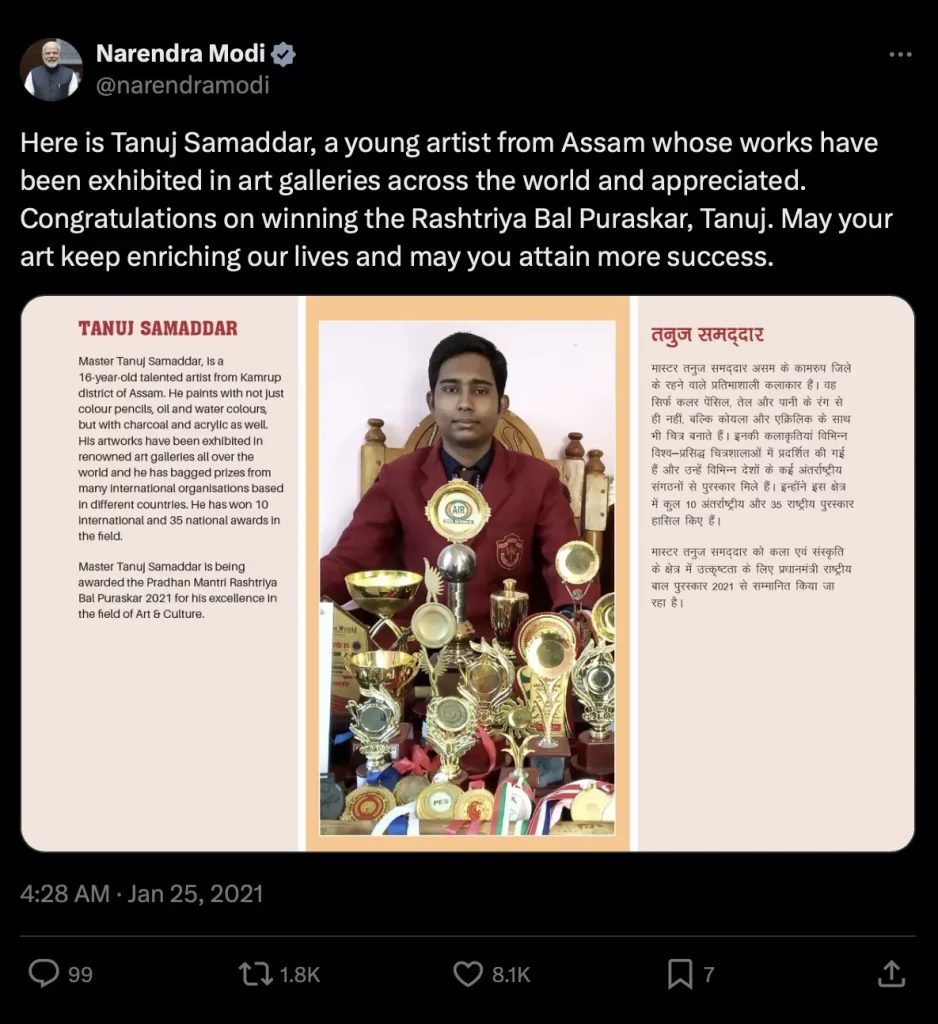
Despite multiple awards and nominations, Tanuj has rarely positioned himself as a contender. “In several instances, I was nominated by well-wishers or local authorities,” he says. The district administration nominated him for the International Children’s Peace Prize, often referred to as the Children’s Nobel Prize. He has also been anonymously nominated multiple times for awards such as the State Youth Award. He did, however, self-nominate for the Pradhan Mantri Rashtriya Bal Puraskar in 2021 which was his second attempt, following an earlier nomination in 2020.
Mentorship, from home to Nobel laureates
Tanuj identifies his parents as his primary inspirations. His mother’s conviction and his father’s steady resolve continue to guide him. “They raised me up to more than I could ever be,” he says.
Beyond home, he credits Anurag Jain, founder and chairman of the Kiran Foundation, as a pivotal mentor. “He treats me not just as a scholar but as family,” Tanuj notes. “His emphasis on leadership, self-reliance, and giving back has shaped my worldview.”
He is also a Billion Acts Peace Fellow, part of the US-based PeaceJam Foundation, an organisation that works directly with 14 Nobel Peace laureates and has itself been nominated for the Nobel Peace Prize eight times. Through the fellowship, he has engaged with laureates such as Kailash Satyarthi, Shirin Ebadi, and Rigoberta Menchú during structured sessions and annual convenings.
From art to algorithms: Mapping the future
Currently pursuing his undergraduate degree in geography, Tanuj plans to continue his studies in development and public policy. His research interests centre on child labour, local governance, and stakeholder partnerships. He envisions using GIS mapping to identify high-risk micro-geographies in Assam where children are vulnerable to labour, linking these insights to adaptive funding mechanisms tied to self help groups. The goal is to facilitate access to secondary education while incentivising community-led reporting and surveillance.
This vision is already taking shape through Action for a Resilient Tomorrow (ART), a social impact initiative supported by a microgrant from the US-based PeaceJam Foundation. The pilot phase currently targets three government schools in Rangia, with plans to include all government schools in the region over the coming years.
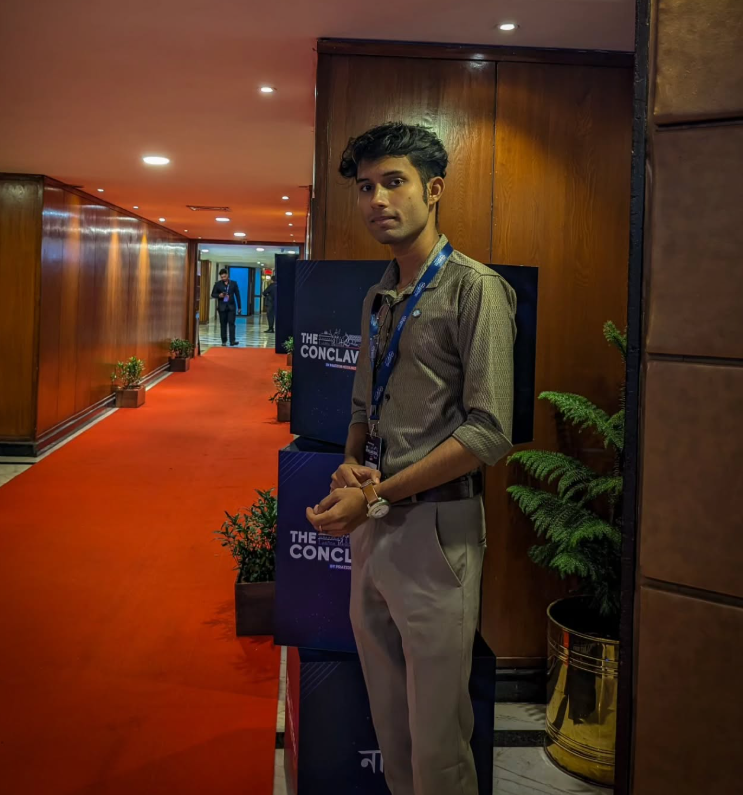
He is also engaged with Beyond The Classroom, a youth development initiative that recently piloted its programme at the Udayan Care Center in Delhi. Following its success, the team plans to scale across the NCR through partnerships with schools and community centres.
Over the next decade, Tanuj hopes to expand art into a transnational campaign and establish micro-policy labs across South Asia to study patterns of upward mobility among vulnerable populations. “My vision is an India where young hands don’t sweep remnants of neglect from train floors,” he says, “but wipe boards to script new ideas.”
For Tanuj, that vision is neither metaphor nor abstraction. It is a continuation of a journey that began with a child’s sketch, preserved carefully in a flood-prone home in Rangia and carried, patiently, into the world.
ALSO READ: Indian artist Sanket Jadia brings alive India’s past with his unique art form