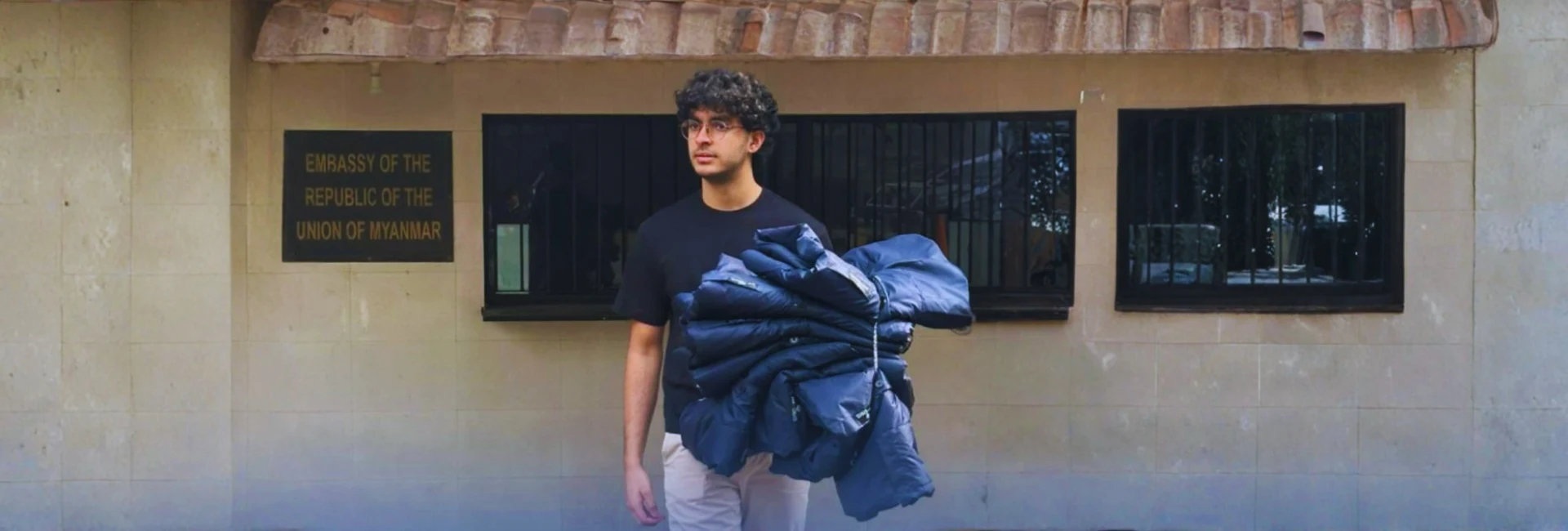


(March 29, 2026) One chilly evening in 2023, Jaivir Gulati and a group of friends were having dinner at the mess hall of Institut Le Rosey, a renowned boarding school in Switzerland, when footage of displaced and orphaned children flickered across the screen. For Jaivir, then in the ninth grade and a long way from his hometown of Delhi, the moment crystallised into a decision of doing something about it.
That something became Fabrecreate. Its a social enterprise that converts surplus textile waste into jackets, distributed to homeless and displaced children in India, Ukraine, Myanmar and Greece, so far. What started as a schoolboy’s response to a troubling news segment has since reached close to 10,000 children and diverted nearly 94 metric tons of textile waste from landfills. Fabrecreate’s mission is to distribute 15,000 such jackets to vulnerable children.
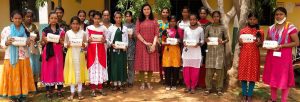
So far, it has upcycled over 46,775 meters of surplus fabric in service of that goal. “We source textile waste by reaching out directly to textile manufacturers, mills, and suppliers through emails and conversations,” Jaivir tells Global Indian. The result is HOPE jackets. The garments stitched from upcycled material, designed to protect children during harsh winters, and produced with a social purpose are distributed in collaboration with more than 15 NGOs worldwide including The UN Refugee Agency (UNHCR).
View this post on Instagram
The idea behind the jacket
The logic animating Fabrecreate is elegant in its simplicity. The global apparel industry generates enormous quantities of fabric waste with offcuts, deadstock, and production leftovers that manufacturers are often at a loss to deal with. Jaivir saw an opportunity to redirect this waste toward people who needed warmth most.
“A lot of our sourcing comes from surplus fabric, deadstock, and production leftovers that companies are willing to share or donate. It’s a very hands-on process of identifying the right suppliers, explaining our work, and building relationships over time,” he mentions. “We have prevented an estimated 4.7 metric tons of methane and 28 metric tons of CO₂ emissions through upcycling and avoided production.”
Empowering women, one stitch at a time
A distinctive feature of Fabrecreate’s model is that production is powered entirely by women artisans from self-help groups (SHGs). More than 30 skilled women are involved in stitching the jackets, earning dignified livelihoods in the process. Jaivir is deliberate about framing this not as charity, but as economic empowerment. “These women are at the heart of Fabrecreate’s impact,” Jaivir says, “stitching warmth and hope into every jacket while earning a dignified livelihood.”
The supportive team
The team supporting this work is small but committed. Jaivir describes Ram Pravesh, known as Masterji as “the backbone of our production,” responsible for training artisans in technical stitching and maintaining the quality of each jacket. Preeti handles sourcing and quality checks, ensuring upcycled material meets warmth standards for winter conditions. Roshni, a student volunteer, works directly with the SHGs, “supporting self-help groups, building their confidence, and reinforcing the belief that women are central to Fabrecreate’s mission.” Sudesh oversees field operations, while Sachin manages logistics between production units and warehouses.
A global distribution network, built from scratch
Getting jackets from a production unit to a child in a refugee settlement or a remote Himalayan village is its own challenge, and one Jaivir has approached with considerable seriousness for someone still sitting school exams.
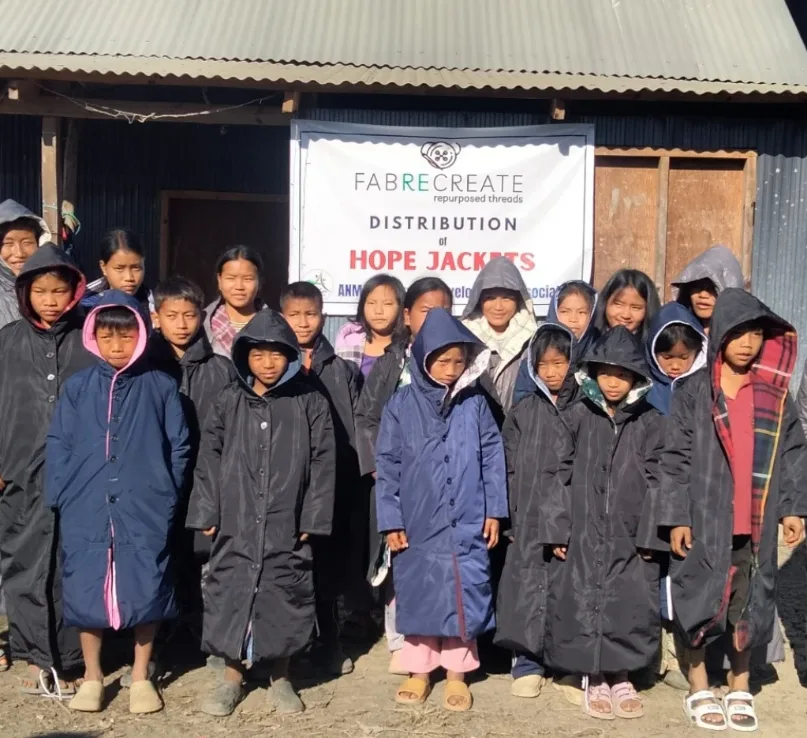
Children in Nagaland with HOPE Jackets
In India, Fabrecreate has partnered with organisations including Don Bosco Snehalaya, HVT Foundation, Maitri, AIDBEES, Shanti Seva, and the Rotary Club of Bombay Bayview to reach children in remote and high-altitude regions. Internationally, the enterprise has collaborated with UNHCR for refugee settlements, Nova Ukraine for communities affected by conflict, and local NGOs in Greece operating in refugee camps. Following the earthquake in Myanmar, Fabrecreate coordinated distribution through the embassy and humanitarian networks on the ground.
“Distribution is not just about sending jackets,” Jaivir says. “It’s about making sure they reach children who truly need them, in a responsible and organised way.”
Managing fund requirements
Funding this operation has required creative hustle. “We started on a very small scale with personal support and contributions from close networks,” he says. “As we grew, we began raising funds through donations, fundraising platforms, and partnerships.” He currently runs campaigns on both Milaap and GoFundMe, using proceeds to pay artisans, manage production, and cover logistics.
Balance at Institut Le Rosey
Jaivir’s life at Institut Le Rosey would sound busy for anyone, let alone a teenager coordinating a multi-country humanitarian supply chain. Beyond Fabrecreate, he competes in judo (earning the Student of the Year Medal at Institut Le Rosey in both 2024 and 2025), plays chess, and pursues music.
“Honestly, it’s not easy,” he admits. “I try to stay structured and plan my time carefully. A lot of Fabrecreate work happens remotely, so I manage calls, emails, and coordination alongside my studies.” Rather than treating his other interests as competing demands, he frames them as stabilisers: “Activities like music, chess, and judo help me stay balanced and focused, so I see them as part of my routine rather than extra work.”
His background may have prepared him for the juggling act. He grew up in Delhi, attending The Shri Ram School before moving to Switzerland after Class eight. His family, which remains based in India, has a business background. Its something that has shaped his instincts. “Growing up around that environment has definitely influenced the way I think about building and managing something of my own,” he mentions.
View this post on Instagram
What comes next
Jaivir is candid that Fabrecreate’s long-term viability depends on building systems that outlast any individual’s involvement including his own. “Fabrecreate is not dependent on just me. It’s supported by partners, artisans, and collaborators,” he says. “As it grows, the goal is to build stronger systems and a team so that it can continue to run and scale even while I’m in college.”
After finishing 12th grade, he hopes to study something that bridges business, sustainability, and social impact. Its a combination that describes, in many ways, what Fabrecreate already is.
The journey from that mess hall dinner in 2023 to a network spanning India, Ukraine, Greece, and Myanmar is remarkable by any measure. But perhaps more telling is the philosophy underpinning it that a piece of discarded fabric, in the right hands, can become warmth; that warmth, delivered to the right child, is hope. Each jacket, as Fabrecreate puts it, represents “a cycle of positive impact from the hands that make it, to the child who wears it, and the planet that benefits. For Jaivir Gulati, that cycle is only just beginning.
ALSO READ: Brothers on a mission: How Vishal and Ishan Vijay are tackling child poverty across borders