

(March 8, 2026) Indian women’s hockey has steadily built its reputation on persistence. Over the past decade, the team has moved from being an underdog on the world stage to a side that now enters major tournaments with genuine expectation.
As the Indian team prepares to begin its campaign at the FIH Women’s Hockey World Cup 2026 Qualifiers in Hyderabad from March 8, that confidence will once again be tested. The tournament, featuring India, England, Scotland, Korea, Italy, Uruguay, Wales and Austria, will determine the final teams that qualify for the Women’s Hockey World Cup this year.
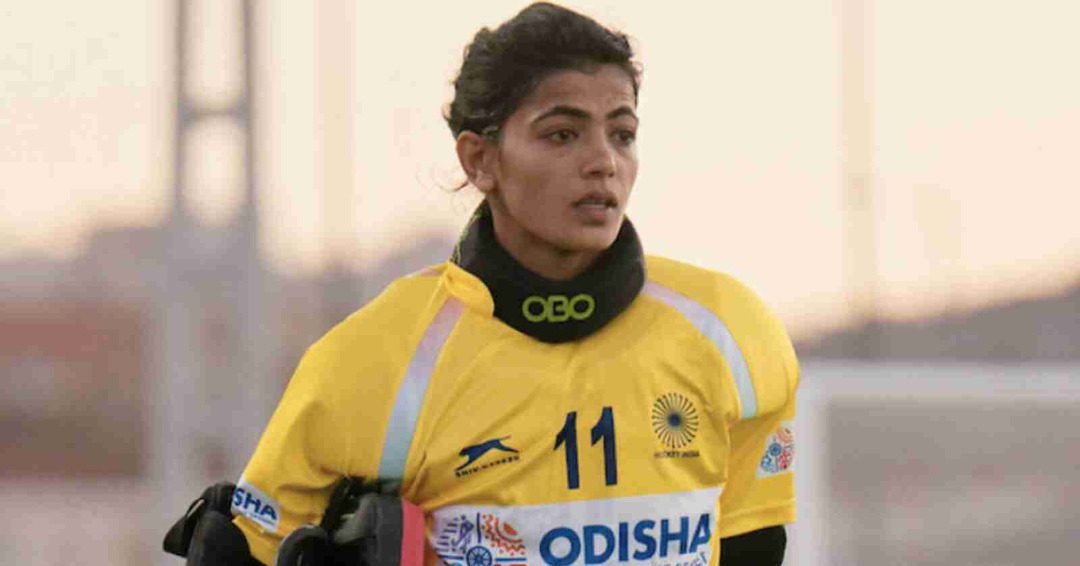
India, currently ranked ninth in the world, enters the competition with realistic hopes of securing one of the three available spots. Leading the side into the crucial tournament is captain Salima Tete, a midfielder whose journey from a remote village in Jharkhand to captaining the national team reflects the evolving story of women’s hockey in India.
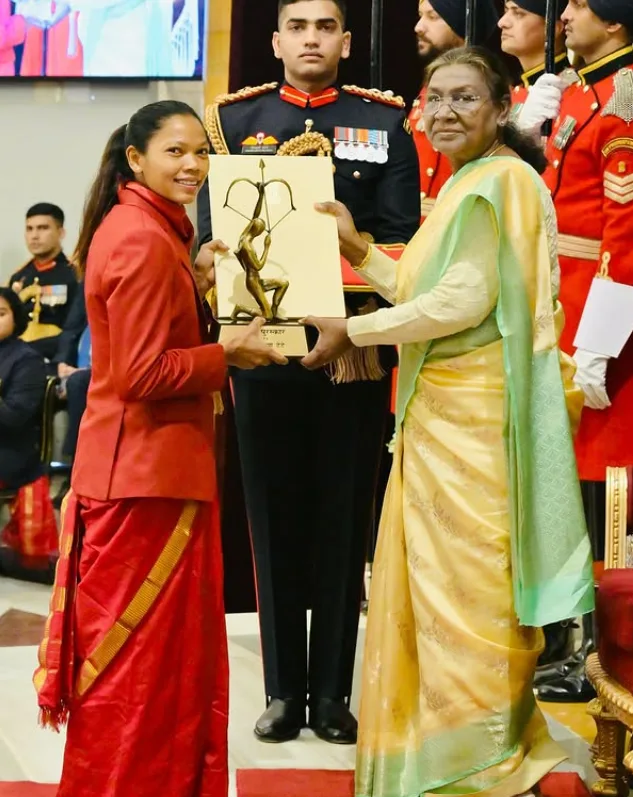
Salima Tete received Arjuna Award from President Droupadi Murmu in 2025
A journey transformed by the game
For Salima, hockey has changed the course of her life in ways she once could not have imagined. Reflecting on her journey, she once said, “Playing for India has really changed my life a lot. It has given me everything I could have asked for. I just want to keep performing for the country and winning more matches.” Her story from village grounds in Simdega to leading the national team mirrors the broader transformation of Indian women’s hockey. Today, players emerging from small towns and rural communities are helping reshape the future of the sport
A captain shaped by Simdega’s hockey culture
Salima Tete grew up in Badkichapar village in Simdega district of Jharkhand, a region long known for producing talented hockey players. In many parts of the district, the sport is part of everyday life, played on open grounds where enthusiasm often compensates for the lack of formal facilities.
Her parents worked as farmers, and resources were limited, but hockey was not unfamiliar to the family. Salima’s father had played the sport in his younger days and encouraged her early interest in the game. In the absence of professional equipment, young players in the village improvised with basic sticks and rough playing fields. Local tournaments brought together teams from neighbouring villages and were often the only competitive platform available.
Reaching those matches required determination. Salima would travel long distances from her village to compete, sometimes accompanied by her father who cycled alongside her to ensure she could participate. Those early experiences slowly shaped a belief that hockey could take her beyond the boundaries of her village.
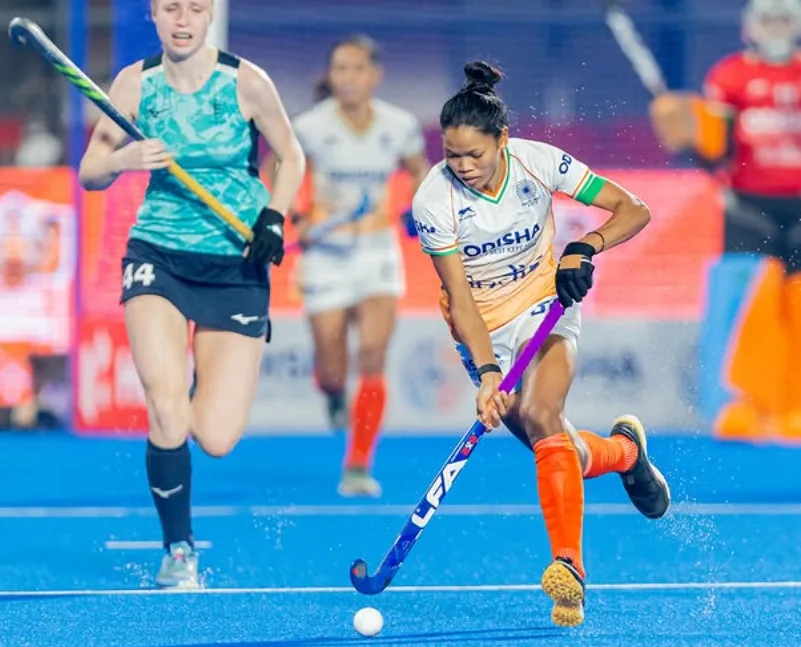
Salima Tete
A rapid rise through Indian hockey
Salima’s ability soon began attracting attention. In 2017, while still a teenager, she made her debut for the Indian senior team against Belarus, marking the beginning of her international career.
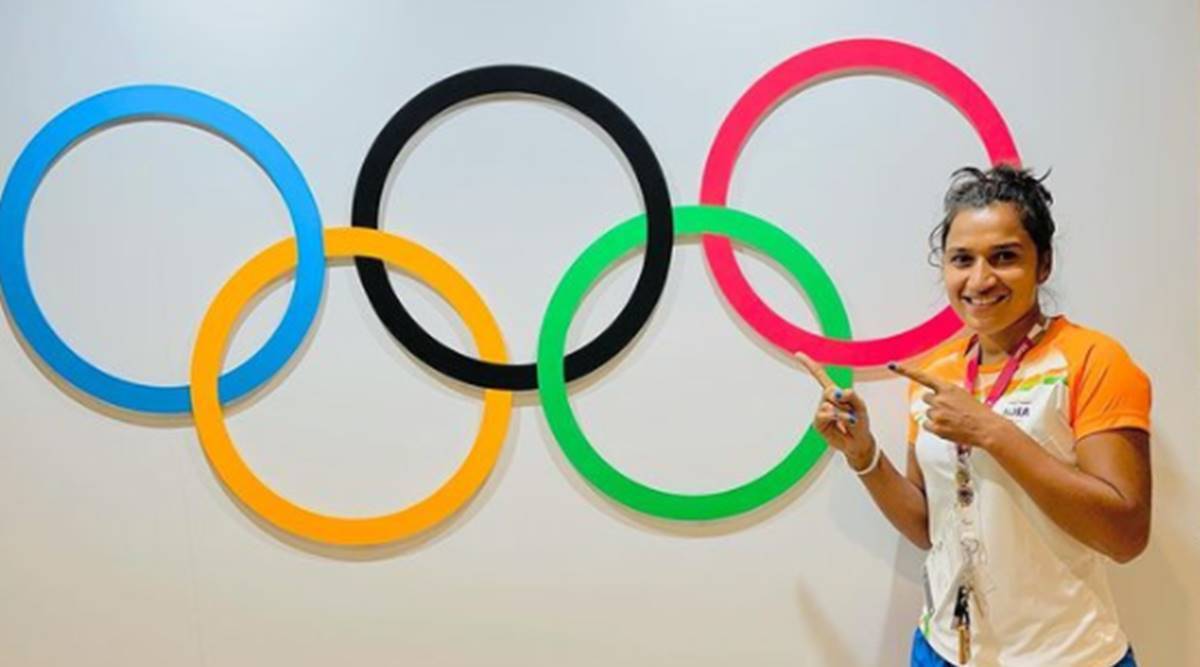
Her leadership qualities became evident soon after. At the 2018 Youth Olympic Games, Salima captained the Indian team to a silver medal, a result that announced her arrival on the international stage. The momentum continued when she was selected as part of the Indian squad for the Tokyo Olympics in 2021, where the women’s team delivered a historic performance and finished fourth. The experience strengthened her role within the national team and established her as one of the most energetic midfielders in the squad.
Rising influence within the squad
Over the years, Salima has grown into a central figure in India’s midfield, known for her speed, relentless work rate and ability to connect defence with attack. Her performances were recognised at the Women’s Asia Cup in Muscat, where she was named the ‘Rising Player of the Tournament’.
In May 2023, she was appointed captain of the Indian women’s national hockey team, taking on the responsibility of guiding a young but ambitious squad. Her leadership has also extended beyond the field. The Asian Hockey Federation (AHF) appointed Salima as an Athletes Ambassador, a role in which she represented athletes across the region and advocates for issues related to players’ welfare. Speaking about the role, Salima had said, “ As athletes from Asia, we face many challenges in our careers, and this position allows me to bring our voices forward.”
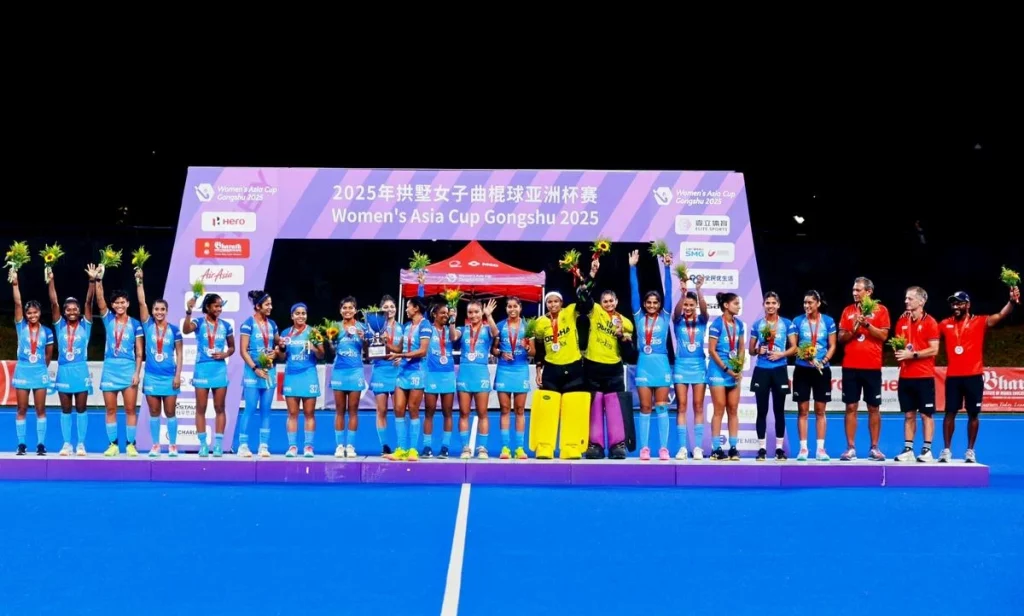
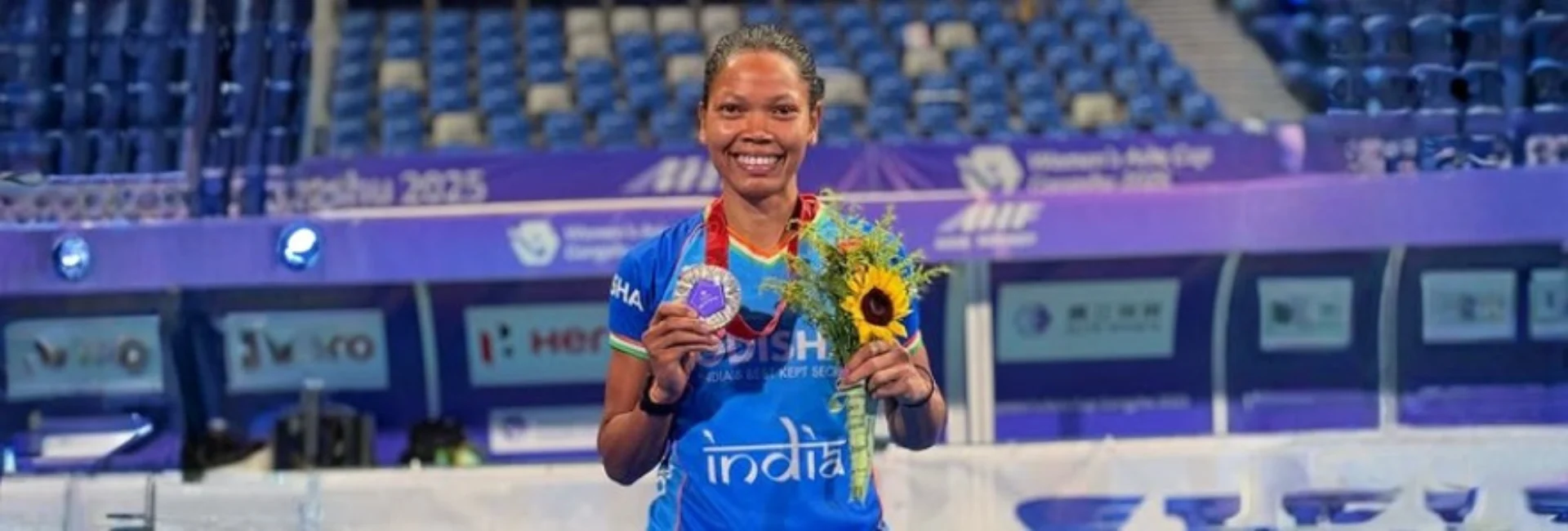
Under the leadership of Salima Tete, the Indian Women’s Hockey Team won the silver medal at the Women’s Asia cup Gongshu 2025
India’s challenge in Hyderabad
The qualifiers in Hyderabad will also mark the first major assignment for head coach Sjoerd Marijne since his return to the Indian women’s team earlier this year. India has been placed in Pool B alongside Scotland, Uruguay and Wales. The hosts will open their campaign against Uruguay on March 8, followed by matches against Scotland on March 9 and Wales on March 11.
The format of the tournament divides the eight teams into two groups, with the top two sides progressing to the semifinals. The two finalists and the bronze medal match winner will secure qualification for the 2026 Women’s Hockey World Cup. Playing at home could provide India with an important advantage as the team aims to secure its place at the global tournament.
Leading India toward the World Cup
As India begins its campaign in Hyderabad, the objective is to secure qualification for the 2026 Women’s Hockey World Cup. For captain Salima Tete, the moment represents another milestone in a journey built on perseverance, opportunity and the support of a community that believed in her talent.
And as she leads the team onto the field, Salima carries with her not just the responsibility of a captain, but also the story of how Indian women’s hockey continues to grow steadily with increasing confidence on the world stage.
- Follow Salima Tete on Instagram