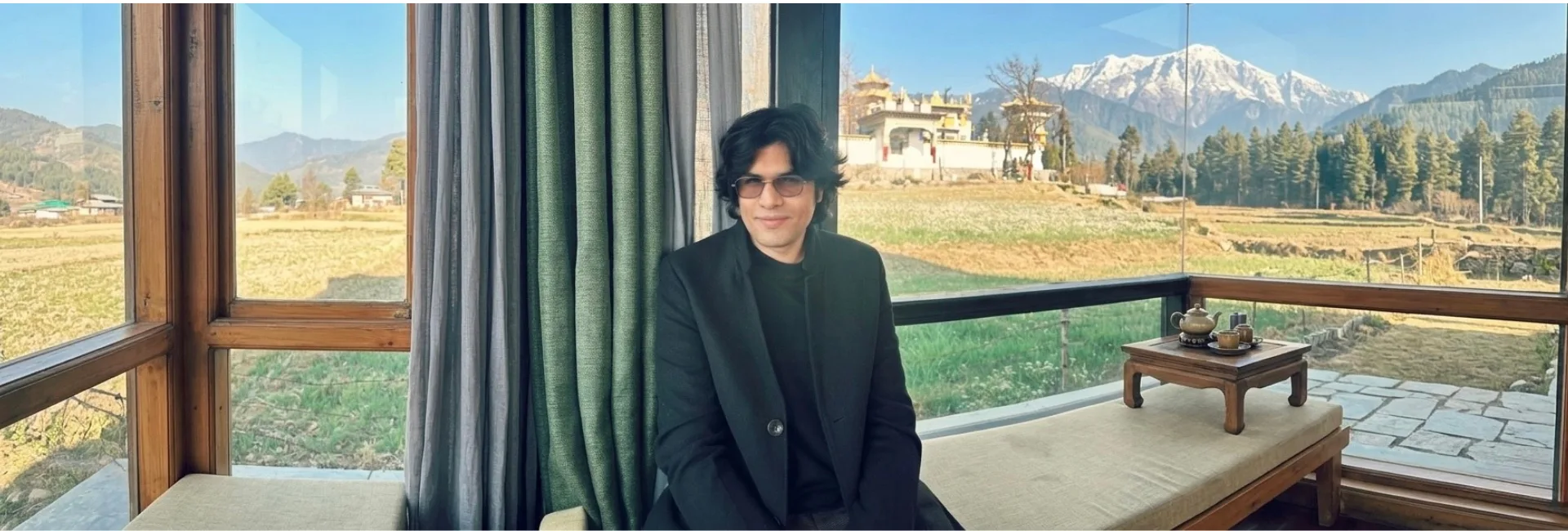


(April 5, 2026) There is a village called Dayalpur in the Faridabad district of Haryana where, for the first 14 years of his life, a boy would wake up each morning and travel by road to the nearby town of Ballabgarh for school. He grew up watching open fields, bellowing cattle, and the slow, unhurried rhythms of rural life. He did not yet know these rhythms would one day lead him to filmmaking. In March, that boy, Ankur Hooda, now 25, boarded a plane for the very first time and landed in Copenhagen, Denmark, for the world premiere of his debut feature The Calf Doll at CPH:DOX 2026.
The Indian Ambassador to Denmark received the team for dinner before the screening and helped carry the film to the Indian diaspora there. It was a warm gesture of recognition for something that had traveled very far from its origins. Now, with a flood of positive reviews behind him, Ankur is preparing for the Asian premiere at the 27th Jeonju International Film Festival in South Korea, running April 29 to May 8. A self-taught filmmaker, writer, and producer, and completely bootstrapped, his journey is as unlikely as the film itself.
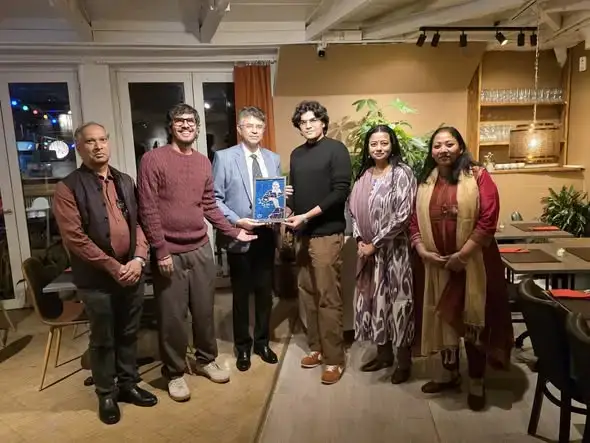
Ambassador of Denmark, Manish Prabhat with filmmaker Ankur Hooda, director of photography Anish Sarai, and others in Copenhagen
The village that never really left him
Ankur’s roots run deep into the soil of Dayalpur. Until Class 8, his daily life was defined by that commute from village to town, a small ritual that perhaps unknowingly trained him to exist between two worlds. At 14, his family moved him to Faridabad for higher studies, and the village became something he carried within rather than lived inside. He went on to complete both his Bachelor’s and Master’s degrees in Advertising from the University of Mumbai, entering a city that could not be more different from the one he came from.
But even as Mumbai pulled him into the world of advertising and ideas, filmmaking kept finding him. His debut short film Usman’s Radio travelled to various film festivals in India, before being released by HumaraMovie. He went to direct, produce and edit films, documentaries and music videos which made their way to platforms like Disney+ Hotstar, HumaraMovie and Pehchan Music. While simultaneously acting as a freelance creative producer on brand ads and digital films, he indulged in writing short stories, poetry and lyrics. Today, Ankur divides his time between his village and Delhi, still caught between the worlds that made him.
An old man, a cow, and a question that wouldn’t go away
Every film begins somewhere. For The Calf Doll, it began with his grandfather standing beside a cow.
“I had once witnessed my grandfather stand beside a cow with a child-like desolation and longing, after selling away his own herd reluctantly,” Ankur recalls in an interview with The Global Indian. “This image continued to bother me for a long time. On the surface, the visual reeked of old-age ennui but it contained an undercurrent that took a long time for me to decipher, although partially.”
The question that image lodged inside him was one of profound, quiet grief: what is left of you when you are no longer in possession of what has defined you your entire life? His grandfather had spent decades as a respected professor across the region, but beneath all professional recognition, he was always a farmer first. “Open fields, bellowing cattle, and slow routines shaped his life more than institutions or accolades,” Ankur says. When those quiet rhythms were suddenly interrupted, something in the old man shifted. That shift became the seed of the film.
The strange, human story at its heart
The resulting work carries a logline that is at once strange and deeply human. “In a smog-choked village, a retired professor turns to an outlawed ritual, crafting a calf doll from a stillborn, to save his cow from the urbanisation slowly erasing his rural world.” It runs 90 minutes, is entirely in Haryanvi, and is best described as a hybrid para-fiction drama. It’s a a form Ankur arrived at not by design, but by following his instincts all the way to the end.
No script, no rehearsal, no map
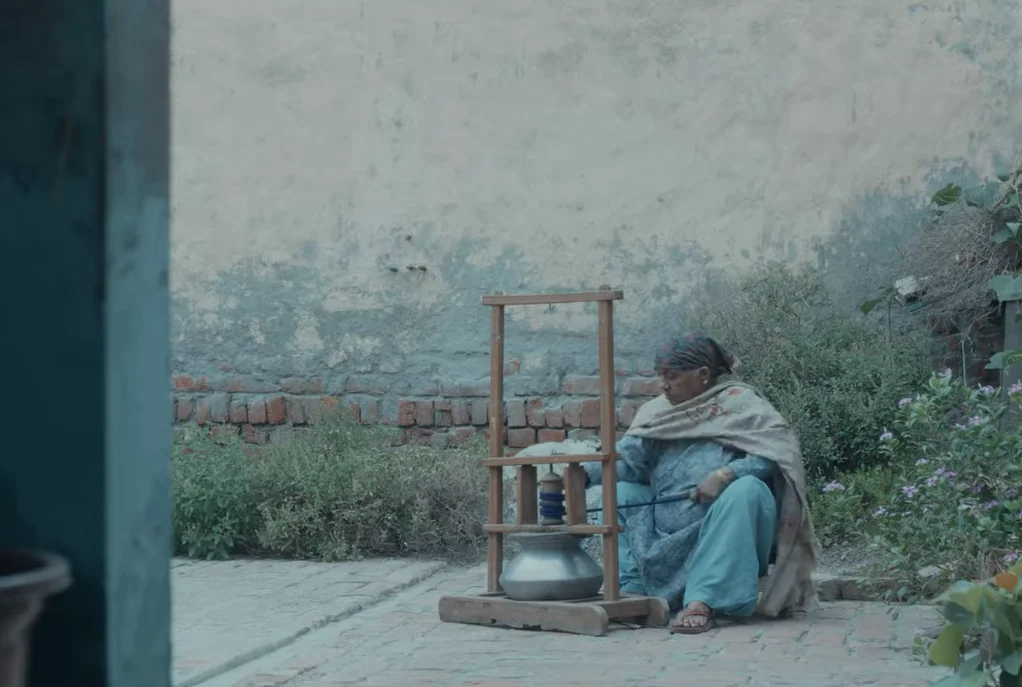
If there is one thing that separates The Calf Doll from most debut features, it is how stubbornly it refused to be a conventional production. Nothing was written or rehearsed. Everything was improvised. And the people at the centre of the film were not actors, rather they were his grandparents, playing themselves inside a reenactment of their own lives.
“At times I didn’t know where the reality ended and the fiction began,” Ankur says, “neither, I think, did they. I could only observe, recall, and gently redirect what already existed in the ancestral spaces around us.”
The grandmother who stole every scene
His grandmother, it turned out, was made for the camera. “She’s one of the most creative people I know. She paints, weaves, sings, writes, and does so much more without any formal training,” he says with evident admiration. “During filming, I realized she’s also a wonderful improviser.” His grandfather was initially hesitant, but she eventually convinced him. The reward now is that he can’t wait to act again.
The film slowly revealed itself as shooting progressed. “It was much later that we realized that it had taken a shape of a ‘hybrid para-fiction’ film unknowingly. In our heads, we were simply trying to live a process of constant discovery rather than making a ‘film’ consciously.” Ankur found himself thinking often of a line from Robert Frost’s essay The Figure of a Poem that poetry begins in delight and ends in wisdom for the poet. “I often wondered if the same could be true for cinema,” he says. “Something like how a painter builds a canvas stroke by stroke or how a poet finds a poem word by word.”
Ghee, milk, and a camera bought just for this film
Producing a feature at 25, with no studio backing, no grant, and no established network, would daunt most people. Ankur made it work through something rarer than money: trust, and a remarkable circle of friends.
“It was a completely bootstrapped project,” he says plainly. He invested personal savings, and collaborators stepped in with everything from equipment to cooking. Anish Sarai, the Director of Photography, bought his own small camera specifically for the project. Achal Mishra, an accomplished filmmaker from Darbhanga, joined as production designer and creative producer and lent equipment. Fellow filmmaker Sumit Mishra came along to help execute the vision. Actor friend Dheeraj Kumar agreed to appear without expectation of payment. And then there were the grandparents, who perhaps did the most quietly essential thing of all. “My grandparents took care of our accommodation and fed us with home-cooked meals, and lots of ghee and milk,” Ankur says. The entire 30-day shoot was completed on a budget that, in the commercial film world, would usually cover just a few minutes of footage.
What it felt like to land in Copenhagen for the first time
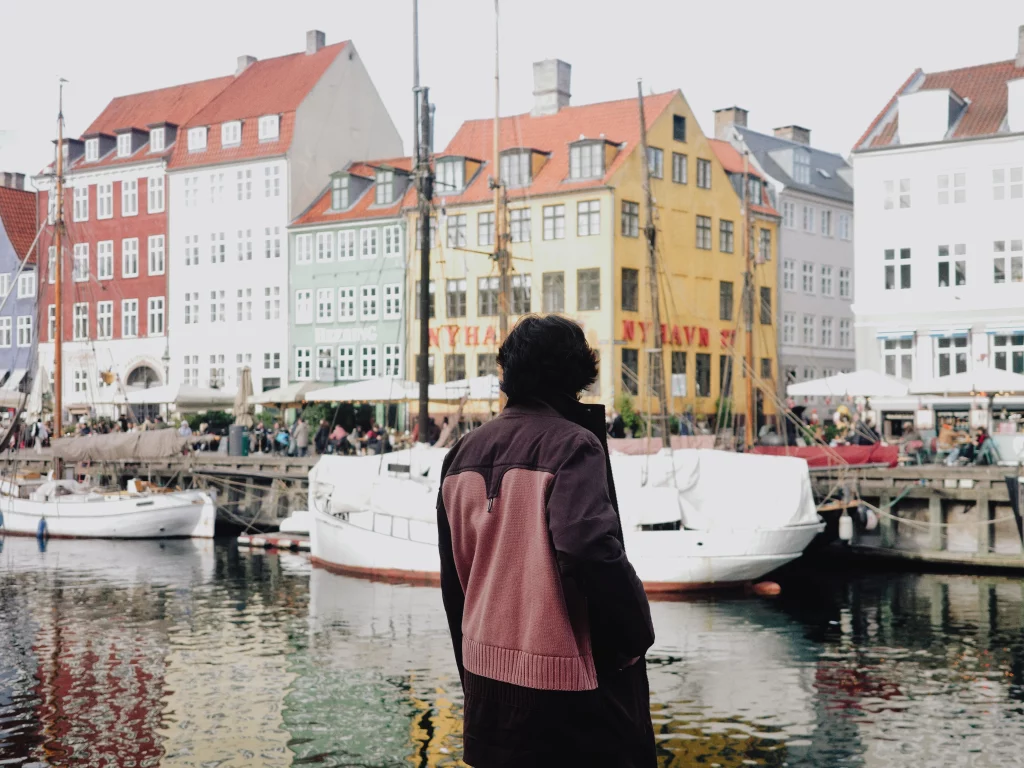
When the invitation came from CPH:DOX, Ankur boarded a flight to Denmark, which was his first time outside India. The festival hosted him for 13 days. There were encounters with filmmakers and actors whose work he had long admired. “Had some real fanboy moments,” he says. The screenings brought something he hadn’t allowed himself to fully expect. “The outpour of positive reviews after the screenings has been heavily reassuring, beyond our expectations.” The Calf Doll also made history as the first-ever para-fiction selection from India at CPH:DOX, and that too in competition. For Haryanvi regional cinema, it is the first-ever international feature premiere at a prestigious global stage.
The next film, and the trilogy taking shape
Ankur is already developing his next feature, the second installment of what he calls the Dayalpur Trilogy. It would not be a direct sequel, but a film set in similar spaces, exploring themes of displacement and urban loneliness.
Filming the people whom modernisation left behind
The thread connecting all his work is one he has thought about deeply. “Over the last few years, the stories that I have written, in literature and cinema alike, have a connecting thread, a unifying motif which runs parallel in all of them,” he says. “I have evolved, my focus shifting towards the elusive spatial identities, veiled beneath the slowly metamorphosing rural landscapes.”
What he is watching and documenting is a world in quiet collapse. Old social structures are falling. Traditional professions are fading. Restless youth are leaving. Modern infrastructure is consuming the land. “Amidst all this, I feel myself drawn towards the existentially adrift rural characters who are never going to make it across,” he says. “People who are slowly being stripped of their elemental lives and their narratives of changing times will slowly fade away with their lost spaces.”
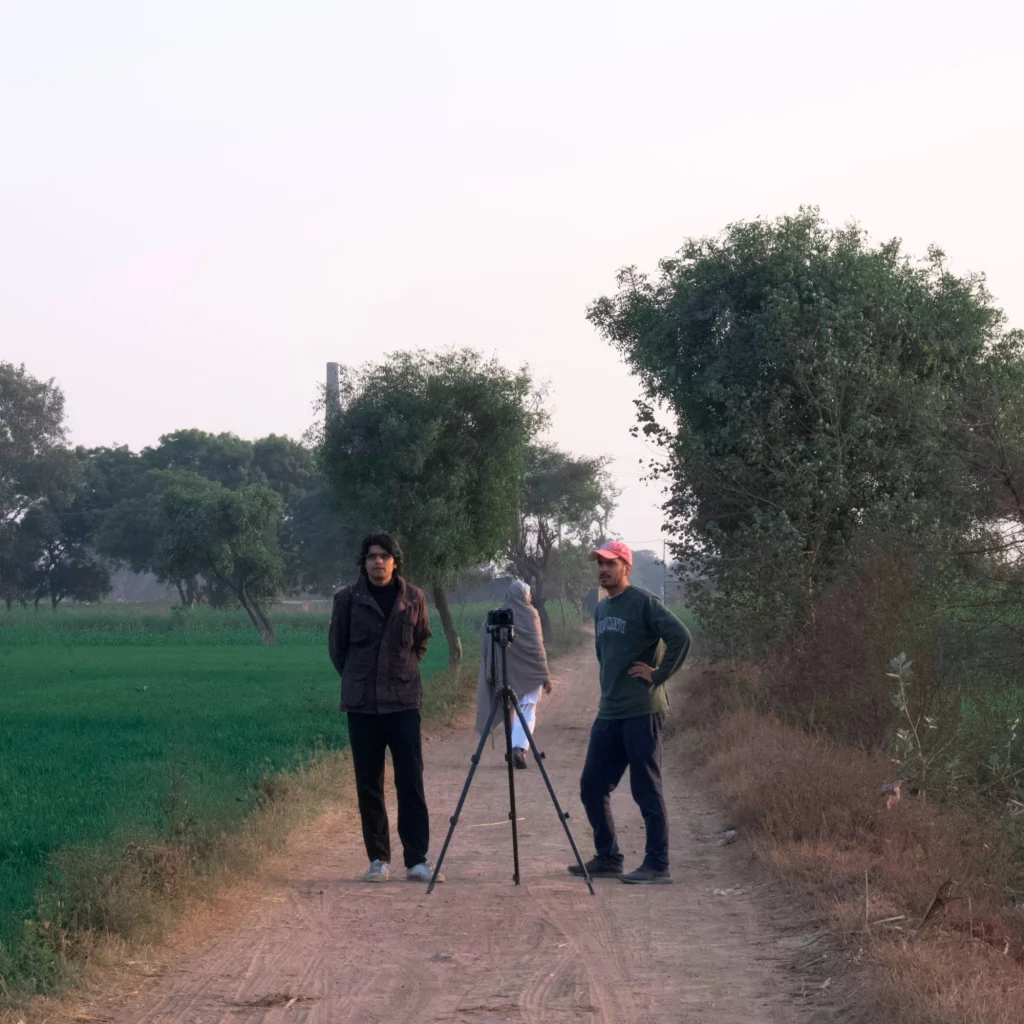
The Calf Doll, he says, is a prologue that “a simple record of memory and meaning which eventually becomes the encompassing, continuing strand for my films to follow.” For a boy who once travelled dusty roads from Dayalpur to Ballabgarh each morning for school, the distance to Copenhagen and now to Jeonju is staggering in miles. In spirit, it is a straight line.