
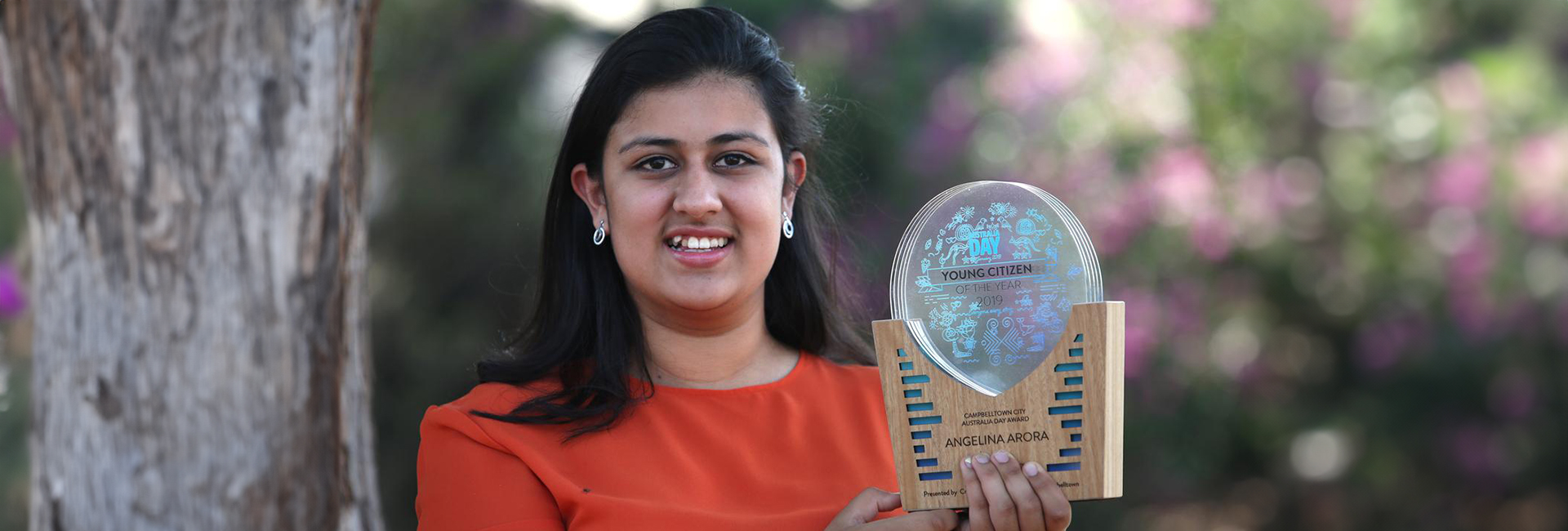


Having mulled over the possible solution for years, in Class 9 as a science project, she began experimenting with corn starch and potato starch to create a biodegradable bag, however, they dissolved in water. She then tried banana peels and other waste products, however, nothing proved successful. Her eureka moment came while sitting at a local fish and chips shop and staring at a pile of fish waste – including crab shells, prawn tails and fish heads. She packed a few kilos of the discarded shells and headed straight to her Sydney Girls High School science lab to start experimenting. Noticing similarities between prawn shells and plastic, she knew she could have found the answer. “I looked at prawns and thought what makes their shells look like plastic? Maybe I can take that out and use it some way and bind it to make a plastic-like material,” the Global Indian said in an interview.
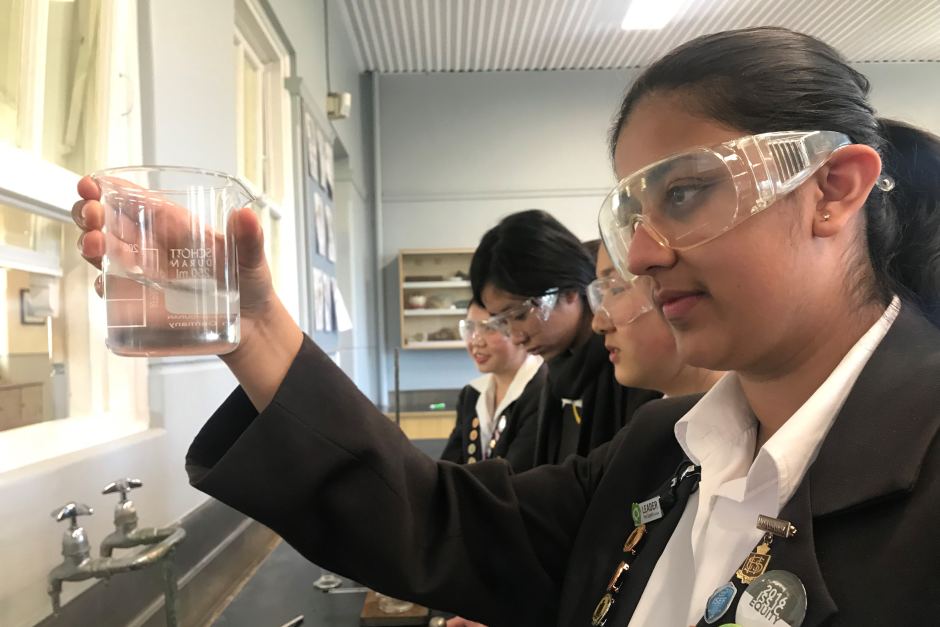
Angelina Arora during an experiment
Making biodegradable plastic
A budding scientist, Angelina extracted chitin, a carbohydrate from prawn shells, and converted it into chitosan which she later mixed with fibron, a protein found in silkworms. “It’s the same protein that spiders use to make webs. It’s very sticky. When you mix it with chitin it produces a fabric that is flexible and strong and exhibits all the properties you want in plastic,” she added. The biodegradable plastic decomposes 1.5 million times faster than commercial plastics and completely breaks down within 33 days of its exposure to bacteria. Her success attracted the attention of scholars and scientists across Australia and even won her the NSW Young Scientist Award in 2016, the Innovator to Market Award in the 2018 and BHP Billiton Foundation Science and Engineering Awards. Moreover, she received the fourth grand award at the Intel International Science and Engineering Fair, where the innovator competed against 1800 students from over 81 countries.
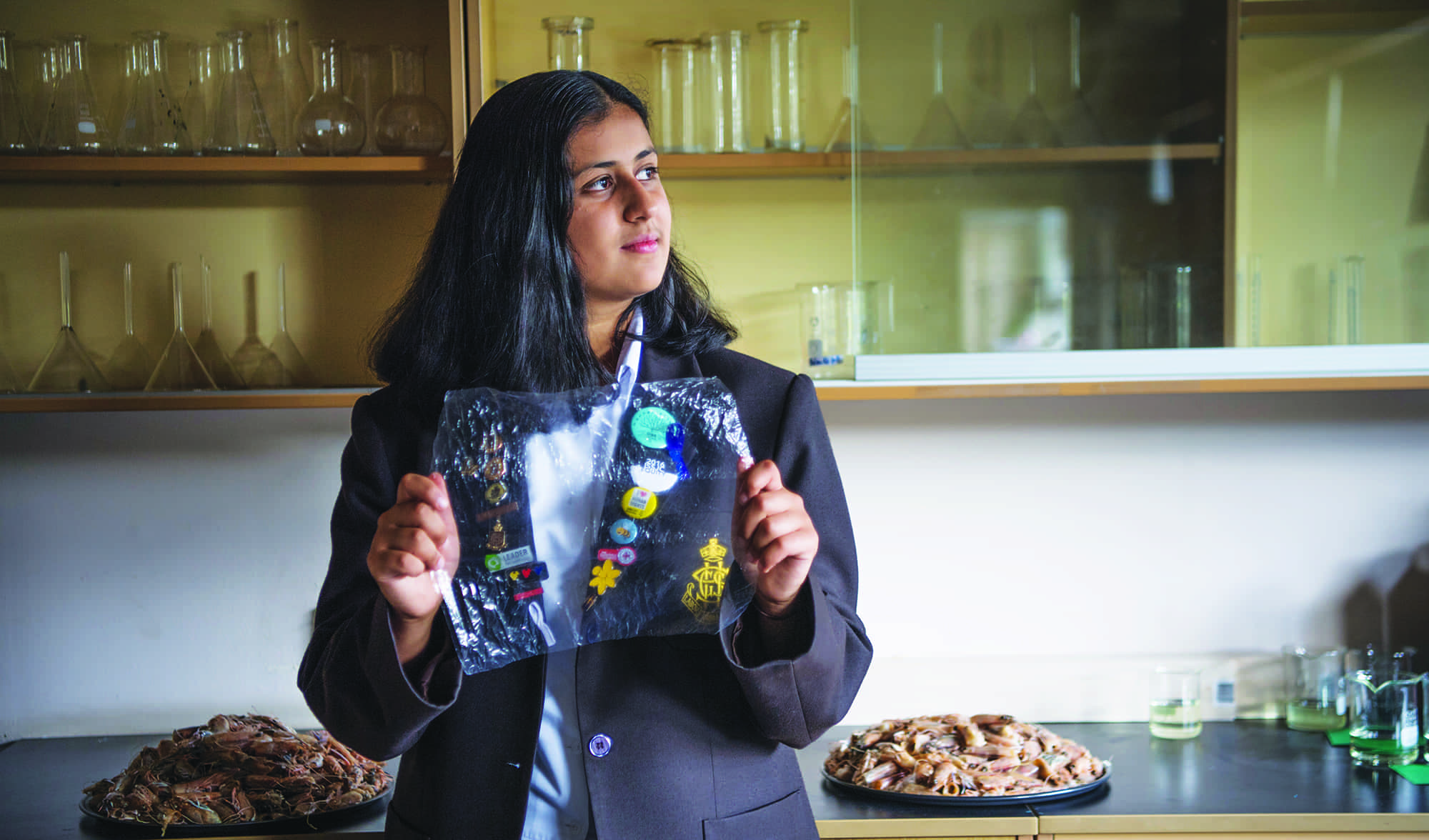
Angelina Arora with her biodegradable plastic
Contributing to the environment
The Flinders University student, who was the nominee for Young Australian of the Year in 2019, is hopeful that biodegradable alternatives like hers will contribute to cleaning up the environment, especially the ocean – a cause close to her heart.
Having started early, she believes the key lies in growing one’s own interests. “Doing your own research outside of school gives you the freedom to do what you really like and be creative, not for a grade. You grow interests, expand awareness and increase your curiosity,” she said, adding, “Plus it gives young people something productive to do for humanity rather than watching Netflix.”
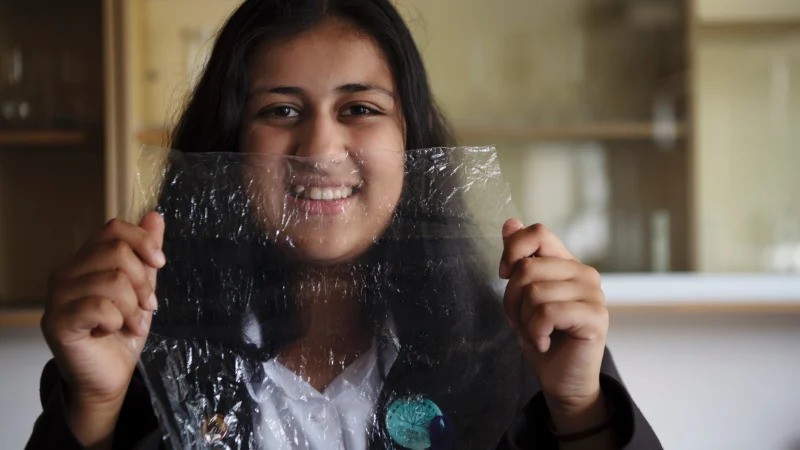
Angelina’s invention shows how we can use scientific creativity and care for the environment to solve big problems. Her work highlights the need for sustainable practices and opens doors for future green technologies, inspiring more people to develop eco-friendly innovations.
- Follow Angelina Arora on Linkedin