


(Jun 21, 2026) You know you have made it in tech when Elon Musk’s company comes knocking. Aman Sanger, a 25-year-old Indian-American from New York, now belongs to that rare club. His AI coding tool, Cursor, is being acquired by SpaceX for $60 billion in one of the largest deals in the history of artificial intelligence.
The acquisition, announced recently, will see Cursor’s parent company, Anysphere Inc., become a wholly owned subsidiary of SpaceX. According to a filing with the US Securities and Exchange Commission, the merger is expected to close by the third quarter of 2026. The announcement came days after SpaceX made a blockbuster public market debut that pushed its valuation past $2.5 trillion.
The deal has put four young MIT graduates Aman Sanger, Michael Truell, Sualeh Asif and Arvid Lunnemark, the co-founders of Cursor in the spotlight. The co-founders are a globally diverse group. Among them, Aman’s story is the one that stands out for the Indian diaspora, as he emerges as a determined Indian-American coder who built something the world’s most ambitious company now wants to own. While Sualeh, Michael and Arvid are from Pakistan, United States and Sweden respectively.
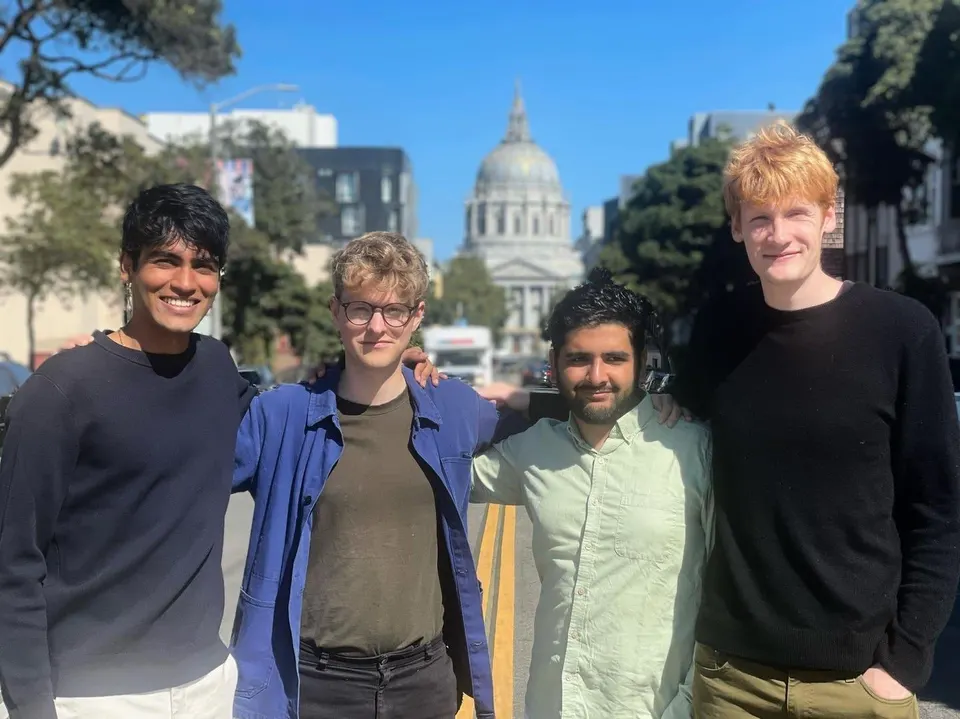
Aman with co founders of Anysphere Inc.,
The family behind the Indian-origin founder
Aman was born and raised in New York, but his roots run deep into India. His father, Arvind Sanger, is an IIT Bombay alumnus and hedge fund professional. His mother, Shilpa Sanger, is an orthodontist, entrepreneur and board member of education non-profit Pratham USA. From both parents, the expectation of excellence was evidently absorbed early. Sanger began coding at 14.
By the time he reached MIT, he had already done an internship at Google.
The idea that became Cursor
At MIT, Sanger and his co-founders were early users of GitHub Copilot, the AI coding assistant Microsoft launched in 2021. The first experience was memorable. “It was really amazing. It felt magical when it came out,” Aman has said in an interview. “This was the first language model-based product that actually worked.”
But a year on, almost nothing had changed. The underlying models were improving rapidly; the product was standing still. Aman and his co-founders saw the gap and decided to step into it, even though it meant competing with Microsoft.
“We 100 per cent thought about that, and that was the biggest thing holding us back,” he admitted. “We kept hesitating.” But a conviction formed that the future of coding was not going to be better autocomplete. It required reimagining the entire interface. “If language models were really going to get good enough to produce 90 to 95 per cent of software, you had to reimagine the interface by which engineers actually build software.”
Before Cursor, the team tried building a tool for mechanical engineers — an autocomplete model for CAD software, inspired by Copilot’s success. It did not work. “There wasn’t really a founder market fit. We weren’t really mechanical engineers,” Aman said. They kept returning to code. In January 2023, they started building what would become Cursor.
The long, demoralising summer
The launch came a few months later, timed alongside GPT-4. There was initial buzz, and then silence. “Usage tanked. The entirety of that summer was just incredibly slow growth. That was somewhat demoralising,” Aman recalled.
The team resisted the temptation to narrow their focus. Instead, they kept experimenting. The breakthrough came when two features clicked: Command K, an instructed editing tool, and codebase indexing that let developers ask questions about an entire project at once. “After we integrated those two features and launched them, growth just took off.”
What kept the momentum going was an approach that made competitors uncomfortable. Rather than waiting until a feature was polished, Cursor shipped early and improved in public. “We release these half-finished things which a lot of our competitors refuse to do,” Aman said. “The first version of Cursor Tab sucked, but once you release it to the world and see how people react to it, you can improve it a ton.”
It is a philosophy that extends to team building too. For well over a year, it was just the four co-founders. Their first outside hire came from their own user base — a power user identified through analytics, who became an excellent engineer. Of Cursor’s 30 employees today, roughly half are from MIT.
$100 million, no salespeople
Cursor crossed $100 million in annualised revenue without a single salesperson. It’s a fact that still surprises people in the industry. Revenue came entirely from developers telling other developers. “It’s just the story of people telling their friends about these products,” Sanger said simply.
The company also built its own custom AI models, around ten in production, trained on data that larger labs do not have access to: the real-time edits developers make between code commits. “What you have if you’re looking to pre-train these models is all this data on GitHub, but you don’t have what happens between the commits. That we found to be a really excellent source of data.”
On whether Cursor has built a lasting competitive moat, Aman is refreshingly honest. “I don’t think there are real long-term moats that we’ve built right now,” he said. The strategy going forward: build stickiness by training models on individual companies’ codebases, so that the more a team uses Cursor, the better it gets specifically for them.
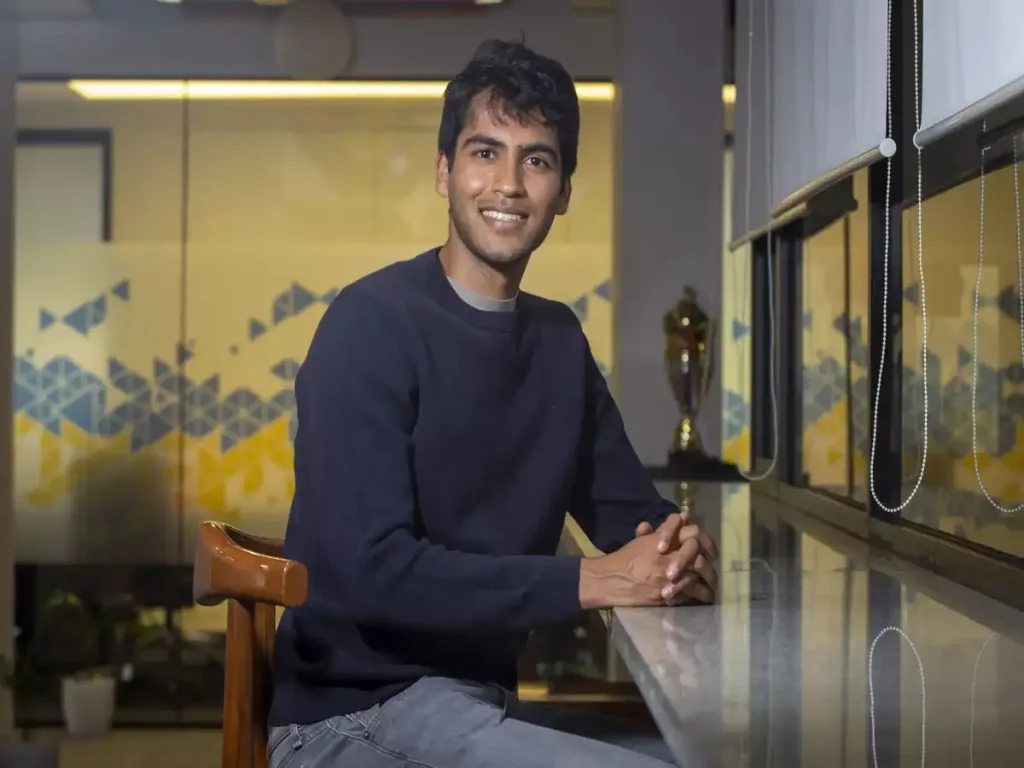
What the young founder believes about the future
The SpaceX acquisition marks Cursor’s biggest chapter yet. But Aman’s thinking about where software development is headed is what makes him genuinely interested beyond the deal.
He is sceptical that AI co-workers — autonomous agents that operate like digital colleagues are the ideal end state. “I have real colleagues and they’re excellent engineers, but there is overhead when trying to communicate ideas to them,” he said. “I think you can do better than your colleagues. If you have something that’s close to instant and can iterate with you instantly, a lot of development is going to look like that.”
On the culture inside Cursor, he is equally vivid. “The dinner table conversations are filled with speculations about what we could do if we trained a model to do this. The UI people are talking with the model people, thinking through what the future could look like. That curiosity — what is the next thing to build, what is the next killer feature — that’s the essence of Cursor.”
The ultimate ambition, he says, is to make it possible for anyone in the world to produce software. Asked how far along that journey Cursor is, he paused: “I think we’re probably a bit more than 1% done but definitely less than 10%. I’d say two or three.”
At 25, with a $60-billion deal behind him and Elon Musk’s backing ahead, Aman Sanger is, by his own reckoning, just getting started.
- Follow Aman Sanger on LinkedIn
ALSO READ: 21-year-old college dropouts build a $250 million AI startup to simplify recruitment