
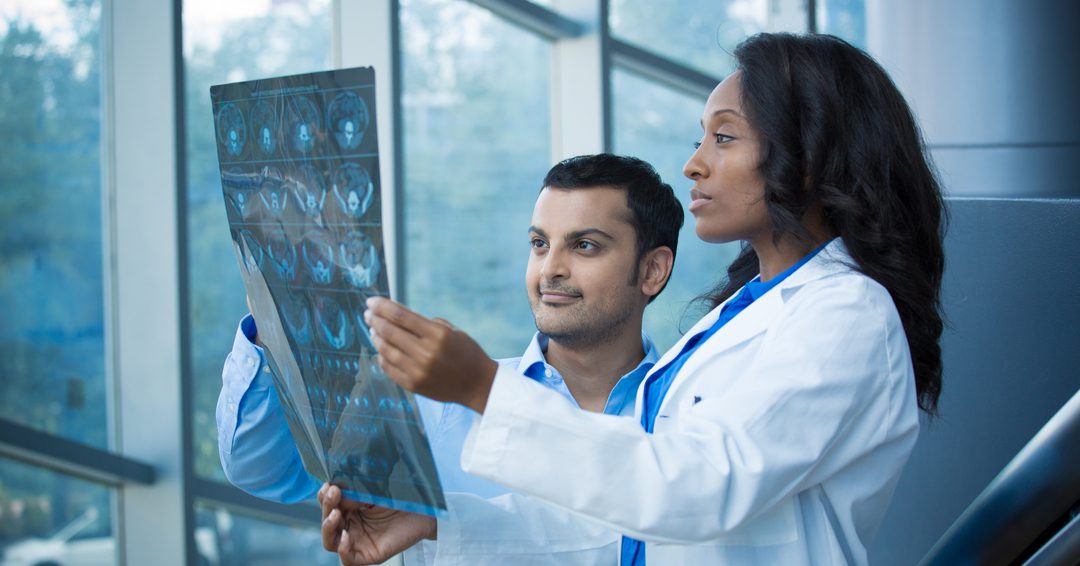


When Americans visit their doctor in a rural clinic in Kansas, a teaching hospital in New York, or a specialist centre in New Jersey, there is a significant chance their physician trained in India. According to the American Immigration Council, citing the 2024 American Community Survey, India is by far the most common country of origin for immigrant physicians and surgeons in the United States, with more than 62,800 Indian doctors currently practising across the country. That figure makes Indian doctors in the US not just a community statistic — it makes them a structural pillar of American healthcare.
The numbers tell a compelling story. Out of approximately 987,000 doctors practising in the US, around 262,000 are immigrants — and Indian doctors account for nearly one in four of those immigrant physicians. Nearly a quarter of all physicians in the US went to medical school outside the US or Canada, according to 2025 licensing data — and among that cohort, India leads every other nation by a considerable margin.
A history rooted in ambition and opportunity
The story of Indian doctors in the US did not begin recently. It stretches back to the 1960s, when the Immigration and Nationality Act of 1965 abolished national-origin quotas and opened America’s doors to skilled professionals from Asia. Indian doctors arrived in significant numbers, drawn by the promise of world-class residency training, advanced medical technology, and professional opportunities unavailable at home.
Indian doctors found a home in the American medical marketplace, where they became a mainstay in primary patient care in both urban and rural areas. Decades later, that presence has only deepened. The Association of American Physicians of Indian Origin, founded to represent this growing community, today counts tens of thousands of members across every medical specialty and every US state.
Where Indian doctors in the US make the greatest impact
Indian physicians make up one of the largest cohorts of international medical graduates in the US and are disproportionately likely to serve in rural and underserved communities. This is not coincidental — it is structural. The J-1 visa waiver programme, one of the primary pathways through which foreign-trained doctors enter the US workforce, requires recipients to serve for three years in a federally designated physician shortage area. Indian doctors have taken up this responsibility in extraordinary numbers.
A nationwide survey of international medical graduates found that two-thirds practise in regions that the federal government has designated as lacking sufficient access to healthcare. These doctors also occupy a disproportionate number of primary care positions — and in a sample of 15,000 physicians who accepted new jobs in one year, foreign-born doctors were nine times more likely to enter primary care specialties.
They work in underserved urban and rural areas where there is often just one physician for every 3,500 residents — communities that would face a genuine healthcare crisis without the Indian doctors in the US who serve them.
The specialties where Indian doctors in the US lead
Indian doctors in the US often specialise in cardiology, infectious diseases, and critical care — some of the most demanding and consequential fields in medicine. Their contributions extend well beyond clinical practice. Harvinder Sahota invented the Sahota perfusion balloon, which changed angioplasty. Sanjeev Arora founded Project ECHO, a telementoring model that brought specialist expertise to rural clinics and has since been replicated around the world. Ashutosh Tewari pioneered robotic prostatectomy techniques for urologic cancer surgery. These are not footnotes in American medical history — they are landmark innovations that have saved and improved millions of lives.
Why India produces so many doctors for the US
Several factors combine to make India the single largest source of immigrant physicians in the United States. India’s medical education system — anchored by its government medical colleges and All India Institute of Medical Sciences institutions — produces rigorous, English-speaking clinicians trained to international standards. The immigration process facilitates this through channels such as J-1 visas, which allow international medical graduates entry into underserved areas, and H-1B visas, which enable hospitals and universities to hire specialist physicians.
Economic incentives play a role too. Starting salaries for resident physicians in the US hover around $60,000 to $70,000 annually — a significant figure compared to India’s average income levels — and specialists can earn upwards of $250,000 post-residency. For ambitious Indian medical graduates, the combination of professional opportunity, financial reward, and access to cutting-edge technology and research makes the US an irresistible destination.
Indian doctors in the US: an irreplaceable workforce
The importance of Indian doctors in the US has been thrown into sharp relief by recent immigration policy debates. When the Trump administration announced a $100,000 H-1B visa fee for new applicants in September 2025, it sparked fear and anxiety among the roughly 50,000 India-trained doctors working in the US — many of whom serve in the rural and underserved communities most dependent on their care. The American Medical Association warned that underserved areas in the US depend on international doctors, and that if policy remains stagnant, communities may face a physician shortage projected to reach 86,000 by 2036.
The debate underscored a truth that American healthcare has long known but rarely stated plainly: Indian doctors in the US are not a supplementary workforce. They are essential. From rural primary care clinics to the most advanced surgical theatres in the country, their presence, their training, and their dedication have shaped American medicine in ways that no statistic can fully capture.
As the United States looks ahead to a future defined by an ageing population, a growing physician shortage, and an ever-increasing demand for specialist care, the contribution of Indian doctors in the US will only become more vital — and more valued.
Discover more about Indians in USA and their extraordinary contributions to American society. Read about Indian CEOs shaping the world’s most iconic companies.