


(April 10, 2026) From Bundelkhand in Uttar Pradesh to the boardrooms of London’s listed companies, Shefaly Yogendra has built an unusually wide-ranging career in global governance. She has a strategy for almost everything—at least professionally. A glance at her expansive body of work makes that clear.
From building organisations and brands to shaping culturally diverse teams, the internationally experienced strategist has worked across global markets and with a wide spectrum of stakeholders. Over the years, she has been part of both founder-led and professionally managed organisations, with a consistent focus on technology innovation, risk and foresight, and governance.
Now, she is bringing those ideas together in a book for leaders navigating uncertainty. “In the current world circumstances, the combination of technology and geopolitics gives me a unique vantage point on innovation and stewardship,” she says, in a conversation with The Global Indian.
Trusted advisor
An experienced independent board director, Shefaly is widely regarded for her work on stewardship in complexity, governance for resilience, and long-term value creation.
Her experience spans highly regulated sectors including financial services, energy, higher education, and legal services—domains where decision-making often carries both economic and societal consequences.
A recognised and trusted boardroom adviser, she has chaired key committees including Audit & Risk, Nomination, Remuneration, and ESG. These roles, she says, require not just technical expertise but the ability to balance competing priorities in evolving contexts.
Comfort with discomfort
For Shefaly, effective governance begins with culture. “Functioning boardrooms—or well-functioning committees—need psychological safety so people feel comfortable raising issues,” she says.
But she goes a step further. There must also be a culture of being comfortable with discomfort. “Anybody who’s asking a question is doing so to help all of us do our jobs better and take the best decisions. Nobody should be offended that a question was asked.”
This clarity of thought and approach to leadership has earned her recognition, including being named among the FTSE 100 Women to Watch in the UK in 2016. An alumna of the Massachusetts Institute of Technology, Shefaly’s work has served a wide range of stakeholders—from startups and small businesses to large corporations, investors, policymakers, and regulators.
Exploring uncharted spaces
Based in the UK, Shefaly is now set to release her first book, Uncharted Spaces: Reset the Agenda. Reimagine the Boardroom, on April 14. The book draws on the experiences of several dozen directors from around the world, unpacking how boardroom dynamics are evolving in response to rapid global shifts.
“It takes the reader on a tour of curiosity,” she says, “through emerging themes in technology, geopolitics, and climate action that are shaping business imperatives and demanding courageous, resourceful leadership.”
Her global perspective, shaped by years of working across the UK and Europe, informs the book’s central argument: that leadership today must be both adaptive and deeply reflective.

Rethinking priorities
At its core, the book argues that the complexity of today’s world requires leaders to rethink how they prioritise their strategic agendas. It calls for building teams that are diverse not just in skills and experience, but also in temperament, perspective, and ways of solving problems.
“Whether you are a business leader or a board director, this book will help your stewardship of businesses as you navigate the dynamic world of strategic decisions in the face of complex challenges and rich opportunities,” she says.
From IIM Ahmedabad to global boardrooms
Trained as an electronics engineer, Shefaly went on to study management at the Indian Institute of Management Ahmedabad. Her career has consistently intersected with technology—from enterprise systems and the early use of the web as a business tool to artificial intelligence and technology policy.
“In my career, I have worked with and around technology in many forms,” she says. Her enduring interest in geopolitics led her to pursue a PhD in political decision-making at the University of Cambridge—an academic foundation that continues to inform her thinking on leadership and global systems.
Bundelkhand to London
Shefaly grew up in the Bundelkhand region of Uttar Pradesh—a storied landscape known for its poets, writers, filmmakers, and tales of resilience and valour.
Those early influences, she suggests, shaped her worldview in subtle ways. “London has a similar, wide-ranging cultural vibe and historical grounding,” she says, drawing a connection between her roots and her present.
Over the years, she has held leadership roles including COO and executive director at Ditto AI, and co-founder and COO of luxury startup Livyora. Her professional journey began in corporate venturing at HCL Corporation.
AI, governance, and the next generation
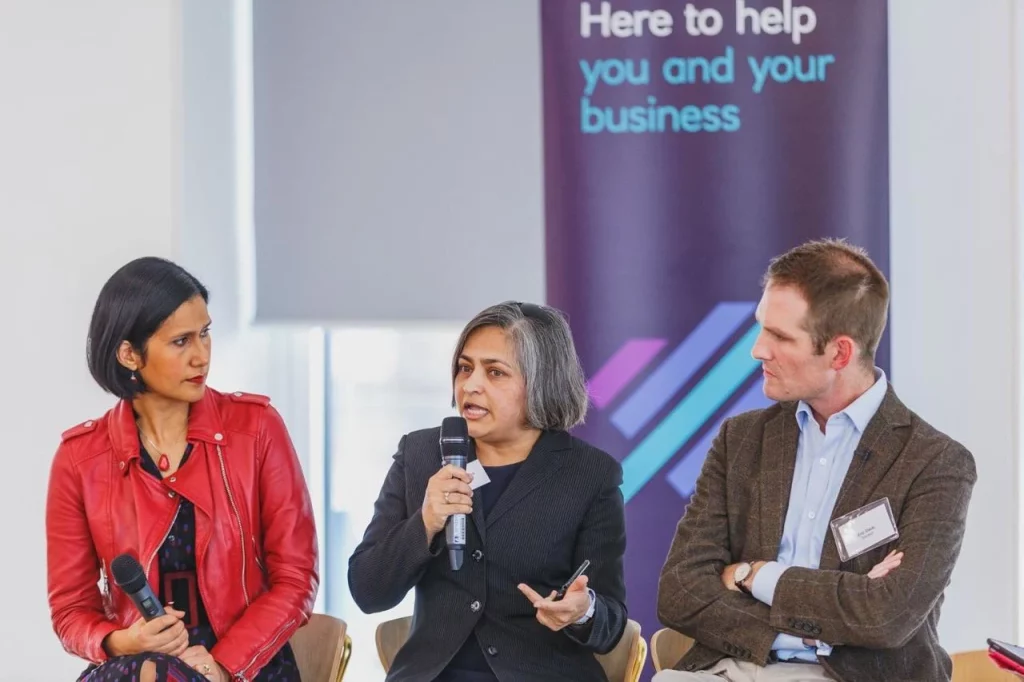
A popular speaker and podcast guest, Shefaly frequently engages with themes such as AI, governance, risk and compliance, investment, and future skills. Her commitment to younger generations is equally central to her work. She teaches Critical Thinking and Decision Making at the Vedica Scholars Programme for Women in India.
“My enduring interest in understanding and engaging with upcoming generations shows up in many ways,” she says. Her work often sits at the intersection of ambition and infrastructure—connecting the aspirations of young people with the realities of how technology is financed, governed, and scaled before widespread adoption.
Global conversations on AI
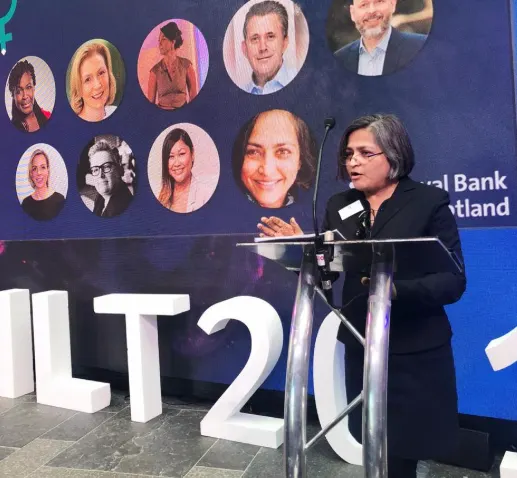
In 2025, Shefaly was invited by Eunomia Global, the sister company of Eunomia Risk Advisory, to speak at an executive roundtable on AI for Africa. Part of Eunomia’s Executive Roundtable Series, the forum brought together senior leaders from business, law, investment, the public sector, and civil society to engage in high-level discussions on governance and ethical innovation.
Each session convenes voices from boardrooms, corporates, regulators, investors, and academia—creating a space for focused, forward-looking dialogue on responsible growth. Sharing the stage with leaders from organisations such as Google South Africa, Microsoft, Dentons South Africa, and Launch Africa Ventures, Shefaly offered insights on how Africa can shape a trusted and resilient AI future.
The road ahead
Looking ahead, Shefaly outlines three clear priorities. First, she aims to continue leading and facilitating strategic conversations at the board and CEO level globally—focused on resilience, innovation, sustainable financing, and responsible stewardship of resources.
“I will continue to work with younger generations entering the workforce and with new entrepreneurs who will shape our world,” she says.
Second, she plans to keep discovering new “uncharted spaces”—exploring emerging technologies, new ideas, and opportunities in a rapidly transforming world. Third, she intends to write another book documenting these journeys and insights. “I invite approaches from chairmen, CEOs, talent partners and leaders who are building their visions bravely while the ground is shifting,” she says.
Beyond work
Away from her demanding schedule, Shefaly finds joy in quieter pursuits. She enjoys visiting art galleries, reading, walking, and practising yoga. More recently, she has taken up gardening. “It’s an act of meditating with nature,” she says.
- Follow Shefaly Yogendra on LinkedIn
ALSO READ: Sanjeev Sanyal: Bringing an ‘Ocean of Churn’ to India’s economy, history and geography