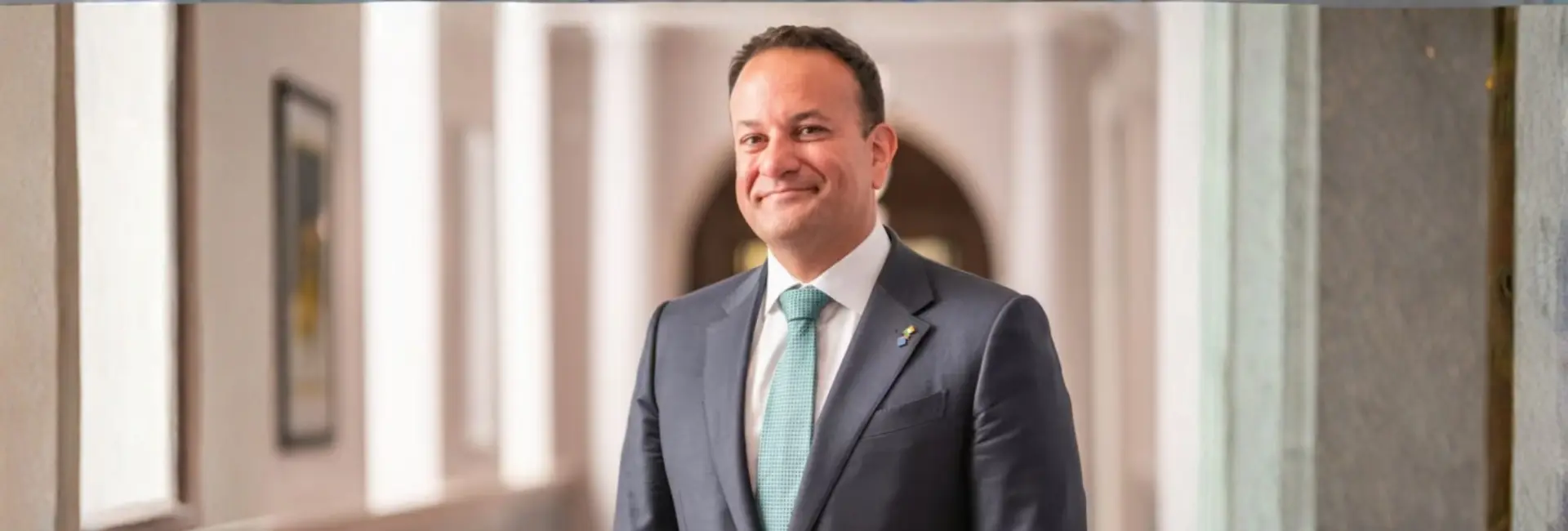


(January 20, 2026) When Leo Varadkar stood on the steps of Dublin Castle in June 2017, Ireland was announcing not just a new Prime Minister, but a generational shift. At 38, Varadkar became the country’s youngest Taoiseach (PM), its first openly gay head of government, and one of the few leaders of colour in Europe. The son of an Indian immigrant father from Maharashtra and an Irish mother, he represented a nation that had changed dramatically — socially, culturally, and politically within a single generation.
During his time in office, Varadkar steered Ireland through a succession of defining global crises: the upheaval of Brexit, the unprecedented shock of the COVID-19 pandemic, and a series of economic disruptions that tested the resilience of a small, open economy. He worked closely with world leaders across Europe, the United States (including Presidents Donald Trump and Joe Biden), and the Commonwealth, becoming a familiar presence at global summits and high-stakes negotiations.
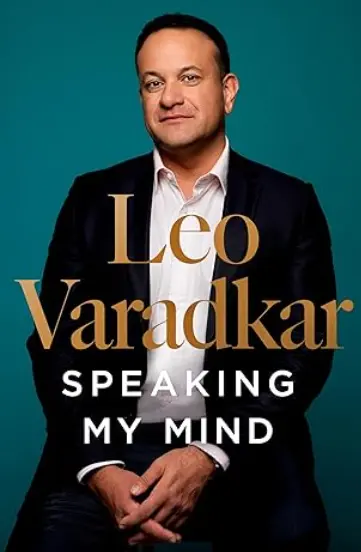
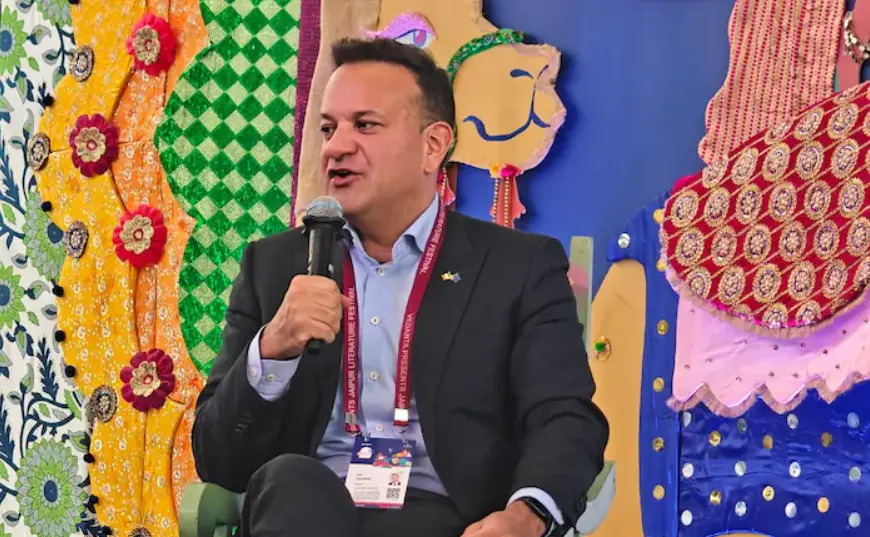
Now, having stepped away from frontline politics, Varadkar reflects on power, identity, ambition, and legacy with an unusual mix of clarity and candour. His memoir, Speaking My Mind, is not a victory lap but a conscious attempt, as he puts it, to write “the first draft of history.” In an exclusive conversation with Global Indian at the Jaipur Literature Festival, he remains deeply political — thoughtful, analytical, and strikingly unguarded, offering a perspective shaped by migration, modernity, and the rare experience of choosing when to let go.
Growing up between worlds
Varadkar is quick to resist any romanticised version of his childhood as a seamless blend of Irish and Indian cultures. His upbringing, he says, was decisively Irish. “To be honest, it was very much a European, Western, Irish upbringing,” he explains. “Ireland in the 1980s was not the diverse country it is today. About 20 percent of people in Ireland now were not born there — that simply wasn’t the case when I was growing up.”
His parents made a conscious choice. “They decided that if their children were growing up in Ireland, they would bring them up as Irish kids. And I think that was very sensible.”
He was raised Catholic, learned Irish alongside English in school, and absorbed the norms of a society that was still deeply traditional. Yet the difference was never entirely absent. “Because of my surname, because of my skin colour, I always knew I was different too,” he says, without bitterness. “That awareness was always there.”
India entered his childhood not through language (a loss he now regrets) but through rituals, stories, and everyday practices. Diwali and Holi were marked at home; cricket arrived courtesy of his father; and epic serials like the Mahabharata played on television. “I wish I spoke Gujarati or Hindi,” he admits. “My dad could speak both, but unfortunately I wasn’t brought up bilingual.” Food, however, remained the strongest cultural bridge. “My mum learned to cook Indian food very well,” he recalls. “So food was really central to how India existed in our home.”
It was only later in life: aided by travel, technology, and global connectivity, that he began to more fully explore his Indian heritage. That exploration would eventually take on a far deeper political resonance.
Medicine, migration, and the making of a politician
Before politics, there was medicine — a path the former PM half-jokingly describes as fulfilling the expectations of a “good Indian kid.” His family, steeped in healthcare, initially viewed politics with caution.
“They were supportive, but not enthusiastic,” he says. “Their main concern was that I finish my degree and medical training so that if politics didn’t work out, I’d still have something to fall back on.” He now sees that caution as wisdom. “It’s advice I give young people all the time,” he says. “Have a qualification, a skill, a profession first. It gives you real-life experience outside politics, and it means you’re never afraid of losing your seat because you’ll still be able to pay the bills.”
That perspective, rooted in security and pragmatism, shaped how he governed. It also informs his views on immigration (he is after all a child of an immigrant) a subject that has become increasingly polarised across the world. “I dislike the way it’s discussed now,” he says bluntly. “This idea of ‘us versus them’ is nothing new. It’s the lowest common denominator in politics defining who you are by saying who you’re not.”
He is careful, however, not to collapse policy into prejudice. “That’s not to say immigration shouldn’t be controlled,” he adds. “The levels of immigration into Europe and America have been very high in recent years, maybe too high. But that’s a completely different conversation from discriminating against people or taking away their rights.”
He notes with concern that friends in the United States — citizens — now feel compelled to carry passports at all times. “That’s something they didn’t have to do before,” he says. “And it changes the atmosphere of a society.”
Firsts, identity, and the weight of representation
Varadkar is acutely aware of the symbolic weight attached to his tenure. The first openly gay Taoiseach. The youngest Prime Minister. One of the few leaders of colour in Europe.
“Yes, I was aware of those firsts,” he says. “And when people tell me now that it’s made things easier for them — especially people of colour or LGBTQ+ people — I really like hearing that.” But symbolism, he insists, could never substitute for substance. “My focus was always on the big issues — Brexit, the pandemic, housing, cost of living. That’s where your legitimacy comes from. It can never just be about your own identity.”
His decision to come out publicly in 2015, ahead of Ireland’s marriage equality referendum, remains one of the most defining moments of his political life. “It would have been dishonest of me to campaign for a yes vote and pretend it wasn’t personally relevant,” he says. “I didn’t have to do it on national radio — I chose to. It was embarrassing, but I don’t regret it for a second.”
Ireland’s transformation, he notes, has been nothing short of extraordinary. “When I was born in 1979, you couldn’t get divorced. Abortion was illegal. Only married people could access contraception. Being gay was illegal until 1993,” he says. “All of that changed in about twenty years.”
Governing through crisis: Brexit, COVID, and consequence
Varadkar’s years in government coincided with three major economic and political shocks: Brexit, the pandemic, and global instability.“Brexit was a huge threat to our economy,” he says. “We’re deeply interlinked with the UK.”
Then came COVID-19 — an unprecedented challenge for a former doctor-turned-Prime Minister. “And on each occasion, we bounced back quicker than expected,” he notes. Ireland now has full employment and a rapidly growing population — a success story with complications. “We didn’t invest quickly enough in infrastructure,” he admits. “Housing, energy, water — those deficits are real.”
With hindsight, he acknowledges that different choices might have been made. “But if things had gone the other way, we’d have been criticised for running up massive debt. That’s the nature of governing — you’re always choosing between imperfect options.”
The choice of exit and legacy
Unlike India, where political retirement is rare, Varadkar is unapologetic about stepping away. “I don’t miss it,” he says plainly. “The daily media, the photographs, the constant pressure — I don’t miss that at all.”
After more than 23 years as an elected official, including 13 years in cabinet and seven as party leader, he felt his political capital waning. “You start with a bank of political capital,” he explains. “Over time, you spend it. You make unpopular decisions, you frustrate people by not solving problems fast enough. You can replenish it, but it’s hard.”
A conversation with Jacinda Ardern, former Prime Minister of New Zealand, crystallised the decision. “She said to me, if you’re Prime Minister, there are really only three ways it ends,” Varadkar recalls. “‘You die, you lose, or you resign.’ If you don’t want to die in office, and you don’t want to lose because all politicians eventually lose elections — then resignation becomes the question. And whether it’s your choice or forced on you.”
In a world where leaders often cling to power (politicians in India never really retire), the politician makes the case for knowing when to step aside, recalling that figures as different as Mahatma Gandhi and George Washington chose not to remain in office indefinitely. Politics, he believes, can be a chapter rather than a lifetime — ten or twenty years of service, followed by the willingness to let others take the reins.
Though he remains deeply interested in public life and engaged in causes he believes in, he does not miss the relentless bustle of daily politics — the constant media glare, the photographs, the ceaseless demands. Today, he says, the freedom to “dip in and dip out” feels like a privilege.
India, ancestry, and political inheritance
One of the most emotionally resonant moments of Varadkar’s career came during an official visit to India, when he travelled to his ancestral village in Maharashtra.
“That’s when I really learned my family’s political history,” he says. “Two of my uncles were imprisoned by the British — recognised freedom fighters. One later became mayor of his town. The other followed Gandhi, then Bose.” His aunt, too, had played a role in history. “She was involved in the march to liberate Goa from Portuguese rule.”
He pauses. “It was strange. I’d already been in politics for twenty years, already Prime Minister — and only then did I realise that politics was in my blood.”
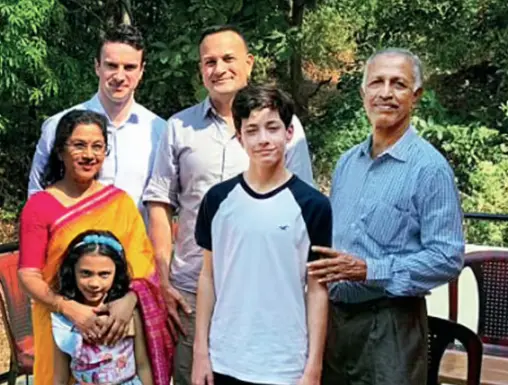
Leo Varadkar at his ancestral village, Varad in 2019, while he was serving as the Irish PM
‘Speaking My Mind’ and writing history
Varadkar wrote Speaking My Mind while memories were still raw. “I wanted it to be the first draft of history,” he says. “Other books will come, with different interpretations. But they’ll all have to refer to what I wrote.” The memoir mirrors his post-political voice: honest, reflective, precise, and unafraid of complexity. The bestseller got shortlisted for Biography of The Year at the Irish Book Awards in 2025.
For young Indians studying abroad, his advice is unequivocal. “Go,” he says. “It’s a really good idea to live or study abroad. You gain perspective, skills, understanding — and you can bring all of that back. Some will come back and some won’t, but it’s really about gaining a different perspective about life.”
At just 47, his career hasn’t really ended. “I really like what I’m doing now,” he smiles. “I’m teaching, I’m writing, I’ve served on one or two boards, and I’m involved in different campaigns that matter to me.” What appeals to him most is the balance this phase allows — remaining engaged without being consumed. “It’s a way of staying connected to public life and ideas, without the constant intensity,” he reflects. For now, he adds, that mix feels fulfilling, grounding, and exactly where he wants to be.
ALSO READ: Dhoom of Democracy: Zohran Mamdani and a Bollywood touch in New York