

(January 25, 2026) Founded in 1786 by K. Mani Thomas, the Kelachandra legacy now finds new expression under the leadership of Neleema Rana George, Ryana Kuruvilla, and Rishina Kuruvilla. While coffee entered the family’s journey only in the mid-1990s, the values of patience, stewardship, and long-term thinking have shaped Kelachandra’s agricultural DNA for over two centuries.
In the middle of the lush Chandrapore Estate of the Kelachandra Group sits a laboratory that takes you straight back to your school chemistry lessons. Rows of test tubes, glass tumblers, and advanced machines line the space, where the team is led by R&D Head Dr J.S. Nagaraja, the former Joint Director of Research at the Coffee Board of India. Located in Karnataka’s Chikmagalur district in South India, the high-altitude estate is set within the Western Ghats and specialises in shade-grown Arabica and Robusta coffee.
Walking into the lab of the estate is an eye-opener. The team is working on a range of initiatives, from studying beneficial fungi such as Trichoderma for soil health to developing resilient coffee varieties. They are also experimenting with techniques such as bio-fermentation, carbonic maceration, and yeast fermentation to advance Indian specialty coffee, reflecting the depth of research driving Kelachandra’s approach.
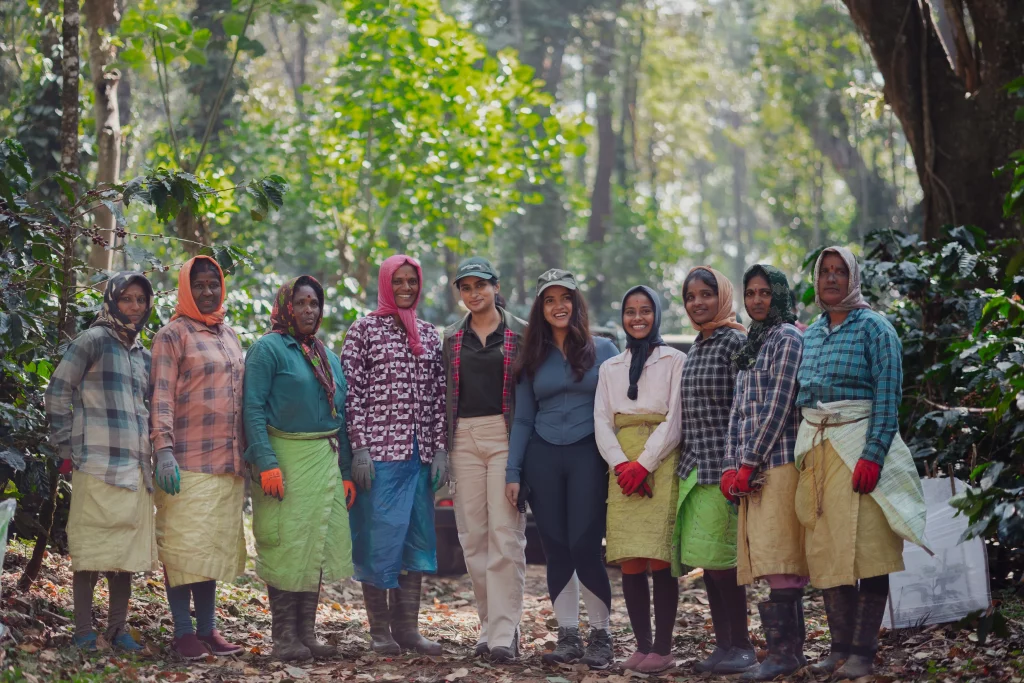
Ryana Kuruvilla with the estate team
Two centuries of plantation stewardship
Kelachandra Coffee’s expertise as growers is grounded in over two centuries of sustainable plantation life. Founded in 1786, when K. Mani Thomas first ventured into agricultural plantations, the Kelachandra Group has remained guided by a core philosophy of working in rhythm with nature and nurturing the land while giving back to the communities it sustains. Today, that legacy continues across 15 estates in the biodiverse Western Ghats, where shade-grown, hand-harvested coffee is cultivated through permaculture and multi-cropping practices, supported by modern processing facilities. From seedling to export-ready green beans, this responsible, end-to-end approach defines Kelachandra Coffee’s commitment to quality-conscious roasters around the world.
The seventh-generation team
Neleema Rana George, Head of Coffee Works and Technology; Ryana Kuruvilla, Head – People & Culture; and Rishina Kuruvilla, Head – CSR & Sustainability, are the three women from the family’s seventh generation driving this transformation.
Having grown up in Bangalore, sisters Rishina and Ryana gained global exposure through their overseas education, but their grounding came early from time spent on the estates. Ryana recalls in a chat with Global Indian, “Rishina and I spent much of our childhood on our estates, and it gave us solid exposure to coffee and other crop cultivation. Kelachandra’s agricultural legacy dates to 1786, and while coffee formally entered our journey in the mid-1990s, the values of stewardship, patience, and long-term thinking were always present in my upbringing.”
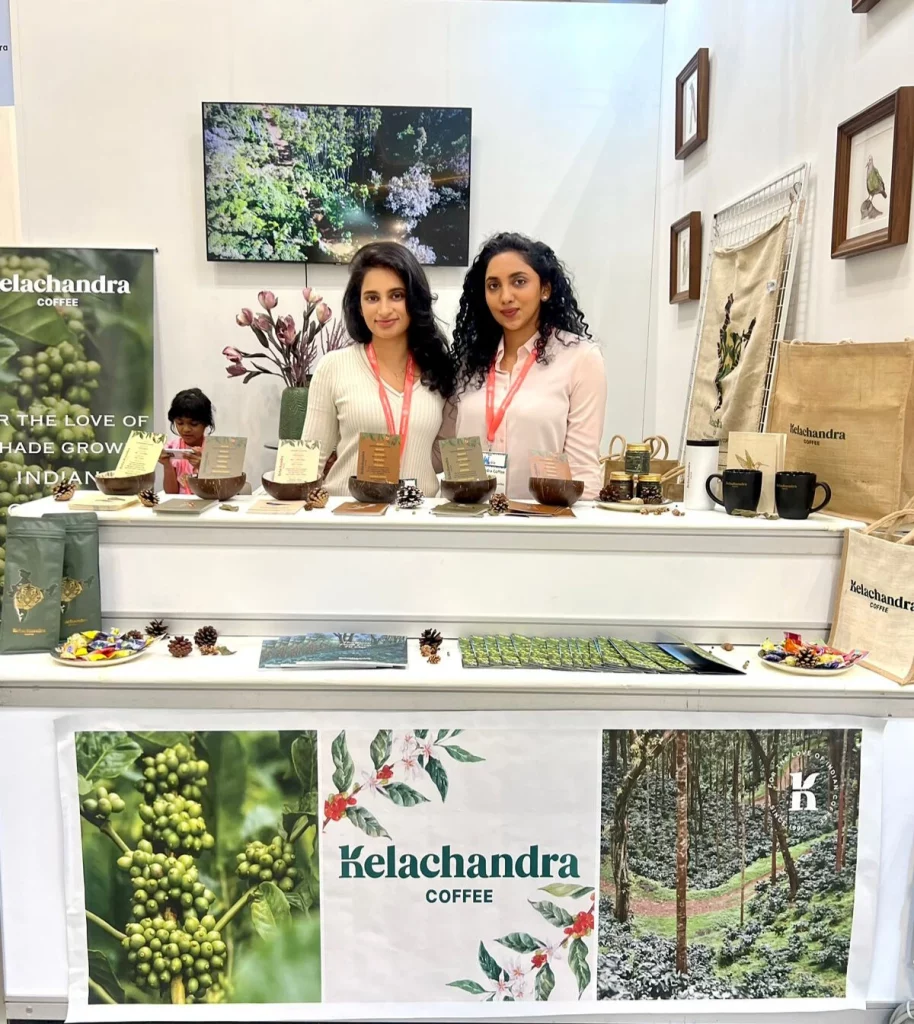
Ryana and Rishina Kuruvilla (right) at World of Coffee, Busan Exhibition & Convention Centre, South Korea in 2024
Ryana reflects that back then, with limited network connectivity, the sisters would trek through the estates, exploring flora and fauna. It was an experience that quietly built their understanding of the land. “It became even more exciting when Neleema joined the family,” she says.
Blending science, strategy, and community
Neleema brings a distinctly interdisciplinary lens to the business. She earned a master’s in coffee economics and science from Università degli Studi di Trieste in Italy in 2023, a master’s in human resource management from St Joseph’s Academy in 2007, and a bachelor’s degree in advanced financial accounting and management from Christ College, Bangalore, in 2004. “This interdisciplinary path allows me to approach the coffee trade through scientific rigour, the precision of a finance strategist, and deep consideration for the community,” she says.
After completing her bachelor’s in design and visual communications from St Joseph’s, Rishina joined Neleema at the University of Trieste for a master’s in coffee economics and science. “These distinct worlds taught me to see coffee not just as a commodity, but as a visual narrative,” she explains. “I see everything—sustainability, coffee production, and biodiversity conservation through a design and innovation lens.”
Ryana, meanwhile, earned a B.A. in Economics with a minor in Anthropology from the University of California in 2017, followed by an M.Sc. in Real Estate Investment from London’s Bayes Business School in 2023. “My education helped me harmonise business aspirations with human welfare, ensuring both evolve in tandem,” she says.
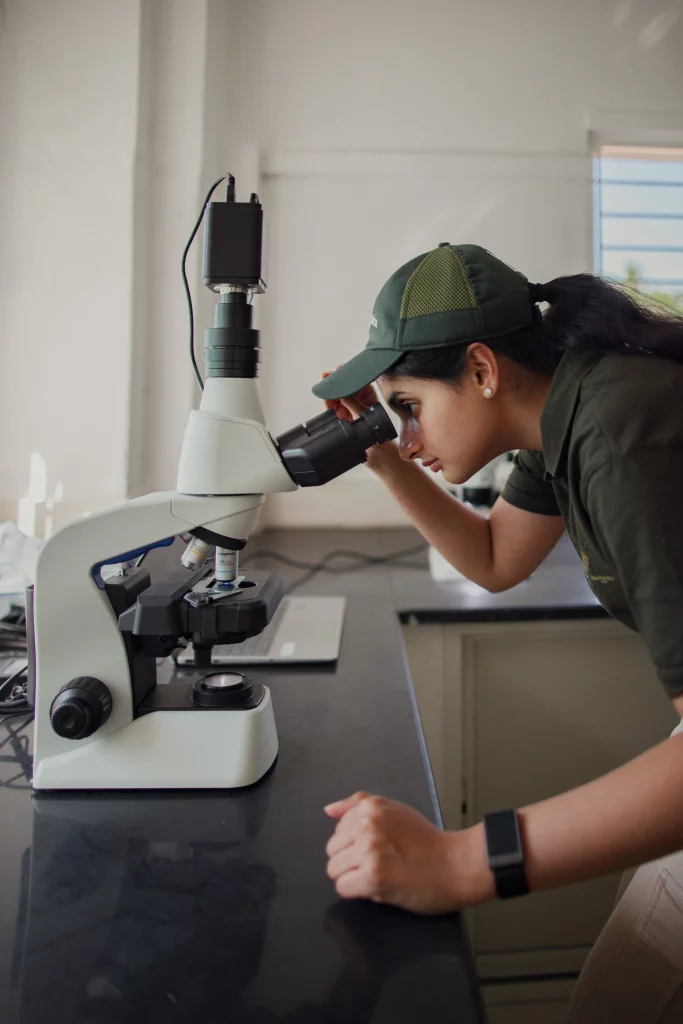
Ryana Kuruvilla at the R&D Center of Kelachandra Coffee
Global influences, local application
During their time in Italy, the sisters learnt that while Indian coffee has immense potential, processing techniques often define market dominance. “We have since implemented Brazilian and Colombian coffee processing technologies to meet international speciality standards,” says Neleema.
Rishina agrees, pointing to the influence of Ernesto Illy’s programme at the University of Trieste. “Students were handpicked from across the world, and learning about their coffee cultures, alongside Europe’s was a defining moment in my time with Kelachandra Coffee.”
For Ryana, living overseas reinforced the importance of understanding people through their cultural, social, and economic realities. “That perspective brings clarity to my engagement with everyone, from global traders to estate teams,” she says.
Legacy as responsibility
For the trio, family legacy is less about inheritance and more about accountability. “It requires evolving as an individual to make decisions that honour the vision and values established generations ago,” says Ryana, “and to carry forward a legacy is to remain grounded in your roots, regardless of shifts in the global landscape.”
Their responsibilities align naturally with their strengths. Neleema bridges conventional and modern processing technologies. Rishina immerses herself in plantation challenges to devise sustainable solutions for the planet. Ryana manages both the people and business sides of coffee, with community upliftment at the core. “The foundation of our thought process was laid by our family,” she adds.
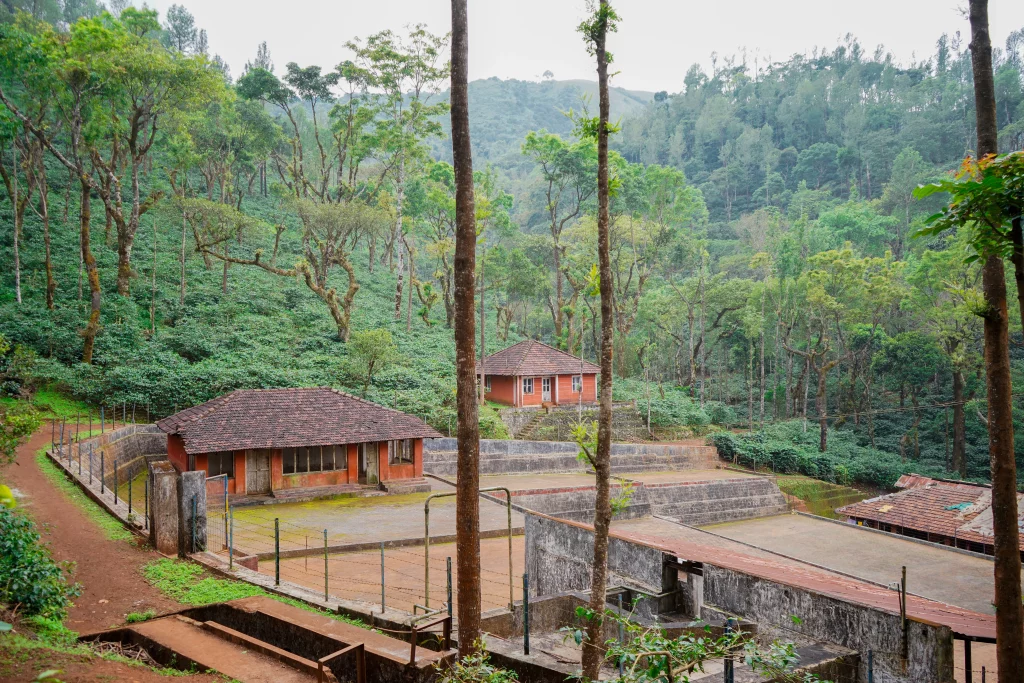
Kelachandra Group’s Chandrapore Estate
Putting Indian coffee on the world map
Kelachandra Coffee’s mission is to position Indian specialty coffee as premium—a transition that has unfolded over several years as the estates moved from commodity-focused farming to specialty production. Their coffees have been showcased at World of Coffee trade shows in Busan, Copenhagen, Dubai, Jakarta, and at the Embassy of India in Tokyo.
“All our 15 estates are Rainforest Alliance certified and EUDR compliant, ensuring our exports meet global regulatory standards,” says Neleema. This is supported by a dedicated R&D unit focused on soil analysis, Trichoderma cultivation, and related research. “We are also extending these facilities to smallholder farmers in the region to scale sustainable practices and reduce chemical dependency across the Western Ghats.”
Inviting traders to the estates to witness the process firsthand has helped Kelachandra move beyond transactional sales to long-term partnerships.
Motivation rooted in community and landscape
The Indian coffee ecosystem, they believe, cannot thrive in isolation. It demands the harmonisation of skilled labour, research scientists, technologists, and strategic promoters who can communicate the technical and sensory strengths of Indian coffee globally.
Working closely with surrounding communities, the group has built 650 modern homes for estate workers. The biodiversity of the Western Ghats remains a constant source of motivation. “We cultivate coffee along the slopes and peaks of the Western Ghats, ensuring our operations do not hinder the forest canopy or the natural flow of mountain streams,” says Rishina. “Watching our teams navigate this challenging landscape reinforces a simple truth: every skill in the value chain is invaluable.”
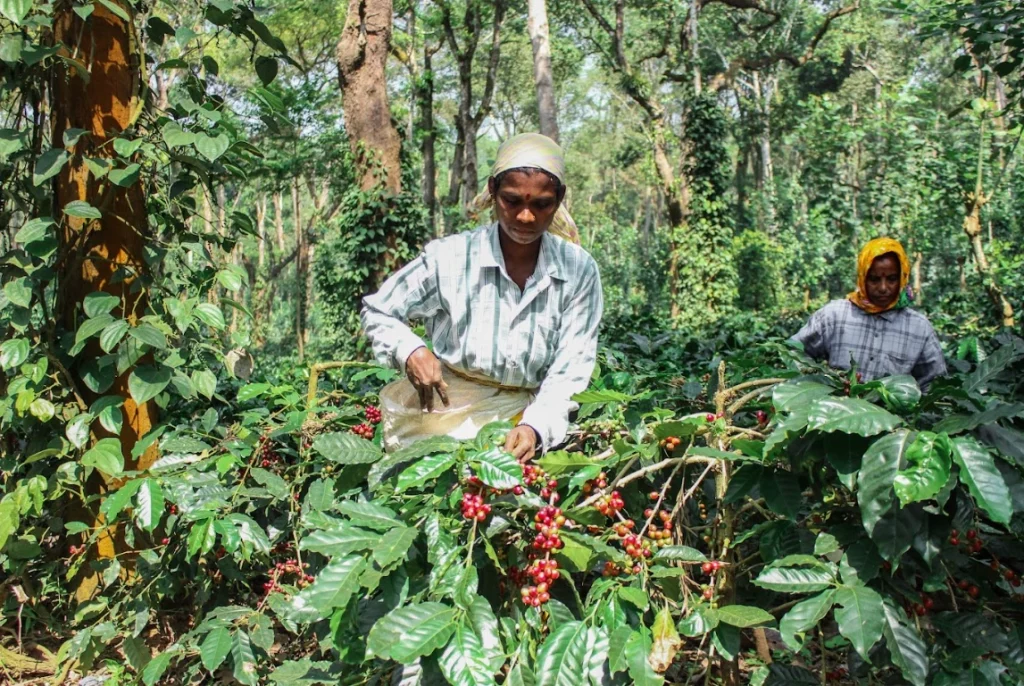
A global perspective
For Kelachandra Coffee, a global identity means inviting the world to experience Indian coffee as a craft shaped by high-altitude microclimates, shade-grown cultivation, careful harvesting, and cup profiles that can be both elegant and surprising, with notes of cocoa, spice, citrus, and lingering sweetness.
Ryana and Rishina are currently strengthening their expertise through a Plantation Management course at the Indian Institute of Plantation Management (IIPM), Bangalore with the belief that learning is continuous.
For them engaging with the world is less about scale and more about integrity. It’s about taking something authentically Indian, refining it to meet the world’s highest expectations, and keeping it honest to where it came from.
- For more information on Kelachandra Coffee and its legacy, visit its website
- Follow Neleema Rana George and Ryana Kuruvilla on LinkedIn
ALSO READ: Brewing Big Dreams: How Avinit Bagri is scaling South Indian flavours with The Filter Coffee