April 23 2026
From Chennai to the World Boxing Council’s Asian silver title: Sathish Karthik’s story
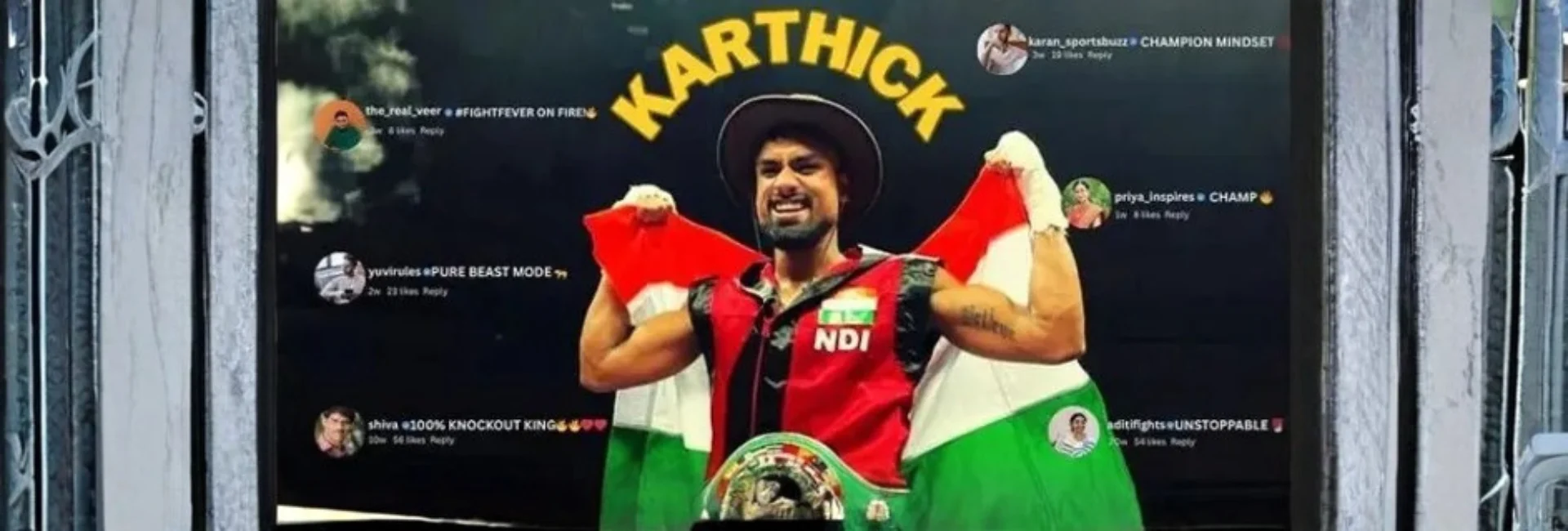
(April 23, 2026) At the age of 12, Sathish Karthik was just another Chennai boy playing cricket at the Integral Coach Factory ground when a railway employee who had once boxed called him over and offered to train him for free. That moment changed the direction of his life. Years later, that same boy would step into international rings, fight for global recognition, and return as a WBC Asian Silver title holder, currently ranked among India’s top professional lightweight boxers. He claimed the WBC Asian Silver title, a few years back defeating Indonesia’s Hero Tito. It was a win that placed him firmly on the professional boxing map in Asia.
The World Boxing Council, widely known as WBC, is one of the most respected governing bodies in professional boxing. It oversees rankings, sanctions title fights, and recognises champions across the world. Winning a WBC regional title such as the Asian Silver belt places a boxer within a global competitive system and signals that they are moving toward higher international opportunities.
“I feel grateful for how far I have come, but I am far from satisfied,” Karthik tells The Global Indian. Now, he is working toward the next stage of his career, preparing for international tournaments in regions such as Dubai and Africa, where he hopes to further establish himself and move closer to bigger global titles. “My journey has been about persistence and growth,” he says.
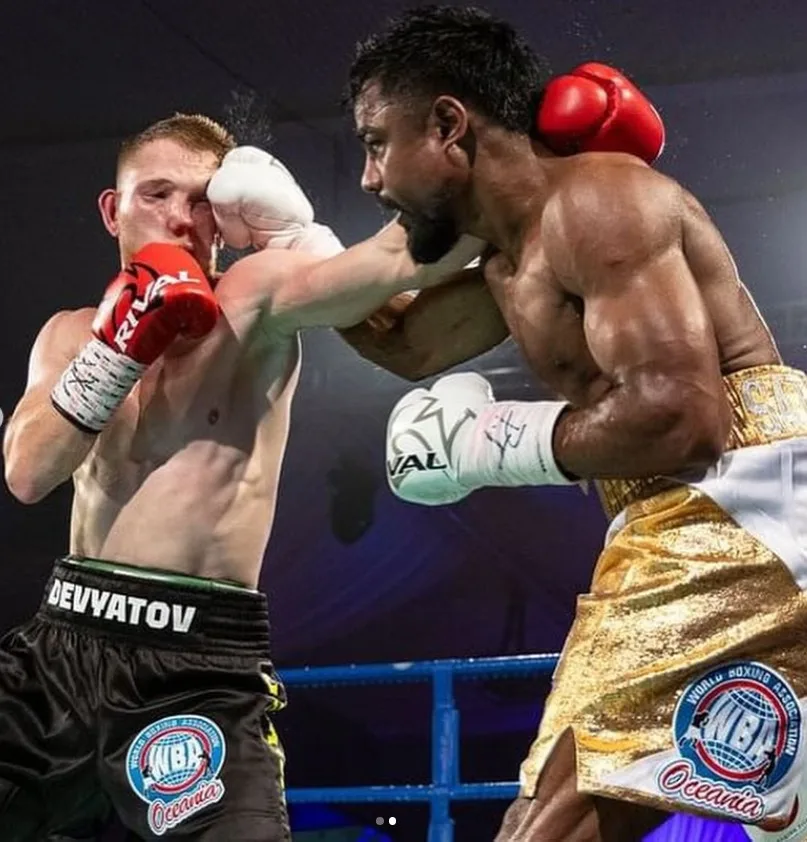
Sathish Karthik in action during a professional bout
A railway ground and an unexpected beginning
The man who first introduced Karthik to boxing was not a professional coach. He was a railway employee who had access to the ICF ground and trained local children out of passion. Karthik and his friends walked into one of his sessions out of curiosity, not knowing it would shape his future.
For the first two weeks, he trained in secret. At the time, he was not very focused on academics and was unsure how his parents would react. When he finally told his father, the response surprised him. His father had boxed in his youth but never pursued it seriously. That moment created an unexpected bond between them. From there, boxing slowly became central to his life.
Karthik was later scouted by the Army, specifically the Madras Engineer Group and Centre, an institution known for nurturing sporting talent alongside military training. Being scouted meant that he was brought into a structured environment where education and sport went hand in hand. He completed his schooling between 2009 to 2016 within the Army system, where discipline, routine, and physical training were part of everyday life.
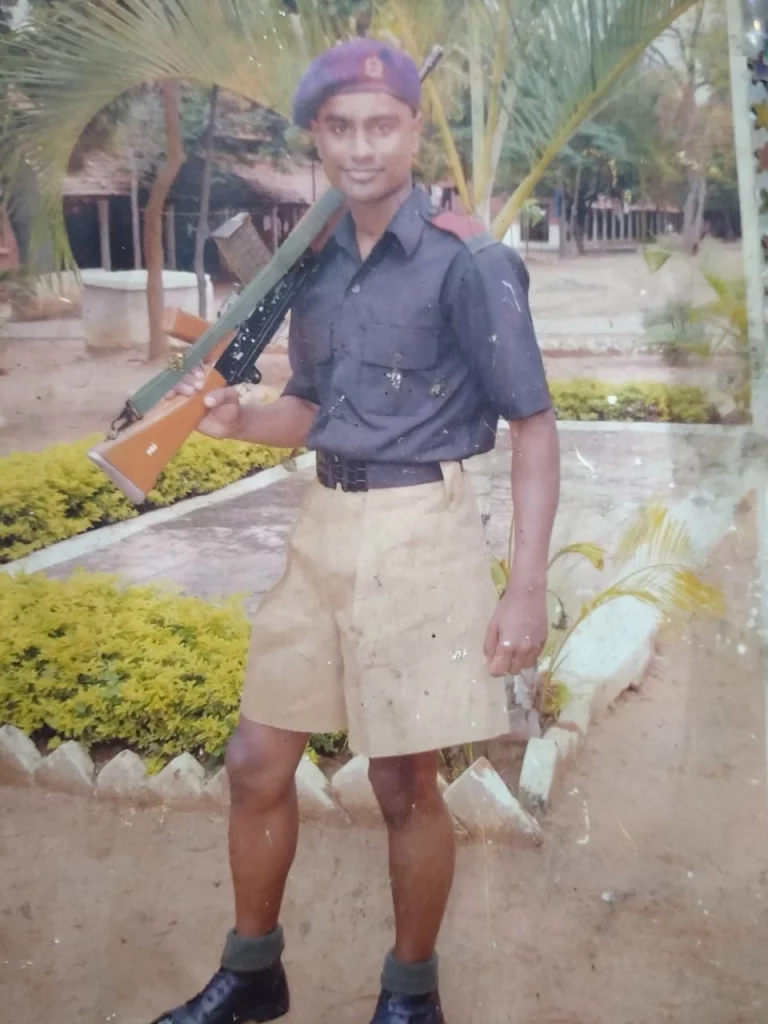
He later went on to pursue his college education in Tamil Nadu while continuing to train and compete as a boxer. Balancing academics with the demands of sport was not easy, but it played an important role in shaping his mindset. “Managing studies alongside boxing was challenging,” he says, “but it taught me discipline, time management, and mental toughness.”
For nearly seven to eight years, this system helped build his foundation. During this period, he competed at national and international levels, including representing India at the Youth World Boxing Championship in Sofia in 2014. Over time, however, his ambitions began to extend beyond what the system could offer.
The Olympic dream that changed direction
Karthik’s next step was into the JSW Sports high performance programme, one of India’s early private initiatives aimed at preparing athletes for the Olympics. There, he trained under American coach Ronald Sims, who was brought in to provide international level expertise. The goal was clear: The 2020 Tokyo Olympics.
Sims saw strong potential in Karthik and invested in his development. The training was intense and focused, and for a time, everything was aligned toward that Olympic dream. But there was a challenge that went beyond sport. The system did not provide a stable income, and without the job security that some other athletes had, managing personal and family responsibilities became difficult.
Eventually, Karthik made the difficult decision to step away. It meant leaving behind not only a programme but also a dream he had spent years working toward. It was one of the toughest choices of his career.
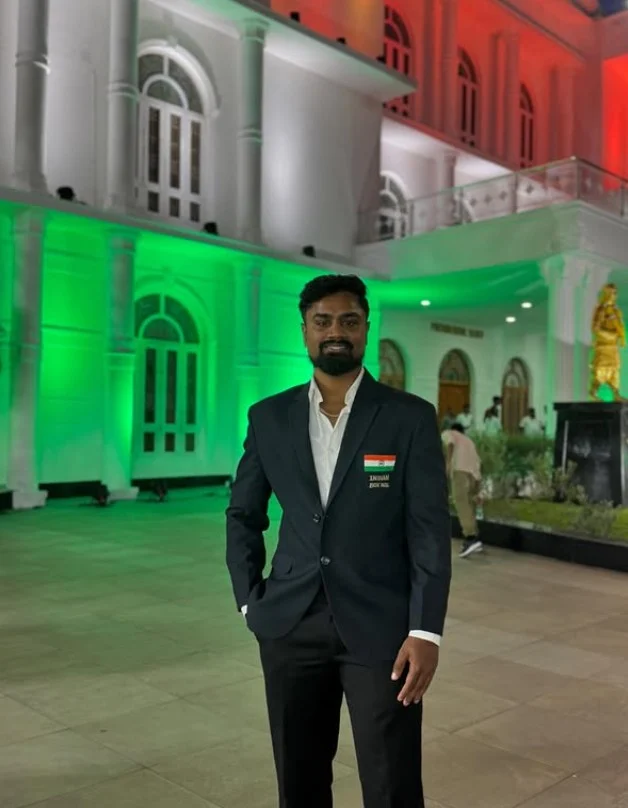
Building a career outside structure
After leaving the programme, Karthik began working as a trainer at Cult Fitness. It was a practical move that allowed him to earn a living while staying connected to boxing. “To support myself, I work as a fitness expert, helping clients with their transformation journeys,” he says. “It allows me to manage my responsibilities and continue investing in my boxing career.”
This phase also exposed him to the realities of professional sport in India. “It has become quite challenging for athletes to secure consistent sponsorships,” he explains.
He was briefly associated with a management team but chose to part ways after facing unsatisfactory professional and financial experiences. Since then, he has been managing his own career, organising fights through his network and continuing to search for better opportunities.
A new world in professional boxing
Karthik’s entry into professional boxing came through Mujtaba Kamal, founder of Grassroot Boxing. The transition from amateur boxing to the professional circuit marked a major shift. Amateur boxing focuses on shorter bouts and scoring points through technique. Professional boxing is more demanding. Matches are longer, sometimes going up to twelve rounds, and require greater endurance, strategy, and resilience.
The structure is also different. Professional boxing operates through private promotions and international bodies such as the WBC, which regulate rankings and titles across regions. Within this system, Karthik began to build his career step by step.
What the title represents
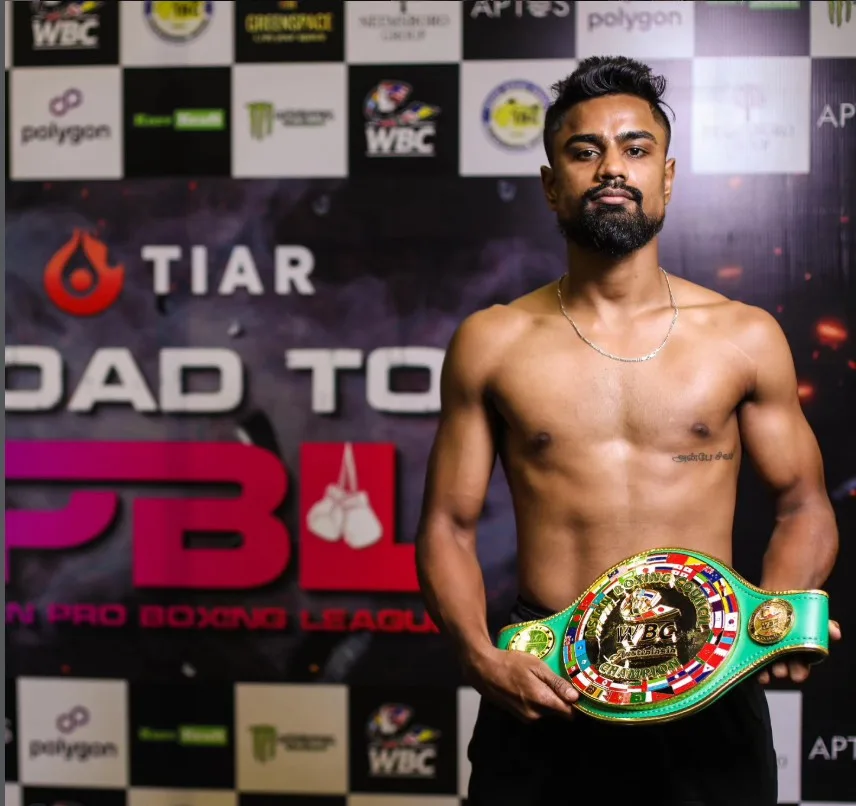
Winning the WBC Asian Silver title was a defining moment. Karthik defeated a defending champion from Indonesia to claim the belt, proving himself against an experienced opponent. The lightweight category, in which he competes, requires strict weight management at around 135 pounds. Maintaining this consistently over the years is itself a test of discipline.
The Asian Silver title is a regional championship, but it carries significant weight. It places a boxer among the leading fighters in Asia and opens pathways to higher level competitions. Karthik is also the first Indian professional boxer to compete in two international title fights, marking an important step for Indian boxing on the global stage.
“I am proud to be able to support myself and contribute to my family,” he says. “But I want to reach the highest level and set a new standard.”
Discipline that shapes everyday life
Today, Karthik lives alone in Bengaluru, managing his training, work, and daily routine independently. His schedule is planned in advance, often the night before, so that each day runs with clarity and purpose.
This approach comes directly from his years in the Army, where discipline was part of everyday life. His philosophy is simple and grounded. “Motivation is something almost everyone has,” he says. “What matters is discipline and consistency. You have to improve a little every single day.”
Looking ahead and giving back
Karthik’s journey is not only about personal success. It is also shaped by what he has seen around him. “I have seen many talented athletes lose motivation because of lack of opportunities,” he says. “That pushes me to work harder, not just for myself but to create a better path for others.”
He is currently preparing for international competitions in Dubai and Africa, where he hopes to make a stronger mark. At the same time, he is working toward building a boxing academy. The idea is to create a space where young athletes can access better guidance, support, and opportunities than previous generations had. In his free time, he spends time with close friends but also focuses on planning future projects and building this long term vision.
A sport still taking shape
For context, countries like the United Kingdom, Thailand, and the Philippines have decades of professional boxing culture and infrastructure behind them. India is still in the early stages of building that structure, which is precisely what makes competing abroad at this stage so significant.
View this post on Instagram
Karthik’s journey reflects this moment of transition. By competing internationally and holding his own, he is helping build credibility for Indian professional boxers. His story is not just about titles or rankings. It is about persistence, adaptation, and creating a path in a system that is still being built.
The door to global boxing for Indian athletes is not fully open yet. But with fighters like Sathish Karthik stepping forward, it is opening wider with each fight.
- Follow Sathish Karthik on Instagram
ALSO READ: From lows to highs: Saweety Boora wins gold in World Boxing Championship

Share with



Written By: Amrita Priya
Small Village, Big Punch: Minakshi Hooda strikes gold at 2025 World Boxing Championships