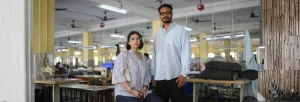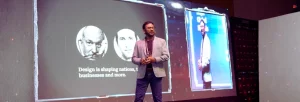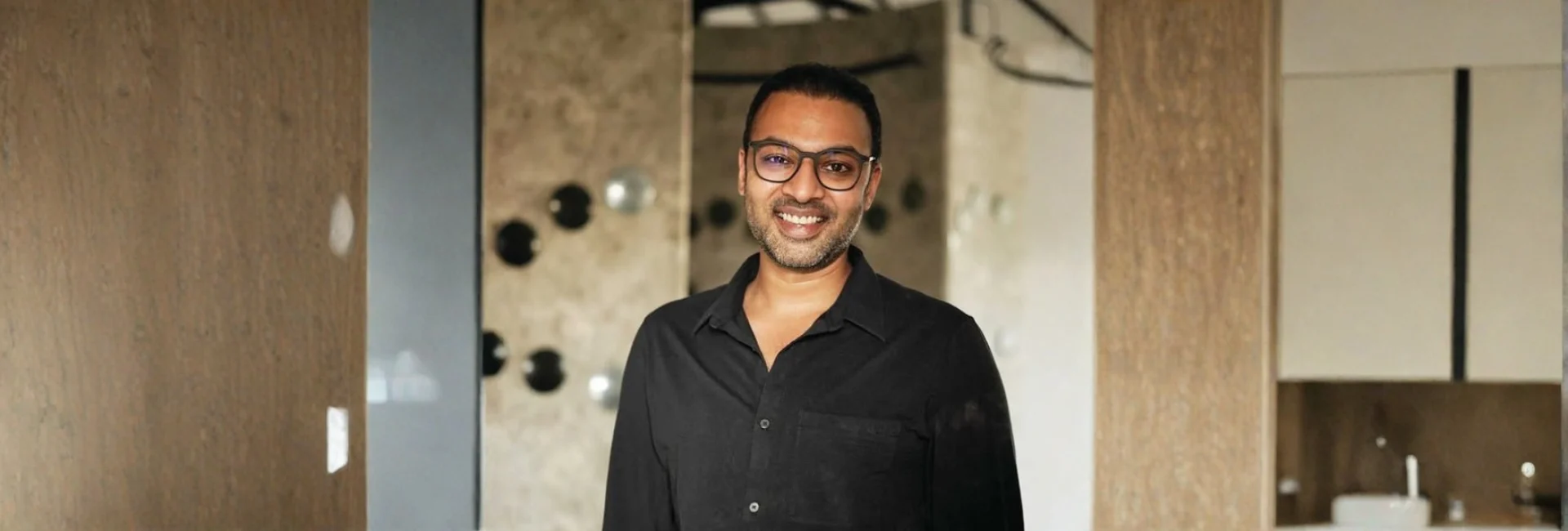


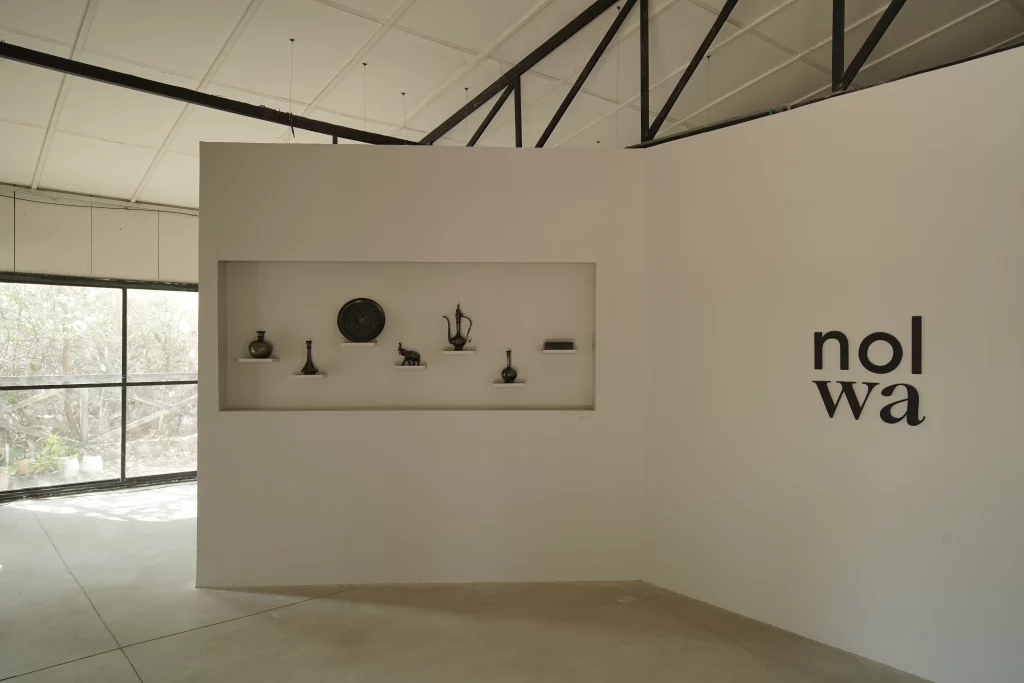
(March 25, 2026) At a time when India’s traditional crafts are struggling to remain relevant in modern homes, Rohit Naag is quietly reshaping the narrative. The Hyderabad-based founder of design studio Nolwa (short for New old ways) is reinterpreting age-old heritage craft forms like Bidri and Etikopaka through a contemporary lens, creating collectible design pieces that sit at the intersection of art, engineering and functionality.
Operating out of a sprawling 6,000 sq. ft. studio set on a two-acre campus on the outskirts of Hyderabad, Naag works closely with master craftsmen to produce limited-edition, made-to-order pieces that range from sculptural furniture to lighting and objects. His work has already earned recognition in the design world, including a Design Trends Award and acknowledgement from Elle Decor India, placing the studio among a new generation of new age ateliers redefining Indian craft.
But beyond awards and aesthetics, the 40-year-old’s larger ambition is more fundamental: to restore aspiration to Indian craft by merging traditional skill with contemporary design thinking. In doing so, he is not only creating objects, but also building a framework through which heritage can find relevance in a rapidly modernising world.
View this post on Instagram
From engineering to design
Rohit Naag’s journey into design was anything but linear. Born and raised in Hyderabad, he grew up in a culturally blended household, with roots in both Andhra Pradesh and Rayalaseema. His early education followed a familiar path, schooling in the city followed by an engineering degree in Electronics and Communication from CBIT.
Like many young Indians, engineering was less a conscious choice and more a default trajectory. It was only after completing the degree that the entrepreneur realised his interests lay elsewhere.
“I didn’t know enough to make a different decision back then,” he reflects in a chat with Global Indian. “But once I finished engineering, I knew I had to find something that felt more aligned with what I enjoyed.” That search took him to the United States, where he enrolled in an Engineering Management programme at Duke University in North Carolina. The experience marked his first exposure to a global environment and a fundamentally different approach to learning.
“The education system there was far more practical,” he says. “There was a strong focus on case studies, collaboration and independent thinking. It gave us a lot of agency in how we learned.”
The entrepreneurial detour
After completing his programme, Naag worked in a business analytics firm in Virginia before returning to India to explore entrepreneurial opportunities.
Over the next few years, he experimented across sectors, from attempting a renewable energy venture to building an agribusiness focused on essential oils, working with farmers across multiple villages in Andhra Pradesh.
While these experiences broadened his understanding of business and operations, they did not fully satisfy his creative inclinations. That clarity came later, during his time at INSEAD in France, where he pursued an MBA. “That year was transformative,” he says. “It exposed me to incredible diversity and a very high level of intellectual rigour. But more importantly, it gave me the confidence to ask a simple question: can work and joy come together?” The answer, it seems, lay in design.
Reviving craft through design intervention
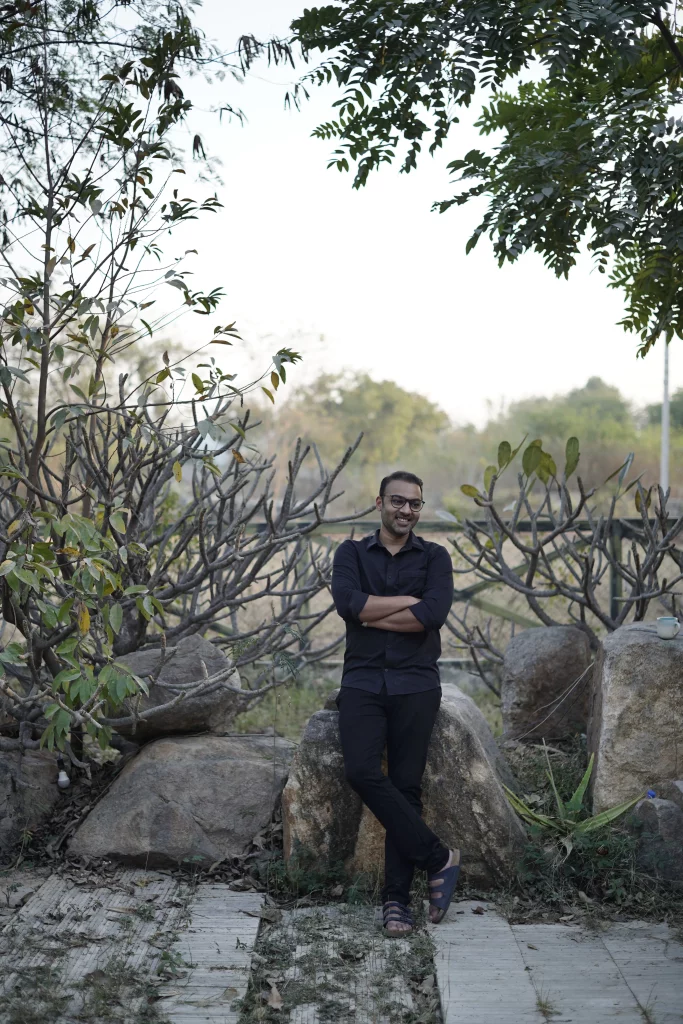
The idea for NOLWA emerged from a deep fascination with India’s craft traditions and an equally strong sense that they were being underutilised in contemporary contexts. India is home to nearly 2,800 craft forms, yet many are fading due to declining demand and lack of innovation. The design whiz found this disconnect particularly striking in a world that increasingly values handcrafted, artisanal objects.
“In the past, craft was aspirational,” he explains. “Artisans were patronised by royalty, and there was constant pressure to innovate and impress. Today, many crafts have become commoditised.”
Before narrowing his focus, Naag undertook an extensive exploration of craft clusters in and around Telangana and Andhra Pradesh. He visited and studied a range of traditions: from Kalamkari in Kalahasti and stonecraft in Allagadda to filigree work in Karimnagar, as well as other regional practices, spending time with artisans and understanding their processes, materials and limitations.
“I wanted to start with what was in our backyard,” he says. “Craft requires presence. You have to spend time with the artisans, understand their processes and build trust.”
After evaluating multiple forms, he identified Bidri and Etikopaka as having the strongest potential for meaningful design intervention. What set them apart was not just their aesthetic appeal, but the scope they offered to rethink how the craft could be applied in a contemporary context.
Bidriware, in particular, stood out for its intricate silver inlay work on blackened metal surfaces. While the craftsmanship itself remains extraordinary, its traditional forms: vases, boxes and ornamental objects, have struggled to find a place in modern homes.
Merging modern design with traditional craft
“What we’re trying to do is merge modern design with traditional craft,” he says. “The skill is already there. What’s missing is design intervention.” At NOLWA, this intervention goes far beyond surface-level redesign. Each piece involves deep collaboration between designers, engineers and craftsmen, often requiring entirely new methods of production. Translating complex, contemporary design languages onto traditional craft surfaces has meant solving problems that have no precedent.
For example, to achieve precise geometric patterns on curved Bidri surfaces, the team developed custom 3D-printed stencils: an innovation that allowed artisans to execute designs with the required level of accuracy. “We tried multiple approaches: manual drawing, projections, digital overlays—but nothing worked,” Naag explains. “We had to engineer a completely new solution.”
View this post on Instagram
Core principles
This fusion of craft, design and engineering is guided by three core principles that define every NOLWA piece.
The first is to create work that is, as far as possible, one step ahead of machines—pushing craftsmanship into areas that are difficult for industrial processes to replicate. The second is craft-centricity, meaning that if the craft element is removed, the piece should lose its essence and appeal entirely. The third is what the entrepreneur calls the “X factor”: an intangible quality that makes a piece memorable, something that invites a second look or sparks conversation.
“These three criteria keep us grounded,” he says. “They ensure that what we’re doing is not just decorative, but meaningful.”
Building a new language for Indian craft
At its core, NOLWA operates as a product studio, producing a tightly curated range of limited-edition pieces, typically in editions of nine. These include furniture, lighting and functional objects designed to integrate seamlessly into modern living spaces.
The Founder is deliberate about positioning the studio at the intersection of art and utility. “We don’t want our work to be purely decorative,” he explains. “It should have a sense of use, so that it becomes part of everyday life rather than something that sits in a showcase.”
This philosophy also informs how the studio collaborates with artisans. Rather than relocating craftsmen to urban centres, NOLWA works within existing craft clusters, ensuring that traditional ecosystems remain intact. Currently, the studio partners closely with a small number of artisan families, allowing for deeper collaboration and higher-quality output.
The journey, however, has not been without challenges. The studio’s limited-edition model means lower production volumes, which can make it difficult to engage external vendors willing to experiment with complex processes. Many projects involve atypical engineering challenges that require extensive trial and error.
“Most of what we do doesn’t fit into standard manufacturing,” Naag says. “So we have to figure things out from first principles.”
Pushing the boundaries
Despite these constraints, NOLWA has steadily built a reputation for pushing the boundaries of craft-based design. Yet Naag remains aware that the Indian market for such work is still evolving. “There is growing appreciation for craft-based pieces,” he says. “But at the higher, collectible level, it will take time for wider acceptance.”
Looking ahead, the studio plans to expand its work with both Bidri and Etikopaka, introducing new finishes, colours and techniques while remaining committed to the integrity of the craft. Upcoming collections are expected to debut at major design platforms, further strengthening NOLWA’s position within the global design landscape.
For the revivalist, however, the long-term vision extends beyond commercial success. “If we can make craft aspirational again,” he says “then we can help sustain it. That’s the larger goal.”
ALSO READ: How Harsha Durugadda built a global sculptural career from a Chilkur farm