

(April 6, 2026) A Tamil Nadu-born federal contractor is making history as the first South Asian on the DC mayoral ballot. But for Rini Sampath, this is less about breaking barriers and more about fixing a city. The campaign she is running is about potholes, grocery stores, 911 response times, and a city government she believes has been asking more of its residents while delivering steadily less.
Rini Sampath was born in Theni, a town tucked into the foothills of the Western Ghats in Tamil Nadu. She was seven when her parents brought her to the United States, at an age when she was young enough to absorb America, but old enough to remember where she came from. She has spent over a decade in Washington, DC, working as a federal contractor improving government programs and citizen services, and has also worked as a field organizer and managed higher education nonprofit programs. “I’ve called DC home for over a decade,” she writes on her campaign website. But her sense of identity reaches back further than that. “I definitely identify with the term Asian-American,” she said in a 2017 NBC News coverage as University of Southern California’s Student Body President. “Hyphenated identities are incredibly important to immigrant families and communities. People who are first-generation, second-generation, and it’s something so beautiful to know that our identities of being American also has another story behind it.”
Now, she is on the ballot to become Mayor of Washington, DC as the first South Asian person ever to get there. It is a milestone she does not appear especially interested in dwelling on. The 31-year-old is squarely focused on the city that has been her home for over a decade.”
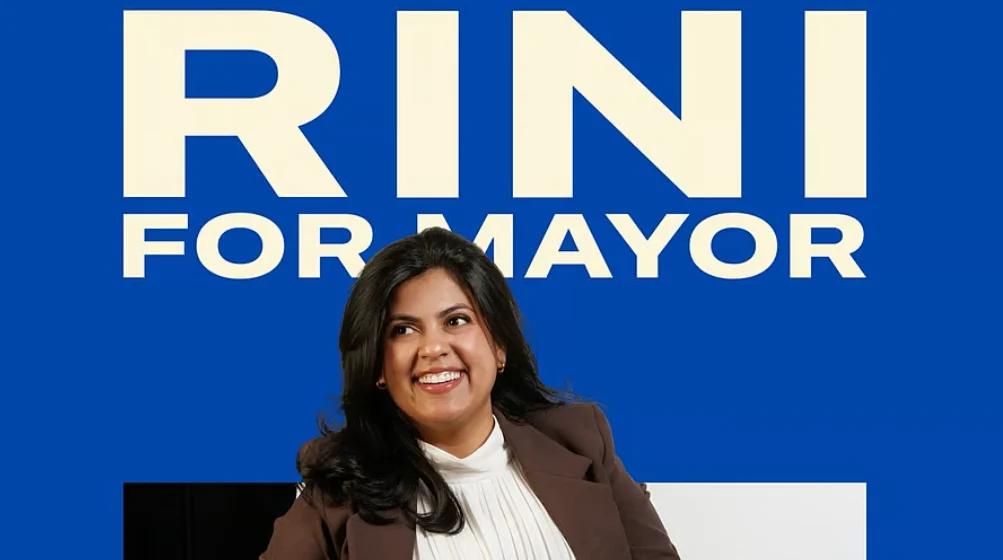
From Theni to Washington, DC: A journey three generations in the making
The family’s story, as Rini has told it, is one defined by education pursued against steep odds. Her grandfather obtained only a seventh-grade education. Her grandmother stopped studying in first grade. Her father became only the third person in his entire extended family, across uncles, aunts, and generations to earn a university degree. That achievement made the next step possible.
“His decision to take the risk of moving us to the United States was amazing,” Rini has said. “It was transformative. The immigrant calculus of her upbringing, the weight of what her parents gave up, the significance of what her father had already accomplished shaped how she thinks about risk, about service, and about what institutions owe the people who depend on them.
She went on to attend the University of Southern California, where a stint as Student Body President gave her the first taste of what it meant to run for office
The all-women ticket no one wanted her to run
When Rini decided to run for Student Body President at USC, many advised her to choose a running mate who fit the traditional mould, someone who was white, male, and part of a fraternity. She, however, was a woman of colour and not part of that fraternity system, and was told that balancing the ticket this way would improve her chances of winning.
She chose to ignore that advice. Instead, she picked Jordan, the most qualified candidate. Together, they went on to win the election as the first all-women team, and she became the first woman to hold the office in a decade.
“This is more than just us,” she told a friend on election night. “It’s not about us anymore.” She saw it clearly. By being the first, she was signaling to women, and specifically young women of colour that they could do it too.
Why she decided to get into the DC mayoral race
After USC, Rini built a career in federal contracting, working to improve government programs and citizen services. These involvements put her close enough to institutional failure to understand, in granular terms, how it happens and why it persists. She settled in DC, watched city government from close range, and, by her own account, spent more than a decade growing increasingly frustrated.
The moment that tipped her into the race came earlier this year, during a February snowstorm. The city ground to a halt. Neighbors could not leave their homes. People with disabilities were stranded. Workers lost income. It was, she acknowledges, not a catastrophic storm, rather the kind of weather a functioning city government ought to be able to manage.
“I found myself asking a simple question,” she writes on her campaign website. “Why can’t our city deliver, even on the basics?”
She describes the snowstorm as the moment DC’s failures “came into sharp focus” not because the problem was new, but because it made the accumulated dysfunction impossible to look away from. “After more than a decade of watching City Hall fall short on its basic promises, this moment made clear that it was time to step forward and take responsibility for fixing a government that asks for more and more from residents while delivering less in return for our taxes.”
An outsider with a spreadsheet
In DC political circles, Rini is not a known person. She has not come up through ward politics or the city council. She describes herself as “not a politician.” She does not have political donors to repay or factional allegiances to manage. Her professional formation has been in federal contracting and nonprofit management which are the unglamorous work of making programs actually function.
That diagnostic instinct runs through her platform. DC, she argues, already collects the performance data needed to run the city better. The problem is that nobody uses it. “Audits show city agency failures persist because data is fragmented, accountability is unclear, and failures don’t trigger consequences.” Her proposed remedy is less revolutionary than it sounds. She aims to bring in data and technology experts, build tools that let residents report and track issues in real time, and hold agencies to the benchmarks they have already set for themselves.
“DC already has the data,” she writes. “We’ll finally use it to fix problems faster and manage the city budget responsibly.”
Her priorities reflect a close attention to the parts of the city that city hall most visibly neglects. More than 30,000 DC residents live without easy access to a grocery store, with the largest gaps concentrated east of the Anacostia River in Wards 7 and 8. Traffic deaths continue despite city safety programs. Rats, she notes plainly, “run rampant.” Childcare costs tens of thousands of dollars per child per year, pushing parents. particularly women out of the workforce. These are not issues that generate headlines. They are the mechanics of daily life, and in DC, she argues, they are broken.
What the ballot means, and what she’s focused on instead
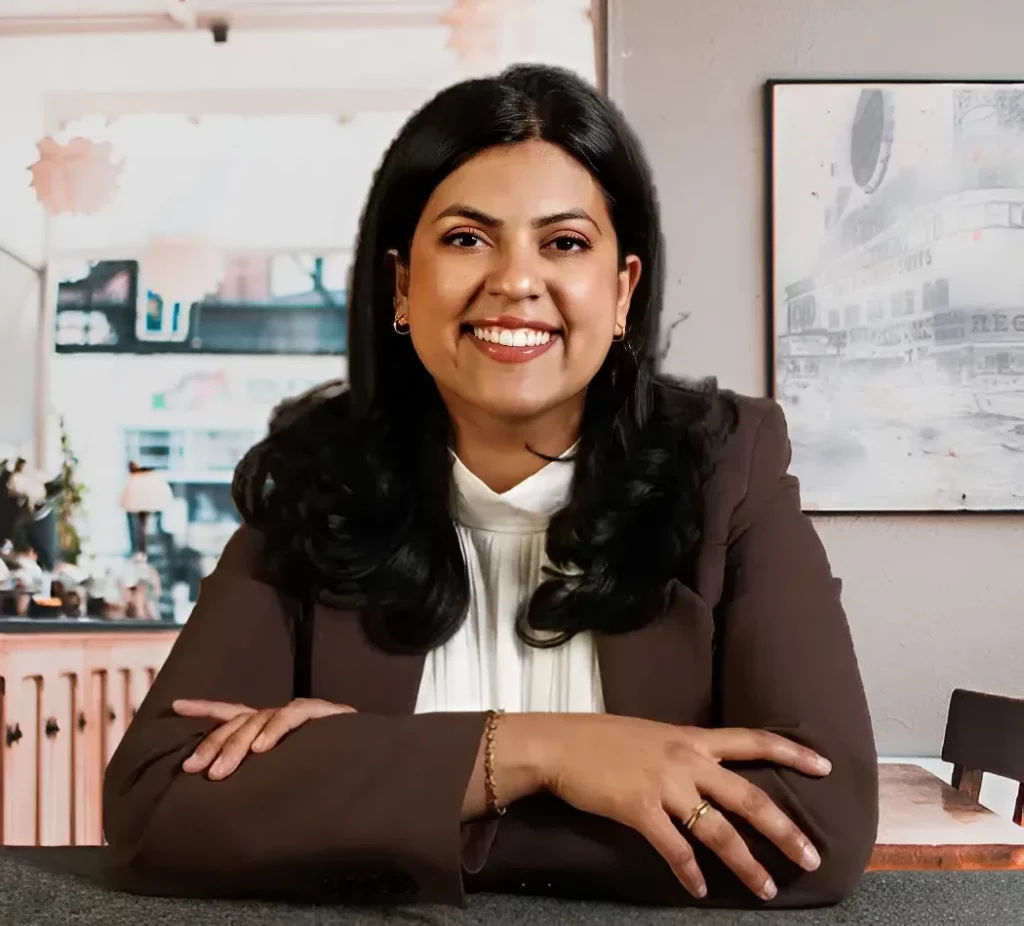
Rini is aware of what her candidacy represents. The version of her who spoke at USC in 2015 understood viscerally that visibility is not merely symbolic, and that seeing yourself reflected in leadership changes what you believe is possible. “In order to be a more inclusive space,” she said then, “we need to see the faces of these different people in all types of different roles.”
But the campaign she is running in 2025 is not organized around that argument. It is organized around potholes, snowplows and grocery stores, and a government she believes has drifted into comfortable unaccountability.
“My career has taught me that results happen only when we set clear goals, gather data, build strong teams, and have the discipline to follow through,” she writes. “That same standard is what I hold the city I call home to.”
Whether Washington hands her that stake is another matter. Incumbency, political networks, and institutional money are formidable forces in any city election. But Rini Sampath has run against longer odds before, with less, and been told what was and wasn’t possible. She has a documented habit of not listening.
The immigrant woman from Tamil Nadu’s Theni who became a student body president, who became a federal contractor, who watched her city fail in a snowstorm and decided she’d had enough is on the ballot. The rest is up to DC.
- To know more about Rini Sampath visit her campaign website