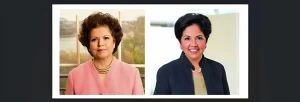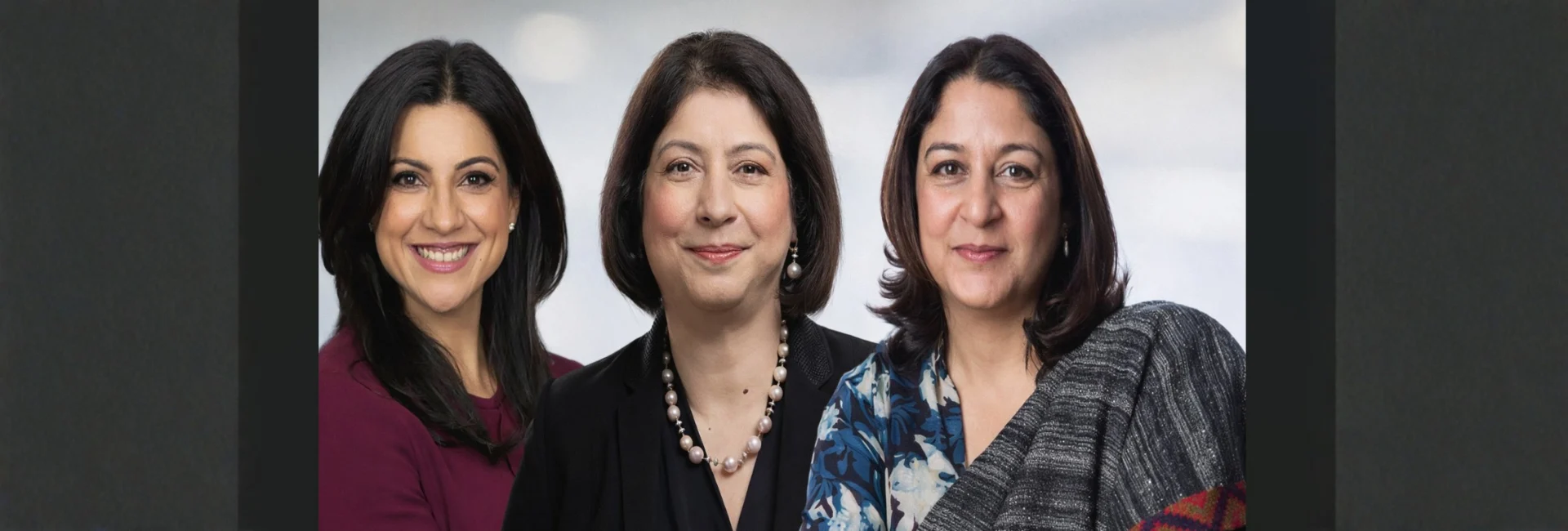


(March 4, 2026) Influence is often measured in followers, headlines, or market value. But some of the most consequential work happens in spaces that rarely trend like the research labs, policy rooms, and across rural communities where opportunity is fragile. Time magazine’s 2026 Women of the Year list turns its focus toward that kind of leadership.
Among the 16 honorees this year are three Indian-origin changemakers whose work spans biotechnology, economic policy, and grassroots education. Athough Dr. Reshma Kewalramani, Reshma Saujani, and Safeena Husain work across different geographies and professions, they are united by a shared mission of redesigning systems that have historically excluded women and girls. Their recognition reflects a broader shift toward celebrating leaders who build durable systems rather than chasing momentary disruption.
Reshma Kewalramani: Engineering cures at the molecular frontier
Boston-based Dr. Reshma Kewalramani has built her career at the intersection of clinical rigor and corporate leadership. As CEO and President of Vertex Pharmaceuticals, she became the first woman to lead a major U.S. biotech firm. Its a milestone that matters in an industry historically dominated by men.
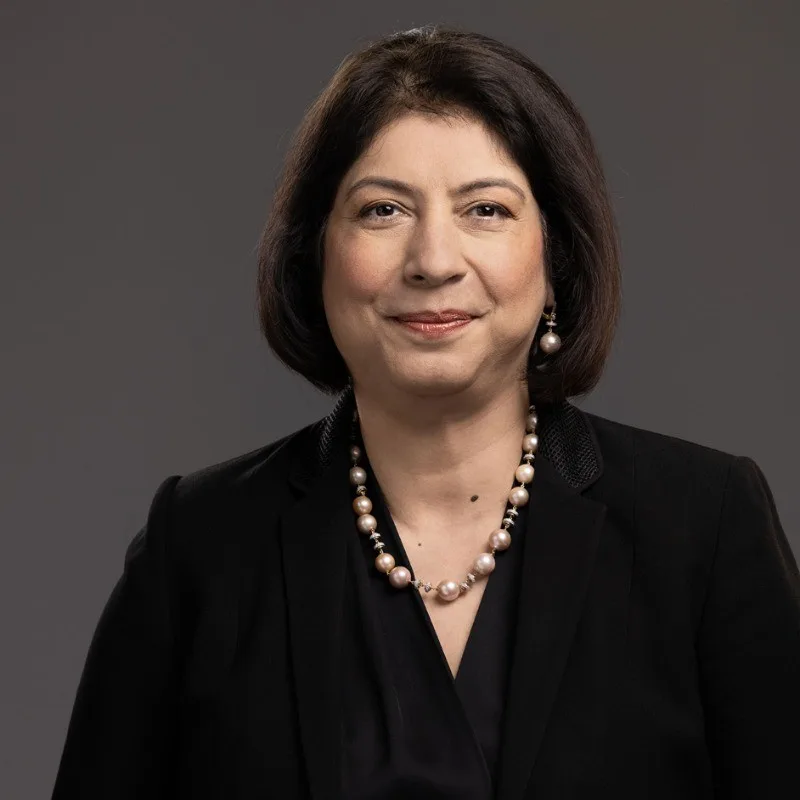
Reshma Kewalramani
Born in Bombay, Kewalramani immigrated to the United States at age 11, carrying with her the resilience of first-generation ambition. She completed her medical degree with honors at Boston University’s seven-year medical program, followed by an internship and residency in internal medicine at Massachusetts General Hospital. Her fellowship in nephrology was completed through the combined Massachusetts General and Brigham and Women’s Hospital program. She later attended Harvard Business School’s General Management Program.
Under her leadership, Vertex has pushed forward CRISPR-based gene-editing therapies, bringing transformative treatments for conditions such as sickle cell disease closer to mainstream accessibility. In doing so, Kewalramani has positioned scientific innovation not as a luxury product but as a public health imperative.
We don’t do incremental improvement, we innovate to transform or cure, and we serially innovate. We simply are relentless in that way, and our own history has taught us to be like that.
Reshma Kewalramani
Her career has already earned her spots on the TIME 100 list, the TIME 100 Health list, Fortune’s Most Powerful People ranking, and recognition from Barron’s and Business Insider as one of healthcare’s most transformative leaders. In honoring her again, Time highlights a growing truth that medical breakthroughs are only as powerful as the systems that make them available.
Reshma Saujani: Rewriting the rules of work and motherhood
If Kewalramani is reimagining the future of medicine, New York-based Reshma Saujani is challenging the architecture of work itself.
A graduate in political science from the University of Illinois Urbana-Champaign and a master’s degree holder from Harvard Kennedy School in political science and economic development, Saujani began her career as an attorney and Democratic organizer. In 2010, she became the first Indian American woman to run for U.S. Congress, It was a bold political debut that placed representation squarely at the center of her public life.
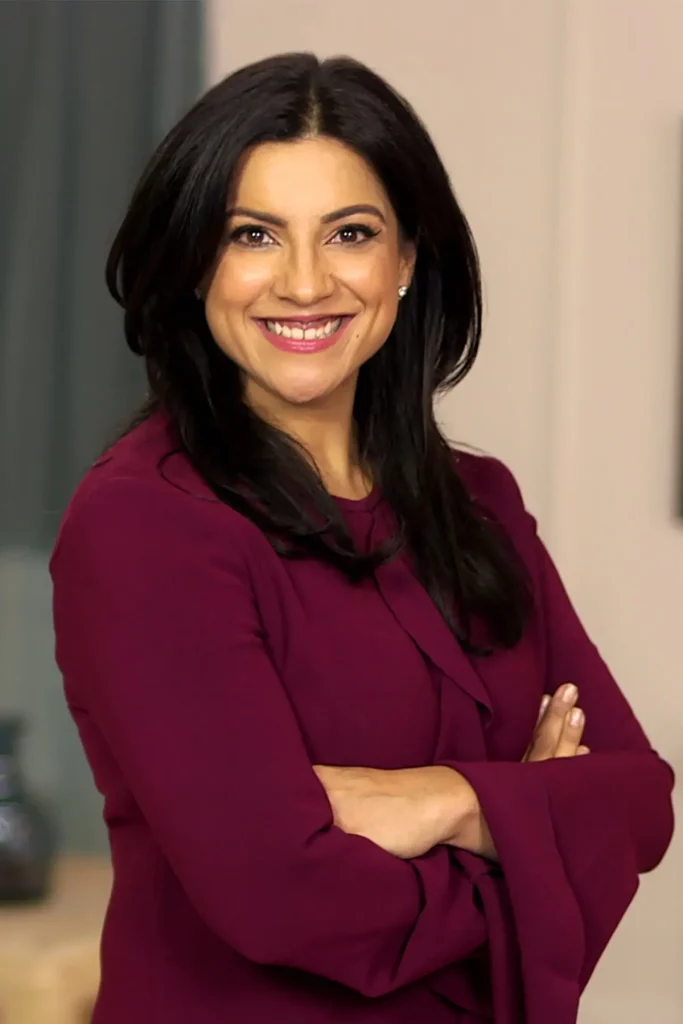
Reshma Saujani
Her next act proved even more consequential. In 2012, she founded Girls Who Code, launching a national movement to close the gender gap in technology. Over more than a decade, the organization helped reshape the narrative around women in STEM, reframing coding as a gateway to economic agency.
But Saujani’s focus has since expanded. As founder and CEO of Moms First, she is now confronting what she calls the “care crisis”—the structural inequities that leave working mothers navigating unaffordable childcare and inadequate paid leave. Through policy advocacy and movement-building, she argues that economic equity is impossible without supporting the women who sustain the workforce itself.
I think that feeling of being thrown into the deep end and doing something you never thought you would accomplish is really powerful.
Reshma Saujani
Her bestselling books including PAY UP: The Future of Women and Work (And Why It’s Different Than You Think) and Brave, Not Perfect have amplified this message globally. In 2024, she launched My So-Called Midlife with Lemonada Media, a podcast that entered Apple’s Top 10 charts and was named one of the best new podcasts of the year by Time. Through it, she reframes midlife not as decline but as reinvention in a theme that mirrors her own career.
Living in New York City with her husband Nihal, their two boys, Saujani continues to blend policy advocacy with accessible storytelling. Her presence on the 2026 list recognizes that economic reform is possible only when girls and women are part of it.
Safeena Husain: Bringing the last girl into the classroom
While Saujani debates federal policy in Washington and Kewalramani navigates biotech boardrooms in Boston, Safeena Husain works in villages where the barriers are more immediate: poverty, distance, and entrenched gender bias.
The founder of Mumbai-based nonprofit Educate Girls, Husain has spent nearly two decades mobilizing community volunteers to identify and enroll out-of-school girls in some of India’s most remote regions. Educate Girls has now helped more than two million girls access education. In 2019, when the organization became the first Asian nonprofit backed by the Audacious Project under TED, it set a goal of enrolling 1.5 million out-of-school girls. By 2025, it had met and surpassed that target.
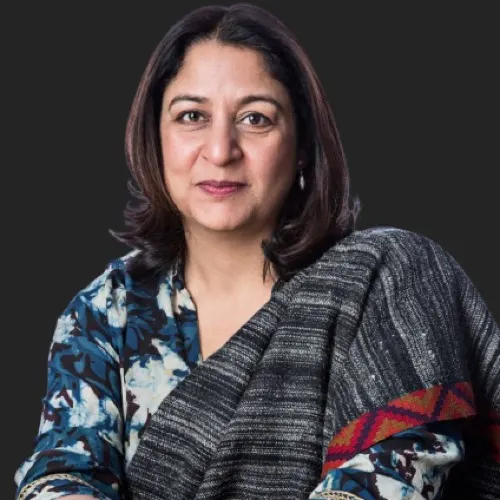
Safeena Husain
Raised amid poverty and instability, Husain experienced interruptions in her own education. After becoming the first in her family to study overseas, earning a degree in Economics and History from the London School of Economics and Political Science, and spending a decade in the nonprofit sector in San Francisco, she returned to India to make a difference.
I’ve never met a girl who said, ‘I don’t want to go to school. Every single girl wants to be able to go to school.
Safeena Husain
In 2025, Educate Girls became the first Indian nonprofit to receive the Ramon Magsaysay Award, often described as Asia’s equivalent of the Nobel Prize. Husain also completed a Rockefeller Foundation residency and published Every Last Girl: A Journey to Educate India’s Forgotten Daughters, dedicating it to a girl named Antimbala—“the last girl” whose very name reflects the bias she is fighting. Husain’s ambition is expansive. By 2035, Educate Girls aims to reach 10 million students.
A broader signal about leadership
The 2026 Women of the Year cohort includes cultural figures like American actor Teyana Taylor and Olympic champion Sydney McLaughlin-Levrone. Yet the inclusion of leaders in gene editing, economic policy reform, and rural education suggests a deliberate widening of the spotlight. From Boston’s biotech corridors to Capitol Hill debates to Rajasthan’s village classrooms, the Indian-origin leaders’ influence is measurable in momentum. In 2026, Time’s list reads less like a celebration of prominence and more like a ledger of systems being redesigned persistently, and at scale.
ALSO READ: Time 100 trailblazers Manjusha Kulkarni and Priyamvada Natarajan named Great Immigrants of 2025