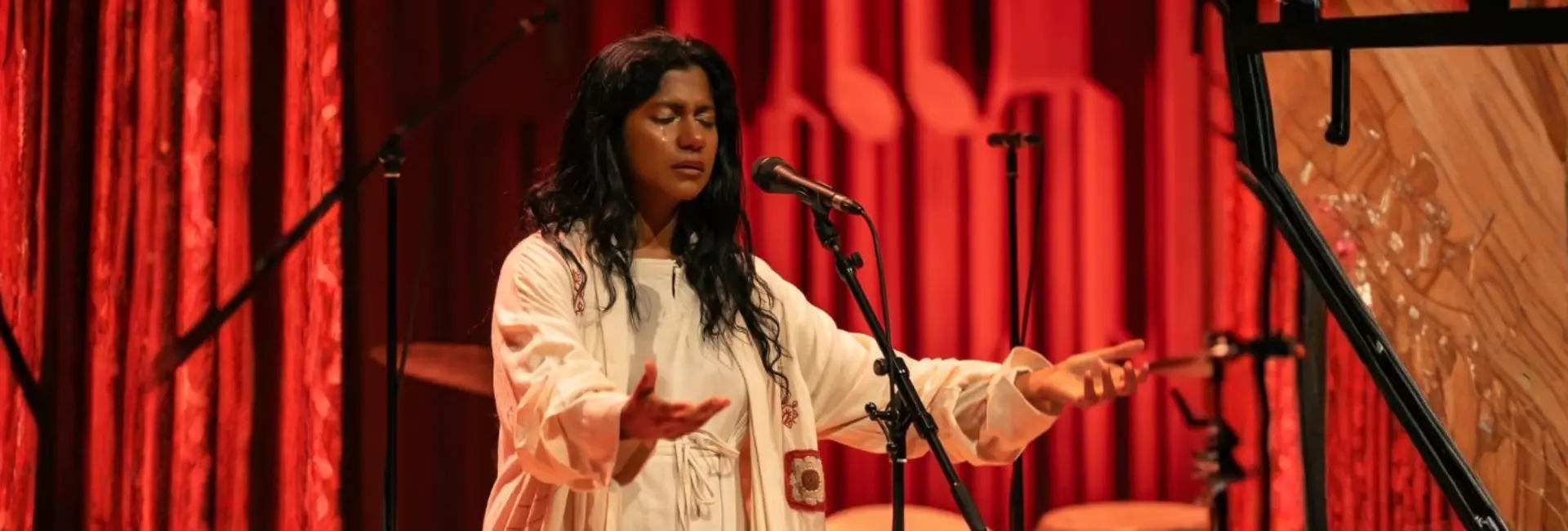


(December 22, 2025) When Barack Obama released his annual list of favourite films, books and music for 2025, it carried the ritual he has maintained since his White House years. “As 2025 comes to a close, I’m continuing a tradition that I started during my time in the White House,” he wrote on social media, reminding the world that his lists are less about trends and more about curiosity, generosity and global listening. Among songs of international heavyweights like Kendrick Lamar and Lady Gaga, Pasayadan by Ganavya Doraiswamy, the Indian-origin singer who sings in Tamil, Old Marathi and English stood out for its stillness rather than spectacle.
A reimagining of a traditional Marathi prayer, the song placed the New York-born, Tamil Nadu-raised Indian-American vocalist firmly within Obama’s global cultural map, alongside Indian-origin author Kiran Desai, whose novel The Loneliness of Sonia and Sunny featured on his favourite books list. Last year, Ganavya was described by The New York Times as “The Singer Whose Work Feels Like Prayer,” capturing the spiritual depth of the singer bringing her blend of spiritual jazz and south Indian classical music to stages around the world.
A voice honed by different worlds
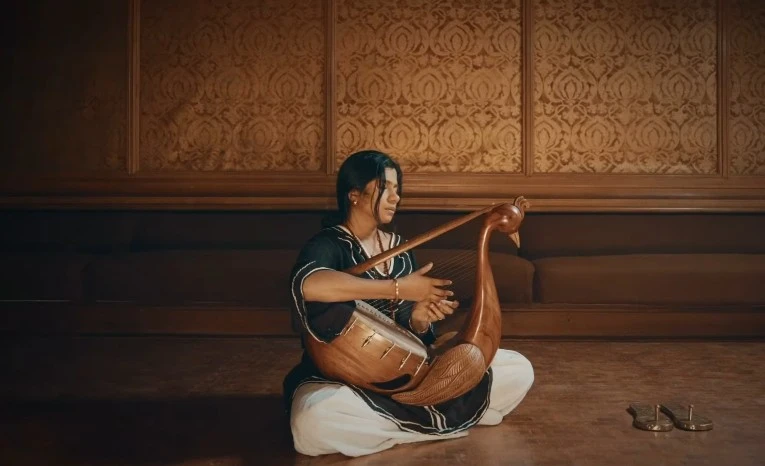
Born in New York City, her early life unfolded across continents and cultures. When she was seven, her family moved to Shenkottai, a small village near the ayurvedic waterfalls of Kutralam along a southern Indian pilgrimage route, before relocating to Chennai a year later. Her childhood moved between the United States and southern India, between schools and temples, and between everyday routines and long-standing traditions. In India, Ganavya learned jalatharangam, a traditional South Indian classical instrument, studied Carnatic music and trained in Bharatanatyam. These early experiences shaped her musical instincts and continue to echo through her work today.
For years, she felt unsure about her unusual name, thinking her mother had formed it by blending her own name and Ganavya’s father’s, Vidya and Ganesan. It was only later that a cousin discovered the name in an old Sanskrit text. Her mother had always believed it meant “one who was born to spread music,” and her conviction ran deep. Even before Ganavya was born, she had consulted a star chart that pointed toward a musical future. That belief guided many decisions the family made, including frequent moves and long periods of separation. “I think my family did suffer from that arrangement,” Ganavya remarked in an interview. “At the time, I felt my mother was taking big risks just so I could learn music, and I did resent that a little when I was young.”
View this post on Instagram
Learning, leaving and returning
After leaving Shenkottai at the age of eight and being separated from her father, Ganavya became determined to complete her music and dance training as quickly as possible so her family could be together again. But the path was not straightforward. Financial pressure at one point forced her to give up the idea of becoming a professional musician altogether. She enrolled at Florida International University, earning undergraduate degrees in theatre and psychology. By 19, she was working full-time at a men’s correctional institution in Miami, helping inmates think about life after prison.
Although the work was demanding, she found meaning in conversations about faith, creativity and resilience. Music returned to her life almost unexpectedly when she stopped by Berklee College of Music and sang informally. Soon after, she received a call encouraging her to apply. Instead of moving to Boston, she joined Berklee’s Valencia campus as one of its first postgraduate fellows. There, she taught Indian music and recorded her debut album Aikyam: Onnu in 2018, featuring jazz standards sung in Tamil. Collaborations followed with artists such as Alfredo Rodríguez, Shabaka Hutchings, Vijay Iyer and Esperanza Spalding.
However, early industry attention also brought disappointment. “Some kindness was lost in the process,” she recalls. “As things began to look promising, people started behaving differently.” Choosing distance over disillusionment, she stepped away, deciding she needed community rather than industry approval.
The long quiet and the breaking open
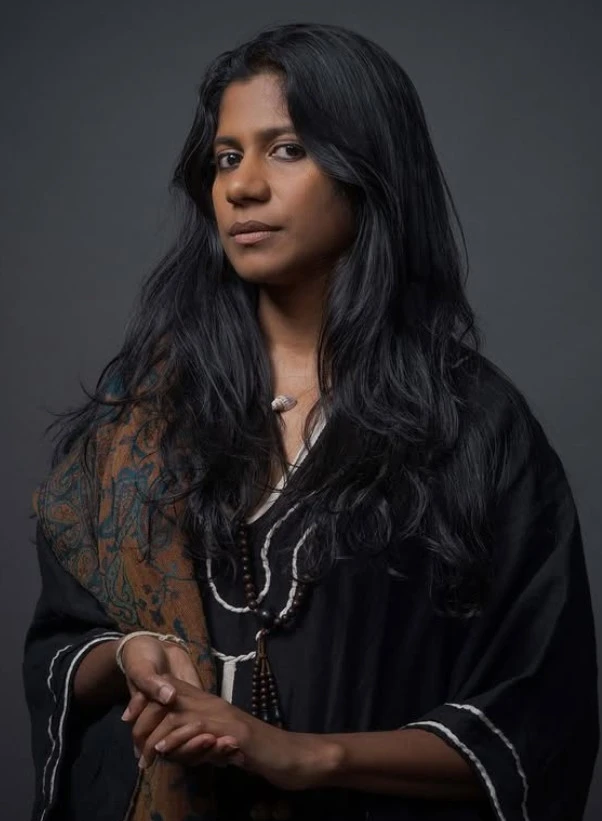
Her next chapter included academic work at UCLA and later at Harvard, where she studied ethnomusicology and creative practice. While these years offered learning and connections, she eventually realised that academic prestige did not give her the clarity she had hoped for. The real turning point came after a difficult period marked by illness, exhaustion and frustration in New York. A phone call to Shabaka Hutchings changed everything. His response was simple and practical: “‘Sorry that happened. That’s the world. Do you want to come make an album in two weeks?’”
With little preparation, Ganavya flew to London and recorded like the sky i’ve been too quiet over three largely improvised days. Released in 2024, the album blended prayers in Tamil, English, Spanish and Marathi, alongside moments without words at all. The project brought together musicians from the contemporary jazz and experimental scenes, creating a sound that felt both intimate and expansive. For Ganavya, the album became a way to bring together the many spiritual and musical influences she had gathered over the years. The album’s lowercase titles, reflect a journey inspired by Alice Coltrane’s writings. “It’s not just about the moment itself,” she explains. “It’s about what comes after.”
View this post on Instagram
Faith, queerness and unanswered questions
Ganavya resists simple labels. A practising Nichiren Buddhist, among other influences, she often speaks about learning to stay present in a complicated world. She is open about her identity as a queer woman and the tension that can exist between queerness, faith and tradition. To her, queerness is not only about identity but about questioning inherited ideas. “Accepting queerness in your life,” she says, “makes it easier to accept new ways of thinking in music and language too.”
Returning to rural Tamil Nadu as a queer woman remains emotionally complex, and that sense of distance finds its way into her work. The “quiet” she refers to in like the sky i’ve been too quiet reflects absence, waiting and unresolved longing, but also patience and strength drawn from village life, folk traditions and shared songs sung for joy rather than performance.
Momentum and meaning
In recent years, Ganavya Doraiswamy’s creative output has gathered pace. Her third album Daughter of a Temple, recorded with more than 40 musicians, and her fourth, Nilam (2025), featuring Tamil, English and Old Marathi vocals, further expanded her musical range. Sold-out shows in different countries have taken her work to wider audiences. Yet she does not frame these moments as milestones in a conventional sense. Instead, she sees them as signs that things are moving in the right direction.
“I’m not only realising my dreams,” she says. “I’m realising many dreams.” Her long-term hope is to create sound that moves beyond language altogether, inspired by teachings from the Buddhist text Vimalakirti Nirdesa Sutra, where communication is not about words but understanding. For an artist whose journey spans continents, faiths and forms, Obama’s endorsement feels fitting.
- Follow Ganavya Doraiswamy on Instagram
ALSO READ: G.O.A.T. meets the Met: Diljit Dosanjh’s path from Punjab to global stardom