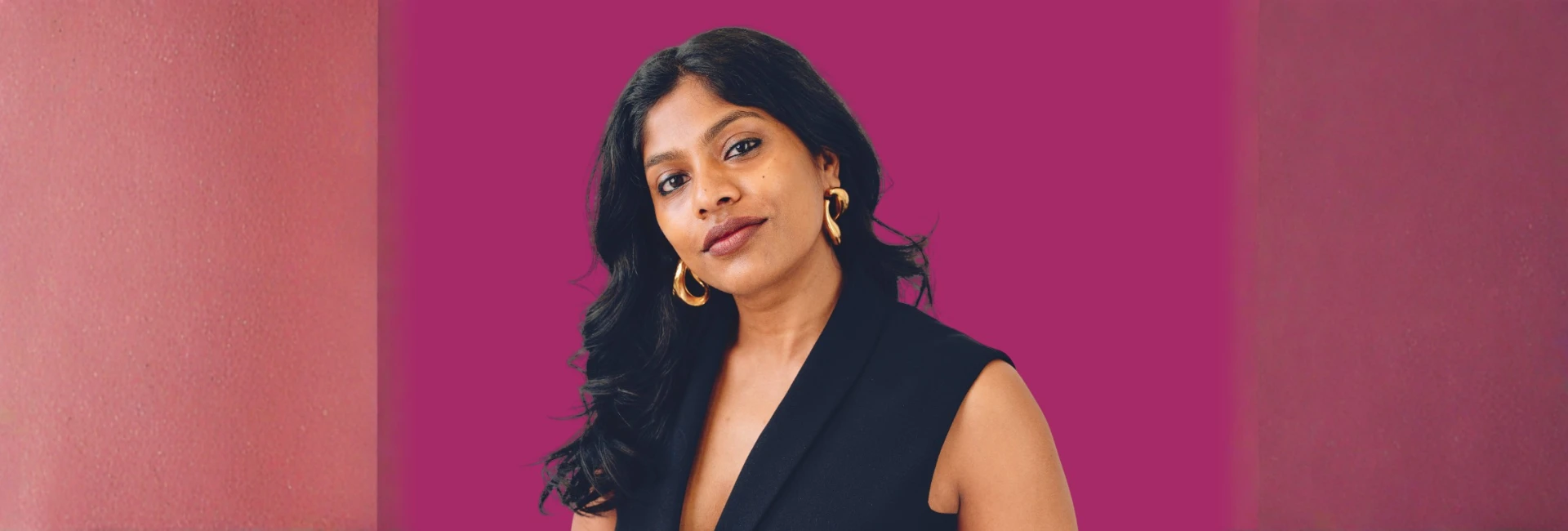


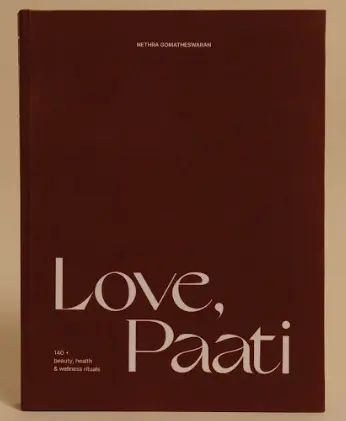
(January 10, 2026) At a time when beauty and wellness rituals are increasingly commodified and globalised, New York-based designer and author Nethra Gomatheswaran has offered something refreshingly grounded, deeply personal and culturally resonant. Her coffee table book Love, Paati (Paati means Grandmother in Tamil) reclaims centuries-old natural beauty and wellness practices rooted in many Indian households and presents them with love to a new generation.
Praise for Love, Paati has come from across creative and cultural circles, with author and television host Padma Lakshmi calling it “a gorgeous, gorgeous book,” while actor Poorna Jagannathan notes that it “awakens us to explore our relationship with beauty and ritual by intertwining them with spirit, mind and body.”
View this post on Instagram
From New York to Chennai, from ancient pantries to contemporary coffee tables, the book has struck a chord with readers and wellness enthusiasts. With over 140 traditional rituals compiled and richly photographed, Love, Paati is part memoir, part cultural archive, and part wellness guide that ensures that generational wisdom is not lost in the daze of modernity.
Born of memory and preservation
Born and raised in Coimbatore, Nethra was drawn to the world of art and design from an early age. She recalls, “I was always making something with my hands: painting, collages, anything handcrafted really, whether it was bracelets or jewellery.”
That flair for design led her to pursue an MFA from Parsons School of Design in New York even after she studied engineering at Hochschule Bochum in Germany. “I used to work on an early version of UX/UI interface and was always interested in functional design and how it aids in user experience,” she tells Global Indian.
After a short course in New York (a city that she remembers fondly as a melting pot of cultures) she pivoted to a design degree at Parsons where during a book binding class the idea of the book germinated. It was 2019 and she wrote the first draft of the book while still studying.
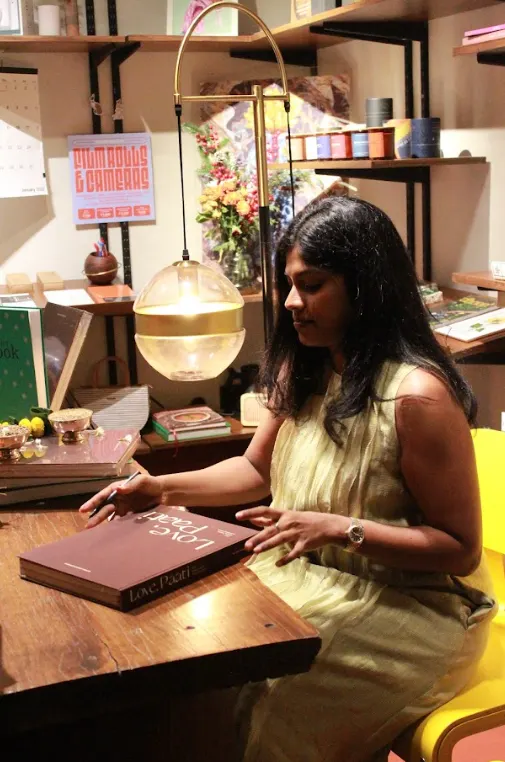
“I realised that so much of this wonderful knowledge was locked in the memories of the elders,” she explains. “My great-grandmother passed away when I was very young. And when I would have conversations with my grandmother, she would tell me she was already forgetting some things. That urgency to document, to preserve before it disappears, was the seed of Love, Paati.”
Over the course of her research, she expanded beyond her immediate family and spoke to people to capture rituals that were transmitted orally, often never formally recorded. These range from infused hair oils and body scrubs to aromatic teas and rejuvenating masks, all rooted in familiar natural ingredients such as turmeric, neem, rice water and hibiscus flowers.
Balancing tradition and modern design
“One of the guiding principles of this book,” Nethra explains, “was authenticity—keeping narratives true to their roots rather than rebranding them into trending wellness buzzwords.”
The philosophy certainly reflects in the design, the images are breathtaking and provide the right context without over-exotifying a lived-in way of life. The author smiles saying that she was keen to ensure that most of the images were shot in India to ensure that they remained rooted to the narrative.
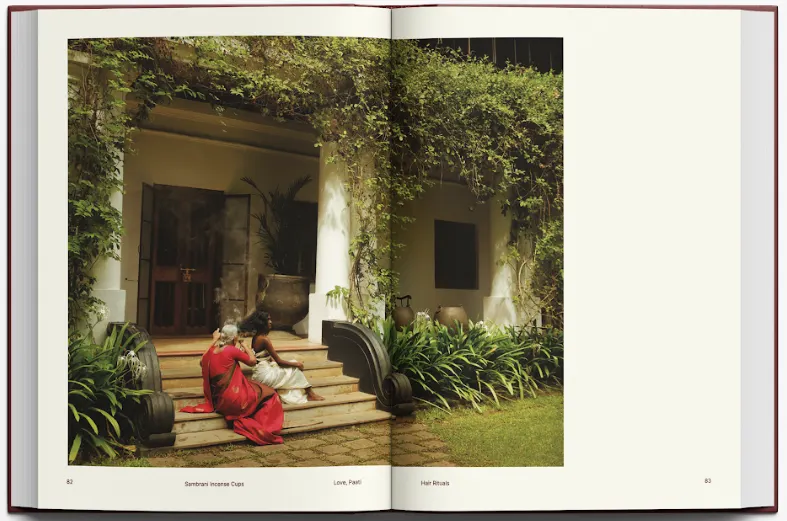
“We shot the images in a week and it was not easy to say the least. The minute I landed in Karaikudi for the shoot, it started to rain and we made rain a backdrop for the images instead of looking at it as a hindrance,” she laughs.
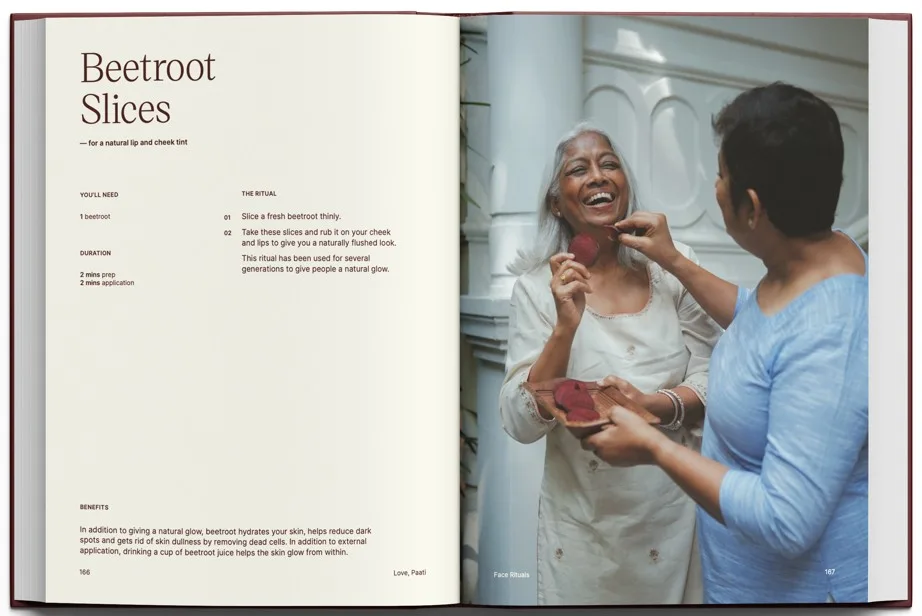
The short memoir-like texts that weave personal reminiscences with cultural insights, photos bursting with rituals most Indians are aware of and the lovely visuals (of rural Tamil Nadu, mostly) add another dimension to the book. Most rituals are ones that elders in families have always followed and suggested: from using rice water to remove dark spots on the skin or using beet root skin for naturally healthy looking skin.
Ancient wisdom meets contemporary relevance
What sets Love, Paati apart is its refusal to confine these rituals to nostalgia. “These practices aren’t just tied to south India—they are applicable to anyone,” Nethra notes, emphasising their universality.
Indeed, many of the book’s remedies are simple, kitchen-friendly recipes that resonate with contemporary sensibilities. The author gives her top three homemade rituals: soaking almonds overnight, a simple scalp massage after getting up in the morning (without oil) to improve circulation and a face mask made of papaya: all done very easily with ingredients commonly available in most Indian kitchens.
Did moving away from India make the author nostalgic for these simple day habits? She nods and adds, “Absolutely, I think that staying away made me value things much more. Importantly, it added a different perspective on traditions we have grown up with.”
As trends like turmeric lattes take over the world, Love, Paati is a reminder of simple cultural practices that are rooted in centuries worth of wisdom and home grown knowledge. “I wanted this book to be a tribute to the people who shared their wisdom with me—not just my grandmother, but the community of elders who graciously opened their stories to me,” she says.
Currently moving to Mumbai actively pursuing her next venture in fashion with a focus on preserving artisanal work and techniques, Nethra is in no hurry to write another book and for now is actively pursuing her other interests: playing tennis for recreation, traveling and staying connected with everything that grounds her.
For the debutant author however, the book is less about perfect rituals and more about remembering, about slowing down, listening to elders, and finding comfort in practices that once shaped everyday life. In a time when wellness is often packaged and sold, the book gently reminds us that some of the most enduring forms of care have always existed at home, passed on quietly, with love.
- Follow Nethra Gomatheswaran on LinkedIn
ALSO READ: From LSE to Bestseller: Pushkar Anand’s debut book is making spiritual wisdom go global