


(March 28, 2026) A 17-bedroom palace, spread across eight acres in Hyderabad, holds a special place in Dr Nawab Mir Nasir Ali Khan’s heart. He was born there and grew up listening to stories of his illustrious ancestors — key figures in the bygone Nizam’s era — and their long-standing tradition of leadership, governance, and service.
The 40,000 square foot palatial home embodies not just history, but a refined way of life shaped over generations. Tradition here was not taught — it was lived, observed, and quietly understood.
Like most scions of royal families, Nasir had the choice of enjoying the luxuries of an inherited legacy. But he chose the harder path, establishing his own identity and empire as an accomplished business leader and distinguished diplomat, a rarity among those with blue blood in their veins.
“Being raised in an aristocratic family instilled a deep awareness of conduct, how one carries oneself and treats others, and how responsibility is embraced with quiet dignity,” smiles Nawab Mir Nasir Ali Khan, Promoter and Managing Director of MAK Projects and Honorary Consul of the Republic of Kazakhstan in Hyderabad (Telangana and Andhra Pradesh), in conversation with Global Indian.
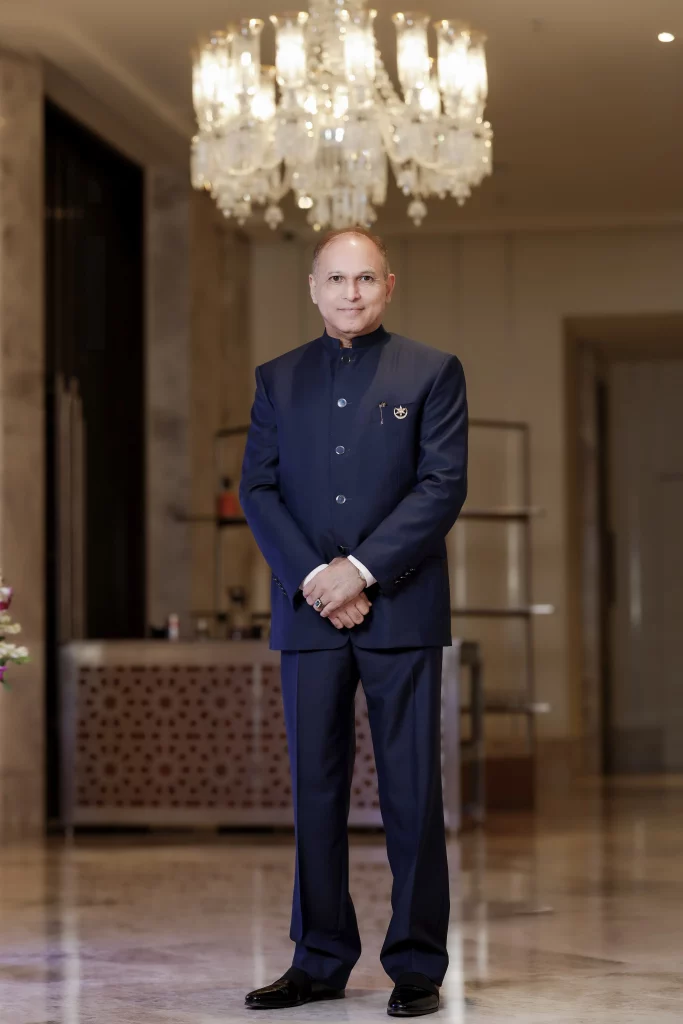
Honoured across continents
From being awarded the AsiaOne Person of the Year and Dubai Diplomat of the Year, to receiving the Capitol Hill Jubilee Medal in Washington D.C., and the Republic of Kazakhstan Congressional Proclamation & Congressional Medallion in the United States — Nasir’s journey from heritage to enterprise, from responsibility to global service, has been shaped by values, conviction, and a deep sense of purpose.
“Each recognition represents not an endpoint, but a continuation — a responsibility to contribute more meaningfully and to lead with integrity and purpose,” he says.
Roots in Central Asia
Nasir’s ancestors trace their origins to Central Asia, from where many prominent royal and noble families of the Deccan established their legacy in India, particularly under the dominion of the Nizams of Hyderabad. “Over generations, my family became closely associated with the Nizam’s court and governance,” says a soft-spoken Nasir, his eyes lighting up as he speaks of his lineage.
His great-grandfather, Nawab Khadir Jung Bahadur, was related to the Nizam of Hyderabad through marriage and served as the Subedar (Executive Head of Government), a position of significant authority in state administration. His grandfather, Nawab Mir Abdullah Khan, carried forward this legacy as one of the last Governors under the Nizam, serving until 1948, when Hyderabad was integrated into the Indian Union.
My father, Nawab Mir Yousuf Ali Khan, the eldest son, inherited the family’s Jagirs and became one of the last Jagirdars of Hyderabad, continuing until the abolition of the Jagirdari system — which marked the end of that historic era.
Nawab Mir Nasir Ali Khan
Recorded in a US publication
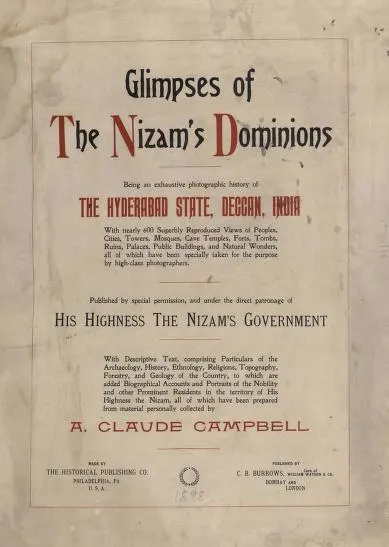
Nasir’s lineage is formally documented in “Glimpses of the Nizam’s Dominions” (1897), a historic publication from the United States that records notable families and the administrative framework of Hyderabad State during that era.
Carving his own path
Traditionally, Nasir’s family managed private estates, which formed the foundation of both livelihood and identity. However, with the introduction of land ceiling reforms in India, a significant portion of these landholdings was surrendered for redistribution.
“This was more than a structural shift — it was a turning point. It presented a clear choice: to remain within the comfort of inherited legacy or to step forward and build something new. I chose to build,” says Nasir.
MAK Projects
During his college years, Nasir was exposed to peers from entrepreneurial and business-oriented families. “Their independence, ambition, and forward-thinking mindset had a profound influence on me. It sparked a desire not just to preserve legacy, but to create value — to build something that reflected both heritage and contemporary relevance,” he says.
This led to the founding of MAK Projects, now a prominent player in the construction and property development sector in Hyderabad.
It was never intended to be just a business. It was a vision — a commitment to creating spaces that go beyond construction and contribute meaningfully to people’s lives.
Nawab Mir Nasir Ali Khan
Building green, building well
From the outset, Nasir’s philosophy was clear: to develop clean, green, and healthy living environments that harmonise luxury with responsibility. “What initially seemed unconventional gradually became a defining strength.”
Today, MAK Projects stands as a symbol of sustainable, eco-conscious luxury where thoughtful design meets environmental responsibility. “Every development is designed to offer balance — spaces where individuals and families can live in harmony with nature, community, and themselves.”
Canadian Woods: A green benchmark
Under his leadership, MAK Projects developed the Canadian Wood Villas — a pioneering sustainable luxury residential project, created in collaboration with the Government of British Columbia, Canada, in 2022. “This initiative set a new benchmark in environmentally responsible construction, green architecture, and wellness-oriented living in India.”
Ravi Kahlon, Minister of Jobs and Economic Growth, British Columbia, wrote to Nasir praising the project’s use of low-carbon wood products from sustainably managed forests to construct “high quality, durable and architecturally beautiful homes.”
The minister noted that the Canadian Wood Villa had stored and avoided 482 metric tons of carbon dioxide — the equivalent of taking 102 cars off the road for a year. “This is an impressive achievement and an excellent example for other developers in India,” he wrote.
The project was subsequently awarded the National Award for Sustainable Project of the Year in 2022 at the National Excellence Awards ceremony in Mumbai.
A calling for diplomacy
Nawab Mir Nasir Ali Khan watched friends at the US Embassy, Turkish Consulate, and British High Commission help people, and wanted to do the same. He was appointed Honorary Consul by the External Ministry of the Republic of Kazakhstan on January 15, 2021, with the approval of the President of India in 2021.
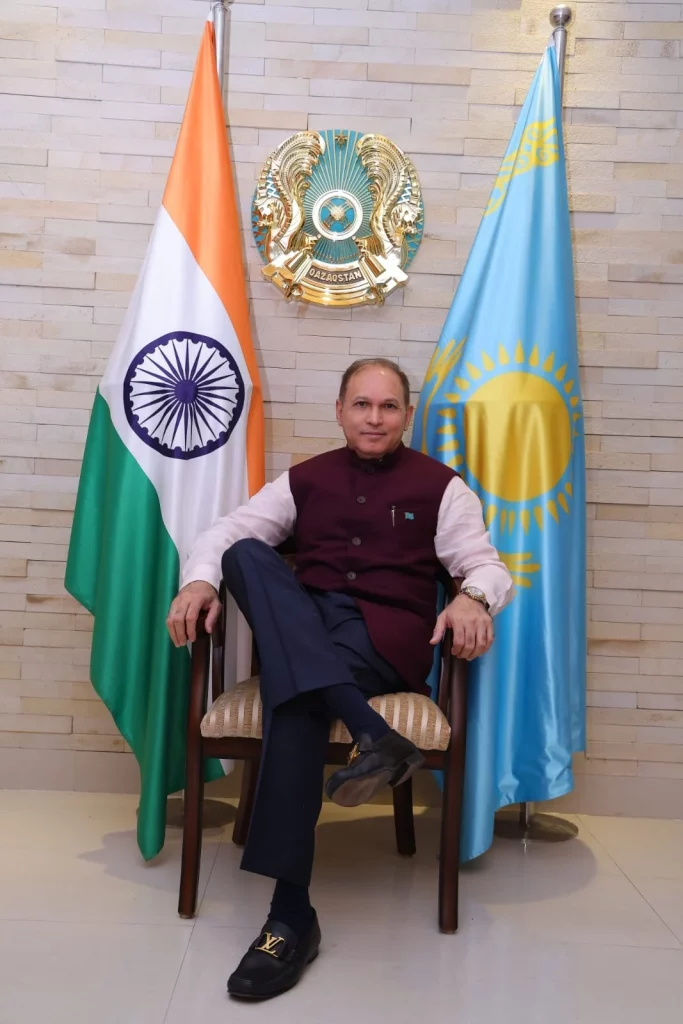
I was always interested in international relations and diplomacy. I wanted to be a diplomat and love being one — you get to meet people from different countries.
Nawab Mir Nasir Ali Khan
The role allows him to act as a bridge between the two nations — facilitating engagement across trade and investment, cultural exchange, educational collaboration, and tourism development. “It’s been an honour and a profound responsibility,” says Nasir, who has worked closely with government institutions, business leaders, and diplomatic counterparts to strengthen bilateral ties between India and Kazakhstan.
The Jubilee Medal
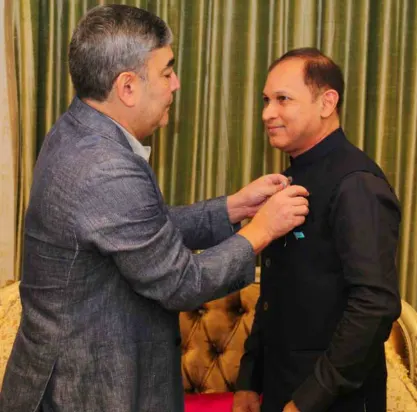
He was honoured with Kazakhstan’s prestigious Jubilee Medal in recognition of his contributions to the country’s development, statehood, and sovereignty — a distinguished national honour bestowed upon individuals who have made outstanding contributions to bilateral relations between nations.
Nasir counts among the most fulfilling aspects of his diplomatic role the opportunity to assist individuals during difficult times, particularly during the COVID-19 pandemic. “Diplomacy, in its truest sense, is not about protocol — it is about service. And that is a principle I hold deeply,” says Nasir, who also holds an Honorary Doctorate in Real Estate & Infrastructure from Ecole Supérieure Robert de Sorbon, France.
Recognised by the US Congress
The US House of Representatives also acknowledged Nasir’s work as Honorary Consul. In the Congressional Record of December 2025, it noted that he had worked tirelessly to strengthen bilateral relations, drawing inspiration from centuries-old Indo-Kazakh cultural ties.
“He has championed the exchange of art, literature, textiles, cuisine, and heritage between the two nations. His scholarly efforts include a compilation of a work highlighting Kazakhstan’s leadership in nuclear disarmament,” it observed.
Born into privilege, raised with purpose
Though born into privilege, Nasir’s parents ensured that comfort never bred complacency. “Our interactions were guided by an unspoken code of dignity, respect, and responsibility,” he recalls — values never imposed, but absorbed naturally, becoming an intrinsic part of his character.
Life then, he says, was far simpler. “There was a natural rhythm to living, where time was not measured by urgency, but by experience and connection. Education was important, but it was never seen as the sole measure of success or identity.”
My parents used to tell us that though we were born with privileges, we had to be responsible, humble, and firm. We were taught to look after the less fortunate too.
Nawab Mir Nasir Ali Khan
Cricket and character
Sports, especially cricket, played a significant role in Nasir’s upbringing. “Physical activity was not merely recreational; it was formative. It instilled discipline, resilience, sportsmanship, and the ability to build meaningful relationships,” he says.
Like father, like son, and bonds that endure
Nasir was deeply inspired by his father. “I am very much like him. He had a taste for all the good things — a good house, good cars, fine accessories. I love cars, watches, and pens,” smiles the real estate baron-turned-diplomat, who remains loyal to three brands: Rolex, Montblanc, and Mercedes.
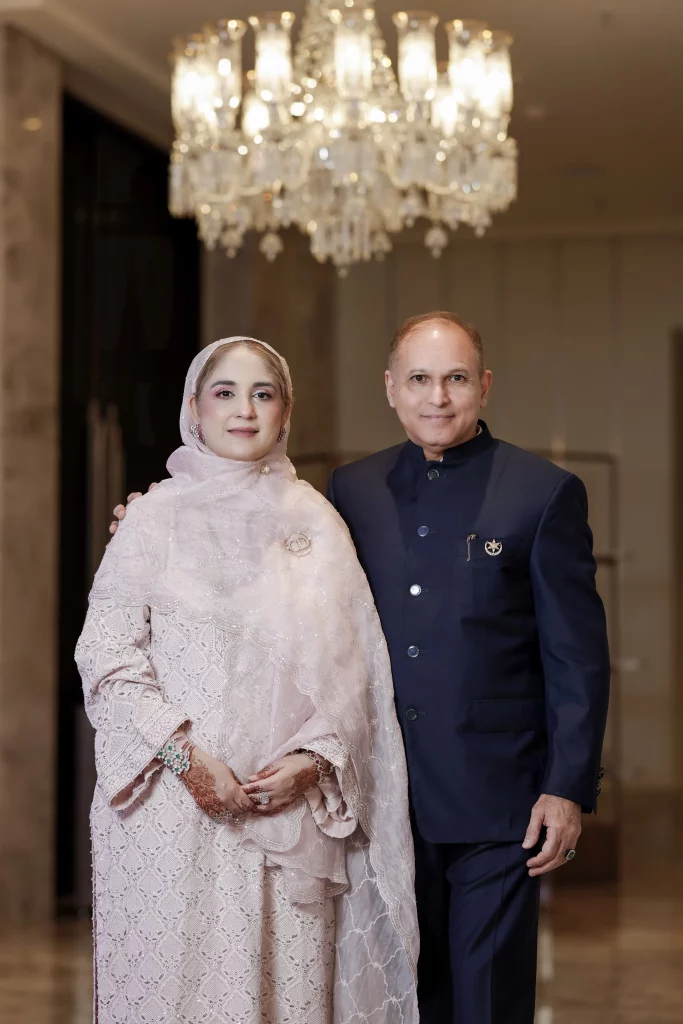
“This is reflected in my passion for collecting Rolex watches and Montblanc pens — a tradition inherited from my father,” says Nasir, a father of four, who describes his wife, Begum Meher Fatima Khan, as his greatest strength and constant source of support.
Trained in Japan
Nasir completed his education at Osmania University, one of India’s most prestigious institutions. Early in his career, he gained valuable corporate experience working in the reprographic division of Minolta in Japan for two years.
“I worked under a highly disciplined and exacting mentor, in an environment where precision was expected and excellence was non-negotiable,” he says. The role gave him hands-on exposure to advanced imaging technologies, business operations, and client engagement — laying the groundwork for his entrepreneurial pursuits. “It was one of the most transformative phases of my life. It strengthened my strategic thinking and broadened my global perspective.”
Extensive international travel through business forums, diplomatic engagements, and global conferences further shaped his worldview over the years. “Exposure to diverse cultures and systems reinforced adaptability and my belief in collaboration across borders.”
The road ahead
Nasir’s vision for the future is clear: to build sustainable communities and contribute to a more conscious world. “I aim to further strengthen international relationships and partnerships, and leave behind a legacy rooted in values, impact, and continuity,” he says, firmly believing that progress must always be balanced with responsibility.
Beyond his professional commitments, he finds balance in music and poetry. “They offer moments of introspection — an opportunity to pause, reflect, and reconnect with simplicity.”
- Follow Nawab Mir Nasir Ali Khan on LinkedIn
ALSO READ: Tirumala Devaraya: The 20th descendant of Krishna Devaraya revives Vijayanagara in debut novel