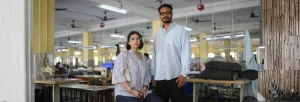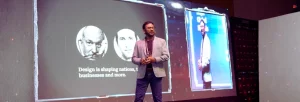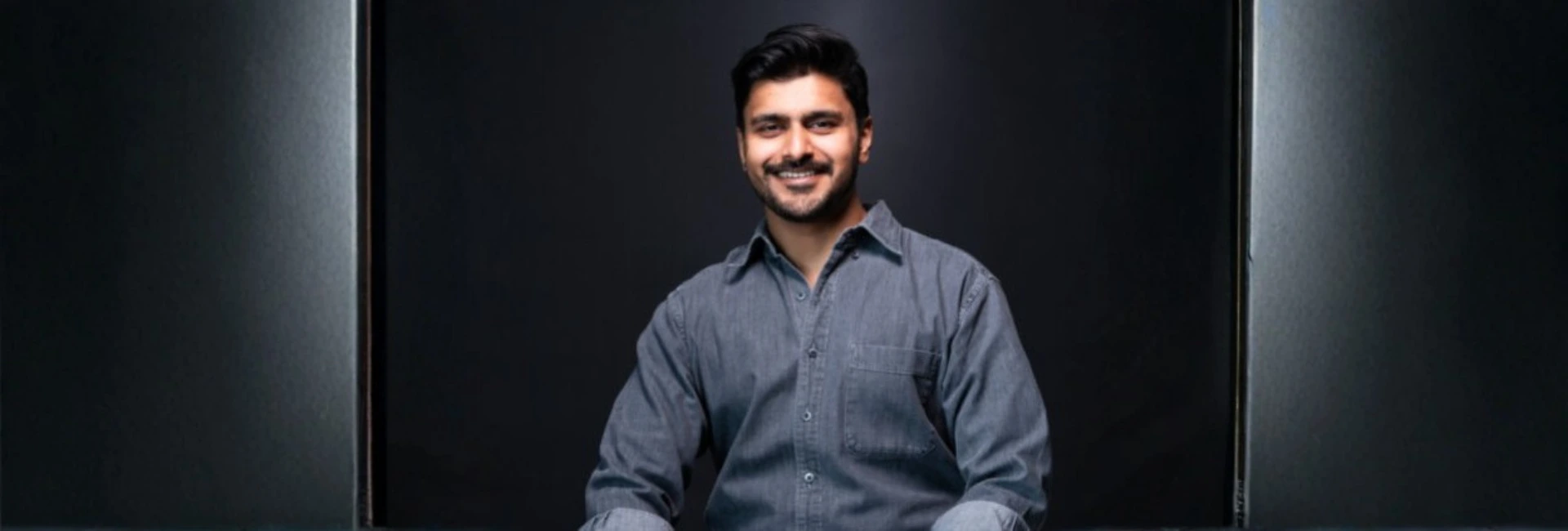


(December 5, 2025) From the studios of Illinois to the historic streets of Barcelona, and from Mumbai’s fast-evolving skyline to high-tech design labs experimenting with 3D-printed ceramics, Kush Bhayani’s journey has spanned geographies, disciplines, and ways of thinking. His architectural worldview was shaped not only by academic rigour but by lived global exposure of travelling across Europe, absorbing centuries of urban history, and learning how buildings can become active participants in cultural narratives.
That perspective took a definitive turn when he was commissioned to design the Mumbai home of celebrated actor Jaaved Jaaferi. The project demanded Bhayani to harmonise Jaaved’s Mediterranean aesthetic with his children’s love for minimal modernism, proving his ability to mediate contrasting visions with a cohesive design language. This milestone project cemented his belief in contextual, human-centred, tech-forward design paving the way for KULx Studio, a platform that bridges craft and computation, emotion and precision, tradition and innovation.
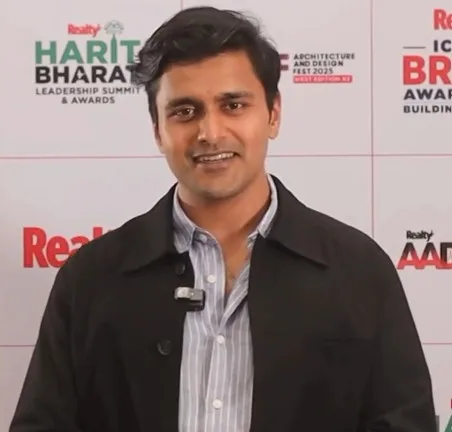
Discovering the maker within
Kush Bhayani began his academic journey at the University of Illinois as an aerospace engineering major. About a year and a half in, he realised that although the technical rigour was exciting, he was naturally drawn to creating, building, and making. The idea of bringing different parts together to create something functional, experiential, and complete is what pulled him toward architecture. “Switching majors was one of the best decisions I made. A huge turning point came during my senior year, which I spent abroad in Barcelona. That year was incredibly formative. I travelled to over 30 European cities in a year, absorbing how architecture interacts with history, culture, and context. In the Midwest, where I studied, structures often stand isolated from their surroundings. Europe showed me how buildings participate in the narrative of a place,” he shares with Global Indian.
This exposure shaped how he thinks about how Indian cities are layered with thousands of years of history, indigenous architecture, and colonial influences. “All of it has a place in our urban story. Understanding this made building for context central to my design philosophy and continues to influence everything I do today,” he adds.
Professional path and an unconventional pivot to finance
After graduating from Illinois and completing his senior year in Barcelona, he returned to Mumbai and joined Kamal Malik Architects, where he worked for two years. While it was a solid foundation, he wasn’t fully aligned with the direction Indian architecture was taking at that time, and he wanted a broader understanding of the built environment.
“So, I did something unconventional. I took up an internship at Motilal Oswal’s Real Estate Private Equity Fund. I worked there for about eight months before COVID. It was eye-opening. Finance is a huge, often invisible driver of how our cities grow, and understanding it gave me a more rounded view of development and architecture from a completely different perspective than what I was used to, as I was only focused on design,” he says. When COVID hit, the internship didn’t convert into a full-time role, so he moved forward and co-founded OpenHaus with two partners who were real estate developers. “Our idea was to disrupt the sales process by building 1:1 digital twins of buildings using game-engine technology. This allowed homebuyers to walk through their future homes even before construction began, something that was otherwise impossible to visualise,” he says.
View this post on Instagram
First independent projects and the birth of KULx Studio
During this time, he started getting enquiries for smaller architecture and interior projects, and as design was always a passion, he took them on. One of these opportunities became his turning point: designing actor Jaaved Jaaferi’s home in Mumbai. “Leading that project gave me immense confidence and affirmed my ability to guide teams, manage design narratives, and deliver distinct spaces,” he says.
This led to the beginning of what is now KULx Studio. KUL, which means “family”, represents the coming together of multifaceted individuals from across India who are passionate about the built environment – about creating diverse, meaningful, and innovative spaces. “We’re driven by the desire to build newness, to reimagine old ideas, and to explore directions that feel unprecedented. That spirit of experimentation continues to guide us today. We’re constantly pushing ourselves to try something different, to innovate in areas that haven’t been explored, and to disrupt conventional ways of thinking to create work that is both functional and truly new,” he says. All these experiences have shaped him as someone who is inherently technocratic, who loves working with technology, materials, and the knowledge gained over the years to cohesively build something fresh and forward-looking.
A clean-slate approach to every client
KULx approaches every project with a completely clean slate and does not carry forward aesthetics from previous work, only learnings. Each project begins by deeply understanding the client: how they live, how they spend their day, how the family interacts, and what each member’s personality and preferences are. “For residential projects, we study how people use their homes and what makes their routines unique. For commercial clients, we look not only at functional and technical requirements but also at how they like to work, their lighting preferences, workflow, team interactions, and the subtle nuances that shape their daily environment. Every project is treated as its own narrative,” he says.
The standout project
Jaaved Jaaferi’s home was envisioned with a Mediterranean aesthetic by Jaaved, while his children preferred something more contemporary with clean lines, straight edges, and a minimal modern look. “Naturally, there was a dichotomy between these two worlds. Our role as designers was to merge these contrasting visions into a space that felt cohesive and harmonious, without making it seem like two different styles competing,” he says. The appreciation that project received reaffirmed the team’s belief in listening deeply to clients, understanding what ties them together, and then weaving those threads into a unified design language.
View this post on Instagram
Technology as a design partner
At KUL, technology is part of the team’s DNA and influences every stage of their work. “We create true 1:1 digital walkthroughs of homes and buildings so clients can experience their spaces before they exist. We experiment with 3D-printed ceramics, digital visualisation tools, and ways to enhance traditional craft using new-age tech. Technology helps us generate ideas, refine details, and improve precision,” he says. Every project, deadline, vendor, and task are built into a shared digital system, almost like a collective brain that the entire team accesses. Technology doesn’t replace creativity; rather, it amplifies it.
Honouring craftspeople across India
He and his team also work with a wide spectrum of local artisans, from the kadia and carpenters on site to craftspeople who specialise in highly bespoke, handmade objects. For them these collaborations are an essential part of how they design and build. “A recent example is our work in Ahmedabad, where we’ve partnered with artisans who hand-tuft Indie wool. This wool is usually rejected for export and considered ‘waste’, but we saw incredible potential in it. We provide the artisans with this wool and work with them to develop new applications for it,” he says.
Aim high, always
Bhayani’s greatest motivation has always been his grandfather, and his motto is something he always told him: “If you miss your aim, you are forgiven. But if you aim low to begin with, you are not.” This philosophy guides him and has become part of KULx’s ethos.
The power of curiosity
The biggest life lesson he has learnt is the importance of staying curious, continuously upskilling, and reinventing. “To try new things even when the outcome is uncertain. At some point, there will always be an audience that appreciates the creativity, thought, and innovation behind the work, and that belief keeps me moving forward,” he says.
He aims to contribute meaningfully to India’s story. “It means helping shape how the world sees us, not just as a country with deep heritage, but as a nation that is forward-thinking, inventive, and capable of leading global conversations in design and technology.”
View this post on Instagram
Working aross major Indian cities
His team is currently working on several residential and architectural projects across major Indian cities, but the broader mission extends beyond metros. “We want to work more deeply within Tier 2 and smaller cities, in regions like Madhya Pradesh, Karnataka, and others, where thoughtful design can have a transformative impact. There is so much cultural and material richness in these communities, and we want to help highlight and integrate that through meaningful design.”
Goal: To design for the public good
In the long term, his goal is to contribute to India’s public infrastructure—designing community spaces, cultural institutions, and environments that bring people together. “Whether it’s a public plaza, a community centre, or a civic space for celebrations and dialogue, I want to create places that foster connection and elevate the everyday life of Indian citizens. Ultimately, my vision is to help build happier, more connected, and more human cities for India’s future,” he says.
- Follow Kush Bhayani and KULx Studio on Instagram
ALSO READ: From Madhuri Dixit’s home to ‘The Hungry Caterpillar’: Apoorva Shroff’s evolving design story