
May 20 2026
Nagaland to the World: How Jesmina Zeliang is taking indigenous crafts global

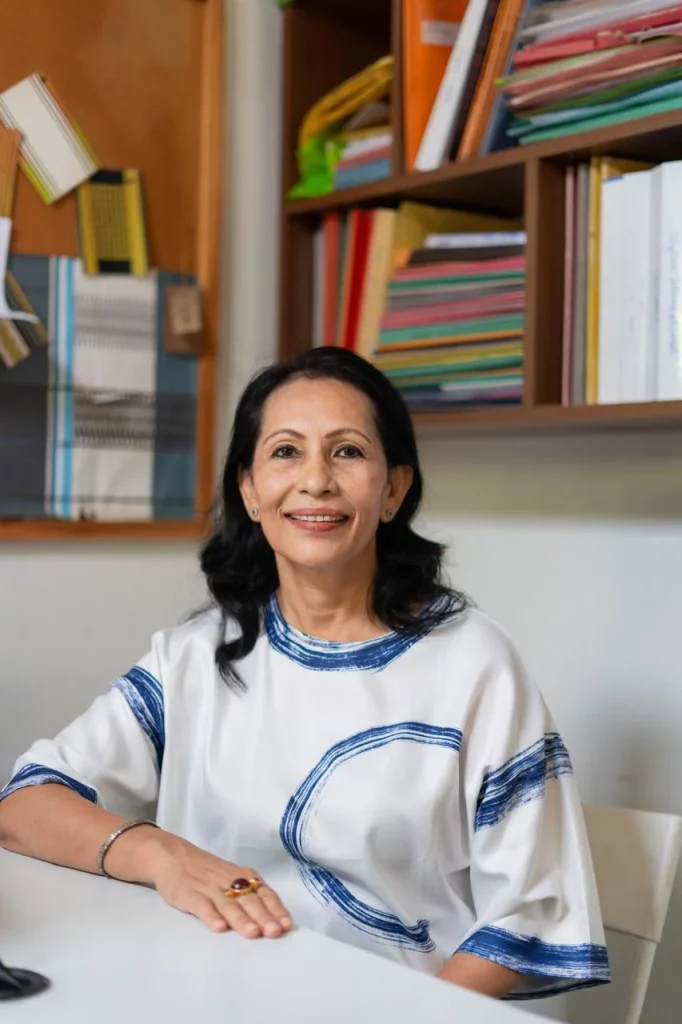
(May 20, 2026) From a modest backyard initiative in Nagaland to global design showcases in Paris, Milan and New York, entrepreneur Jesmina Zeliang has spent over three decades bringing Northeast India’s indigenous craft traditions to the world stage. Through Heirloom Naga and several artisan collaborations, she has helped transform traditional weaving and bamboo craftsmanship into globally recognised contemporary design narratives, while creating sustainable livelihoods and preserving the cultural identity of hundreds of artisans across the region.
Vibrant textiles drying in the courtyards, women weaving on loin looms, and others busy with bamboo craft were everyday sights Jesmina Zeliang deeply admired during her growing-up years in Dimapur, Nagaland, in the late 1960s and 70s. The striking visual language around her — amidst breathtaking lush landscapes dotted with ancient megalithic ruins and waterfalls — conveyed fascinating stories of the immense cultural richness, traditions, beliefs and valour of more than 250 indigenous communities of Nagaland.
Now, several decades later, this daughter of the soil continues to admire the same sights she did as a young girl — except that she has taken Nagaland’s rich legacy to the global stage as a cultural entrepreneur, bringing visibility and recognition to the handmade traditions of Northeast India.
“Everything I have built comes from this land and its people. My journey has never merely been about textiles or exports. It’s about visibility, dignity and cultural confidence,” smiles Jesmina, as she settles down for a conversation with The Global Indian.
Through her brainchild, ‘Heirloom Naga’, and wider collaborations, Jesmina has brought both domestic and global recognition to the extraordinary handmade traditions of Northeast India.
Heirloom Naga
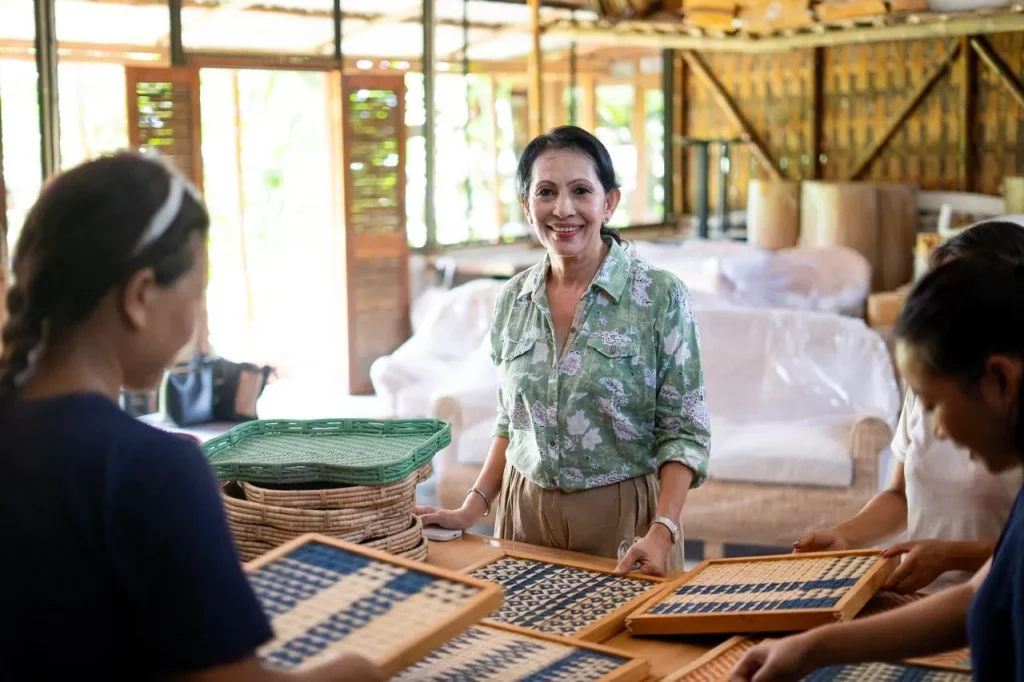
Jesmina says Heirloom Naga happened almost accidentally in the early 1990s. She entered the field with absolutely no technical knowledge of weaving, warp, weft, design or exports. “Everything was learned through instinct, observation, perseverance and constant experimentation.”
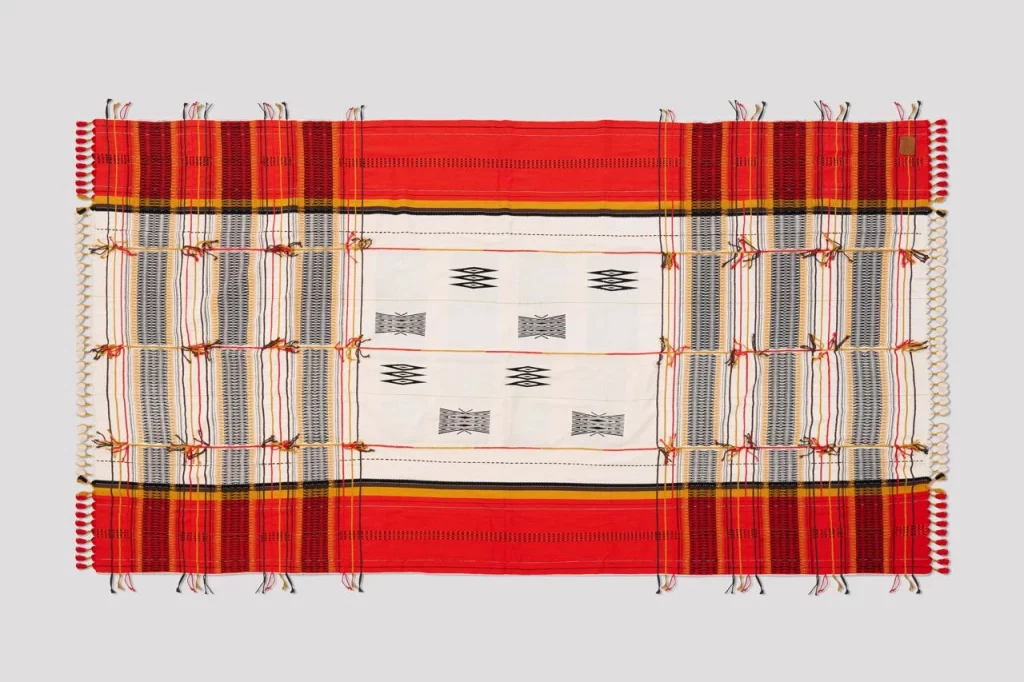
The business process was an experience of hands-on work through trial and error. At the time, says Jesmina, traditional Naga textiles were appreciated within cultural contexts but had very little relevance outside the region. “I felt there was immense untapped potential in presenting these textiles differently — not by diluting them, but by contextualising them for contemporary global lifestyles.”
She started with cushion covers, runners, throws and home textiles that adapted traditional motifs into contemporary formats and colour palettes. “The response from buyers in Delhi and Mumbai was encouraging, and eventually international buyers also began taking interest,” says the entrepreneur, whose initiative was among the first few enterprises from Northeast India to successfully enter international handcrafted home and lifestyle markets.
What began as a small backyard initiative with just one weaver eventually evolved into one of Northeast India’s most recognised handcrafted export enterprises.
Challenges and global breakthrough
The challenges before Jesmina were enormous — logistical limitations, lack of infrastructure, absence of market linkages, export documentation, quality control, production consistency, and simply convincing global buyers that handcrafted products from Nagaland could meet international standards. One of the key aspects she worked on was helping artisans adapt to global markets without compromising authenticity.
There was virtually no export ecosystem in Nagaland when we started. Traditional artisans possess extraordinary skill, but international markets require consistency in sizing, finishing and timelines. Training and capacity-building therefore became a huge part of our work.
Jesmina Zeliang
She consciously adopted a decentralised artisan model where women could work from their homes and villages rather than through factory systems. After a successful run in the handloom arena, orders began petering out towards the end of the millennium. With the responsibility of providing continuity of work to her large artisan base, Jesmina decided to explore the markets herself.
“I understood that B2B marketing was the only way to sustain the business.” She travelled to New York, London and Paris on modest budgets to understand global markets and buyer expectations. “With just the Yellow Pages as my constant, I visited several stores and, very gingerly, showed them my samples at the reception. Of course, it didn’t work!”
But in retrospect, the experience gave Jesmina a strong understanding of leading international brands and buyer expectations. This market intelligence later gave her a head start when she began participating in international fairs. A major turning point came when Heirloom Naga was selected by the Dutch Government’s CBI (Centre for the Promotion of Imports from Developing Countries) as one of only 40 small producer groups globally.
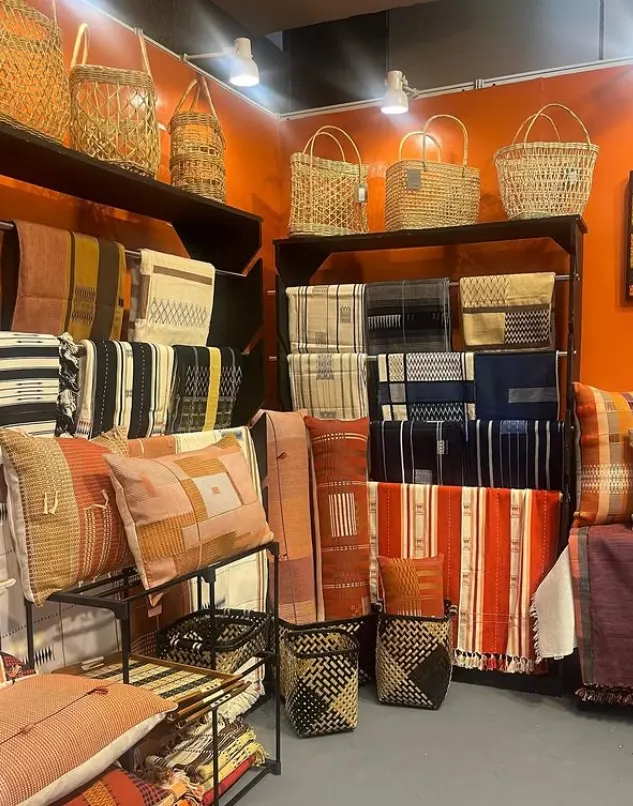
“That exposure gave us invaluable mentorship in export systems and enabled us to participate in important international fairs and exhibitions.” Soon, Heirloom Naga products found their way into global lifestyle and retail spaces including Crate & Barrel, The Conran Shop and other design-led global stores through recognised lifestyle and décor brands in India.
Jesmina says their participation in Maison & Objet in Paris in 2006–07 was particularly significant because it introduced their work directly to premium global buyers and design audiences. Over the years, Jesmina’s products reached stores and clients across the US, UK, France, Italy, Spain, Japan, Australia, the Netherlands, Norway, South Africa, Chile and Denmark. They also showcased in the UK, South America, South Africa, Japan and Thailand. Most recently, their collectible craft was showcased at Milan Design Week.
Preserving traditions and empowering artisans
What moved Jesmina deeply was seeing international designers appreciate the complexity of loin-loom weaving — something many people in India still considered merely “traditional craft”.
“The global design communities recognised it as highly sophisticated. Our products resonated because they carried both craftsmanship and story.” One aspect Jesmina is most proud of is continuing the legacy of loin-loom weaving and contemporising the craft — one of the world’s oldest weaving traditions — by bringing it into global contemporary interiors.
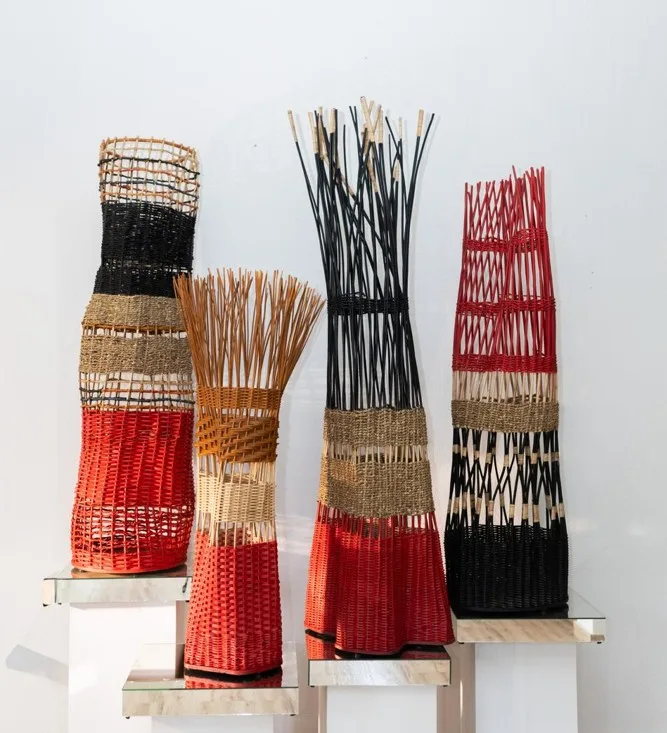
Over the years, Heirloom Naga expanded beyond textiles into collaborations with bamboo artisans, cane workers, jewellery makers, woodcraft practitioners and indigenous craft communities across the Northeast.
Jesmina’s hard-goods venture under the brand Cane Concept works with more than 250 male artisans. For decades, she says, craft traditions from Northeast India were viewed as anthropological or ethnic curiosities rather than sophisticated design languages.
In India, we always took our rich craft heritage for granted. Nobody spoke about it in the past as much as they do now. We helped shift perceptions.
Jeslina Zeliang
Apart from financially empowering artisans, Jesmina says they were never displaced or subjected to unfavourable working conditions. “This freedom has ensured that some of our weavers from the early 90s are still weaving for Heirloom Naga.”
View this post on Instagram
Strong roots
Born and raised in Dimapur, Nagaland, in the late 1960s, Jesmina comes from a political family. Her late father represented the metro areas of the town in the Nagaland State Assembly. “I was born at a time when the Northeast was still largely unknown to the rest of India, let alone the world,” says Jesmina, pointing out that Nagaland had attained statehood only in the early 1960s.
Her upbringing had a strong socio-political influence, where public life, social responsibility and identity were important conversations. It instilled confidence, sensitivity and leadership qualities in her.
Growing up in Nagaland also meant understanding the extraordinary diversity of indigenous communities. Northeast India is home to more than 250 indigenous tribes and sub-tribes, each with distinct textile traditions, motifs, symbols and craft vocabularies. “Yet, for decades, this incredible cultural wealth remained underrepresented in mainstream India and almost invisible globally.”
Jesmina studied at Holy Cross School, Dimapur, St. Bede’s, Shimla, and later graduated from Punjab University, Chandigarh. She subsequently pursued Mass Communication at Sophia College, Mumbai.
Academically, she was among the top students in the Nagaland School Board exams. “I was deeply interested in culture, communication, aesthetics and people. I was also drawn to storytelling long before I understood that craft itself could become a powerful medium of storytelling.”
One of her strongest childhood memories is of her mother weaving in the courtyard of their home. “Every year she would weave our school bags and a shawl for my father. Watching him wear those handwoven textiles with pride stayed with me forever,” smiles Jesmina, who at the time had no inkling that these memories would eventually shape the foundation of her life’s work.
Interestingly, she never formally trained in design, textiles or business. “My early exposure to different cultures sensitised me and gave me a better understanding of markets beyond my state.” In fact, entrepreneurship was never part of her original plan.
Heirloom Naga Centre and new collaborations
Jesmina’s work mode has always remained flexible. What remains constant is her daily interaction with artisans. “I am quick to jump in to edit colours, forms and designs, and equally adept at inspecting day-to-day work on orders.”
As she mostly works on orders, Jesmina is also a tough taskmaster who honours timelines. She regularly travels to villages to develop her pet project, the Heirloom Naga Centre — conceived as a space for deeper cultural immersion and exchange.
The centre includes retail spaces, studios, a gallery, workshops, an eatery and a guest house. “We have hosted several dignitaries, luxury designers and cultural enthusiasts since we opened in 2023.” The Centre attempts to connect craft, culture and community through immersive experiences that allow people to engage meaningfully with Northeast India’s indigenous knowledge systems.”
Another area of focus at the centre is organising culinary experiences and food workshops with local and international experts as part of its effort to promote food diplomacy and the creative economy. More recently, Jesmina collaborated with Shakti Residency on an international design residency that brought global designers into direct engagement with indigenous craft traditions from Northeast India.
“We worked with two international designers as part of the residency, creating an immersive exchange between contemporary global design practices and traditional artisan knowledge systems from the region.”
View this post on Instagram
Brand India and the road ahead
Jesmina serves as a member of the Committee of Administration (COA) and is also the co-chairperson of the Handicrafts & Carpet Sector Skill Council. For over 25 years, she has been associated with the Export Promotion Council for Handicrafts (EPCH). She was also elected the first woman president of the Indian Handicrafts & Gifts Fair (IHGF) from Northeast India.
Her current engagement as an advisor for Tantavi, an initiative by the Ministry of Textiles, has enabled her decades of handloom experience to contribute to wider industry conversations. Jesmina feels the Northeast receives far greater visibility today than when she began three decades ago. But there is still a long way to go.
“For years, the region was viewed through narrow lenses — conflict, remoteness or exoticism. Very little attention was given to the intellectual, artistic and design wealth of our indigenous communities.” She believes more institutional support is still needed in export infrastructure, logistics, design education, market access, branding, digital visibility and long-term artisan support systems.
India must recognise that the Northeast is not peripheral to Indian culture — it is one of the country’s richest cultural reservoirs.
Jesmina Zeliang
The entrepreneur believes Brand India’s greatest strength lies in its handmade traditions, cultural diversity and civilisational knowledge systems. “In a world overwhelmed by mass production and sameness, handcrafted products carry memory, identity, sustainability and human connection.”
Looking ahead, she hopes to focus on cross-cultural collaborations, museum-level craft documentation, hospitality-linked craft experiences, mentoring younger entrepreneurs and scaling indigenous craft narratives globally. Increasingly, she sees her role not just as an entrepreneur, but as someone creating platforms where artisans, designers, institutions and global creative communities can engage more deeply with Northeast India.
View this post on Instagram
Travel and aesthetics
Travel has always been deeply enriching for Jesmina, allowing her to study cultures, architecture, museums, food traditions, design sensibilities and craft ecosystems. Italy remains one of her favourite countries because of its respect for craftsmanship, heritage and design, while Japan resonates with her for its philosophy around minimalism and reverence for artisanship.
Within India, she is naturally drawn to the Northeastern states, as well as Rajasthan, Kutch and Ladakh for the way craft traditions are woven into identity and tourism. “I am also deeply interested in interiors, indigenous architecture, textiles, cultural preservation and storytelling through objects and spaces.”
Even outside work, Jesmina remains constantly observant of aesthetics and handmade traditions. “For me, craft is not merely a profession — it is a way of understanding people, memory and identity.”
ALSO READ: How Jaya Jaitly gave India’s crafts a future
Share with



Written By: Bindu Gopal Rao
From International Finance to Folk Art: Danny Mehra’s quest for tribal carpets along the Silk Road

Written By: Amrita Priya