


(April 1, 2026) Four decades, five countries, eight patents and one conviction. Dr Bellamkonda K. Kishore has honed his craft for impact, and in the process has provided a blueprint for every immigrant who chooses to lead with passion and purpose, not ambition, in the pursuit of the American Dream.
“A passionate purpose-oriented life is far superior to an ambitious success-driven life,” Dr. Bellamkonda K. Kishore tells Global Indian. This philosophy is the blueprint of a four-decade journey that has taken him from a town in Andhra Pradesh to the frontiers of biomedical science in the United States, from an MD student’s first paper in The Lancet to eight therapeutic patents, and from an immigrant’s oath of citizenship to a book that asks every naturalized US citizen to truly reckon with what that oath really means.
Dr. Kishore has built a career that spans groundbreaking kidney research, a biotech company at the University of Utah Research Park, and a growing body of writing. His research on purinergic signaling has opened new frontiers in treating kidney disorders and obesity, and metabolic syndrome. His biotech startup, ePurines, Inc., is translating decades of laboratory discoveries into therapies for conditions affecting hundreds of millions of people globally.
True innovation in medicine isn’t just about new molecules and patents – it’s about finding ways to reach every corner of the world with affordable solutions.
Dr. B. K. Kishore
His most recent book, Naturalized US Citizen: Culture, Tradition, Integration, Loyalty, and Patriotism: Journey of an Immigrant Scientist is a treatise only someone who has lived the journey across continents and cultures for decades, could have written with such conviction.
The scientist is a senior member of the National Academy of Inventors, a Fellow of several prestigious scientific societies, and the Founding Editor-in-Chief of the Journal of the American Association of Physicians of Indian Origin (JAAPI). With the Hind Rattan (Jewel of India) Award, the Pravasi Rattan Award, the Nelson Mandela and Mahatma Gandhi Leadership Awards, and most recently, the Indian Overseas Award from the NRI Welfare Society of India, Dr. Kishore has also accumulated an array of distinctions within the diaspora.
Naturalized US Citizen: A book on citizenship as commitment not entitlement
The immigrant scientist’s latest book, Naturalized US Citizen: Culture, Tradition, Integration, Loyalty, and Patriotism, published in May 2025, arrives at a moment when the question of what it means to belong to America has never felt more urgent. Reviewed positively by Kirkus Reviews, the gold standard of the publishing industry, it is part philosophical reflection, part immigrant’s guide, and part civic manifesto.
The book’s central argument is that becoming an American citizen is not a transaction. It is a transformation. The US Constitution, Dr Kishore argues, functions almost like a sacred text for a nation built not on religious or dynastic authority, but on human aspiration. “The Pledge of Allegiance is not a ritual. It is a covenant,” he mentions.
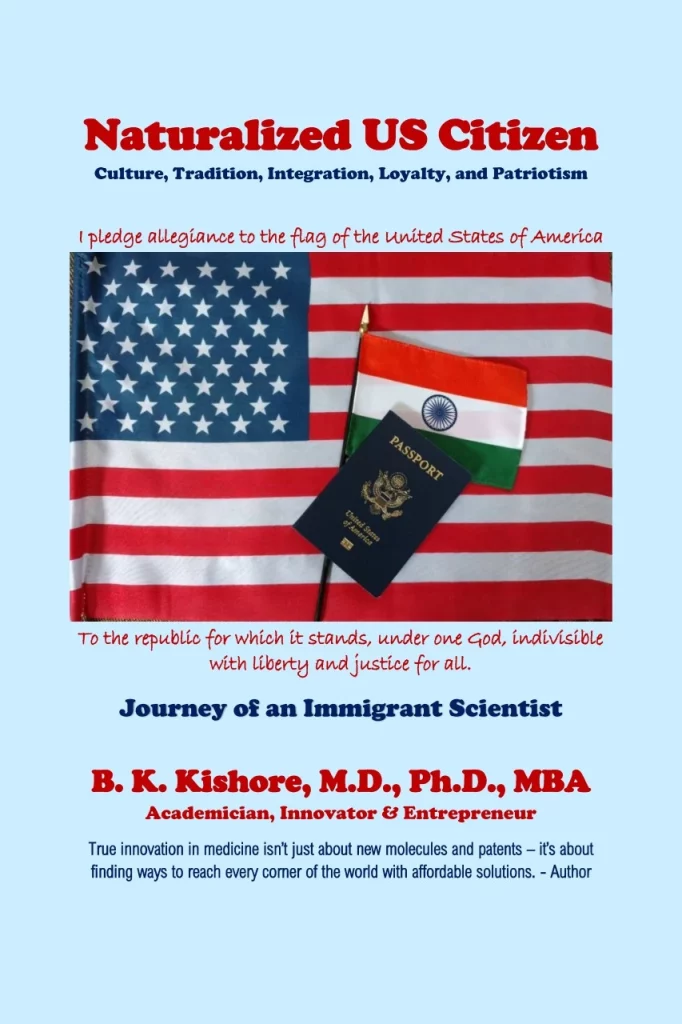
Cover image of Dr BK Kishore’s latest book
Taking the Pledge of Allegiance to the US Flag is a serious commitment. One has to give up allegiance to the flag of one’s motherland and have allegiance to the US Flag. So, one has to mentally prepare for that during the preceding years. I prepared well for that.
Dr. B. K. Kishore
The American Dream that was built on excellence, not for affluence
The Indian-American scientist makes a pointed argument about the distortion of the American Dream. Until the mid-1990s, he contends, immigrants came to America to excel in their professions, to build something lasting, to become architects of their fields. Since then, the dream has narrowed for many into wealth accumulation. The building of a profession and a legacy, and the idea of contribution took a backseat, he believes. “Instead of integrating into mainstream American life like salt dissolving in water, many immigrants began forming isolated blocs, promoting narrow interests, which is disrupting the fabric of the United States and diluting the foundational principles and values,” he remarks.
“For those who come here with a real American Dream, have merit and skills, and play by the rules and regulations, America is still a great destination where they can reach great heights,” he says adding. “It is not the responsibility of America just to provide jobs and livelihood to immigrants because conditions in their countries are not ideal.” The book according to him is ultimately a call to course-correct.
After availing the opportunity of the American Dream, it is the moral responsibility of every legal immigrant to protect and preserve it for future generations. People should take care of the sacred altar cloth of the United States and pass it on to the next generation intact.
Dr. B. K. Kishore
Roots that moved, and a mind that followed
Dr. Kishore’s forefathers came from Antarvedi, a small coastal village where river Godavari merges with the Bay of Bengal in East Godavari District of Andhra Pradesh. He was born in Visakhapatnam, but his childhood was anything but stationary. His father, a state government employee, was transferred every three to four years. He grew up and studied across Kakinada, Rajahmundry, Eluru, Anantapur, and Kurnool. Five towns, five sets of classmates, five versions of home. It was an upbringing that demanded adaptability and gave him something most people spend a lifetime seeking, and that is comfort with the unfamiliar.
Since childhood, he learned to work outside his comfort zone and thrived in it. He believes it helped him enormously in his career, allowing him to take risks and embrace challenges without hesitation, seamlessly moving into the growth zone. “Every place I lived in childhood, later played a role in shaping my personality, thinking and development,” he reflects. That geographical, intellectual, and spiritual restlessness would come to define the man that he is today.
A paper in the Lancet, and a career pivot that changed everything
When Dr. Kishore arrived at Banaras Hindu University to pursue his MD, he did not plan to become an innovator and entrepreneur. He simply aspired to become a good researcher. But life had other plans. While still an MD student, he published his first research paper on kidney failure patients in The Lancet in 1980. It was apparently the first paper from his institute in that prestigious British journal. “It was an exceptional feat given the prevailing conditions at the time with frequent power outages without backup, lack of running water, and a dearth of special chemicals,” he mentions, adding “That changed my career. It also changed my understanding of kidney diseases across the world in the decades that followed.”
After completing his MD, he secured a position at the All-India Institute of Medical Sciences, New Delhi. But the research environment he needed “simply did not exist there at the time” to pursue his interest in kidney diseases. Frustrated, he made a decision that would alter his life’s trajectory. In 1981, he left India for Japan on a Japanese Government Fellowship.
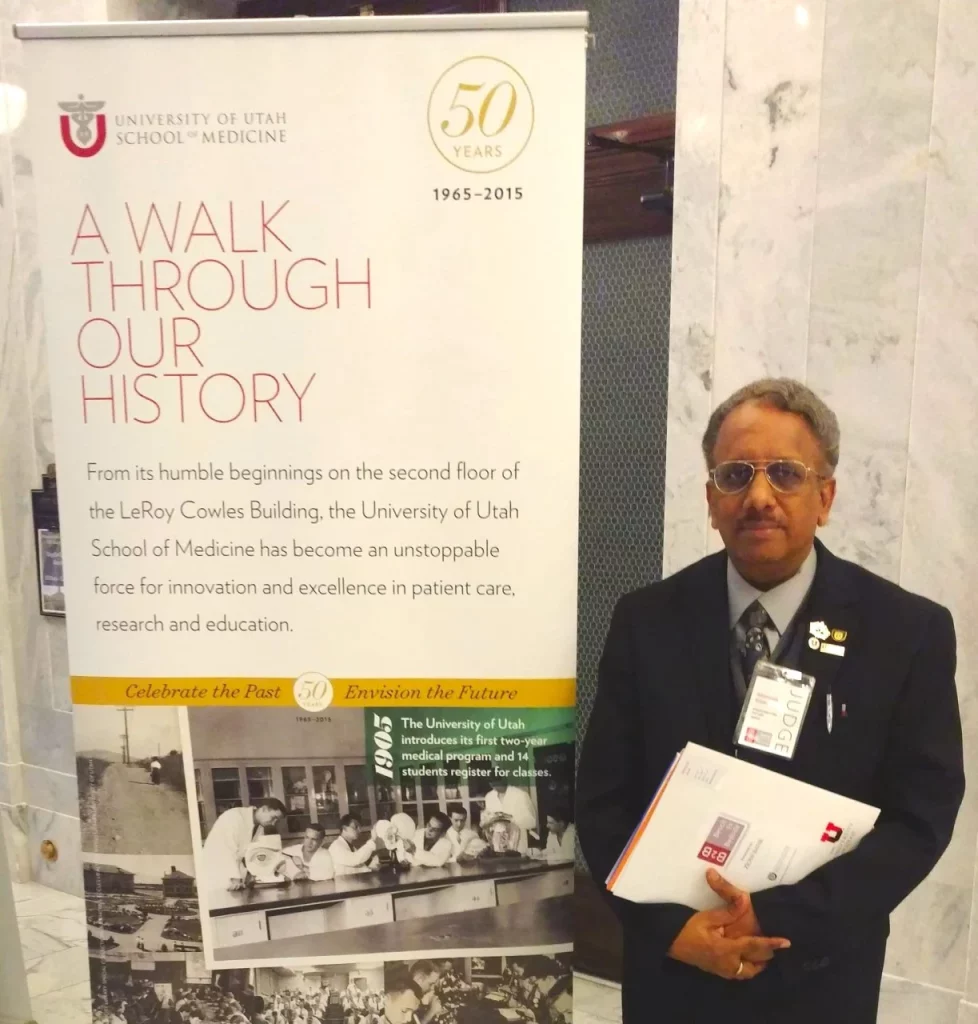
Japan, North Africa, Belgium, and the circuitous path to purpose
In Japan, Dr. Kishore spent eighteen months publishing six research papers, cementing his credentials in kidney research. It helped him to understand the true purpose and meaning of research, and that it is not publishing papers, but solving the problems faced by the patients. From Japan, his path curved through North Africa and eventually to Belgium, where he earned his Ph.D. in kidney cell biology and pharmacology and held a faculty position there before moving to the United States in 1993 as a Fogarty International Fellow at the National Institutes of Health. He obtained his Green Card in 1998 and became a US citizen in 2005.
In 2009, he graduated with Executive MBA degree from the David Eccles School of Business at the University of Utah, attending weekend classes for 21 months, during peak of his career in academics. He has now lived in the USA for 33 years.
Life is not becoming something. Life is creating oneself. There is no cookie cutter formula for becoming a scientist. I just followed my passion for research on the kidney and went wherever it took me.
Dr. B. K. Kishore
Building a science of signaling: The kidney’s hidden language
For two decades, Dr. Kishore’s laboratory at the US Department of Veterans Affairs Salt Lake City Health Care System, where he served as Principal Investigator in Nephrology from 2001 to 2020, became one of the world’s leading centers for research on purinergic signaling in the kidney, earning international recognition for him with invited lectures across the globe. Purinergic signaling, as he explains, is the study of how kidney cells communicate with each other using extracellular molecules called nucleotides, governing water, sodium balance, and other functions in the kidney and other organs.
The medical scientist’s research has focused on purinergic receptors, specifically P2Y2 and P2Y12, and their role in conditions such as nephrogenic diabetes insipidus (water diabetes), lithium-induced polyuria, and electrolyte disorders. He extended this framework to metabolic diseases, exploring how P2Y2 receptors are implicated in diet-induced obesity and insulin resistance, building a bridge between kidney physiology and systemic metabolism. His research also ranged into erythropoietin production by the kidney, with implications for treating anemia in chronic kidney disease.
Eight patents and a biotech company born in University of Utah Research Park
Dr Kishore has been recognized as a lead inventor on eight patents covering novel therapeutic approaches like treatments for nephrogenic diabetes insipidus, diet-induced obesity and metabolic syndrome, diseases linked to elevated vasopressin, and erythropoietin-related therapies for chronic kidney disease. Led by restless, curiosity-driven energy he carried basic science into the territory of invention.
These inventions gave rise to ePurines, Inc., the biotech company co-founded and led by him as President, CEO, and Chief Scientific Officer, based at the University of Utah Research Park, a rapidly evolving biotech hub in the United States often called Bionic Valley. “The company aims to translate decades of bench research into therapies addressing kidney disease, obesity, metabolic syndrome, and disorders of the liver, heart, and lungs due to excessive production of the hormone vasopressin.”
The Indian-American scientist’s innovative work earned him induction as a Senior Member of the National Academy of Inventors, a distinction reserved for those who have demonstrated remarkable innovation, producing technologies that have brought, or aspire to bring, real impact on the welfare of society. The members of NAI are scientists with growing success in patents, licensing and commercialization, who also dedicate themselves to educating and mentoring the next generation of inventors. Dr. Kishore continues to hold the position of Adjunct Professor of Internal Medicine in Nephrology at the University of Utah.
A scholar who built platforms, not just published papers
Dr Kishore co-founded the Renal Purinergic Club in 2009, a global scientific forum connecting researchers across continents working on purinergic signaling as it relates to kidney health and disease. In editorial leadership, he served as an Associate Editor for Frontiers in Renal Physiology and Pathophysiology, earning an Outstanding Associate Editor Award, and as a Guest Associate Editor for Frontiers in Endocrinology (Obesity Section).
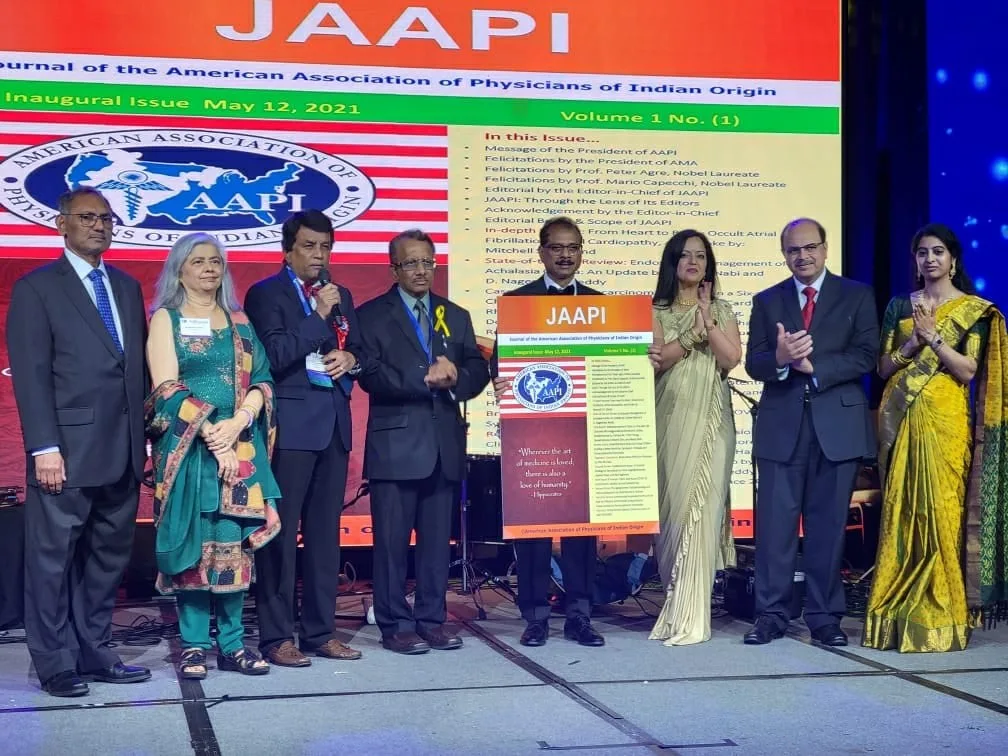
His most distinctive contribution to scholarly infrastructure has been as Founding Editor-in-Chief of JAAPI, the Journal of the American Association of Physicians of Indian Origin. It’s a peer-reviewed platform giving physician-scientists of Indian origin a credible global forum. “JAAPI is the first peer-reviewed journal published by an association of ethnic doctors in the United States,” he mentions.
The scientist co-authored From Idea to Empire: Turning Passion into Profit with Kevin Harrington, one of the original investors from Shark Tank. The collaboration pairs an inventor-scientist who built a company out of a laboratory with a veteran dealmaker, reflecting Dr. Kishore’s belief that good science and good enterprise are not competing values, rather complementary ones. He also contributed a section in the book Immigrant Doctors: Chasing the Big American Dream published by Dr. Satheesh Kathula, former President of the American Association of Physicians of Indian Origin (AAPI).
The writer, poet, and philosopher
Long before he took to writing books, Dr. Kishore was writing poems in English and in Telugu, his mother tongue. His poetic work ranges from reflections on purposeful living to Pandemic Gitanjali, a tribute to the collective human experience during COVID-19 drawn in the spirit of Rabindranath Tagore’s classic form.
His earlier books, Tamasoma Jyothirgamaya, grounded in ancient Indian wisdom, and Life is Creating Yourself, a meditation on personal growth and character, speak about a man who has always inhabited two worlds. The first one being the rigorous empirical world of the research laboratory and the other, a quieter world of philosophy and spiritual inquiry. Themes of purposeful living over ambition, ancient wisdom integrated with modern challenges, and the cultivation of inner strength recur across all of his writing.
“I travel to India once every two or three years, usually on invitation for lectures or award ceremonies,” mentions the scientist who likes visiting Puttaparthi, a small town in Andhra Pradesh for its spiritual atmosphere. On his India visits, he also sees his brother, sister, and a few old friends. His parents have passed away. The places he studied and lived carry warmth, even as the people he once knew have moved into lives of their own.
Diaspora and community recognitions
- Excellence Award in Research, North American Telugu Association — NATA (2023)
- Meritorious Award in Science, Telugu Association of North America — TANA (2023)
- Nelson Mandela Leadership Award, NRI Welfare Society of India, New Delhi (2023)
- Mahatma Gandhi Leadership Award, NRI Welfare Society of India, New Delhi (2024)
- Hind Rattan (Jewel of India) Award, NRI Welfare Society of India, New Delhi (2024)
- Pravasi Rattan (Indian Shines in USA) Award, NRI Welfare Society of India, New Delhi (2024)
- Global Unity Ambassador, INDIAN.Community (2024)
- Indian Overseas Award, NRI Welfare Society of India, New Delhi (2025)
Follow Dr B.K. Kishore on LinkedIn