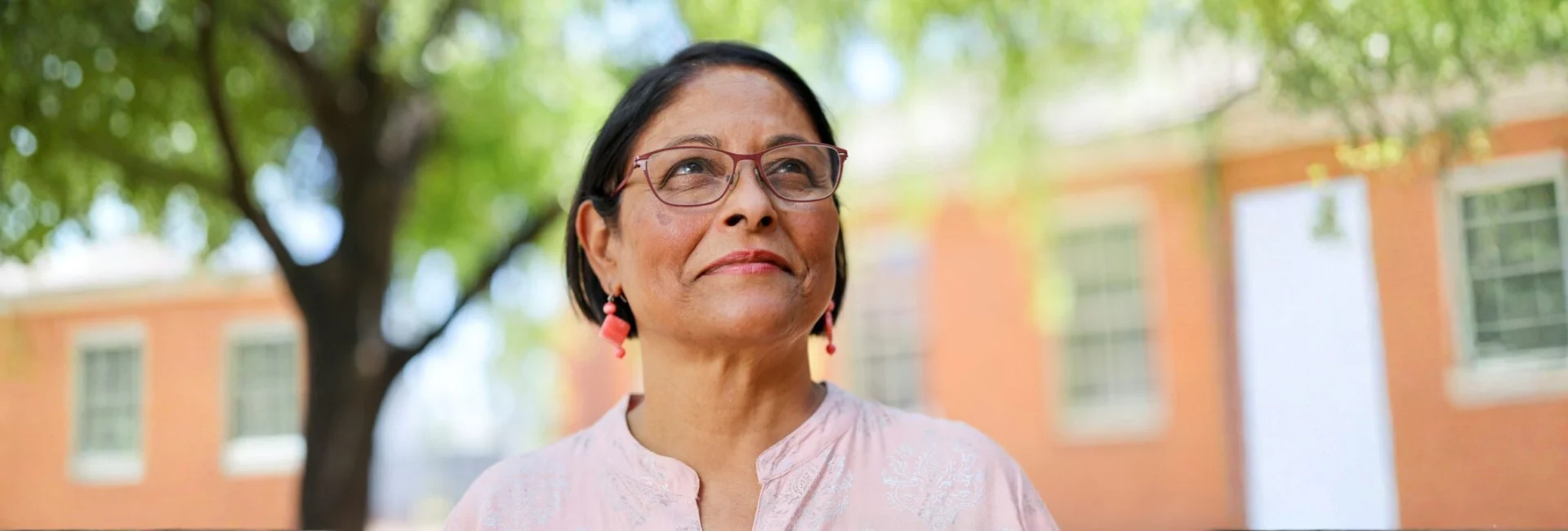


(April 3, 2026) In Dubbo, a city about 400 kilometres from Sydney in New South Wales, Australia, locals say the dust gets into your shoes and doesn’t let you go. It is a place that, as many who settle there will tell you, has a way of holding on to people who never planned to stay.
Gargi Ganguly is the most compelling proof of that saying. She arrived in 1999 from Kolkata with a young child, a government job and a plan to stay two or three years. More than a quarter century later, she is not merely a resident of Dubbo. She is, in many ways, the person most responsible for making it a home for thousands of others.
Last week, her community work was formally recognised when Gargi was named the winner of the 2026 Regional Unity Medal, awarded by Multicultural NSW, the New South Wales state government’s lead agency for cultural diversity, and sponsored by My Guardian Group. The medal celebrates individuals making a lasting impact on the economic, social and cultural fabric of regional communities beyond metropolitan Sydney. It was presented at the Premier’s Harmony Dinner, an annual state government gala hosted by the Premier of New South Wales and one of the largest multicultural gatherings in the state. For those who have watched Gargi Ganguly work over the decades, it was a recognition long overdue.
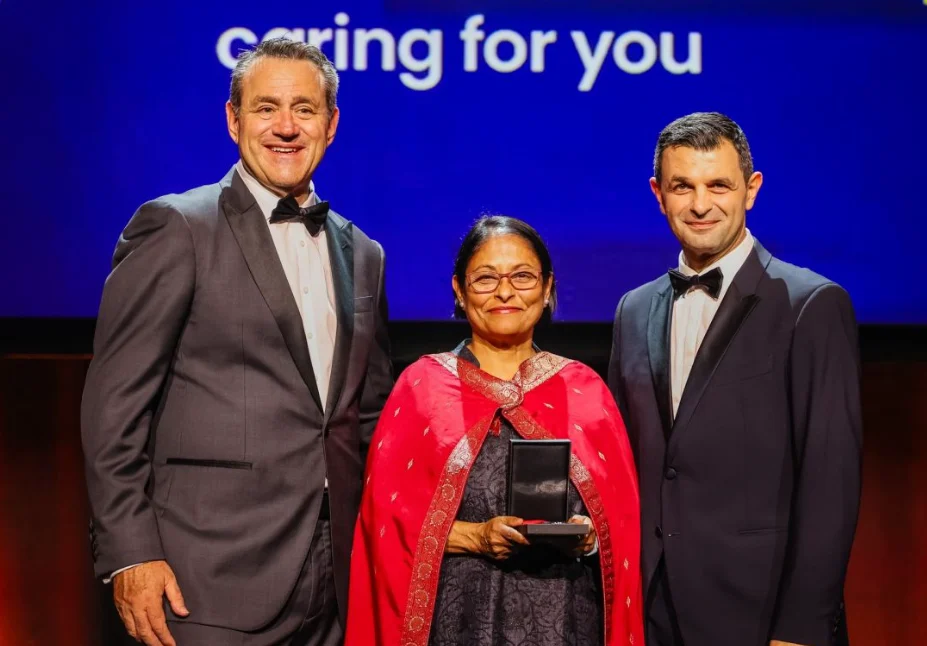
Gargi Ganguly received the Regional Unity Medal at the Premier’s Harmony Dinner 2026
Roots in Kolkata, a journey across two continents
Gargi was raised in Kolkata. She earned a Master’s degree from Jadavpur University. After moving to Australia, while building her career in the Australian public service, she continued studying alongside her work and family commitments, earning a Graduate Diploma of Public Sector Management and ultimately a PhD, both from the University of New England.
When she first arrived in Australia, it was her brother who steadied her footing. “My brother supported me financially when I arrived in Australia. When I tried to repay him years later, he told me I should pay it forward,” Gargi has said. “That message of my brother became my internal compass. Today in Dubbo, I work so that others can feel that same support.”
Gargi has since poured thousands of hours, without fanfare, into the lives of strangers in a city she once planned to leave.
The choice that changed everything
In 1999, offered a position with the NSW Government, she listened when friends told her to choose Dubbo over another city as it was the place to raise a child. She was a single mother. What she found was a community that revealed itself slowly. She built networks through her child’s school, through sport, and through friendships that deepened over time.
“Dubbo is a family-friendly, community-oriented place and there was a village around me to help raise my child,” she has said. “I was lucky to create networks through my activities, through school and sports, and through enduring friendships and relationships I found my place in town.”
She also found purpose. When she arrived, Dubbo’s migrant community was small and largely insular. Gargi, who had grown up in one of the world’s biggest cities, recognised that isolation is not only a social challenge but a missed opportunity for the region.
A career built around service
Gargi has built a distinguished career in the NSW and federal public service that ran in parallel with her volunteer commitments.
At the NSW Department of Family and Community Services (FACS), she held a series of senior positions including District Director roles across Nepean and the Blue Mountains, Western NSW, Murrumbidgee and the Far West. She served as Innovation and Reform Director, Regional Manager of Strategy, and as Project Leader for Families First at the Cabinet Office of the Department of Premier and Cabinet, a flagship early intervention program supporting children and families most at risk.
She later served as Regional Violence Prevention Specialist at the Attorney General’s Department, deepening her understanding of the structural forces that keep families in cycles of disadvantage.
In time, her expertise took her to the Department of the Prime Minister and Cabinet as a Senior Advisor, and later to the National Indigenous Australians Agency (NIAA), where she became Director of Engagement Operations and Delivery for the Central West.
Her professional and community lives have never been separate. Both have been driven by the same question of how to bring marginalised people into the fold.
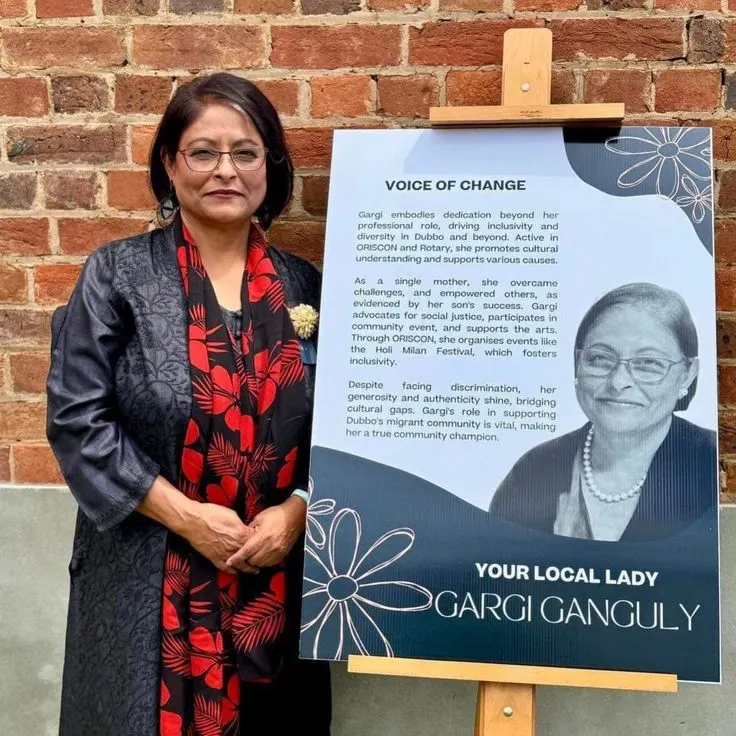
Building ORISCON: A lifeline for South Asian migrants
One of Gargi’s earliest and most significant community commitments was to the Orana Residents of Indian Sub-Continental Heritage, known as ORISCON, an organisation supporting South Asian families in Dubbo since 1999 and formalised as a charity in 2016.
She joined as a committee member, worked across roles including events coordinator, sports liaison officer and board member, and eventually became its Chairperson.
Today, ORISCON supports a sizeable community in a regional city, including around 300 Nepalese families and a similar number of Indian families spanning Punjabi, Gujarati, Malayali and other communities. For many new arrivals, the challenges are immediate: finding housing without knowing the local history, accessing familiar food, enrolling children in school and navigating healthcare systems. Under Gargi’s leadership, ORISCON has often been the first point of contact, helping families expand their social circles and build a sense of belonging.
Chai and Chat: Warmth as social policy
Of all the programs Gargi has created, none captures her philosophy more clearly than Chai and Chat, a monthly gathering for migrants experiencing isolation.
The format is simple. Participants meet over tea, take part in creative activities and receive practical guidance on parenting, healthcare and local systems. In a regional setting where formal services can be limited, these sessions provide essential social infrastructure.
“For some, it’s about building friendships. For others, it’s about practising English,” Gargi has said. “But for some people, it is simply a chance to have a warm, welcoming space where they feel seen and heard. In a regional setting like Dubbo, that is incredibly important.”
She had noticed early that many migrants arrived to meet visa conditions, only to leave for larger cities as soon as they could. She understood the pull of Sydney and Melbourne, but also believed Dubbo offered something different in the form of proximity, manageability and a human scale.
“I wanted to show people that Dubbo was not just a train station, a place to leave as soon as possible, but a great place to live and raise a family,” she has said. “My dilemma was: why? I wasn’t leaving—why were they?” Chai and Chat became her answer.
Festivals, carnivals and the power of public celebration
Gargi has long understood that inclusion must also be visible. Public celebration, she believes, normalises diversity in ways private outreach cannot.
The Dubbo Cross-Cultural Carnivale, developed through her work with ORISCON and the Rotary Club of Dubbo, where she has served as International Director and past President for over 16 years, draws thousands each year. Performances range from First Nations didgeridoo and welcome dances to Hakka traditions, American Indian storytelling, Mexican and Portuguese rhythms, an all-ladies choir and men’s bhangra. It is less a showcase than a shared space where the city meets itself.
The Festival of Colours, Dubbo’s Holi celebration, has followed a similar trajectory, growing from a grassroots effort into a major community event. In 2023, ORISCON received a grant from the Foundation for Rural and Regional Renewal to expand it further, with the Dubbo mayor in attendance alongside residents from across the city.
“Events like this really ignite in people the feeling that yes, there is a place for them in this country,” Gargi noted. “And there is also respect for what they celebrate back home. So everyone feels Dubbo is their home, not for a short time, but for a longer time.”
Through Rotary, her work has also extended globally, including initiatives such as Project Dignity in India and the Chumcriel Language School in Cambodia.
The professional behind the purpose
Gargi Ganguly’s career becomes even more striking when set alongside her community commitments. During the COVID-19 pandemic, her Central West team at the NIAA established the Koori Community Circle in Dubbo, a cross-agency model for engaging with the local Aboriginal community that was recognised by senior leadership and stakeholders as uniquely effective.
She has also been involved with the Dubbo PCYC for decades, contributing to youth programs and community development in a region where young people, particularly Indigenous youth, face significant barriers. She has worked on initiatives connecting Aboriginal jobseekers with employment and has been a consistent community voice on federal policy affecting regional Australians.
Beyond this, she serves as President of the West Dubbo Bowling Club and Secretary of the Dubbo Film Society, reflecting her deep engagement with the broader civic life of the city.
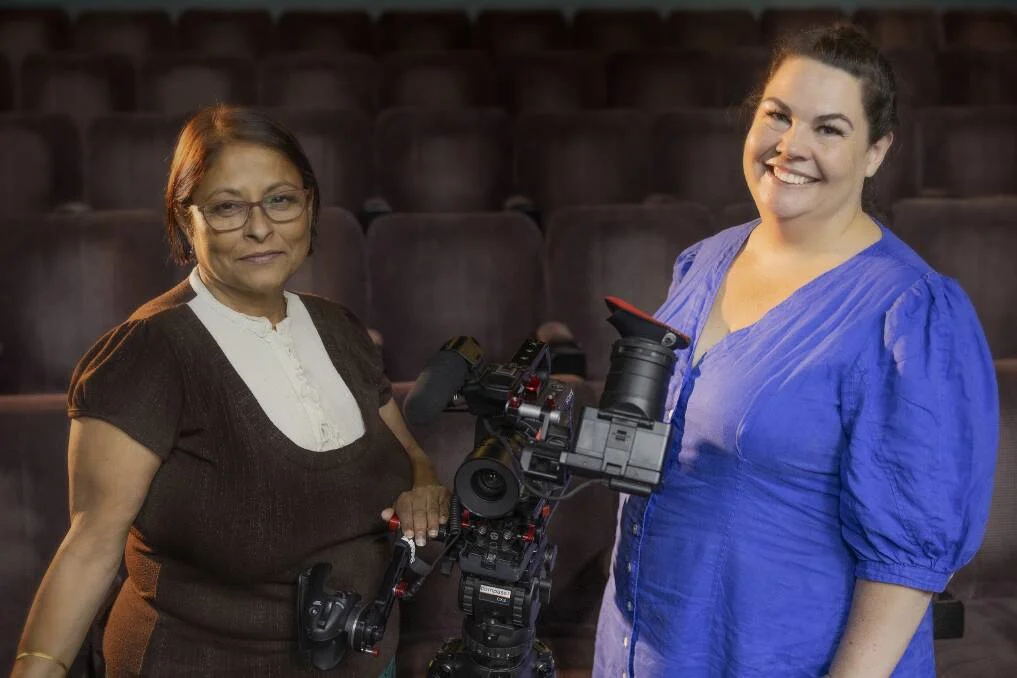
Gargi Ganguly during an Indian film festival in Dubbo
Confronting hate, championing courage
Gargi does not shy away from difficult truths about multiculturalism. When NSW Police launched a campaign to address hate crimes in 2023, she spoke candidly about what she had observed. She pointed out that migrants remain silent due to fear that reporting could affect visa applications, unfamiliarity with systems and the burden of shame.
“The community is not calling it out because they are scared… there’s also the element of shame, fear, and a range of emotions at play,” she said. Her advocacy contributed to the push for structural change, including the need for a dedicated multicultural liaison officer within NSW Police.
Honours, and a horizon still ahead
In 2024, the Hindu Council of Australia presented Gargi Ganguly with the Gargi Award in recognition of her contribution to social welfare. While this year, Multicultural NSW honoured her with the Regional Unity Medal at the Premier’s Harmony Dinner.
Through her current roles as Chair of ORISCON, Vice Chair of NPFGuide, International Director of the Rotary Club of Dubbo, and a Multiple Paul Harris Fellow Double Sapphire honouree, she shows no signs of slowing. “There are hundreds of reasons to say no, but there is only one to say yes, and that’s to make a difference in the community,” she believes.
From Kolkata’s paras to regional Australia, and a city she has spent 25 years helping transform. From a single mother with a two-year plan to a woman who has shown that a regional city, if nurtured with intent, can hold everyone.
The dust of Dubbo got to her shoes. And she, in turn, got to Dubbo.
ALSO READ: Sammy Kotwani: Stitching culture, community, and Indo-Russian friendship