
May 02 2026
Farha Naaz: Bringing the flavours of the Northeast to the fore
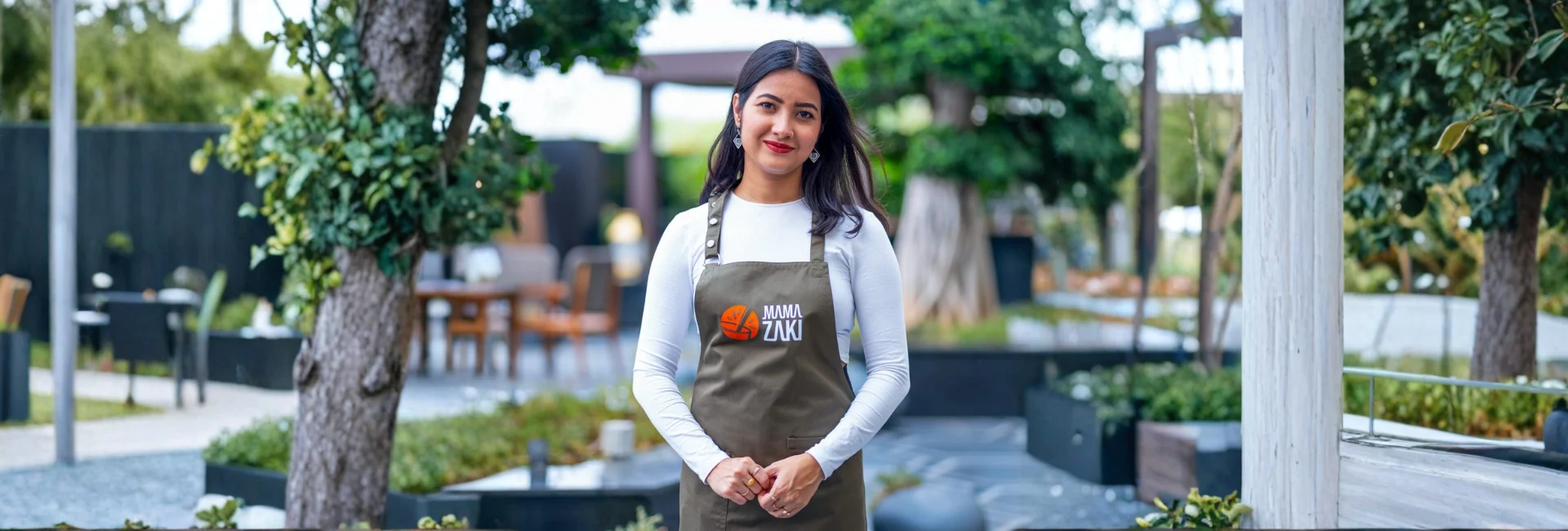
(May 2, 2026) The first time Farha Naaz tried to cook, it was curiosity that led her into the kitchen. That early instinct has since shaped a career that spans a top 20 finish on MasterChef India and the founding of Mamazaki, where she reimagines northeastern cuisine through a contemporary lens. It began in a small town straddling the Assam–Mizoram border, where, sitting beside her grandfather and watching a cooking show on television, she became fascinated by the idea of turning a familiar vegetable into something entirely unexpected.
Lauki (bottle gourd) she had only known as a savoury staple at home, was being transformed into halwa on screen. Intrigued, she insisted on trying it herself. “I told my mother I wanted to make it,” she recalls in a chat with The Global Indian, laughing at the memory. “They were all surprised, but I tried.” It may not have been perfect, but that quietly marked the beginning of a journey that would eventually redefine how northeastern flavours are experienced in contemporary Indian cuisine.
View this post on Instagram
Growing up on a border of flavours
Farha’s culinary vocabulary was shaped long before she ever stepped into a professional kitchen. Born in Silchar, Assam, and raised between Assam and Mizoram, her childhood unfolded in a region where borders blurred, both geographically and gastronomically. The kitchens she grew up around were rich with influences from Mizoram, Manipur, Bengal, and Bangladesh, layered over the foundation of Assamese food traditions.
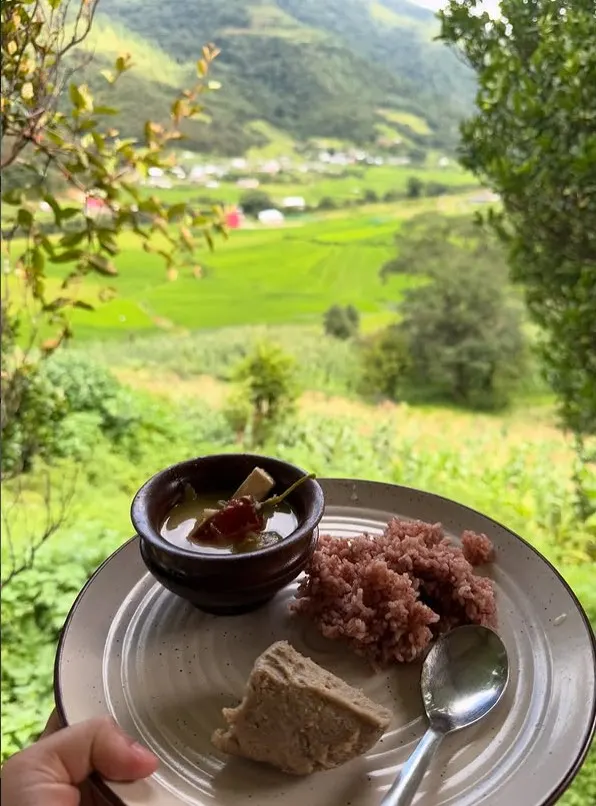
“The kind of food that I grew up eating was an amalgamation,” she says, describing a table where bamboo shoot, fermented ingredients, fresh herbs, and regional spices came together naturally. Unlike urban kitchens that often rely on packaged ingredients, her early exposure was rooted in immediacy and abundance. Bird’s eye chillies, Thai basil, and kaffir lime weren’t exotic imports; they grew in her backyard. Kazi nemu (Assam’s fragrant citrus) hung from trees at home, while bamboo shoot appeared in multiple forms: fresh, dried, and fermented.
Food, for her, was inseparable from memory. One of her most cherished dishes remains a humble preparation of bamboo shoot with jackfruit seeds and dry fish. “You don’t need anything else,” she says. “It’s so satisfying.” These early experiences did more than shape her palate; they instilled in her an intuitive understanding of ingredients—their seasons, their textures, and their emotional resonance.
It was also a deeply personal inheritance. Her mother’s cooking, she admits, continues to influence her work today. “What I cook is a lot from memory,” she says. “The flavours I enjoyed growing up stay with me.”
From engineering to the kitchen
Like many from her generation, the Chef’s path initially followed a more conventional route. She pursued a degree in agricultural engineering, a decision shaped as much by societal expectations as by circumstance. “I come from that generation where every parent wanted you to be either a doctor or an engineer,” she says candidly. A career in culinary arts was not even part of the conversation: largely because it wasn’t widely understood as a viable profession.
Yet, even during her college years, food remained a quiet constant. Hostel life in Guwahati proved to be a turning point. Dissatisfied with the food available, she began cooking for herself, often recreating dishes her mother would guide her through over phone calls. One such dish (a local rajma preparation with cherry tomatoes) became both a comfort and a revelation. When her friends responded enthusiastically, something clicked. “You cook something, you like it, and people appreciate it… I thought, maybe I do know how to cook.”
Still, it took time, and a leap of faith, for her to fully embrace that instinct. After working briefly with the Indian Council of Agricultural Research and later in food processing at Mother Dairy, she found herself at a crossroads during the lockdown. Without announcing it to her family, she quit her job and began experimenting in her kitchen in Guwahati.
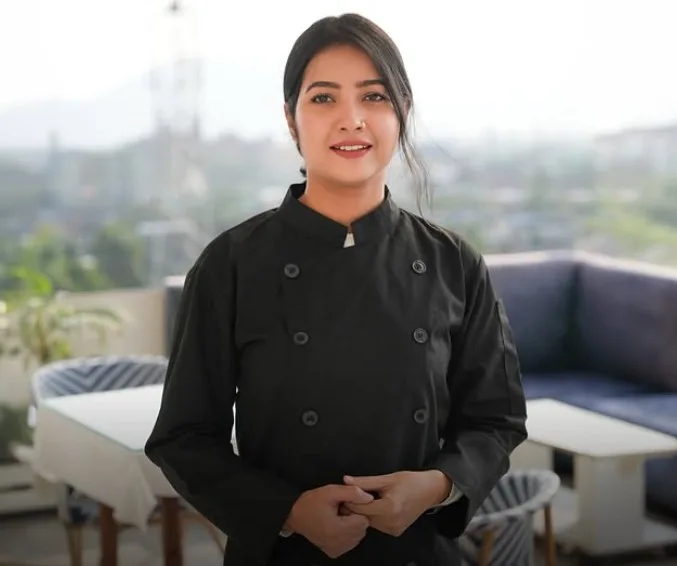
What followed was less a calculated pivot and more an organic unfolding. With limited access to supermarkets, she turned to local produce and traditional ingredients, reimagining them through a contemporary lens. Dishes like mango prawn noodles and Kazi nemu fried chicken began to emerge cementing her flair towards creating fusion dishes. “I didn’t do it because it was a trend,” she says. “I did it because that’s what was available to me.”
Reimagining the Northeast
Out of this period of experimentation came Mamazaki, her concept kitchen start up that has since become synonymous with progressive northeastern cuisine. The name itself reflects the dual inspirations behind her work: Mama for her mother, and Zaki from filmmaker Hayao Miyazaki, whose films (rich with food imagery) deeply influenced her during lockdown.
At its core, Mamazaki is about reinterpretation. Farha doesn’t replicate traditional dishes; she reimagines them. Her approach involves pairing northeastern ingredients with global techniques, creating dishes that are both accessible and distinctive.
Take her smoked duck with roselle sauce, a dish that exemplifies her philosophy. While smoked duck is a familiar element in continental cuisine, the use of roselle, a tangy flower native to the region, introduces a sharp, unexpected dimension. Similarly, her Kazi nemu fried chicken replaces conventional sauces with citrus-forward profiles, elevating a popular dish through regional nuance.
View this post on Instagram
Her work extends beyond the plate. Through curated outdoor dining experiences, forest picnics, lakeside brunches, and riverside dinners along the Brahmaputra, she has redefined how food is consumed and experienced in the Northeast. These events are designed not just as meals, but as immersive encounters with landscape and culture. “The food has to complement the place,” she explains. “You’re not just eating, you’re part of the environment.”
This approach has resonated deeply, especially in a region where traditional cuisine is often confined to home kitchens and remains underrepresented in mainstream dining. By presenting these flavours in a contemporary format, the Chef has made them more accessible: not just to outsiders, but to locals as well.
Her instinct for working with what a landscape offers is perhaps best captured in the story of her orange blossom salad, one of her most evocative dishes to date and delicious to boot.
The idea came to her while working on a project in Arunachal Pradesh with a community of Monpa women, an indigenous ethnic group from the region, where she was helping design a menu using entirely local ingredients. The region, she recalls, was abundant with orange groves. “I went there and I was like, oh my god, there are orange trees everywhere: we have to do something with it.” What followed was a dish that reflected both place and imagination: fresh orange slices layered with labneh, local persimmons, and even popcorn for texture, all sourced from the immediate surroundings.
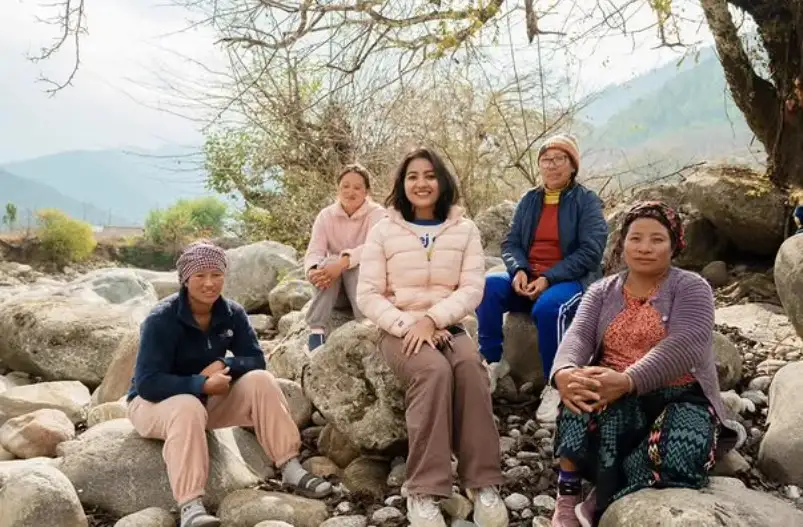
Farha in Arunachal Pradesh with a community of Monpa women, while working on a project
This sensitivity to place continues to shape her work across cities. Over the past few years, Farha has taken her pop-up experiences across India, steadily building a following for her progressive northeastern cuisine. From intimate collaborations at Oxymorons and The Leela
in Hyderabad to showcases at Chor Bizarre in Delhi, her food has travelled far beyond the Northeast while still carrying its essence. Between these pop-ups, she spends time researching, travelling, and developing new dishes, ensuring that each menu is not just a repetition but a fresh exploration.
Food, identity, and the road ahead
Despite her growing recognition (including a stint in the top 20 of MasterChef India), the 31-year-old remains grounded in her intent. Her work is less about visibility and more about representation: bringing northeastern ingredients and culinary traditions into wider conversations without diluting their essence.
Her recent explorations have taken her beyond India, particularly to Southeast Asia, where she discovered striking similarities between northeastern and Thai cuisines. This has opened up new creative possibilities, allowing her to build menus that bridge regions while staying rooted in authenticity.
At the same time, her journey has not been without resistance, particularly in convincing her family to accept cooking as a profession. “My grandmother would say, ‘We wanted to keep you out of the kitchen, and now you want to cook?’” she recalls. Over time, however, success and conviction have shifted those perceptions.
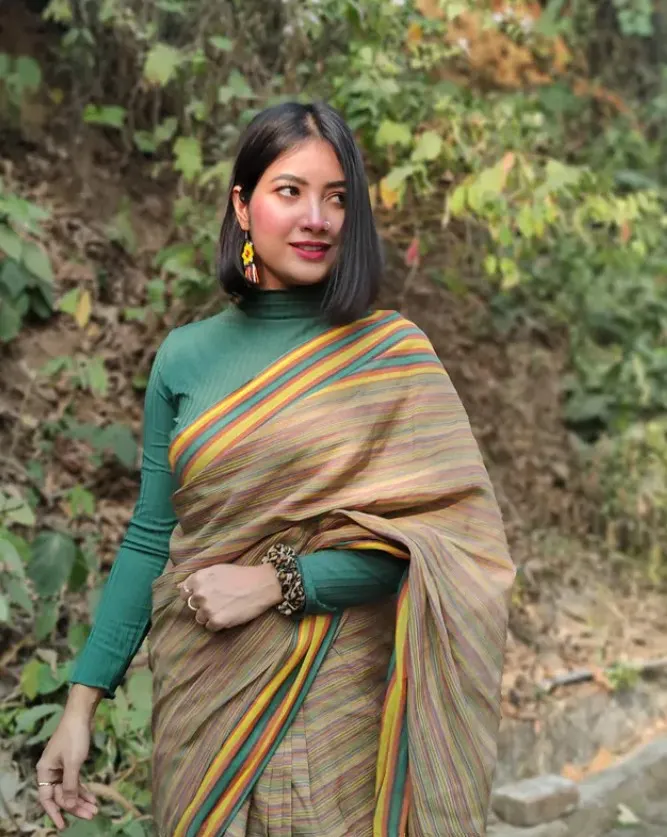
Farha is part of a larger movement redefining Indian cuisine, not through reinvention alone, but through rediscovery. By drawing from memory, locality, and lived experience, she is helping reshape how regional food is understood and valued. “I feel very grateful,” she says simply. And perhaps that gratitude; towards her roots, her ingredients, and her journey, is what continues to define her work.
ALSO READ: Bikram Das: From Bhutan’s wild bounty to bringing Indian soul to the American table
Share with



Written By: Bindu Gopal Rao
Devinder Oberoi: The chef behind a new destination for Indian food in Amsterdam

Written By: Bindu Gopal Rao
Chef Abhijit Nag: Global experience meets Odia cuisine at Sterling’s Amo Odisha in Puri

Written By: Amrita Priya