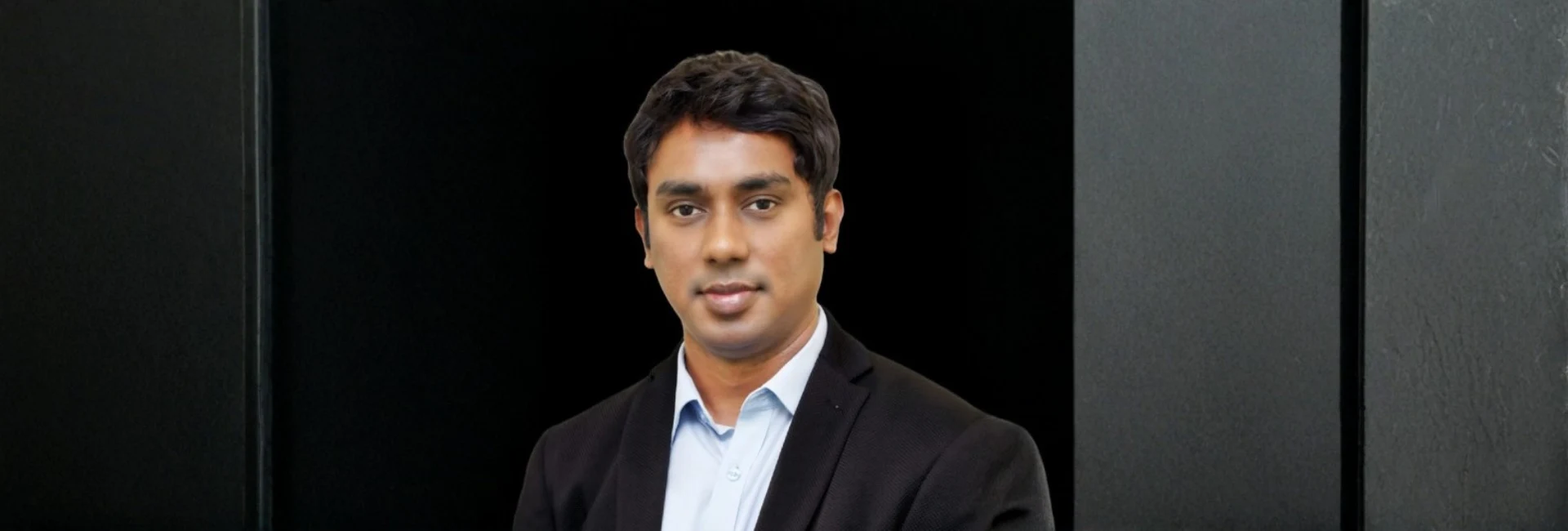


(March 24, 2026) When a 14-year-old boy who had accidentally consumed a toxic substance (paraquat poisoning) was examined by a team of doctors, including Dr Viswesvaran Balasubramanian, the challenges were immense.
He required multiple medications to maintain his blood pressure. With his condition worsening, Dr Viswesvaran and his team decided to make one last attempt to save him using ECMO (Extracorporeal Membrane Oxygenation)—an advanced life-support system. Though they were able to stabilise his oxygen levels, his lungs were completely damaged. A lung transplantation followed, which was successful.
After nearly a month of intensive care, the child recovered. This was the world’s youngest successful lung transplant survivor after paraquat poisoning. “It was a moment of great pride for our entire team,” smiles Dr Viswesvaran, Senior Consultant, Interventional Pulmonology and Sleep Medicine Specialist at Yashoda Hospitals, Hyderabad, in a chat with Global Indian.
For Dr Viswesvaran, challenges are part of everyday life, as the field of pulmonary medicine and critical care is complex and highly demanding. From pursuing education in India and Malaysia to mentoring doctors in India and abroad, his expertise lies in performing advanced procedures such as bronchoscopies, ECMO, lung transplantation support, and management of complex ICU-related respiratory illnesses.
Early inspiration
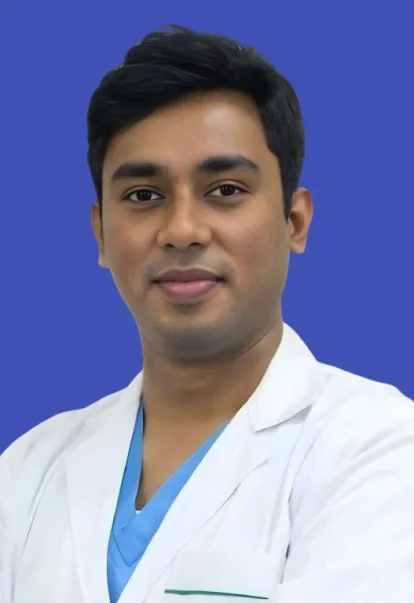
The curiosity to learn medicine began during his school days, when his grandmother was suffering from a chronic respiratory illness. “Back then, finding a good pulmonologist was quite difficult, even in Tier-1 and Tier-2 cities,” says Dr Viswesvaran, who was also fascinated by developments in oncology, especially lung cancer.
During his MBBS at Coimbatore Medical College, he became deeply interested in understanding lung physiology and how delicate this organ is in maintaining oxygenation and removing carbon dioxide from the body.
Another aspect that attracted him to respiratory medicine was the opportunity to contribute to reducing the burden of chronic lung diseases, especially among children suffering from chronic asthma and elderly patients with smoking-related lung diseases or lung cancer.
Training in pulmonary medicine
His interest in pulmonary medicine and critical care led him to one of the premier institutes in the field—the Vallabhbhai Patel Chest Institute, Delhi.
During his residency there, he realised that knowledge of pulmonary medicine is incomplete without experience in critical care. This motivated him to pursue further studies, and he went on to complete his DM in Pulmonary and Critical Care Medicine from Safdarjung Hospital, New Delhi, one of the finest institutes in the country.
During his training, Dr Viswesvaran received excellent mentorship and gained experience in advanced pulmonary procedures such as bronchoscopies, biopsies, and managing critically ill patients requiring ventilator support and advanced life-support systems like ECMO.
Advanced training in Malaysia
After completing his DM, Dr Viswesvaran decided to further enhance his skills in advanced interventional pulmonology.
Since there were limited opportunities in India at the time to learn advanced bronchoscopic and interventional pulmonology procedures, he applied for fellowship programs in both Western countries and Malaysia. “I chose Malaysia because it offered a high-volume centre with strong hands-on exposure to advanced interventional pulmonology procedures,” says Dr Viswesvaran, who was the program’s gold medallist.
During his training there, he understood why advanced interventional pulmonology is extremely important for a country like India, where many patients suffer from complex lung disorders such as lung cancer causing airway obstruction, or fluid accumulation in the lungs secondary to tuberculosis or malignancy.
At Yashoda Hospitals
After completing his fellowship in Malaysia, he returned to India and joined the Yashoda Hospitals in Hyderabad, where he initially led the interventional pulmonology program.
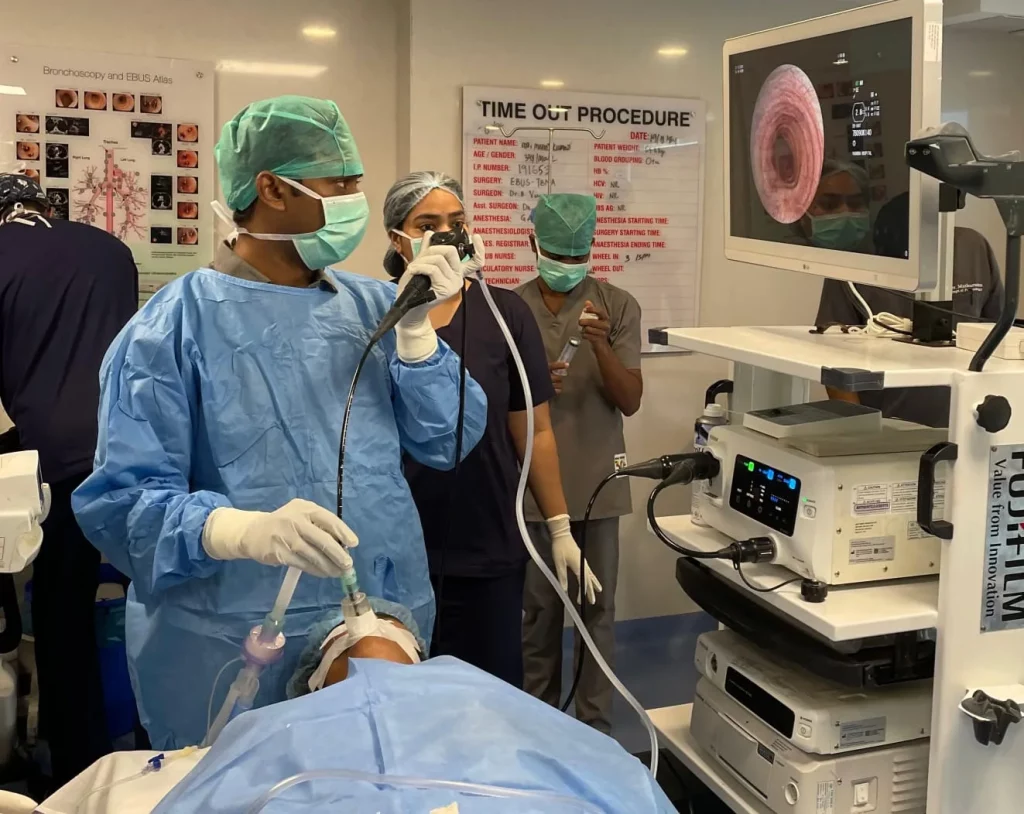
Dr Viswesvaran’s day usually starts with outpatient consultations, followed by several procedures scheduled in the bronchoscopy suite. During this time, he not only performs advanced interventional pulmonology procedures but also trains fellow doctors in these techniques as part of the hospital’s structured fellowship program.
Multidisciplinary approach
Dr Viswesvaran, along with his team, frequently manages patients requiring advanced life-support systems such as ECMO. “Managing patients requires a multidisciplinary team approach, so we work in coordination with intensivists, anaesthesiologists, and surgeons to plan and execute the treatment strategy.”
He is also actively involved in the evaluation, preparation, and management of lung transplant patients, and participates in performing lung transplantation procedures. He performs bronchoscopic procedures in the ICU as well for critically ill patients.
International work in Kenya
Dr Viswesvaran was instrumental in establishing the first advanced interventional pulmonology training program in Kenya. He mentored pulmonologists there in performing advanced procedures for complex lung diseases, including lung cancer.
One memorable case involved an elderly patient with a persistent bronchopleural fistula—a chronic air leak from the lung. “The patient had previously suffered a cardiac arrest and was not fit for surgery, so the team sought guidance on a minimally invasive bronchoscopic approach.”
Dr Viswesvaran guided them in placing an endobronchial spigot along with glue to seal the leak. The fistula closed completely. “The patient recovered well, and the chest tube could be removed. It was extremely fulfilling.”
He also trained Kenyan doctors in airway stenting, rigid bronchoscopy, tumour debulking, and other advanced interventional pulmonology techniques. “Representing our country on an international platform and helping doctors from other nations learn these procedures gives me great satisfaction,” he mentions.
International recognition
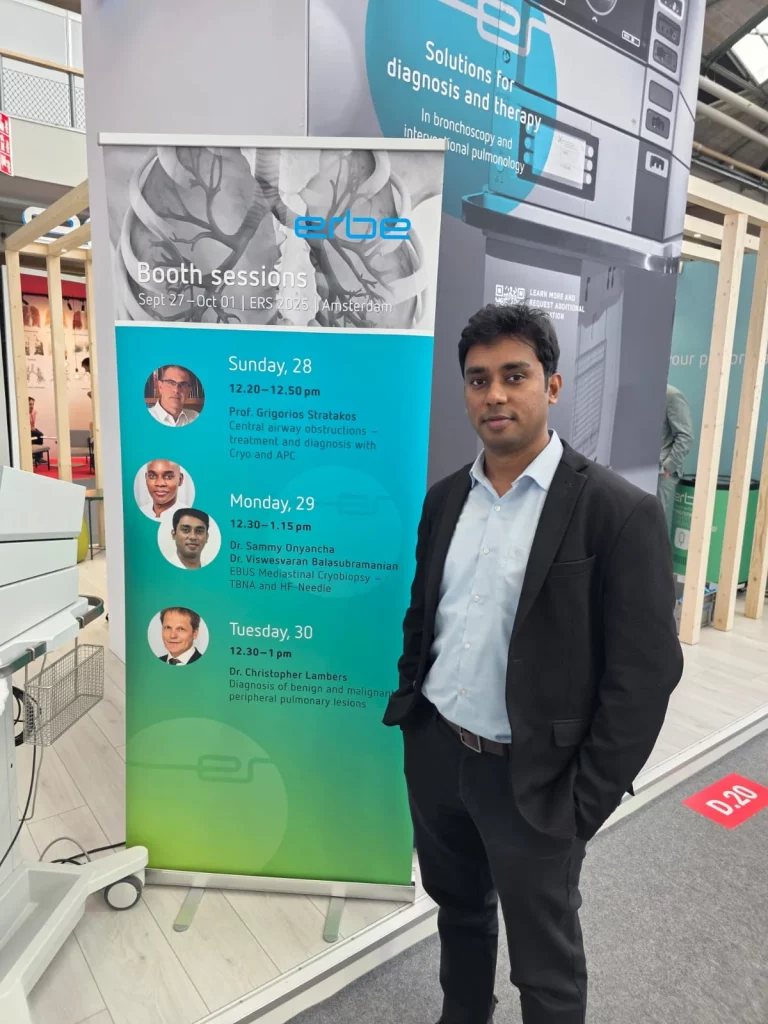
Dr Viswesvaran was invited as faculty to the European Association of Bronchology and Interventional Pulmonology, where he delivered lectures on advanced interventional pulmonology procedures being performed in India.
Later, he received multiple recognitions at the World Congress of Bronchology and Interventional Pulmonology held in Bali, where his work was awarded for Best Imaging, Best Video, and Best Innovative Technique in Interventional Pulmonology.
“Receiving all three awards at the same congress is extremely rare, and this recognition was a great boost for our fellowship program,” says Dr Viswesvaran, who also completed the European Diploma in Adult Respiratory Medicine.
Humble beginnings
Born in Sathyamangalam, Tamil Nadu, Dr Viswesvaran grew up in Coimbatore. His father was a bank employee and his mother a school teacher.
He completed his schooling at SBOA Matriculation School and was always a topper in academics. He actively participated in extracurricular activities such as debating, painting, and scientific projects, and was a state-level award winner in painting.
“I used to participate in group discussions, debates, and other extracurricular activities, and had many winning moments,” recalls Dr Viswesvaran, whose project on water conservation was selected as one of the best at school.
Beyond academics
He was also recognised as one of the best overall candidates among hundreds of students across the country and received awards from leading organisations.
He loved playing cricket and was a trained cricketer. “Though I couldn’t make it to higher levels of competitive cricket, watching and playing the game is something I’m very passionate about,” he says. He was also among the best outgoing students in his Class 10 and 12 board examinations.
Training future doctors
Dr Viswesvaran was instrumental in starting a structured fellowship program in advanced interventional pulmonology at Yashoda Hospitals. So far, he and his team have trained more than 70 fellows from India and abroad, including from African countries, the Middle East, Morocco, the Philippines, and even Western countries.
“Teaching young doctors and seeing them become confident in performing life-saving procedures gives immense happiness and pride,” he says.
Apart from clinical work, he is actively involved in academic activities. “We conduct monthly international web-based academic meetings where pulmonologists from across the world participate to learn advanced interventional pulmonology techniques.”
Dr Viswesvaran is also invited as faculty to several national and international conferences, where he conducts hands-on workshops and training sessions.
One of their key achievements has been the creation of a virtual library of interventional pulmonology procedures using virtual reality technology. Through this platform, doctors across the globe can observe recorded procedures in a simulated environment and understand the technical nuances of these complex interventions.
Life-saving cases
Among the most remarkable cases Dr Viswesvaran handled was that of an 80-year-old man from Maharashtra who had a tumour causing more than 90 percent obstruction of his windpipe. “Before the advent of advanced interventional pulmonology procedures, most patients with such severe airway obstruction would not survive.”
He was struggling to breathe, which led Dr Viswesvaran to attempt a minimally invasive bronchoscopic procedure to remove the tumour. “This was a highly challenging case because even a small margin of error could have resulted in losing the patient on the table.”
The tumour was successfully removed, the airway was stented, and the patient’s breathing improved immediately. “A person who might not have survived the next day was able to walk out of the hospital and live independently for a long time afterward.”
Another case involved a 35-year-old doctor who met with a severe road accident and was admitted in a critical condition with almost no hope of survival. Bronchoscopy revealed multiple severe lung infections.
“The chances of survival were extremely low, but we decided not to give up,” says Dr Viswesvaran. The patient required prolonged ICU care, ventilator support, strong antifungal medications, repeated bronchoscopic procedures, and intensive supportive treatment, remaining on the ventilator for nearly 40 days.
With aggressive treatment and rehabilitation, he gradually improved. A year later, he returned to his profession. “There is no greater satisfaction than seeing a patient who was once critically ill return to normal life—especially when that patient is a fellow doctor.”
India’s progress
So where does India stand today in pulmonary and critical care compared to the West?
“Pulmonary medicine and critical care in India have developed tremendously and, in many aspects, are now comparable to the Western world,” says Dr Viswesvaran, adding that India has become a sought-after destination for advanced respiratory and critical care treatment.
About a decade ago, India lacked adequate infrastructure, structured training programs, and advanced instruments required for complex procedures. However, the scenario has changed significantly.
“Today, we are on par with our Western colleagues in performing advanced interventional pulmonology procedures and managing critically ill patients with life-saving technologies.”
Despite this progress, accessibility remains a concern. “Most of these services are still concentrated in a few tertiary or quaternary care centres.”
The road ahead
Dr Viswesvaran plans to train more doctors in advanced interventional pulmonology. “The growth of this specialty depends on the availability of well-trained pulmonologists across the country and the world—not just a few specialised centres.”
Another key goal is increasing awareness about advanced medical services. “There is still a lack of awareness among patients, and sometimes even among doctors, regarding life-support systems such as ECMO and procedures like lung transplantation.”
Life beyond medicine
Recently, Dr Viswesvaran has taken up learning instrumental music, especially the piano. He also enjoys watching cricket and science-fiction films. “These activities help me unwind after a busy schedule. Maintaining balance allows me to return to work with greater focus, energy, and positivity,” he signs off.
ALSO READ: From Partition’s pain to a pulmonary pioneer: The journey of Dr Gopi Chand Khilnani