


(April 8, 2026) When international clients Karl Whelan and John Cross flew in from abroad for a hair transplant, or when English cricketer Nick Compton and South African cricketer Morne Van Wyk chose India over every other option available to them, they weren’t just picking a clinic, rather placing their trust in a man who had walked five kilometres as a boy just to buy a notebook. Dr. Pradeep Sethi, co-founder of Eugenix Hair Sciences, now draws over 80 international patients every month from the US, UK, UAE, Africa and Australia, playing a role in positioning India as a serious destination on the global hair restoration map. Hair transplant, he points out, is the fastest growing vertical in medical tourism.
“Patients from abroad, particularly from the USA, UK, and Australia, usually conduct extensive research before choosing a clinic. They evaluate documented results, follow patient journeys, and engage with independent forums before making decisions,” says Delhi-based Dr. Sethi in a chat with The Global Indian. That trust, built over 15 years and more than 20,000 surgeries, is backed not just by clinical precision but by something harder to quantify — a grounding in purpose and equanimity that he traces to the teachings of Paramahansa Yogananda.
The doctor who grew up in the villages of Odisha with little more than determination is giving back in the most meaningful way by building a world-class school for children who, much like his own childhood years, have big dreams but scarce means.
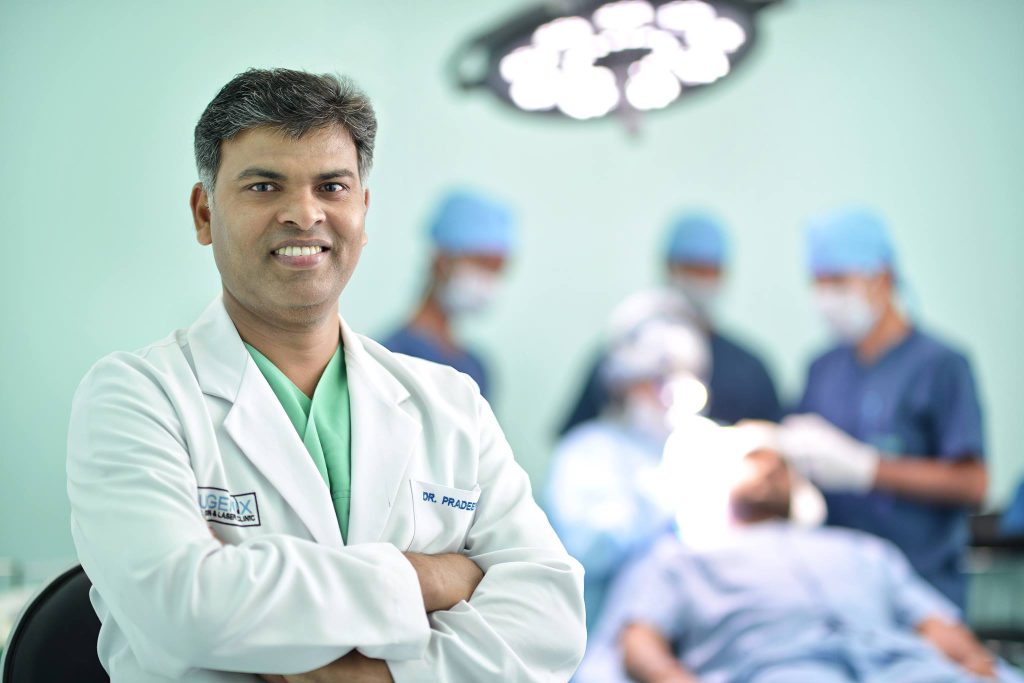
A surgeon guided by a yogi’s wisdom
Early in life, Dr. Sethi began gravitating toward the teachings of spiritual gurus, and none left a deeper imprint than Swami Paramahansa Yogananda, author of the iconic Autobiography of a Yogi. Yogananda’s emphasis on physical health as an inseparable part of spiritual well-being, and his vision of service as a sacred act, deeply resonated with Dr. Sethi’s own sense of purpose. The idea of interconnectedness — that one’s work, one’s community, and one’s inner life are not separate domains — became a quiet compass. “I spend a significant amount of time reading the works of Paramahansa Yogananda and reflecting on ideas around purpose, balance and self-awareness,” he says. Inspired by Yogananda’s counsel to focus deeply on one pursuit, Dr. Sethi stopped general dermatology practice by 2012 and gave himself entirely to hair restoration. Autobiography of a Yogi remains his favourite book — one he gifts as often as he can.
The boy who went barefoot invites President Murmu to the school he built
Dr. Pradeep Sethi went from being a farm labourer, spending his childhood working in the fields, to becoming one of India’s top hair transplant surgeons — and a leading philanthropist. He went to school barefoot until class six, got his first pair of chappals at 11, and proper shoes only at 14. Growing up in a remote village in Odisha, where basic infrastructure was scarce, he walked kilometres just to buy a pen. Yet his commitment to studies never wavered. He did his schooling at Navodaya School, performing well academically including in Odia and English literature. Drawn to science early, he chose biology and eventually made it to AIIMS, New Delhi, where he trained in dermatology.
That arc — from rural hardship to national recognition — came full circle recently when Dr. Sethi met President Droupadi Murmu during her visit to Mumbai. He used the occasion to extend a personal invitation to her to visit Utkal Gaurav International School in Odisha’s Keonjhar district, the school he founded in his home village of Berunapadi.
The school, built with an investment of crores of rupees and virtually inaugurated by then Odisha Chief Minister Naveen Patnaik, provides world-class education, free of cost, to nearly 350 children from economically weaker backgrounds. The institution is backed by the Utkal Gaurav Foundation, co-founded by Dr. Sethi and his partner Dr. Arika Bansal, with a mission to bridge the gap between the developing and developed world through education, balancing eastern spiritual values with western efficiency. He is in the process of bringing in faculty from around the world to give students international exposure, while keeping spiritual practice at the heart of their development. In 2017, his contributions were recognised with the Pride of Odisha Award at the Jagannath International Festival.
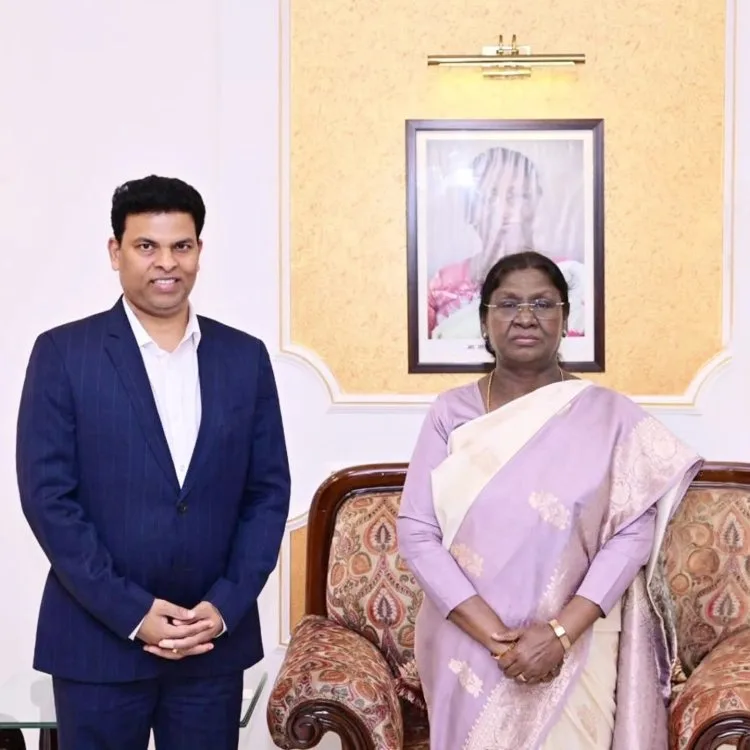
Dr Pradip Sethi with President Droupadi Murmu
Beginning with a small clinic in Rishikesh with a big idea
After AIIMS, Dr. Sethi set up practice in the culturally rich towns of Dehradun and Rishikesh, building expertise in skin, laser and aesthetic procedures. Referrals from other doctors slowly built a patient base, but he felt the pull of more complex, demanding work — the kind he had encountered during training.
Around this time, he Dr. Arika Bansal began exploring hair transplantation. They attended conferences, studied global techniques, and on 2010, performed their first procedure. Within months, Dr. Sethi recognised the depth the field demanded, and the decision to specialise completely was made.
Building Eugenix, and a technique that is making its mark globally
The name Eugenix Hair Sciences, suggested by Dr. Arika, was chosen to reflect something larger than a clinic — a science-led, research-driven practice covering all aspects of hair, from clinical refinement to academic contribution. Over time, the couple developed and refined the Direct Hair Transplant (DHT) technique, which focuses on minimising the time grafts remain outside the body, thereby improving their survival and overall results. It has since become one of the most referenced methods in the field, documented in the book Step by Step Hair Transplantation.
“With sustained focus on outcomes, research and technique, we gradually gained recognition in India and globally, leading to expansion across multiple cities,” says Dr. Sethi. From a small start in Rishikesh, Eugenix has grown to major centres in Delhi NCR, Mumbai, Hyderabad, and Bhubaneswar. Together, Dr. Sethi and Dr. Bansal have treated more than 1,800 cases of Grade 6/7 baldness — among the most demanding presentations in hair restoration. Such has been their reputation that approximately 500 medical professionals have themselves entrusted their hair restoration to Dr. Sethi’s hands.
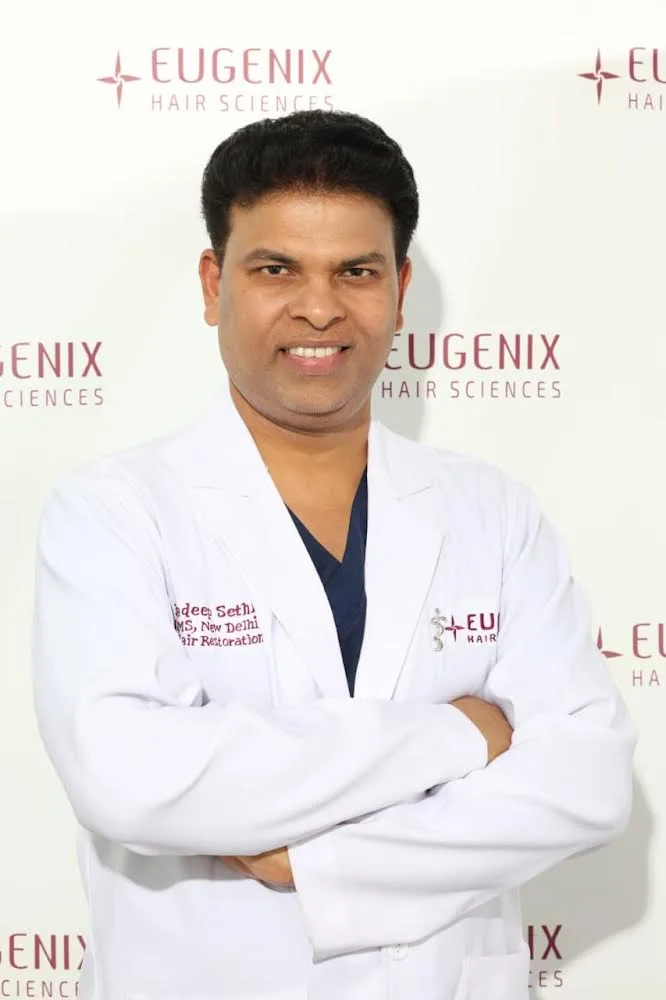
When celebrities came calling
Eugenix’s reputation has made it a quiet destination of choice for some of India’s most recognised faces. On the cricket front, former Indian captain Mohammed Azharuddin, pace bowler Mohammed Shami, former head coach Ravi Shastri, and fast bowler S. Sreesanth have all trusted their hair restoration to Dr. Sethi and Dr. Bansal. Andrew Leipus, physiotherapist of Team India during the 2000s, is among the other prominent names. International cricketers include Nick Compton, Morne Van Wyk, and Australian finisher Michael Bevan.
From Bollywood, film producer Boney Kapoor came in with Grade 7 baldness — one of the most advanced stages of hair loss. “The case was particularly demanding due to the large area that required coverage along with the expectation of achieving high density,” says Dr. Sethi. A total of 6,627 grafts, all sourced from the scalp, were meticulously implanted, including at the temples. Filmmaker Anees Bazmi and singer Anup Jalota are among other well-known names who have chosen Eugenix. “Our mission is to shift perceptions about hair transplants. There’s no disgrace in hair loss, and there’s no shame in wanting to put your best foot forward,” says Dr. Sethi.
India’s rise as a hair transplant destination
Dr. Sethi is candid about where India stands — and where it must go. The country today holds a strong position in hair transplantation, with research-driven centres offering outcomes comparable to global standards. But alongside these, low-cost setups run by unqualified practitioners create risks for patients and fuel the misconception that the procedure is simple. “It requires high levels of skill, planning, and medical expertise,” he says. Stricter regulation and better enforcement, he argues, are essential if India is to capture a larger share of the international market.
His own standing in the global community is well established. Invited by the Sixth World FUE Committee in Bangkok to serve as Scientific Director, he initially hesitated given the time commitment, but saw it as an opportunity to engage with global experts and advance the field. He curated the scientific programme, coordinated with doctors across time zones, and reviewed research and presentations. Shortly after, he contributed to the Global Hair Loss Summit in Los Angeles in 2022. “Both these roles were completed within a span of five to six months,” he notes. His fellowship with the International Society of Hair Restoration Surgery (ISHRS) further reflects years of research, publications, and international conference participation.
View this post on Instagram
What comes next
Dr. Sethi’s road ahead is threaded with ambition and restraint in equal measure. He plans to train at least 100 more doctors globally in advanced hair restoration, focus increasingly on complex cases, and deepen research into stem cells and melanocytes. On the business side, he is looking at establishing or acquiring centres in the Middle East, the US, and the UK.
But it is perhaps in the quieter hours — reading Yogananda, reflecting on purpose, sitting in meditation — that the larger design of his life becomes visible. A boy who walked barefoot to school in Odisha is now shaping the future of a medical speciality, rebuilding the village he came from, and inviting the President of India to witness what he has built. “I try to understand how one can live fully in the world while remaining detached from its extremes — whether success or hardship — and how to bring out the best within oneself in a balanced way,” he says. He has been doing exactly that, quietly, for a long time.
ALSO READ: Dr Stuti Khare Shukla: Restoring hair and confidence worldwide