
April 24 2026
Dr Keshav Mandadi: From rural India to global classrooms, and now on Canada’s political stage

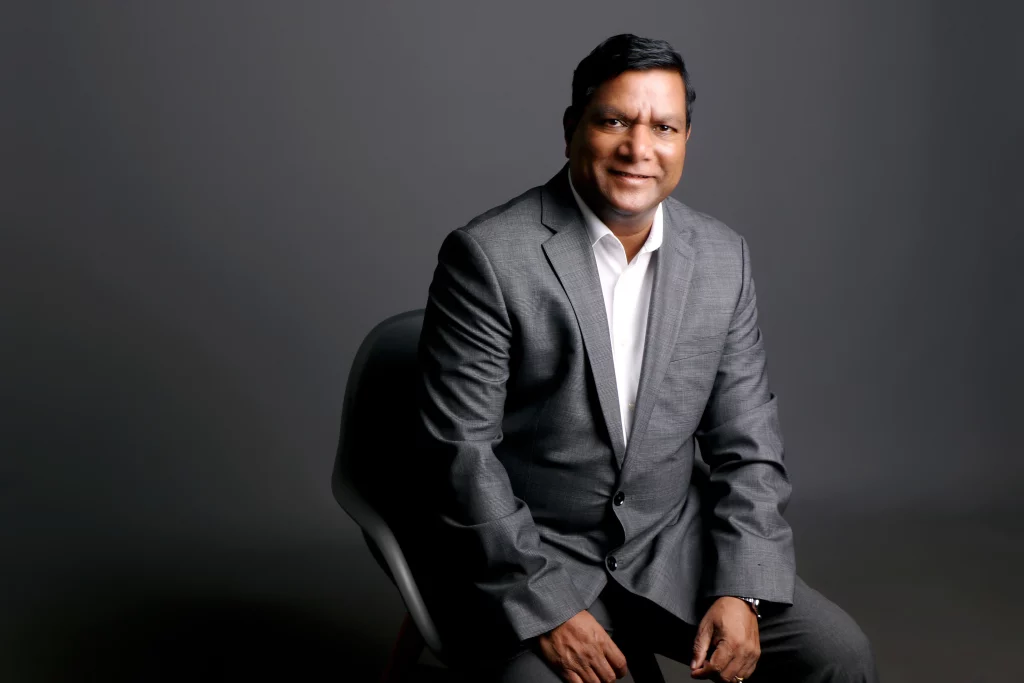
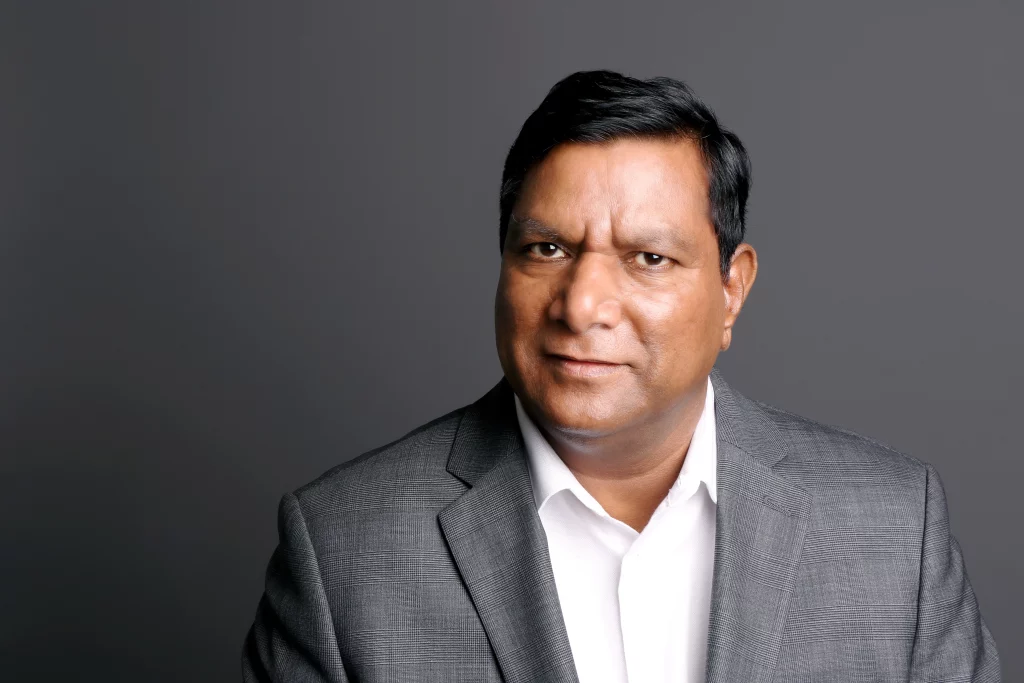
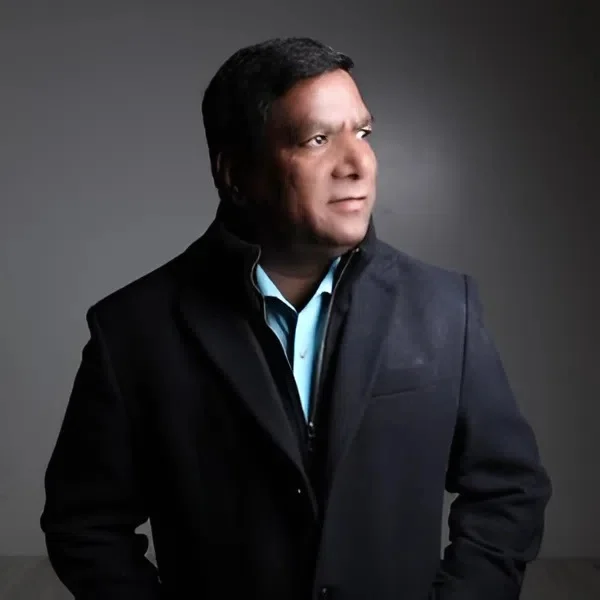
(April 24, 2026) From a village in Andhra Pradesh to Mysore, Hyderabad, Saudi Arabia, Oman, and eventually Canada, Dr Keshav Mandadi’s journey traces a steady movement through classrooms, institutions, and continents. What began as an early fascination with language in a rural classroom grew into a decades-long career in English education across multiple countries. Today, that journey has moved into public life as he works toward a place in the Canadian Parliament.
I did not grow up privileged. If I achieve what I am striving for, it will inspire many who come after me. It would show them that someone who arrived as an immigrant can, in just 10 years, make a real difference. I want to be remembered for the good work I do.
Dr Keshav Mandadi
In a classroom in a small village near Irala, 30 kilometers from Chittoor in Andhra Pradesh, a sixth grader sat with an English textbook. The lesson was about a temple elephant named Kesavan, a creature that lived in Mysore. The boy had never heard of Mysore. He did not know where it was on a map and had no reason to think it would matter in his life. Yet something in that lesson stayed with him.
“I fell in love with that lesson,” recalls Dr Keshav Mandadi, an English language educator now a full-time political candidate in Canada with his sights set on the Parliament. “And eventually that passion took me to develop a liking for the English language,” he says in a chat with The Global Indian.
From a shepherd’s village to Mysore
Mandadi grew up in Gollapalle, a shepherd’s village where daily life was shaped by movement. Families followed grazing cycles, walking long distances with their livestock in search of grass and water. His father and grandfather lived this way, often spending months away from home, setting up temporary shelters wherever the land allowed. As a child, he accompanied them, observing a life that depended entirely on nature.
My father and grandfather were like gypsies. They would take the sheep wherever there was rain and grass. If there was no grass in one area, they would move 10 to 15 kilometres to where there was some. And they would stay there for months together.
Dr Keshav Mandadi
Education was not guaranteed in this environment. Access itself required effort. He became the only child from his village to attend high school, walking two kilometres each day to reach it. There were no role models to follow, no one to guide decisions about what came next. What he had instead was a growing sense of possibility tied to a place he had never seen.
“Imagination is the key for any success,” he says. “When my friends in school were asked where they wanted to study after passing out, some said Tirupati, some said Chittoor, some said Chennai. I told everybody I would go to Mysore. I didn’t know where it was or how far it was. I had nobody who knew the city. But it was constantly there in my mind.”
That thought stayed with him through his school years. After completing high school, he finally secured admission to the Regional Institute of Education in Mysore. Between 1985 and 1989, he completed a Bachelor of Arts in English and Education. The transition from a small village to a campus with students from multiple states reshaped his worldview.
“It was completely residential. We had such a spirit of national integration and love for the country. We respected each other. I even picked up Malayalam and Kannada,” says Dr Mandadi, whose mother tongue is Telugu. He took part in debates, drama, and literary activities, and served in the National Cadet Corps. Those years helped him find confidence in both language and public expression.
Building the academic foundation
From Mysore, Mandadi moved to Sri Krishnadevaraya University in Anantapur for a master’s degree in English. He represented the university in debates and public speaking competitions, continuing to build his engagement with language beyond the classroom.
He then went on to complete a doctorate at the University of Hyderabad, where he remained active in cultural and debating circles. These years established the academic base for what would become a long career in teaching, training, and curriculum development.
Much later, after decades of professional experience, he returned to formal study once again, completing a learning design certification at the University of Toronto in 2018. The decision reflected an ongoing effort to stay aligned with evolving methods in education.
Across classrooms in India and the Gulf
Dr Mandadi’s professional journey began with the Kendriya Vidyalaya Sangathan. In administrative and academic roles, he worked across different regions of India, including Assam and Chandigarh. These early postings exposed him to diverse student populations and institutional systems.
He then moved to Saudi Arabia, where his work expanded in both scale and scope. At Saudi Aramco, he taught English and communication courses and contributed to training programmes designed for professional development. He later joined King Faisal University as an assistant professor, working with students from medicine, engineering, and business.
“I’ve gathered a lot of experience throughout my life at various places in different national and international contexts and very highly reputed institutions,” he says. “I’ve seen education very closely.”
Over 18 years of teaching career in the middle east at the top notch institutions like Saudi Aramco, King Faisal University and Sultan Qaboos University, he developed courses, trained students and professionals, and adapted to multilingual classrooms. During this time, he also became an IELTS examiner with the British Council, assessing candidates in writing and speaking across both academic and general modules.
Canada and the university years
Dr Mandadi moved to Canada in 2013. He joined McMaster University as a teaching faculty member, working as an EAP specialist and writing consultant. He later worked with the Peel District School Board as a TESL trainer, supporting language education in school settings.
In 2022, he joined the University of Toronto as a full-time contract faculty member. Teaching at one of Canada’s leading institutions marked another step in a career that had moved steadily across countries and systems.
Alongside his academic roles, he ran AG Educational Management Services Inc, offering programmes such as student exchanges, summer camps, and language training. He also presented at conferences and conducted workshops in countries including Brunei, Malaysia, India, the USA, Canada, and the UK.
Transition to politics to make greater impact
A few months ago, he stopped teaching. The decision followed years of observation and reflection on the education system in Canada.
Canada attracts a lot of immigrants from all over the world. Many people come with the notion that education is a great opportunity here for their children. I was really disappointed with the way the schools are run in this country. I felt there is so much to contribute.
Dr Keshav Mandadi
He began to see politics as a more direct way to engage with these concerns.“I plan to spend the rest of my life for the community, and I want to give back to the society that has given me so much in my life,” he remarks.
“Once you are in politics and you are able to go to the legislative bodies such as Parliament or assemblies, you get a lot of opportunities to closely influence policymakers and bring out changes that are highly desired in the field of education.”
He ran as a nomination candidate in the last federal elections and began building support across communities. His outreach spans immigrants as well as non immigrants, across age groups and backgrounds. He speaks Arabic, Telugu, Tamil, Kannada, and English, and hence is able to connect with a wide range of people. “I am genuinely interested in people, and do not differentiate between them,” he remarks.
Rethinking education, affordability, and social capital
Dr Mandadi’s focus areas as a politician include education, affordability, and social connections within communities. He speaks about the financial pressures faced by families adjusting to life in Canada, and the long term burden of housing and debt. He sees social capital as an essential but often overlooked part of building stable and inclusive communities.
“Not investing in social capital, not being able to connect with neighbours, not being able to connect with other cultures and communities is a big failure on the part of human beings,” he believes.
He also reflects on immigrant integration and participation in civic life. “People physically immigrate, but not mentally. They keep following politics back home, thinking they can still make a major impact there. But the place one settles in becomes their karma bhoomi. It is the land where we live and raise our children, that they will claim as their future.”
Staying connected to where it began
Even as he builds a political career, Dr Keshav Mandadi remains connected to his village. He founded an alumni association for his school in Irala and has contributed to initiatives such as health camps and local infrastructure development. His efforts include financial support for facilities that benefit students and the wider community.
The road ahead
What matters to the educator turned politician is the path that he is trying to create. He says that despite not coming from a privileged background, his efforts to make a difference in politics could inspire others and show that an immigrant can make a meaningful impact within a decade of immigrating. He hopes to be remembered for the work he does.
Making money abroad is not a big thing. A lot of immigrants come and get successful. But trying to carve out a second profession and then excelling in that is something I wanted to challenge myself with.
Dr Keshav Mandadi
He now works without a university salary, relying on personal savings as he builds his campaign. “It is not easy to afford a life like this. Fortunately, I have done well personally. I can afford to retire early,” he remarks.
Dr Mandadi’s family remains closely tied to this journey. His wife has been part of the transitions across countries and phases of his career. His daughter is studying medicine in the Caribbean, while his son is in his third year of computer science at the University of Toronto, the same institution where he once taught. While their paths are their own, they remain closely tied to Dr Kesav Mandadi’s journey, from a small village in Andhra Pradesh with a lesson about an elephant named Kesavan to a life that has stretched across continents — a name and a journey that, in some ways, echoes his own.
Share with



Written By: Mallik Thatipalli
Speaking My Mind: Former Irish PM Leo Varadkar, son of an Indian immigrant, on leadership and life after office

Written By: Amrita Priya
Rini Sampath: From a Tamil Nadu immigrant to first South Asian in the Washington, DC Mayor’s Race

Written By: Vikram Sharma
I am very proud to hear that you reach un scalable heights and get un claimed honors. I lack words to express my happiness, I only pray God to give enough strength to achive what ever you want. Best wishes 🤝warm hugs.
Keshav Sir you are a true inspiration to all of us. From humble beginnings in rural India to achieving excellence in global education and now stepping into the political arena in Canada, your journey reflects dedication, perseverance, and vision.
You are a shining example of how determination and education can transform lives. We are proud to see such a remarkable personality representing our roots on an international stage.
Wishing you great success in your journey ahead and hoping you continue to inspire many more ❤️❤️❤️
Dear Kesav,
Congratulations on this great achievement. I am sure you have overcome many hurdles and tough times to reach this level—from a small village in Chittoor, AP, to Canada.
Wishing you continued success, and I pray for your good health and a long life
Dear Keshav Ji
Even though I see you often in the temple and community events, I wasn’t knowing your life story. My perspective is changed after reading rhis article. Happy to know you
It’s a legend story
Inspiring
What an inspirational story! Dr. Keshav Mandadi’s journey is a powerful testament to the transformative power of a single spark of inspiration.
From the shepherd fields of Andhra Pradesh to the halls of the University of Toronto and now the political stage of Canada, Dr. Keshav Mandadi’s journey is the definition of the ‘Global Indian’ spirit.
It’s a reminder that where you start doesn’t define where you can go, but it certainly shapes the values you bring to the table. His focus on ‘Social Capital’ and mental integration for immigrants is a refreshing take on nation building. Wishing him the best on his journey to Parliament!
An inspiring life story. Really a great success which many can’t even think of. May God Almighty bless Dr Keshav Mandadi to achieve success in politics too.
Congratulations Keshav ji 🙏
It is inspiring to see your achievements as a political leader. Your hard work, dedication, and leadership are taking you to higher levels of success. Wishing you continued growth, great success, and many more accomplishments ahead. May you reach even greater heights and serve people with honor. Best wishes always 🙏
Mr Keshav is a truly great social worker , potential leader and a great human being. He is always helpful, very plain hearted person with no illusions. HIs life story is inspiring to not you hers to follow, but many people
like us too, at all age. A person with untiring hardwork, loving feeling for community and a huge appetite to serve the community.
Dear Mr. Mandadi,
I have known you and your impeccable spirit, your never-say-die approach, for more than 35 years. You have been a trailblazer from the very beginning of your career as Director of Education in India, and then carried that vast knowledge to the Middle East and eventually to Canada.
True to your nature, you never rested on your laurels and quickly created a meaningful space for yourself in Canada. What stands out even more is your decision to step into public life, not for personal gain, but to give back to a society you genuinely value and respect.
I have had the privilege of witnessing your journey closely, and I am confident you will continue to inspire future generations and leave a lasting legacy in every sphere you choose to serve.
Warm regards,
Bob Myer
“People immigrate physically, not mentally” – this line stayed with me long after reading the story.
Dear sir , reading about your journey truly filled my heart with pride and emotion. From humble beginnings in rural India to making an impact on global classrooms and even the political stage in Canada – this is not just success, it’s inspiration for our entire family and community.
What touched me the most is that no matter how far you’ve come, your roots, values, and mindset remain grounded. That balance is rare and powerful.
You are not just building a career, you are building a legacy that many of us will look up to for years to come. May God bless you with good health, continued success, and the strength to achieve everything you aspire for.
Dr. Keshav Mandadi’s journey is a powerful reminder that where you start does not define where you can go. Rising from rural India to global classrooms and the political stage in Canada, his path reflects courage, vision, and an unwavering commitment to making a difference.
I’ve had the privilege of interacting with him over the past few years, and what stands out most is not just his achievements, but his humility, clarity of purpose, and genuine passion for uplifting coming generations.
Stories like his motivate all of us to dream bigger, stay grounded, and keep pushing forward—proving that with perseverance and purpose, we can create meaningful impact wherever we are.
Hi Keshav ji, hats off to the achievements and great heights, I too grown up remote village backgrounds, know very well about shepherds family and it’s pains in maintaining the flock.
I am also an immigrant not sure will continue as said in the article that physically here and decided mentally, some of the stories are resembles but highly appreciable sir.
I know Keshav and the family for more than 2 decades. He is, no doubt an intellect that moved across continents but one thing that I watched him very closely is, he very grounded and caring. A person to rely on. Congratulations on his career ahead and wish him all the best!!
Hi dear am speechless. Your hard work really paid off. Wishing you to reach ur goal n remain a gud role model to all my friend really am proud of you
Great Keshav ji, I read your autobiography from village life to abroad, and how you grew step by step. It is truly an inspiration for common people. I wholeheartedly wish that, as a politician, you continue to rise to higher levels and achieve all your goals. 🙏
Indeed a great NRI Indian background, depicting to reach heights in education, philanthropy n politics. An inspiring story at all levels of life n a lesson to all Indians. We are so proud of you dear Keshava Rao garu
IHi Keshavji after reading your autobiography which to some extent to my biography except in one aspect that I have lack of Aspiration. One may achieve knowledge with poor financial and social backgrounds but to succeed in life one should be rooted mentally to his background and aspire to bring the society to the level he achieved. Now you entered into politics and sincerely wish and hope that you would disprove the words of Bernard Shaw. With all the sincerity of my heart I pray God to bless you with successful career you have chosen.
Great job done Dr. Mandadi. I remember you as a very dynamic person and committed professional. Keep it up. May be some time I can meet you along with Mr Satish Kumar another charming and social person. God bless you all.
Greeting and best wishes. Wonderful journey. Your contributions in different levels really inspires and ignites many citizens. Your journey from rural India to global Canada and now political role, influences and show a path for millions of people in countries. Let this be a transition not a transformation for self to grow further. Thank you 🙏. Being a wonderful family member ❤️
We are waiting for your contribution to our community and society development .
Truly inspiring to see my dear Dr. Keshav Mandadi, turn a humble beginning in rural Andhra Pradesh into a remarkable journey across continents. From education and academia to public service in Canada, his dedication, courage, and vision are a true inspiration to the next generation. Proud to call him my mama! 🇮🇳❤️🇨🇦