
March 01 2026
Chef Mohit Singh and the making of Otoki: A story across four countries

(March 1, 2026) Trained in India, refined in Japan, tested in Thailand, and polished in Belgium, Chef Mohit Singh immersed himself in some of the world’s most demanding culinary environments before returning home with sharpened perspective and mastery.
Today, that international exposure comes alive at Otoki in Mumbai, his celebration of truly authentic Japanese cuisine. Drawing from his time at Kikunoi Honten in Kyoto, Inddee in Bangkok, and Chef Tim Boury’s three-Michelin-star restaurant Boury in Belgium — along with his foundational years at IHM Ahmedabad and Four Seasons Hotel Mumbai, Chef Mohit Singh brings together techniques shaped across continents.
For him, the journey was never just about working abroad; it was about absorbing cultures at their source and translating that global learning into a deeply disciplined, ingredient-driven experience at Otoki.
View this post on Instagram
Flashback: Discovering the calling
The realisation that cooking was his calling began early, during childhood, when he was first exposed to Western food. It made him aware that flavour could be approached in multiple ways and that food could express culture, technique, and emotion differently across regions. That discovery sparked a curiosity that stayed with him and gradually deepened over time.
As he entered professional kitchens, the demanding nature of the work only strengthened his resolve. Long hours, repetition, and physical fatigue never felt discouraging because each day offered learning.
“I found satisfaction in refining techniques, correcting mistakes, and understanding the reasons behind every process. The desire to improve consistently became more important than external recognition. The defining moment came when I realised that I was not merely cooking to complete tasks but to understand and evolve. The kitchen became a place of discipline, focus, and purpose. That internal commitment, rather than a single external achievement, confirmed that this was not just a profession but a lifelong path,” Chef Mohit Singh remarks in a chat with Global Indian.
An offbeat trajectory
Singh began his formal culinary journey in India at IHM Ahmedabad, where he developed a strong grounding in classical culinary techniques, kitchen hierarchy, hygiene standards, and the discipline required in professional kitchens. Those early years were crucial in shaping his work ethic and helping him understand that consistency is the backbone of any serious culinary career.
“The training at IHM gave me clarity on fundamentals, but more importantly, it instilled respect for structure and process, which later became indispensable in high-pressure fine-dining environments.”
His first major professional exposure came at the Four Seasons Hotel, Mumbai, where he worked at San-Qi. Being part of a luxury hospitality brand taught him how precision extends beyond the plate into service flow, guest expectations, and teamwork.
“San-Qi exposed me to Asian flavours at a refined level and strengthened my interest in Japanese cuisine. I found myself drawn to its restraint, its seasonal sensitivity, and the way technique is used to enhance ingredients rather than overpower them,” he recollects.
Immersing in Japan: Language, culture, and philosophy
This curiosity led him to Japan, where he understood that learning the cuisine authentically required cultural and linguistic immersion. He first studied Japanese at Anabuki Language School, which allowed him to communicate effectively and understand the unspoken etiquette of Japanese kitchens.
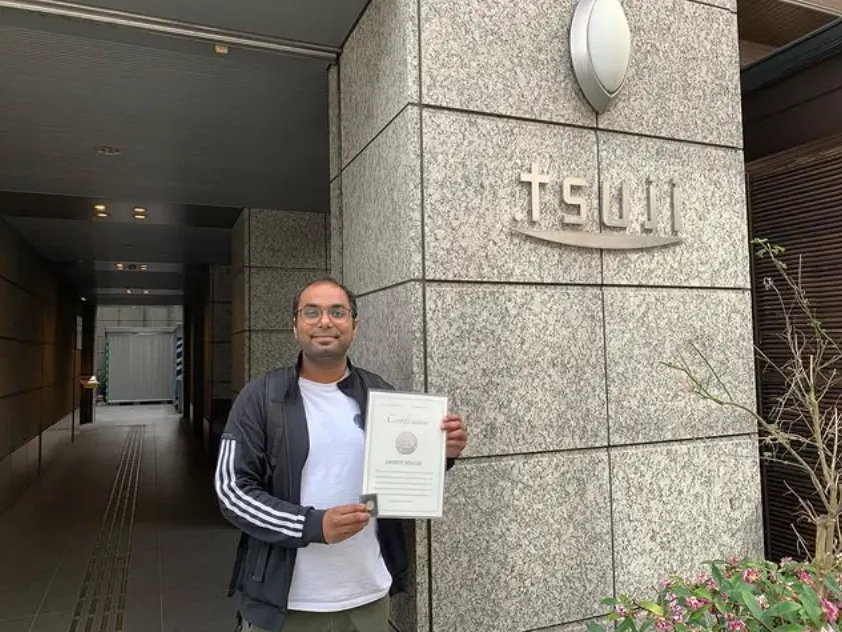
“I then enrolled at Tsuji Culinary Academy, where Japanese cuisine is taught with exceptional depth and seriousness. There, technique was not treated as a skill alone but as a philosophy built on repetition, discipline, and humility.”
Michelin moments: Kyoto to Belgium
One of the most defining chapters of his career was working at Kikunoi Honten in Kyoto, a three-Michelin-star kaiseki restaurant. The experience completely reshaped his understanding of excellence.
“Kaiseki cuisine demands absolute consistency and respect for tradition. Every movement, cut, and garnish had a purpose. The learning was subtle, often silent, but deeply impactful. It taught me patience, observation, and the importance of mastering fundamentals before attempting creativity,” he recollects.
At Kikunoi Honten, his stint was an education in restraint, tradition, and discipline. Every task, no matter how repetitive, carried meaning.
“The focus was on perfecting basics and maintaining consistency across every service. It taught me patience and respect for process,” he says.
Reinterpreting India in Bangkok
His journey then took him to Bangkok, where he was part of opening Inddee, a modern Indian tasting menu restaurant. “This experience allowed me to reinterpret tradition through a contemporary lens and understand how storytelling can be expressed through a structured menu.”
At Inddee, the challenge shifted toward innovation. Reinterpreting Indian flavours in a modern tasting format required balance and narrative clarity. “It helped me understand how creativity can coexist with structure,” he explains.
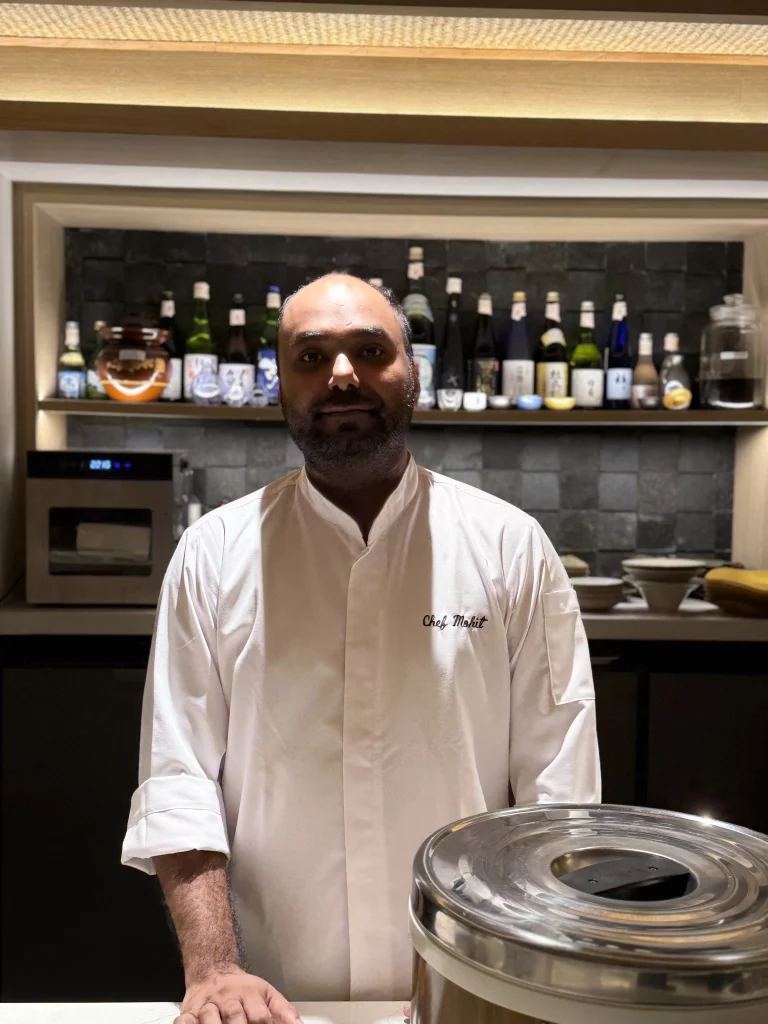
European refinement
Before joining Otoki, he worked with Chef Tim Boury at his three-Michelin-star restaurant, Boury, in Belgium. European fine dining refined his sense of balance, elegance, and technical finesse.
“Across India, Japan, Thailand, and Belgium, the most important lesson I learned was that technique and consistency transcend borders. No matter the cuisine, excellence is built through discipline, repetition, and respect for ingredients,” he avers.
Working in three-Michelin-star kitchens across Japan and Europe further shaped his understanding of excellence, as each environment demanded humility, consistency, and mental resilience.
Philosophy on the plate
His food philosophy is built around technique and ingredients. Technique provides control and consistency, while ingredients define honesty. “When both are respected, flavour follows naturally. I believe food should be intentional, balanced, and restrained, allowing ingredients to speak for themselves,” he adds.
In Mumbai, Otoki was born from the realisation that truly authentic Japanese cuisine was underrepresented in India. The vision was to present Japanese food as it is meant to be experienced — subtle, ingredient-driven, and technique-focused.
Serving authentic Japanese cuisine far from Japan requires discipline, sourcing integrity, and cultural respect — principles that define Otoki.
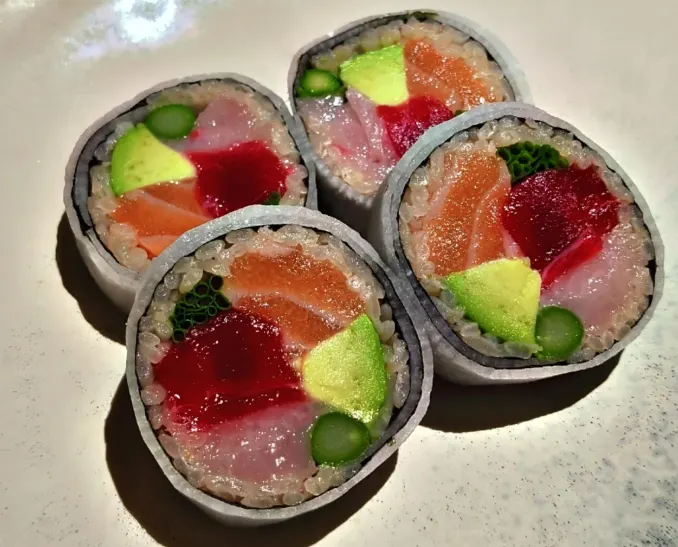
Futomaki, the classic sushi roll of Japan
An Indian identity, a global perspective
“I strongly believe that your cultural foundation gives you identity, but global exposure gives you perspective. Having worked across India, Japan, Thailand, and Europe, I have realised that food becomes a powerful medium to express this balance. My Indian upbringing shaped my palate, values, and resilience, while my international experiences refined my technique, discipline, and worldview.
As a chef, he believes in adapting without losing authenticity. In Japan, I learned the importance of humility, patience, and respect for tradition. In Europe, I experienced precision, innovation, and refinement. Each culture added a layer to my understanding, but none replaced my core identity. Instead, they helped me evolve while staying grounded,” he adds.
Inspirations of life
Singh draws inspiration from chefs who have redefined cuisine through discipline, originality, and clarity of vision. Chefs like Grant Achatz, Ferran Adrià, William Bradley, and Björn Frantzén inspire him not just for their technical brilliance but also for their ability to evolve while staying true to their philosophy. “Their work demonstrates that innovation is most powerful when it is rooted in strong fundamentals.”
Beyond individual chefs, he is inspired by the collective discipline of Japanese kitchens, where learning is continuous and humility is essential. “Watching chefs dedicate years to mastering a single technique reinforces the importance of patience and long-term thinking,” he says.
An important life lesson he shares for young chefs is to find their own voice. “Inspiration is everywhere, but imitation has limits. True growth happens when you absorb influences, reflect on them, and shape something that genuinely represents who you are. Consistency, discipline, and self-awareness are what ultimately lead to longevity in this profession,” he says.
Building Otoki’s future
His future plans are closely tied to strengthening Otoki’s identity as a destination for truly authentic Japanese cuisine in India. The focus is on pushing the restaurant closer to traditional standards — from technique and sourcing to service philosophy and menu structure.
View this post on Instagram
“I want Otoki to reflect the depth and discipline that define Japanese cooking, rather than following trends or shortcuts.” Another important goal is to continue refining the team’s understanding of Japanese techniques and mindset. Building a strong kitchen culture based on discipline, respect, and continuous learning is essential for long-term excellence.
“I also aim to introduce guests to lesser-known aspects of Japanese cuisine, encouraging a deeper appreciation beyond familiarity,” he says. Ultimately, his vision is to contribute meaningfully to raising the benchmark for Japanese dining in the country, while continuing to grow personally as a chef through constant learning and evolution.
- Follow Chef Mohit Singh on Instagram
ALSO READ: Chef Vishesh Jawarani: Blending Japan’s izakaya spirit with Goa’s unhurried susegad vibe at JSan

Share with



Written By: Bindu Gopal Rao
Chef Anand Morwani: From global classrooms to bringing Japanese cuisine to Mumbai

Written By: Vikram Sharma
Chef Anuj Sarkar: From global kitchens to Gauri Khan’s Torii, a culinary destination with SRK ties

Written By: Bindu Gopal Rao